Montana OHV Clubs and Trail Adoption
Montana’s riding season can be hard on trails: spring runoff leaves ruts, summer traffic loosens surfaces, and a downed tree can block a route just when a group arrives. Local OHV clubs help riders respond by organizing volunteer work and coordinating with land managers. This guide explains how clubs and trail adoption work, how to get involved, and what responsible trail support looks like.
How Montana OHV clubs support trails
What clubs do beyond organizing rides
A local off-highway vehicle club can be a useful bridge between riders and the people responsible for public land. Depending on the group and its agreements, members may help with trail maintenance, report hazards, share seasonal access information, or organize volunteer days. Some clubs also offer a way for riders to compare notes on routes, machine suitability, and local etiquette.
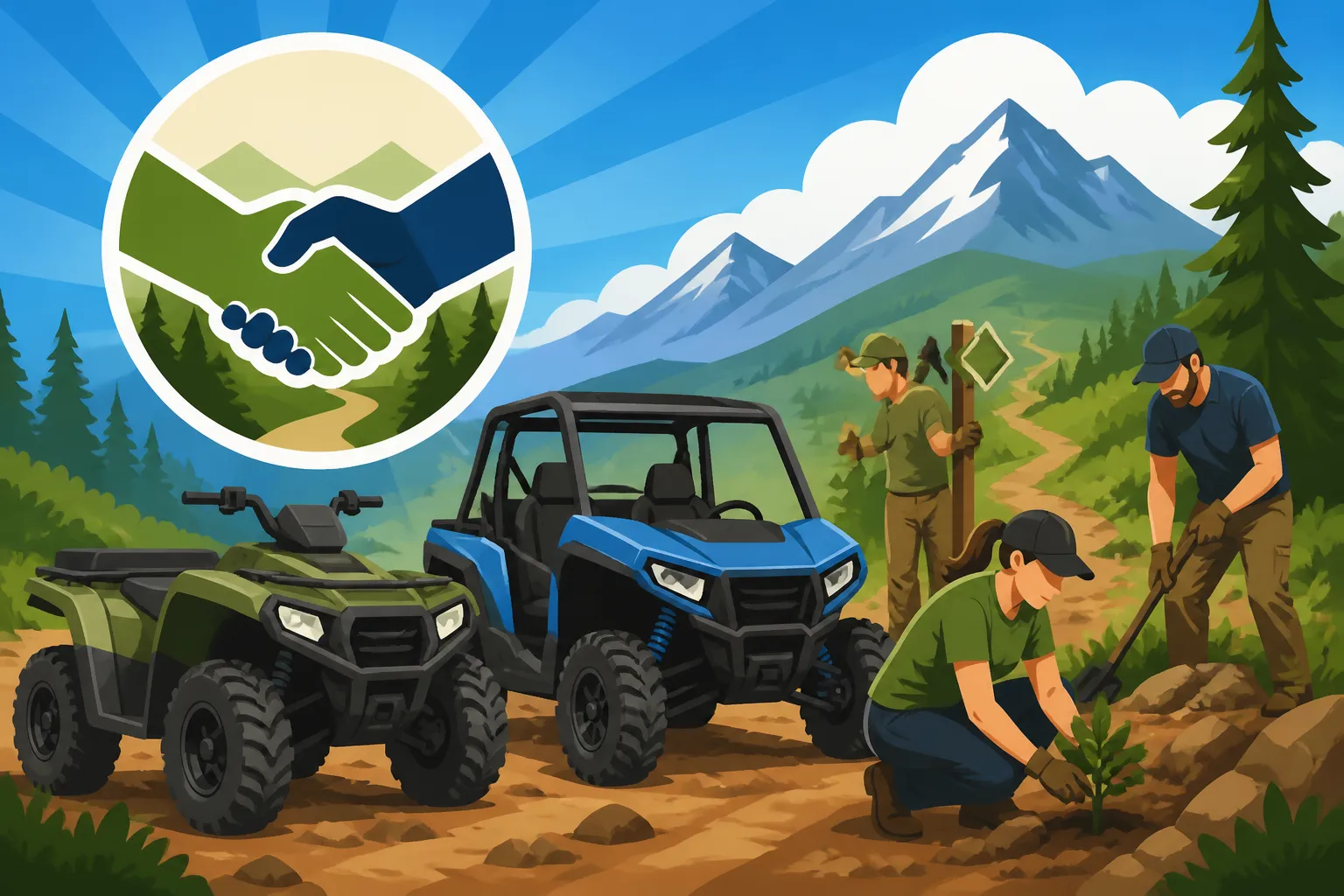
The work is often practical rather than dramatic. Volunteers might clear small branches, pick up litter at a staging area, replace a damaged sign with permission, or help document erosion after a storm. Bigger projects may require trained crews, specialized equipment, environmental review, and approval from a land manager. A club’s involvement does not give members permission to alter a route on their own.
Clubs can also help riders understand why a trail is open, closed, or restricted. A popular route near a town may cross different land ownerships or connect with roads managed by separate agencies. Local knowledge helps, but it should be checked against current official information. For more context, see [Montana Trails Kept Open by Local Clubs].
What trail adoption means in practice
Trail adoption usually means a club or volunteer group agrees to support a specific route or area in coordination with the land manager. It does not mean the club owns the trail, controls public access, or can decide independently to change its use. The agency or landowner remains responsible for access decisions and sets the conditions for volunteer work.
The exact arrangement can differ by location. A group may be asked to check for downed trees, report signs that need attention, help with an approved cleanup, or notify the agency about damage. Another adoption agreement may focus on a staging area or a stretch of trail. Ask what tasks are authorized, which tools are allowed, and how to report work completed.
A useful place to begin is [Montana Trail Adoption and Volunteer Days]. Before joining a work party, confirm its meeting location, expected duration, permitted tasks, and whether participants need to bring tools or protective gear. If the project is on federal land, for example, the group should clarify the relevant agency’s requirements rather than assuming the same rules apply everywhere.
Finding a club and choosing a good first step
How to look for a local riding group
Start with the area where you ride most often, not just the nearest town. A club may focus on a particular trail system, machine type, or kind of volunteer work. Ask at local powersports shops, trailhead information boards, community events, and established rider gatherings whether there is an active group in the area. Verify that the group still meets and that it works on the routes you care about.
Montana’s riding areas are spread across a large state, so the most useful group for a rider near Missoula may not be the right fit for someone who rides near Billings or the Flathead Valley. If you travel between regions, ask whether clubs coordinate with one another or whether volunteer opportunities are managed separately by each local land office. A regional network can help you find contacts, but local approval still matters.
When you reach out, keep your first message specific. Explain what kind of machine you ride, where you usually go, and whether you are interested in trail work, meetings, route information, or all three. You do not need years of experience to ask questions. New members can often contribute by showing up reliably, following instructions, and learning how the group communicates with land managers.
What to ask before joining a work day
A work party should have a defined plan. Ask who is leading it, whether the project has approval, what tasks volunteers will perform, and how the group will handle tools and safety. If the description is vague, request clarification before driving to a remote trailhead. That simple check can prevent a long trip for an event that has been postponed or moved.
Ask whether the group expects you to bring your own machine. Some work days are best done on foot, and a UTV or ATV may not be needed or allowed at the project site. If machines are involved, clarify where they can be operated, how they will be transported, and whether the trail is open to motorized use that day. A volunteer event is not a reason to ride around a closure.
You can also ask what to wear and what supplies are helpful. Gloves, sturdy footwear, water, food, eye protection, and weather-appropriate layers are sensible basics for many outdoor work days, but the project leader’s directions should take priority. For a first visit, it is perfectly reasonable to observe, meet the group, and decide whether the work suits you before taking on a larger role.
What volunteers can do and what requires approval
Trail checks, cleanup, and reporting
Some of the most valuable volunteer contributions are careful observations. A rider may notice a newly fallen tree, a washed-out section, a missing sign, or a damaged gate. Record the location as clearly as possible, describe what you saw, and report it through the route’s land manager or the club’s agreed process. A photo can help explain the issue, but it should not involve riding beyond a closure to get a better view.
A trail check should not become an unofficial repair project. Moving a small loose branch may seem harmless, but cutting vegetation, digging drainage, building a bypass, or altering a sign can have environmental and safety consequences. Even well-intended work can make a route harder to maintain or direct riders into an area that is not open to motorized travel.
For guidance on the difference between observation and maintenance, see [Reporting Trail Damage in Montana] and [Who Fixes a Washed-Out Montana Trail]. If a hazard presents an immediate safety concern, communicate that clearly and use the contact process provided by the land manager. Avoid posting sensitive details publicly if doing so could encourage riders to enter a closed or fragile area.
Approved maintenance and seasonal repair
Approved trail work can involve clearing brush, improving drainage, repairing signs, addressing erosion, or helping restore a staging area. The right method depends on soil, slope, water, vegetation, and the agency’s management plan. That is why a club’s relationship with the land manager matters: volunteers can help, but technical decisions should be made by people authorized to make them.
Seasonal conditions are especially important in Montana. Snowmelt and spring runoff can soften trails, while heavy rain may expose drainage problems or deepen ruts. Riding or working on saturated ground can make damage worse. If a route is closed or a volunteer project is postponed because conditions are poor, respect the decision rather than treating the closure as an inconvenience to work around.
A planned work day should include clear boundaries. Participants need to know what section is covered, which tools may be used, where equipment can travel, and who can approve a change in the plan. For more on how maintenance seasons and volunteer crews fit together, see [Montana Trail Crews and Summer Repairs]. Never assume that a familiar trail has the same work rules as another trail nearby.
| Volunteer activity | Typical contribution | Important boundary |
|---|---|---|
| Trail observation | Note hazards, erosion, blocked routes, or missing signs | Report through the agreed channel; do not enter closed areas |
| Litter cleanup | Remove trash from an approved trailhead or work area | Follow instructions for disposing of collected material |
| Sign support | Help identify damaged or unclear signs | Do not install, move, or alter signs without authorization |
| Approved trail work | Assist with a land-manager-approved task | Follow the project lead and use only authorized tools |
| Club outreach | Share access reminders and volunteer opportunities | Confirm information before presenting it as an official closure or rule |
Planning rides around trail information and club work
Use official access information first
A club’s advice can be valuable, but it does not replace the land manager’s current access rules. A route may pass through national forest, BLM land, state land, county roads, or private property, and each can have different restrictions. Before riding, identify who manages the area and check the applicable official maps, notices, and seasonal closures.
Motor Vehicle Use Maps are particularly important on many national forest routes because they indicate which roads and trails are designated for motorized use and may show seasonal restrictions. Learn how to read the map for the area you plan to visit; a line on a general navigation map is not, by itself, proof that an OHV may use that route. [Reading a Montana Motor Vehicle Use Map] is a helpful companion topic.
Navigation apps can make it easier to keep track of a route, especially in areas with limited cell service. onX Offroad can be useful as a planning and navigation aid, but treat it as a supplement rather than the final word on legal access. Compare what you see in the app with the land manager’s official map and current notices. Download or carry the information you need before leaving reliable service, and remember that a GPS track does not grant permission to ride.
Check conditions before driving to the trailhead
A route that was open during your last visit may be closed today because of weather, maintenance, fire activity, or a seasonal restriction. Check for current alerts before loading the trailer, and confirm the status again if conditions have changed since you planned the trip. The farther you are traveling, the more valuable that quick check becomes.
Local club updates can add useful detail, such as a report of a tree across a trail or a staging area that is difficult to access. Treat informal reports as a prompt to verify conditions rather than as an official closure notice. [Checking Montana Trail Status Before You Drive] explains why checking the right source can save a wasted trip and help prevent accidental violations.
Give trail work the same respect as a closure. If volunteers or agency staff are working on a route, do not ride through the project area unless the person in charge says it is safe and permitted. Keep machines and trailers out of work zones, follow posted directions, and be patient if the route is temporarily unavailable. A short delay is better than creating a hazard for workers or undoing maintenance.
Joining, supporting, or starting a trail effort
Ways to help when you cannot attend a work party
Not every rider has the time, health, equipment, or schedule for physical trail work. Clubs may still need help communicating access information, welcoming new members, organizing supplies, recording observations, or supporting meetings with land managers. Ask what tasks are useful rather than assuming that volunteering only counts if you are carrying tools on a trail.
Responsible riding is also a form of support. Stay on designated routes, avoid soft ground when conditions are poor, pack out trash, and give wildlife and other trail users room. When riders repeatedly follow the rules, it is easier for clubs to build credibility and work constructively with land managers. On the other hand, an unauthorized shortcut can damage the ground and create extra work for volunteers.
If you ride with friends, share accurate information about access and closures. Avoid forwarding an old map or a social-media post as if it were current. A resource such as onX Offroad can help your group stay oriented, but make sure everyone understands that app navigation is not a substitute for official access information. When in doubt, stop and verify rather than continuing down an uncertain route.
Starting a group effort responsibly
If there is no active club near your preferred riding area, begin with the land manager, not with tools. Ask whether a volunteer group is already working on the trail system, whether adoption opportunities exist, and what process new groups must follow. The answer may be that a local club already handles the work, that the agency needs a different kind of help, or that a proposed project is not appropriate for the site.
A small, dependable group is often more useful than a large informal effort with no clear approval. Identify a point person, agree on how to communicate, and keep records of who attended, what work was authorized, and what the group reported. A land manager can explain whether training, safety requirements, insurance, a written agreement, or other arrangements apply to a particular project.
Avoid promising that a club can keep a trail open or guarantee access. Closures and route designations are management decisions, and conditions can change. A credible group focuses on responsible stewardship, accurate communication, and a good working relationship with the people who manage the land. For broader context on local stewardship efforts, see [Montana Trail Adoption and Volunteer Days] and [Montana Trails Kept Open by Local Clubs].
Disclaimer
This article is for general informational purposes only and does not constitute professional advice. Laws, prices and regulations vary by location and change over time. Consult a qualified professional for guidance on your specific situation.