Do Wyoming Riders Need a Montana Permit?
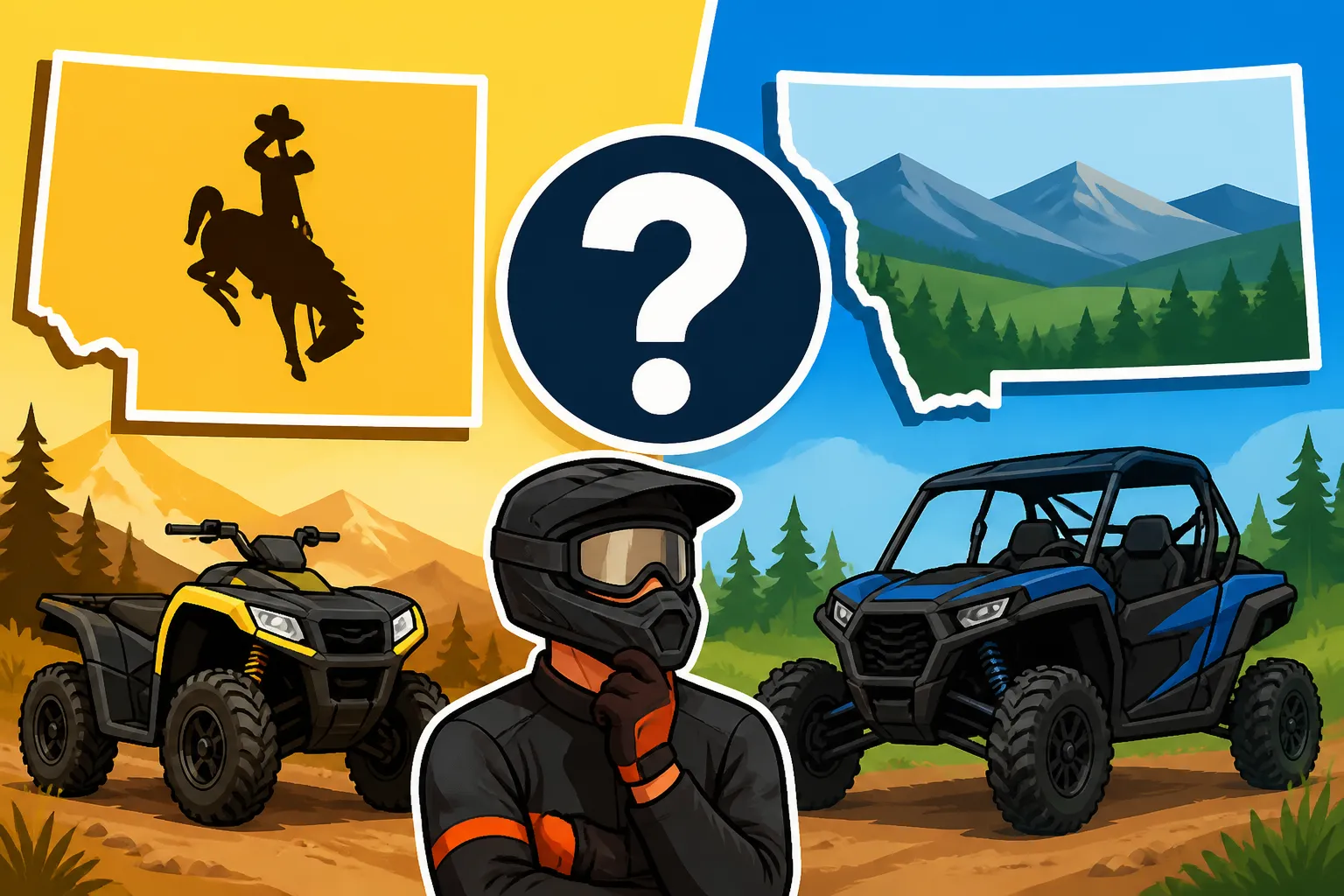
Wyoming registration or a Wyoming permit does not automatically give an ATV or UTV permission to use Montana trails. The answer depends on where you plan to ride and what kind of machine you’re bringing. Here’s how to tell when a Montana nonresident permit is needed, what it covers, and what to check before you tow north.
The Short Answer for Wyoming Riders
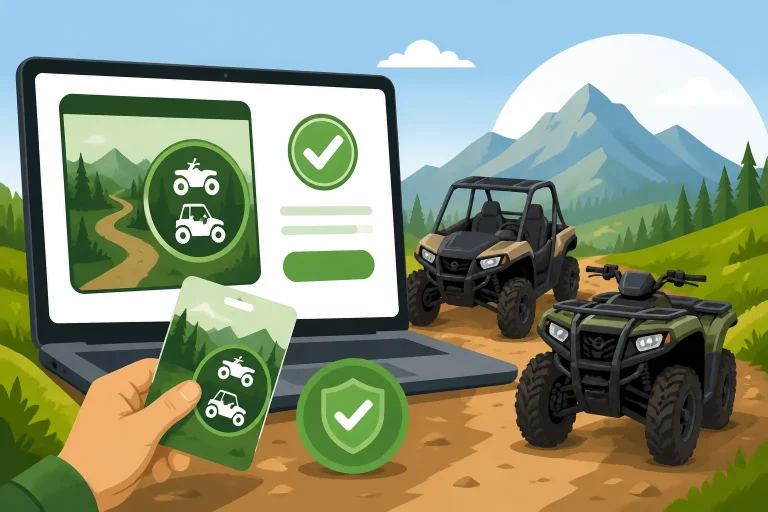
If you’re a Wyoming resident bringing an ATV or UTV to ride on Montana public trails, plan on needing Montana’s nonresident OHV permit. A permit or registration from Wyoming generally does not replace Montana’s requirement. Montana and Wyoming are separate jurisdictions, and having paperwork that lets you ride at home does not, by itself, authorize you to ride on Montana public land.
That permit is different from vehicle registration. Registration deals with the machine’s legal status under the rules that apply to it; the nonresident permit is for visiting riders using OHVs in Montana. It also isn’t the same as permission to use a road. A permit for trail use does not open a road to OHVs or make a machine road-legal.
For the basic rules and visitor requirements, see Montana Rules for Visiting Riders and Montana’s Non-Resident Temporary Use Permit. If you want the practical overview of what the permit does, What the Non-Resident Permit Covers is also relevant.
| Your planned use in Montana | What to check |
|---|---|
| Riding a public motorized trail on an ATV or UTV | Whether you need Montana’s nonresident OHV permit, and whether the trail is open to your machine |
| Riding on private property | Get permission from the landowner; verify whether any public-land route is part of your trip |
| Using a public road or crossing one | Check separate road-use rules, local authorization, and machine requirements |
| Bringing a street-legal vehicle | Confirm how its registration and status apply to the route; don’t assume road legality settles trail-permit requirements |
| Renting or borrowing a machine | Ask who handles the permit and confirm it covers the machine and your intended riding |
The important distinction is the place you ride, not just the state printed on your registration. A machine can be registered in Wyoming and still need a Montana permit for a Montana public trail. Conversely, a trail permit does not automatically satisfy separate rules for road riding, land access, or vehicle equipment.
What the Montana Permit Covers—and What It Doesn’t
Think of the nonresident permit as authorization for the covered kind of OHV use in Montana, not as an all-purpose pass. Its limits matter when a trip mixes forest trails, town streets, private ranch roads, and trailhead access roads.
Public trails and land access
A permit does not mean every trail is open. Public-land routes can have different rules based on the land manager, the route, seasonal closures, machine width, or other restrictions. Check the current route information before you ride. A route shown on a general map may not be open to motorized use, and a trail open to one type of machine may not suit another.
Use the official motor vehicle use map or other current information for the specific area. A map can show where motorized travel is allowed, but it does not replace the permit or any route-specific restrictions. A waterproof map case or phone holder can help protect a printed map or device in dust and weather; outdoor retailers, including Amazon, carry options.
Also separate access to public land from access across private land. A public trail may be reached only by crossing private property, or a road that looks public may have access limits. A permit does not grant permission to cross private property. Get the landowner’s permission where needed, and do not treat a gate, track, or two-track as proof that the public can use it.
Roads are a separate question
A trail permit does not make a road legal for OHV travel. Whether you may ride on a road can depend on the road owner, local rules, the machine’s registration and equipment, and any required authorization. A road that connects two trails may still be closed to OHVs. Likewise, being allowed to cross a road at a designated point is not the same as being allowed to travel along it.
Before planning a road segment, review Does the Non-Resident Permit Allow Road Riding?. If your route uses town streets or county roads, confirm the applicable rules for each section rather than relying on the trail permit.
Wyoming paperwork is not Montana trail access
It’s easy to confuse an out-of-state registration with an out-of-state permit. They serve different purposes, and the rules of one state do not necessarily carry over to another. Montana does not treat a Wyoming trail pass as automatic permission to ride Montana public trails. For more on the state-to-state issue, see Why Reciprocity Ended for Montana Riders.
Keep your Wyoming registration and ownership documents available when traveling, but don’t use them as a substitute for checking Montana’s requirements. If the machine has an unusual status—for example, it is street-legal, leased, rented, or registered to someone else—confirm how that status affects your planned use with the relevant Montana agency before the trip.
How to Get Ready Before You Tow North
A little planning before departure can prevent a frustrating delay at the trailhead. The key is to identify the machine, the route, and the type of riding you intend to do, then confirm the requirements that apply to all three.
- Identify the machine. Note whether it is an ATV, UTV, dirt bike, or another vehicle type. Have the make, model, and identifying details handy. If the machine is rented or borrowed, confirm who is responsible for the paperwork.
- List the places you plan to ride. Write down trail systems, public-land areas, roads, and any private property you’ll cross. A vague plan to “ride near town” makes it harder to check access rules.
- Check the current Montana permit rules. Use Montana Fish, Wildlife & Parks’ current information to confirm whether the nonresident permit applies to your machine and trip. Permit requirements, sales channels, display instructions, and other details can change.
- Buy through a current authorized channel. Check the official Montana information for available purchasing options and any instructions about when and how the permit must be displayed. Don’t assume a receipt alone is enough if the rules call for a permit or decal on the machine.
- Check each route’s status. Confirm the trail is open, suitable for your machine, and reachable without unauthorized travel across private land. Look for seasonal closures and width or vehicle-type limits.
- Keep supporting documents together. Carry any required permit information and the machine’s relevant registration or ownership documents. Follow current instructions on what must be displayed versus what should be carried.
- Recheck before leaving. Weather, fire activity, maintenance, or seasonal conditions can change access. A route that was open when you planned the trip may be closed by the time you arrive.
For purchase timing and where visitors may be able to obtain a permit, use Buying a Non-Resident Permit Before You Drive and Where Visitors Buy a Montana Permit. Check official information for current availability and requirements rather than relying on an old online post or another rider’s experience.
Don’t assume that a group purchase or one permit covers every machine. Verify the requirement for each ATV or UTV you plan to take. If you are riding with family or friends, make a simple list of machines and confirm that each one has the paperwork it needs.
Common Wyoming-to-Montana Scenarios
Most uncertainty comes from trips that mix different kinds of access. These examples can help you spot what to verify, but they are not a substitute for checking the current rules for your route and machine.
You’re bringing your own ATV or UTV for public trails
This is the clearest case: as a Wyoming resident using an OHV on Montana public trails, plan to obtain the applicable Montana nonresident permit. Wyoming registration alone is not the same thing. Then confirm the trail is open and that the machine fits any route restrictions.
If you’re unsure which permit category applies, check with Montana Fish, Wildlife & Parks before you travel. Describe the vehicle and the places you intend to ride. That’s more useful than asking only whether “Wyoming plates count,” since vehicle type and riding location can affect the answer.
You’re riding only on private land
Permission from the owner is essential, but don’t assume that a private-property segment settles the rules for the entire trip. You may need to travel on a public trail or road to reach the property, and those sections have their own requirements. Confirm where the public portion begins and ends, and get permission for any private access route.
You’re riding a rental or a friend’s machine
Ask the owner or rental shop whether the machine has the required Montana permit for your planned use. Don’t infer coverage from the fact that the machine is physically in Montana or that someone else rode it there. For rentals, ask specifically whether the permit is included, what areas are allowed, and whether the agreement restricts particular routes.
For a borrowed ATV or UTV, make sure the owner’s permission is clear and that you know what paperwork must stay with the machine. A permit question is separate from questions about insurance, registration, and responsibility if the machine is damaged.
Your trip includes a road segment
Treat the road section as a separate planning problem. Check who controls the road, whether OHV travel is authorized there, and what requirements apply to your machine and operator. A valid trail permit is not a substitute for local road authorization. If you need to ride through a town or along a county road, verify the rules for that specific stretch before setting out.
You’re bringing a street-legal machine
Street legality can affect what the machine may do on roads, but it does not answer every question about trail access or permits. Check the Montana requirements for the vehicle’s classification and planned use. If the trip includes both public roads and motorized trails, confirm each part separately. Don’t rely on a plate or a Wyoming registration label as proof that all Montana trail requirements are met.
The permit price or validity period is unclear
Permit costs, validity periods, and purchasing details can change. Confirm current figures and terms with the official source before buying, and make sure the information matches the permit type you need. Avoid relying on a prior season’s receipt, a friend’s permit, or a price listed in an old discussion.
The safest plan is straightforward: treat Wyoming registration and Montana trail authorization as separate matters; get the Montana permit if it applies to your public-trail ride; and verify roads, closures, private access, and machine restrictions independently. That approach is more reliable than assuming another state’s paperwork will be honored everywhere.
Disclaimer
This article is for general informational purposes only and does not constitute professional advice. Laws, prices and regulations vary by location and change over time. Consult a qualified professional for guidance on your specific situation.