Fines for Riding Montana Without a Permit
Riding an ATV or UTV in Montana without the required permit can lead to a citation, but there is no single fine that applies to every situation. The outcome depends on your residency, the land you are riding on, and whether the missing document is a permit, registration, or something else. Here’s how to identify the issue and what to do if you are cited.
What riding without a permit can mean in Montana
“Permit” is often used as a catch-all, but several different requirements can apply to an ATV or UTV. A rider may have the wrong permit, an expired or missing registration, or no authorization for a particular road or trail. Those problems are not interchangeable, and they may be handled under different rules.
For many visitors, the key document is Montana’s nonresident temporary use permit for riding on public land. Residents and nonresidents can have different requirements. A permit also does not automatically make a machine street legal or authorize travel on every road. The land manager, route rules, and vehicle requirements still matter.
If you are visiting, start with Montana’s Non-Resident Temporary Use Permit and check What the Non-Resident Permit Covers. The permit’s coverage matters: having one does not necessarily authorize road riding or make up for missing registration. Likewise, a registration from another state should not be assumed to satisfy Montana’s separate permit rules. Montana does not offer blanket reciprocity for every out-of-state document or riding situation.
Permit, registration, and road authorization are different
Before estimating the consequences of a citation, work out exactly what was missing. These categories help:
| Requirement | What it generally addresses | What it does not automatically provide |
|---|---|---|
| Montana trail-use permit or pass | Eligibility to ride in locations covered by that permit | Permission to ride every road or trail |
| Vehicle registration | The machine’s registration status and identification | Access to closed routes or land without permission |
| Road-use requirements | Whether and how the machine may operate on a particular road | Permission to ride on private land |
| Landowner or land-manager permission | Access where permission is required | Compliance with separate vehicle or permit rules |
A nonresident temporary use permit is not the same as a registration card. A machine can be registered at home but still require Montana authorization for certain public-land riding. Conversely, buying a Montana permit does not resolve a registration problem or make an otherwise prohibited road ride legal.
The practical question is not simply, “Do I have a sticker?” Ask what the sticker or document is for, which machine it covers, and whether it applies to the place where you are riding. A permit for one machine should not be assumed to cover another. If you are using a rental or borrowed machine, check whether the operator or owner has handled the required paperwork and whether the permit applies to your use.
The rules can also vary with the land and route. Public land may be managed under different rules from private land, and a route shown on a map is not automatically open to motorized travel. Review Montana Permit Rules on Public Land and, when relevant, Montana Rules on Forest Service Roads. A legal riding area and a properly permitted rider are both necessary; one does not substitute for the other.
Why a citation may not be only about the permit
An officer who stops a rider may find more than one issue. A missing permit could be accompanied by a registration problem, an unauthorized road ride, or travel on a closed route. Each alleged violation needs to be understood separately. Do not assume that resolving one will cancel out the rest.
That distinction matters when you receive a citation. Read the listed violation and any instructions carefully. If the ticket identifies an unregistered machine rather than a missing trail-use permit, the rules and response may differ. Fines for an Unregistered Machine in Montana covers a separate issue, while What a Montana Officer Asks For can help explain the paperwork an officer may request.
How much is the fine for riding without a permit?
There is no single fine amount that can safely be quoted for every Montana permit violation. The amount and process can depend on the specific violation, where it occurred, which authority issued the citation, and the applicable rules at the time. A local road violation, a public-land permit issue, and an unregistered vehicle may not carry the same consequences.
A citation may identify a required court appearance, a payment option, or instructions for contacting the issuing authority. Do not rely on a friend’s old ticket or a general online estimate to decide what you owe. The amount printed on your citation and current instructions from the court or issuing agency are the starting point. If the citation is unclear, contact the office named on it before the response deadline.
Possible consequences beyond the fine
The immediate concern is often the citation, but there may be practical consequences beyond the amount due. Depending on the circumstances and the agency’s rules, an officer may direct you to stop riding until the issue is corrected or the machine is moved legally. A rider may also face more than one citation if multiple requirements were not met.
Those outcomes should not be treated as automatic. A missing permit does not, by itself, mean that the machine will always be impounded, that a rider will face criminal charges, or that a particular additional penalty will apply. The facts matter. The location, the type of violation, the rider’s response, and any other alleged conduct can all affect what happens next.
If the issue involves riding on a closed route or outside an authorized area, the concern may extend beyond the missing permit. Land managers can enforce rules about route access and resource damage separately from permit requirements. Riding past a closure sign, leaving a designated route, or entering land without permission can therefore create a different problem than simply forgetting a permit. A permit does not authorize any of those actions.
Take the citation seriously even if you believe it was issued in error. Missing a response deadline or ignoring an appearance instruction can create avoidable complications. Follow the steps on the ticket, keep a copy of anything you submit, and ask the issuing authority how to resolve questions about payment, correction, or a required appearance. If you intend to contest the citation, use the process and deadlines stated by the court or agency rather than trying to settle the matter informally at the trailhead.
What to do if you are stopped or cited
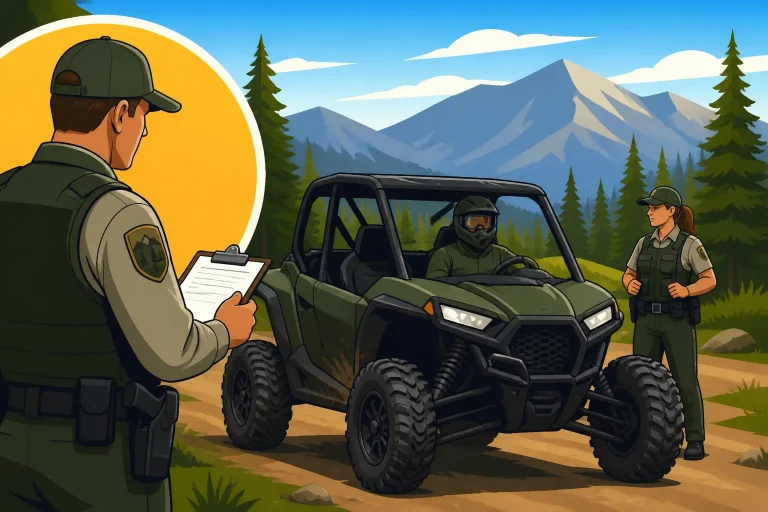
A calm, organized response makes it easier to understand the issue and avoid making it worse. Do not argue about the amount of a fine at the roadside or assume that showing an out-of-state registration proves you have every authorization needed. Ask what requirement the officer believes is missing and where the relevant violation occurred.
- Confirm the specific allegation. Ask whether the concern is a missing permit, registration, road-use equipment, route closure, or another issue. If you receive a citation, read the violation written on it.
- Gather the documents you already have. Keep your registration, permit confirmation, rental paperwork, and any relevant land-access permission together. Digital copies can help, but follow any instructions about what form of documentation is accepted.
- Do not continue riding until you understand the issue. If the officer tells you to stop or move the machine, follow the direction. A permit purchased after the stop may not erase a citation for riding without it earlier.
- Check the citation’s instructions. Note the response deadline, payment or appearance information, and the authority to contact. Keep a copy of the ticket and any correspondence.
- Verify the rules for the exact location. Check the relevant land manager or state office if you are uncertain whether the permit applied to that route. Do not assume a map, trailhead, or prior ride proves the route is currently open.
- Resolve the issue before riding again. Obtain the correct permit or registration, confirm it covers the machine and type of use, and verify that the route is open to your vehicle.
If you are stopped at a checkpoint, the questions may include more than whether you bought a permit. An officer may ask for registration or other required documentation. Montana Warden and Deputy Checkpoints explains why having paperwork ready can make a stop clearer, while Keeping Registration Papers on the Machine offers practical storage considerations. Keep documents secure and accessible without creating a distraction while riding.
For visitors, it is worth checking the permit requirement before leaving home rather than relying on a last-minute purchase option at a trailhead. Confirm the approved purchase method, the dates the permit covers, and how it must be displayed or carried. If you are riding a rental, ask the rental provider what paperwork is included and what remains your responsibility. Montana Rules for Visiting Riders is a useful starting point for questions that go beyond the permit itself.
How to avoid a permit citation before your ride
A short check before riding can prevent a confusing roadside stop. First identify whether the machine is being operated on public land, private land, or a road, and then check the rules for that location. Do not treat “Montana ride” as a single category: the requirements can depend on where you ride and whether you are a resident, a visitor, or using a rented machine.
Next, verify the machine’s paperwork. Match the permit or pass to the machine you plan to ride, and confirm the document is valid for the planned use. If the permit is electronic, save the confirmation where you can access it without relying on cell service. If a physical decal or display is required, follow the current placement instructions rather than guessing.
Check route access separately. A permit does not turn a closed trail into an open one, and an open trail does not guarantee that every machine is allowed on it. Look for current route information from the relevant land manager and pay attention to signs at the trailhead. For road sections, confirm the local and state requirements before assuming an OHV may use the road. A permitted trail ride and a legal road ride are not necessarily the same thing.
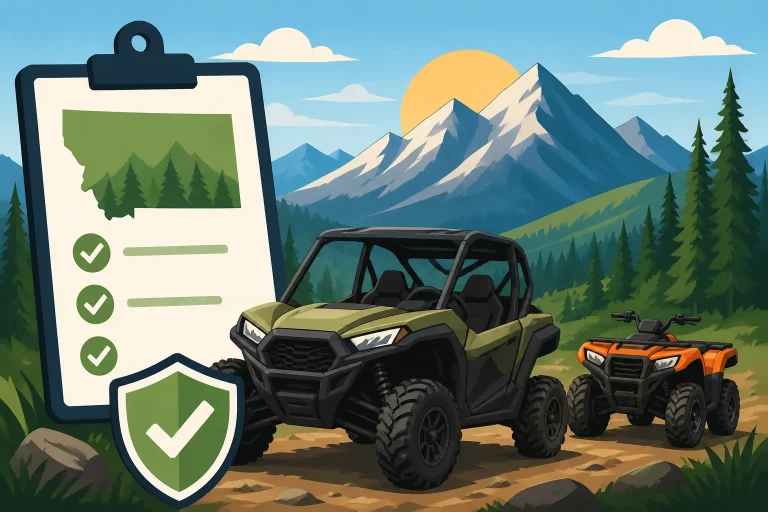
A useful pre-ride checklist is:
- Confirm which permit or pass applies to your residency and type of machine.
- Make sure the document covers the specific machine you will operate.
- Check that registration is current and the machine identification matches the paperwork.
- Verify the route is open to your machine and that any road section is authorized.
- Carry required documents or keep accessible copies in an approved format.
- For a borrowed or rented machine, confirm who obtained the permit and what it covers.
- Check the current instructions from the responsible agency if any part of the requirement is unclear.
If you discover a missing permit before riding, pause and resolve it before entering the area where it is required. If you are already on a route and realize the permit may not apply, do not keep riding deeper into the area on the assumption that a later purchase will fix the problem. Contact the appropriate authority or follow posted directions for leaving legally.
The safest way to think about Montana permit fines is that the fine depends on the actual violation, not just the phrase “no permit.” Confirm what document is required, where it applies, and what the citation says. Keeping permit, registration, and route access separate in your planning can prevent both a needless ticket and an unsafe or unauthorized ride.
Disclaimer
This article is for general informational purposes only and does not constitute professional advice. Laws, prices and regulations vary by location and change over time. Consult a qualified professional for guidance on your specific situation.