Montana Rules for a Machine on Tracks
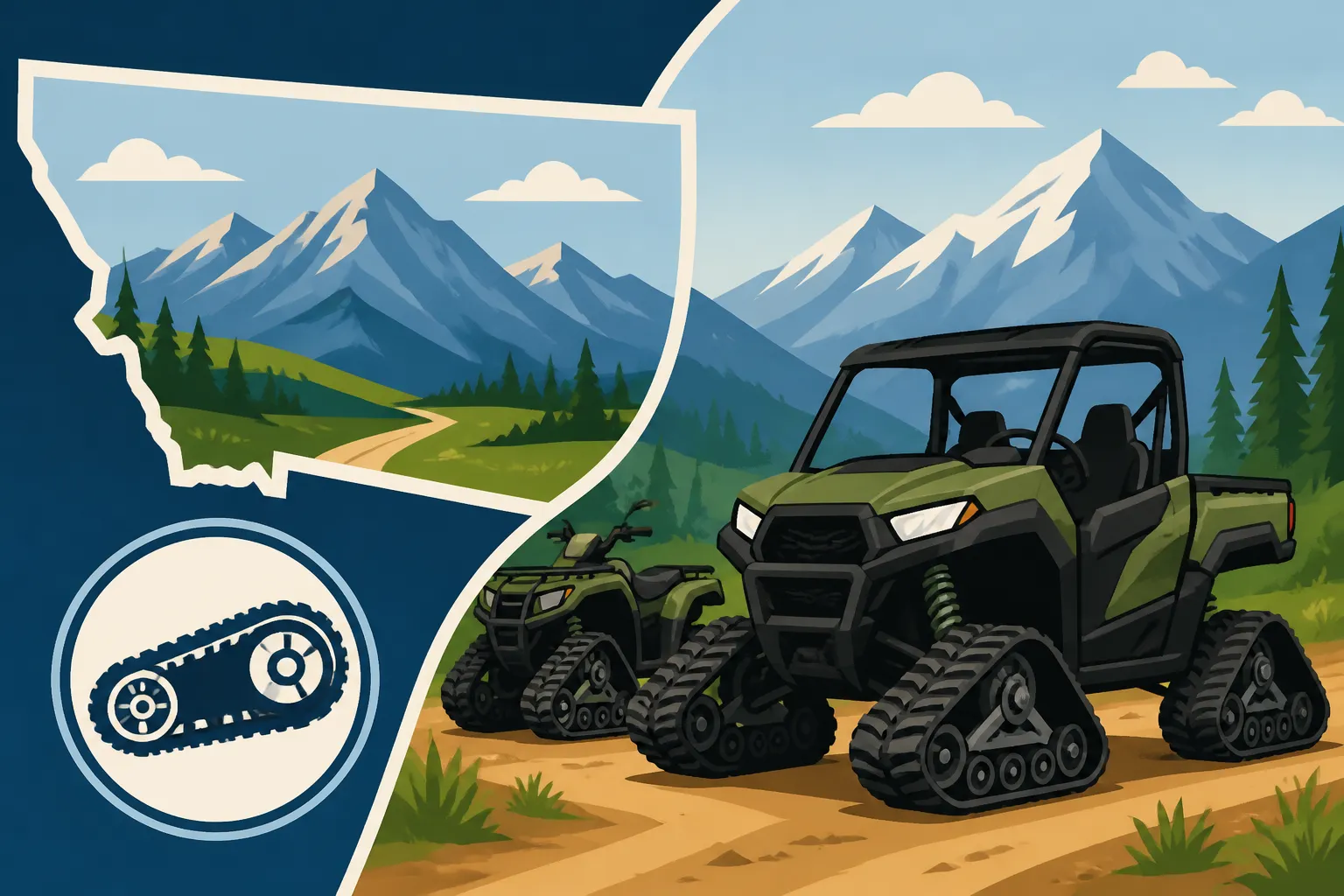
A track kit can make an ATV or UTV useful in snow, but it does not automatically change where the machine may go or which permits it needs. In Montana, the key questions are how the machine is classified, whether you are riding on public land or a road, and what the route allows. Here’s how to check before you unload.
Tracks do not automatically change a machine’s permit category
Fitting tracks to an ATV or UTV usually changes how it moves over snow, not the paperwork that identifies it. A machine that was registered as an ATV or UTV does not necessarily become a snowmobile just because it has tracks. Equally, a snowmobile does not become an ATV simply because it uses a different track setup.
That distinction matters because registration, trail passes and permits can depend on the vehicle’s legal classification, the rider’s residency and the land being used. A machine’s appearance is not a reliable way to determine its category. Check the paperwork and ask the relevant Montana office if the classification is unclear.
Before riding, gather the machine’s registration or title information, its make and model, and details about the track conversion. If the conversion involves more than swapping wheels for a track kit, explain what has changed. A county treasurer can help with registration and title questions; Montana Fish, Wildlife & Parks and the land manager can clarify trail-pass or access requirements.
| Situation | What to verify | Why it matters |
|---|---|---|
| ATV or UTV fitted with a track kit | The vehicle’s existing classification and registration | A track kit alone may not change its legal category |
| Snowmobile with tracks | Snowmobile registration and applicable trail requirements | Snowmobile rules may differ from ATV or UTV rules |
| Riding on public land | Permit or pass rules for the machine and land | A registration document may not cover every public trail |
| Riding on a road | Whether that specific road allows the vehicle and whether it meets road-use rules | A trail permit does not grant permission to use a road |
| Riding outside Montana | The destination state’s rules | Montana paperwork does not guarantee another state will accept it |
Do not rely on a seller’s description, a product listing or a track-kit label as proof of the machine’s legal status. If the machine’s registration says ATV or UTV, start from that classification and confirm whether any conversion requires an update. Keep the answer with your trip paperwork if you expect questions at a trailhead or during an inspection.
Check permits and reciprocity before using public trails
Registration and trail access are separate issues. A machine can be properly registered and still need a trail pass or permit for a particular kind of public-land riding. A track conversion does not, by itself, create an exemption from those requirements.
For a nonresident bringing an ATV or UTV to Montana, review the requirements for the Montana’s Non-Resident Temporary Use Permit. Confirm that the permit applies to your machine and intended use, and check where it must be displayed or carried. Do not assume that an out-of-state registration or permit will substitute for Montana’s requirements. Montana’s approach to other states’ credentials is explained in Why Reciprocity Ended for Montana Riders.
Residents and nonresidents may face different requirements, and the rules can also differ between vehicle classes. If you are unsure which permit applies to a tracked machine, describe it as it is registered—not just as “a machine on tracks”—when you contact the relevant office. Give the make, model, registration category, residency status and intended riding area. Those details are more useful than a general question about track kits.
A permit also has limits. A trail pass is not blanket permission to ride anywhere on public land, and it does not automatically authorize road use. Access may depend on the land manager, the particular route, seasonal closures, machine dimensions and trail conditions. Review Montana Permit Rules on Public Land and the rules for the specific area before planning a route.
If you are visiting from another state, check both sides of the trip: what Montana requires and what your home state requires for registration, transport or use after you return. A Montana permit is for the use it authorizes in Montana; it should not be treated as a substitute for legal registration or access permission elsewhere. Montana Rules for Visiting Riders explains the visitor questions to sort out before setting off.
Confirm the route allows tracked machines
A valid permit does not mean every trail is suitable for every tracked ATV or UTV. A route may be open to one vehicle type and closed to another, have a width restriction, or be subject to a seasonal closure. Some roads and trails are managed for specific uses, and snow conditions can change which routes are open or passable.
Use the current map and rules from the agency that manages the area. On national forests, consult the applicable Motor Vehicle Use Map and any seasonal orders. For other public lands, check the relevant land manager’s current access information. The map is more important than a line shown in a general navigation app: a mapped route is not necessarily open to your vehicle or to motorized use at the time of your ride. See Montana Rules on Forest Service Roads for the road-access distinction.
Pay particular attention to routes intended for snowmobiles. Do not assume that a tracked ATV or UTV has the same access as a snowmobile, or that a snowmobile route is open to all tracked vehicles. Ask the land manager how the route’s vehicle restrictions apply to your machine’s registered category. If there is no clear answer, choose a route explicitly open to your vehicle type rather than testing the boundary on the ground.
Machine width is another practical concern. Track kits can change the vehicle’s overall width, and a route that accommodates a narrow machine may not be appropriate for a wider side-by-side. Check the route’s posted limits and account for the widest point of the machine, including any accessories. Montana Trails Rated for Full-Size Rigs can help explain why trail width and vehicle fit deserve attention before a ride.
Conditions matter as much as the map. Soft snow, thawing ground and spring runoff can make a route vulnerable to damage or unsafe for travel. A tracked machine may spread its weight differently from a wheeled one, but that does not mean it cannot damage a trail. Respect closures and posted signs, and turn around if the surface is breaking up, rutting or becoming unstable. For winter-specific access questions, consult Winter Riding Permits in Montana and verify the current status of the route.
Roads, private land and a pre-ride check
A permit for trail riding does not automatically allow a tracked machine on a public road. Road access depends on whether that road is open to the vehicle, whether local rules allow the use, and whether the machine meets any applicable road requirements. A route shown as a trail on a map may also end at a road where the rules change.
Before riding a road section, confirm that the road is open to your machine and that the machine meets the requirements for that use. Do not assume tracks count as tires for every road rule or that a road-use permit overrides restrictions set by a county, municipality or land manager. If the answer depends on local authorization, contact the responsible agency before the trip. The broader rules for Riding an OHV on the Road in Montana are useful background, but check the specific route as well.
Private land is a separate question. A public-land permit does not grant permission to cross private property, even if the route appears to connect two public areas. Get permission from the landowner before riding across private ground, and do not treat a trailhead or access road as proof that the land beyond it is open.
Before leaving, use this short checklist:
- Identify the machine as registered. Check whether its paperwork classifies it as an ATV, UTV or snowmobile. Ask a county treasurer if the track conversion raises a registration question.
- Confirm the permit requirement. Check the applicable Montana requirements for your residency and vehicle category. Do not assume an out-of-state credential is enough.
- Check the route’s current rules. Use the land manager’s map and closure notices, and verify that the route permits your machine type and width.
- Separate trail access from road use. Confirm any road section independently, including local restrictions and required equipment.
- Carry proof and follow closures. Keep registration and permit information available, and turn around when signs, conditions or updated orders say the route is closed.
The safest assumption is straightforward: tracks do not make a machine exempt, and they do not give it broader access. Start with its legal classification, confirm the right permit, then check that the exact route is open to that machine on the day you ride.
Disclaimer
This article is for general informational purposes only and does not constitute professional advice. Laws, prices and regulations vary by location and change over time. Consult a qualified professional for guidance on your specific situation.