Blaze Orange on a Montana Fall Ride
A fall ATV or UTV ride in Montana can put you on the same roads and trails as hunters, often in changing light and among trees, brush, or dust. Blaze orange helps other people spot you, but it does not replace a permit, make a closed route legal, or guarantee safety. Here’s how to use it sensibly and check the rules before you ride.
What Blaze Orange Does and Does Not Mean in Montana
Blaze orange is a visibility aid. Its bright, high-contrast color can help a hunter, another rider, or a driver notice you against foliage, timber, and shadow. That matters during fall, when shorter days and changing weather can reduce visibility and more people may be outdoors for different reasons.
Wearing orange as an OHV rider is a practical precaution, but don’t confuse good practice with a blanket legal requirement. Montana’s hunting rules may require hunter orange for people hunting certain game during applicable firearm seasons. The details depend on the activity and current regulations. A person riding an ATV or UTV recreationally is not automatically subject to a hunter’s clothing rule just because it is fall.
If you are hunting from or riding with a hunting party, check the applicable rules for the hunt rather than assuming a vest satisfies every requirement. Requirements can depend on what you are hunting and the method or season. Start with Montana Rules During Hunting Season and confirm the current regulations with Montana Fish, Wildlife & Parks before heading out.
| Situation | Practical approach |
|---|---|
| Recreational ride during fall | Wear visible orange if it is comfortable and does not interfere with your helmet, restraints, or controls. |
| Riding near an active hunt | Make your group easy to identify, slow down, and avoid approaching hunters or game. |
| Hunting during a firearm season | Check the current hunting regulations for the specific orange requirements that apply to your hunt. |
| Riding on a route with uncertain access | Verify the route is open to your machine and that you have the required permits. Orange does not grant access. |
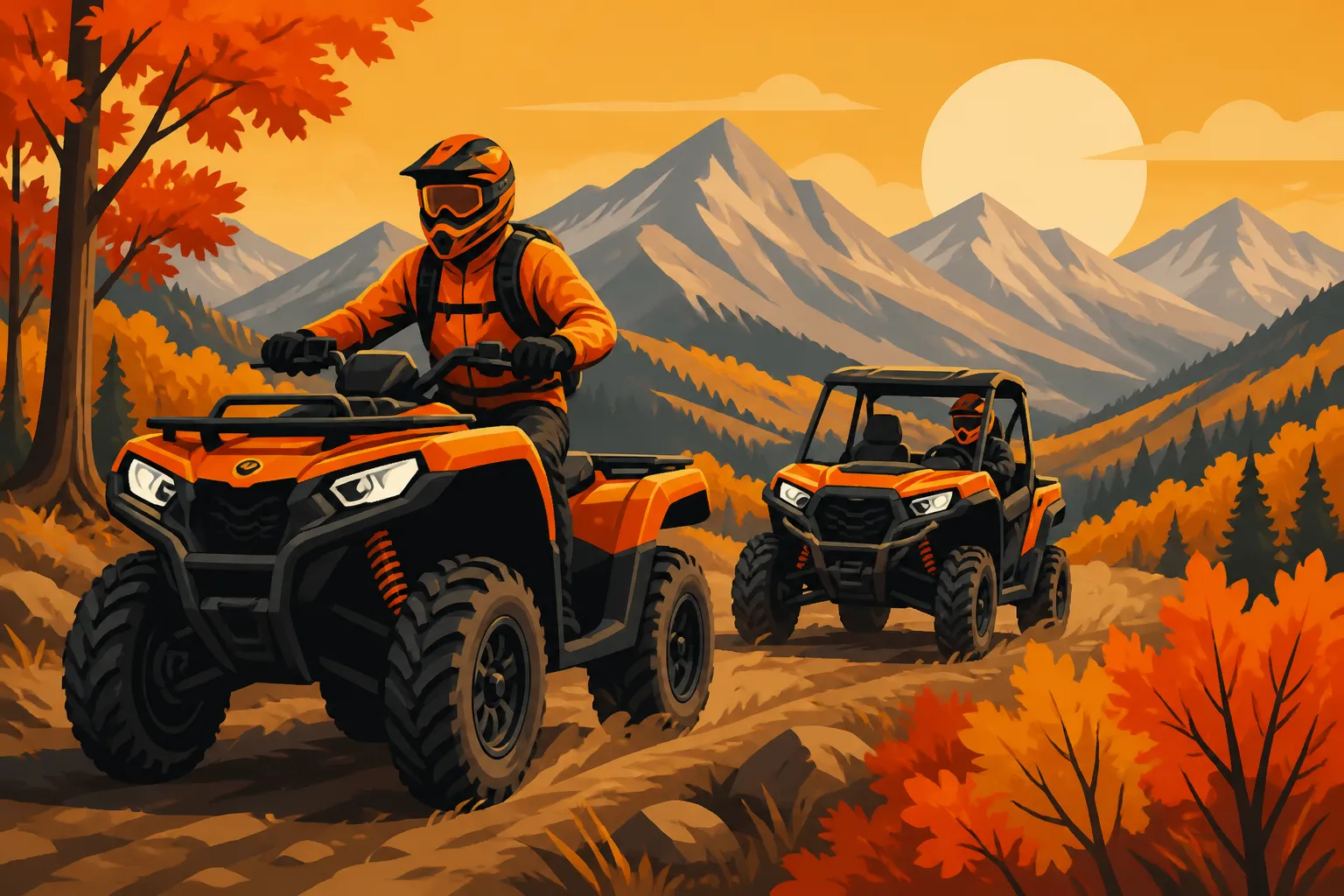
Orange is most helpful when it is visible from the direction another person is approaching. A small patch hidden under a jacket or behind a seat does little. A vest, outer layer, or pack cover can make the rider easier to pick out. In a side-by-side, passengers can also wear visible colors; a bright driver does not make a group in dark clothing easy to see.
Still, color is only one part of being noticed. Ride at a speed that lets you stop within the distance you can see, especially around blind corners, trail junctions, and areas where vehicles may approach from the other direction. Use required lights when conditions or rules call for them, and do not assume another person has seen you just because you are wearing orange.
How to Wear Orange Without Compromising the Ride
A useful visibility layer should stay visible while you are seated, belted in, or wearing your riding gear. Before leaving, sit in the machine and check whether the vest or jacket can be seen from outside. A layer that bunches under a seat belt, catches on a door, or blocks a mirror is not a good solution.
Choose clothing that fits over your normal layers without restricting movement. Fall rides can begin cold and warm up later, or the reverse. A removable outer layer lets you adjust without losing visibility for the rest of the group. Keep loose fabric, drawstrings, and straps secured so they cannot snag on controls or moving parts.
For a group, agree on a simple plan before setting off. Decide where everyone will stop if the group becomes separated, and make sure riders know who is leading and who is bringing up the rear. If someone gets off the machine, tell the group and choose a visible, safe place to wait rather than standing in a travel lane or around a blind bend.
A practical pre-ride check can include:
- Confirm each rider can be seen from the front, rear, and sides where practical.
- Make sure orange clothing does not interfere with a helmet, seat belt, steering, or access to controls.
- Check that lights and other required equipment work.
- Agree on a pace that suits the least experienced rider and the conditions.
- Identify safe places to pull over without blocking the route.
- Tell someone outside the group where you plan to ride and when you expect to return.
For gear, look for a high-visibility layer that suits the weather and fits over the clothes you will actually wear. If you shop through Amazon or another retailer, check the garment’s fit, coverage, and care details rather than choosing by color alone. Do not rely on a product listing to tell you whether you meet a hunting regulation; verify that separately.
Orange does not replace protective equipment. A vest is not a substitute for a properly fitted helmet, eye protection, seat belts in a UTV, or clothing suited to rough terrain and changing weather. Nor should visibility gear encourage a group to ride faster or assume it has priority on a shared route. It is there to make a person easier to notice, not to prevent every collision.
Check Permits, Access, and Fall Conditions Before You Go
Blaze orange cannot solve the most common planning mistake: assuming a route is open or that a pass or registration from one place automatically covers another. Fall conditions, hunting activity, and seasonal closures can all affect where you can ride. Check the route, machine requirements, and access rules before loading the trailer.
Start with the route’s land manager and current maps or notices. A road shown on a map is not necessarily open to OHVs, and permission to ride one section does not necessarily cover an adjoining road or trail. For background on the rules that apply across different public-land settings, see Montana Permit Rules on Public Land. For a broader visitor checklist, What Montana Riders Need Before They Ride is a useful next step.
If you are visiting from outside Montana, do not assume your home-state registration or permit is accepted as a Montana trail permit. Review Montana’s Non-Resident Temporary Use Permit and Montana OHV Rules for First-Time Visitors to understand what may apply to your machine and trip. Permit requirements can depend on residency, machine type, and where you plan to ride. Confirm current requirements with the official source before you travel.
A permit is not permission to ride anywhere. You still need to follow the route designation, land-access rules, and any posted closure or restriction. If your plans include hunting access or an elk camp, review Riding to a Montana Elk Camp and check whether the route is open to your specific machine. Give hunters space, avoid crowding camps or parked vehicles, and do not leave established routes to get around a closure or a group on the road.
Fall also brings practical riding hazards that an orange vest cannot fix:
- Low light: Start early enough to finish before darkness when possible. Familiar trails can look different after sunset.
- Dust and poor visibility: Leave extra space between machines and slow down when you cannot see clearly.
- Wet leaves, mud, and early snow: These can hide ruts, rocks, and slick surfaces. Avoid making new tracks around muddy sections.
- Wildlife and livestock: Reduce speed near animals, blind corners, and ranch areas. Give animals room to move away.
- Changing closures: Fire, weather, maintenance, or land-management decisions can affect access. Recheck Checking Montana Trail Status Before You Drive shortly before departure.
- Limited communications: Do not assume a phone will work everywhere. Share your route and return time with someone who is not on the ride.
If you encounter hunters, slow down and make your presence known in a calm, predictable way. Do not drive toward a person or animal, and do not stop where another rider or vehicle cannot see you. If the route feels crowded or visibility is poor, wait in a safe place or choose another route. A fall ride is more enjoyable when everyone can see each other, understand where they are allowed to go, and has time to react.
Disclaimer
This article is for general informational purposes only and does not constitute professional advice. Laws, prices and regulations vary by location and change over time. Consult a qualified professional for guidance on your specific situation.