Montana Block Management Land and OHVs
Montana Block Management Areas can offer access across private working land, but that access does not automatically mean you can ride an ATV or UTV wherever you like. The rules depend on each property’s agreement and map. Before unloading, check whether motorized travel is allowed, which routes are open, and what registration or permit requirements apply.
Why OHV access varies from one Block Management Area to another
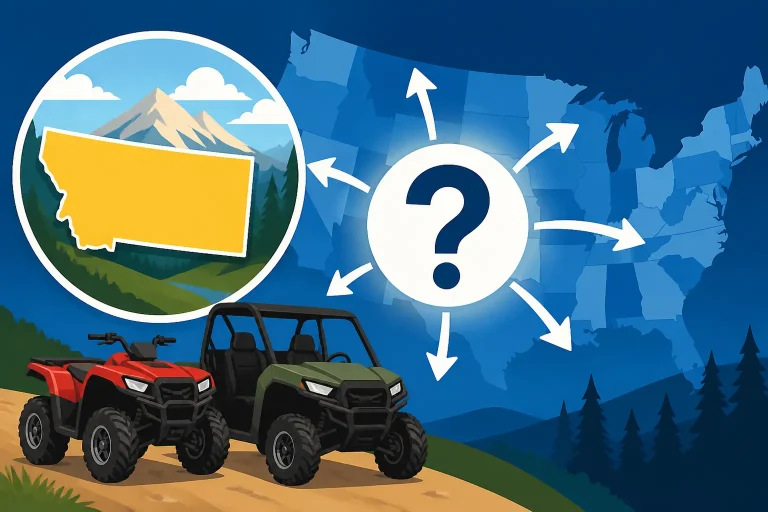
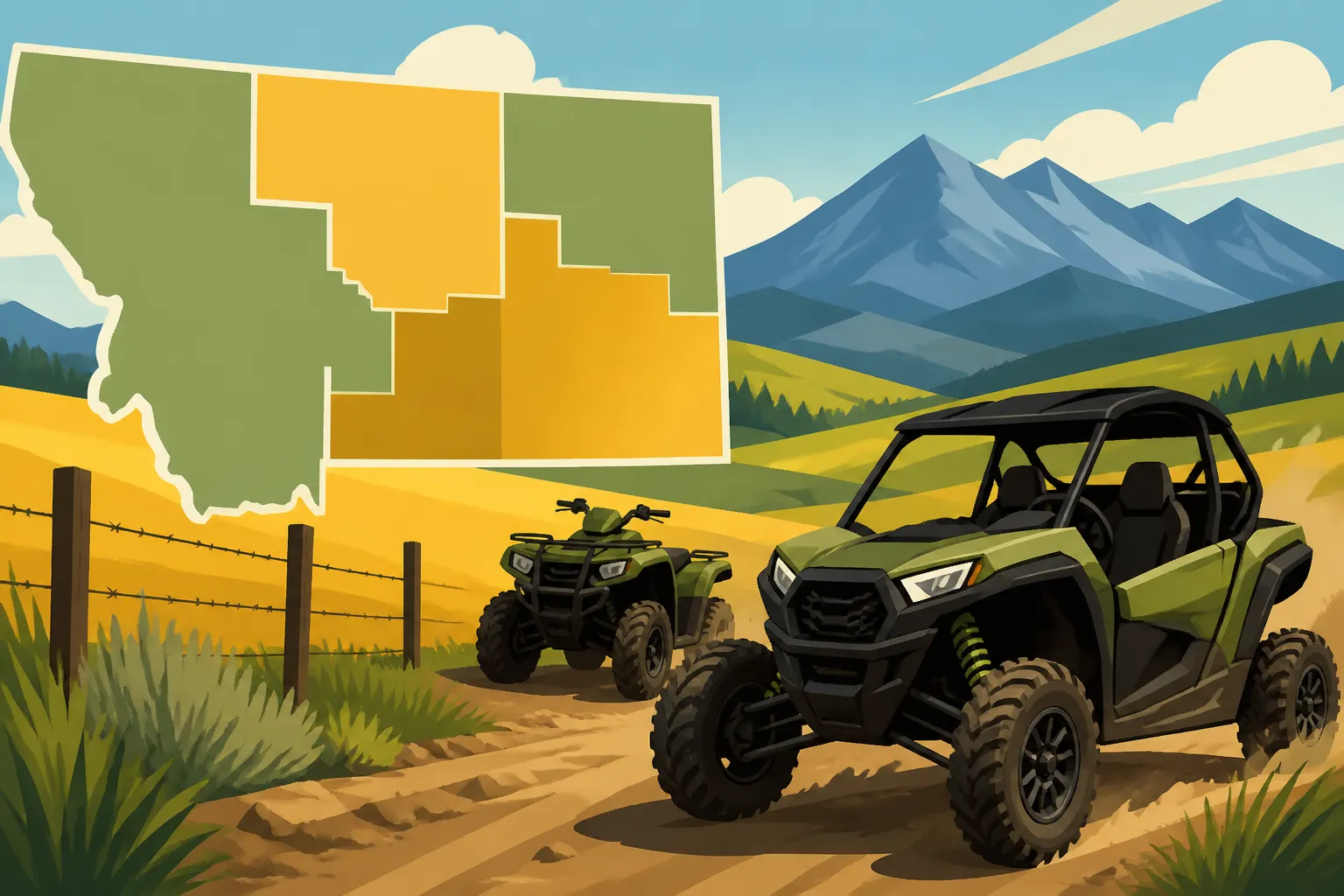
Montana Block Management is a way for participating landowners to make specified property available for public recreation under agreed conditions. It is not a blanket invitation to drive across the property. According to Montana Fish, Wildlife & Parks, OHV access and travel rules are set by individual agreements between participating landowners and state officials, so restrictions vary by property.
That distinction matters for riders. A property may allow people to enter for an approved activity but limit vehicles to certain roads, prohibit OHVs altogether, or impose other travel restrictions. A road visible on a map is not automatically open to motorized use. Nor does permission to be on the property necessarily grant permission to leave a route and cross fields, pasture, or other ground.
For each Block Management Area, the property map and regulations are the controlling reference. Montana Fish, Wildlife & Parks says these materials detail which roads are open or closed, vehicle limits, and travel restrictions. Read the rules for the specific property you plan to visit rather than relying on a neighboring BMA’s rules or a general description of the program.
| Question | What to verify for the specific BMA |
|---|---|
| Is motorized access allowed? | Whether OHVs are permitted on that property at all |
| Which routes can you use? | Open and closed roads, trails, or other designated routes |
| Are there vehicle limits? | Any restrictions on the types or number of vehicles |
| Does the access apply to your planned activity? | The property’s posted use conditions and regulations |
| Do general OHV requirements still apply? | The registration decal and any applicable pass or permit requirements |
| Will your route use a paved highway? | Whether your machine meets street-legal requirements for that roadway |
An access map answers where the property’s stated routes and restrictions apply. It does not replace other OHV requirements, and it does not guarantee that an unofficial track, shortcut, or route shown on a third-party app is authorized. For general land-access distinctions, see Montana Rules on Private Land and Montana Permit Rules on Public Land.
A useful habit is to check the map and regulations again close to your visit. Conditions and access directions can change, and a route that was open on another trip may not be open now. If the map or posted instructions do not make a route clear, do not assume that riding is allowed; contact the appropriate program office or landowner before using it.
How to check routes and ride within the property rules
Start with the exact Block Management Area you intend to visit. Make sure the map corresponds to that property, then read the written regulations alongside it. Maps can show roads without explaining every condition attached to them, while written rules may clarify route limits or vehicle restrictions that are easy to miss when you only glance at a map.
Before you leave home, identify the allowed entrance and the routes you plan to use. Compare that plan with the map and any restrictions listed for the property. If the route leaves the marked or authorized network, treat that as a reason to stop and verify—not as permission to continue. A GPS line, an old riding track, or a route suggested by someone who visited a different property cannot override the BMA’s specific rules.
Once on site, watch for signs, gates, closures, and other directions. A map is important, but riders should also pay attention to current instructions at the property. If a route is blocked or signs indicate a closure, do not try to bypass it. If you cannot tell whether a road is open to OHVs, choose a route that is clearly authorized or get clarification before proceeding.
A careful ride plan should also account for the land’s working use. Block Management Areas are private properties made available under specific conditions, not dedicated OHV parks. Stay on the routes the property allows, avoid disturbing livestock or property operations, and leave gates as instructed. If the posted rules do not explain what to do with a gate, seek guidance rather than guessing.
These steps help prevent a common misunderstanding: access to a property and access by motor vehicle are not necessarily the same thing. The landowner’s agreement may allow certain visitors or activities while limiting OHV travel. The specific map and regulations are the place to confirm whether your intended vehicle use is allowed.
If you are riding during a hunting trip, check the property’s use conditions for the activity and dates relevant to your visit. Do not assume that an OHV route is available simply because a property is open to other recreation. Montana Rules During Hunting Season can help with the broader context, while the BMA’s own rules remain the reference for access on that property.
Permits, registration, and the difference between access and compliance
A BMA’s permission rules and Montana’s general OHV requirements are separate questions. The property map tells you whether you can use an OHV there and where. Registration, decals, and permits address other requirements for operating the machine. Meeting one set of conditions does not cancel the other.
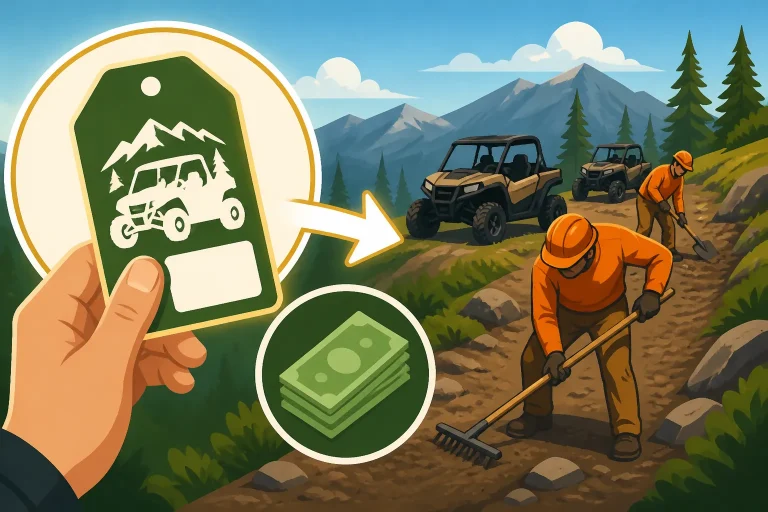
Montana Fish, Wildlife & Parks requires a permanent registration decal to be displayed in a conspicuous location when an OHV is ridden off-highway on public land or trails. Check that the decal is displayed as required before heading out. For the details of registration itself, see Registering an OHV in Montana and Where a Montana OHV Decal Goes.
A trail pass or temporary-use permit may also apply, depending on whether you are a resident or nonresident and how you will use the OHV. Montana Fish, Wildlife & Parks lists the Montana Resident OHV Trail Pass at $20 and the Nonresident Temporary Use Permit at $35, as of November 2026. Confirm current requirements and details with the agency before your trip. Do not assume that holding a pass or permit gives you permission to ride on a particular BMA route; that permission still depends on the property’s rules.
Residents and visitors should also avoid treating a private-property exception as a general exemption for BMA riding. Montana Fish, Wildlife & Parks says resident OHV owners who use their machine exclusively on private property are exempt from fees, registration, permits, and titles. BMA access is governed by a participating landowner’s agreement with the state, and the riding conditions vary by property. If you are unsure whether an exemption applies to your situation, verify it with the appropriate official source rather than relying on the fact that the land is privately owned.
If a planned route connects to a paved highway, the requirements change. Montana Fish, Wildlife & Parks says an OHV must be street legal and have a license plate attached to the rear when ridden on paved highways. The agency also requires at least one properly functioning stop lamp and a rearview mirror for an OHV operated on a paved highway. A route permitted by a BMA does not, by itself, make an OHV legal to ride on a paved highway.
| Requirement or permission | What it addresses |
|---|---|
| BMA map and regulations | Whether OHV use is allowed on that property and which routes or vehicles are permitted |
| Permanent registration decal | Displaying the decal when riding off-highway on public land or trails |
| Applicable pass or permit | The permit requirements that apply to the rider and machine |
| Street-legal equipment and plate | Requirements for operating an OHV on a paved highway |
For a broader checklist before riding, see What Montana Riders Need Before They Ride. Visitors can also review Montana Rules for Visiting Riders and Montana’s Non-Resident Temporary Use Permit rather than assuming that a home-state registration or permit settles every Montana requirement.
A practical checklist before you unload
Use this sequence to reduce the chance of arriving at a property and discovering that your planned route is not allowed:
- Identify the exact BMA. Make sure you have the map and regulations for the property you intend to enter, not a nearby area with a similar name.
- Read the written rules. Look for the property’s vehicle limits, travel restrictions, and any conditions tied to access.
- Trace an allowed route. Confirm that your proposed roads or trails are listed as open to the type of vehicle you plan to use.
- Check your paperwork and decal. Confirm that your OHV meets the registration and display requirements that apply to your ride.
- Confirm whether a pass or permit applies. If you are unsure, check the current guidance from Montana Fish, Wildlife & Parks.
- Review any paved-road portion separately. A BMA route does not authorize highway use; confirm your machine meets the requirements for that roadway.
- Follow signs and closures on site. If directions conflict with your plan or you cannot establish that a route is open, stop and get clarification.
It also helps to keep the property map available during the ride, either in a form you can consult without cell service or as a printed copy. That is a practical backup, not a substitute for following posted restrictions. If other riders in your group are navigating, make sure they are using the same property map and understand the route limits. A group can accidentally stray onto a closed road when only one person is checking the map.
If you are visiting a friend’s ranch or another private property outside the Block Management program, do not assume the same access terms apply. Get permission from the owner and clarify where you may ride. Riding a Friend’s Ranch by Permission covers that separate situation.
The key decision is simple: confirm property-specific OHV access first, then confirm that your machine and paperwork meet the general requirements for the ride. A valid decal or permit cannot open a route that the BMA has closed, and a route shown as open does not remove any separate registration, permit, or highway requirements. For more on how resident passes work, see Montana’s Resident OHV Trail Pass.
Sources
- Montana Fish, Wildlife & Parks — ACTIVITIES :: Off-Highway Vehicles | Montana FWP (checked November 3, 2026)
- Montana State Parks — ohv-brochure_2021_final.pdf (checked November 3, 2026)
Disclaimer
This article is for general informational purposes only and does not constitute professional advice. Laws, prices and regulations vary by location and change over time. Consult a qualified professional for guidance on your specific situation.