Why Reciprocity Ended for Montana Riders
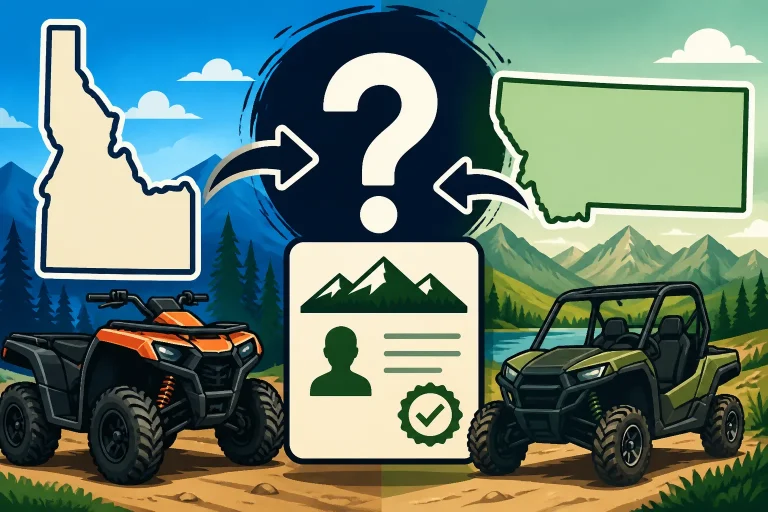
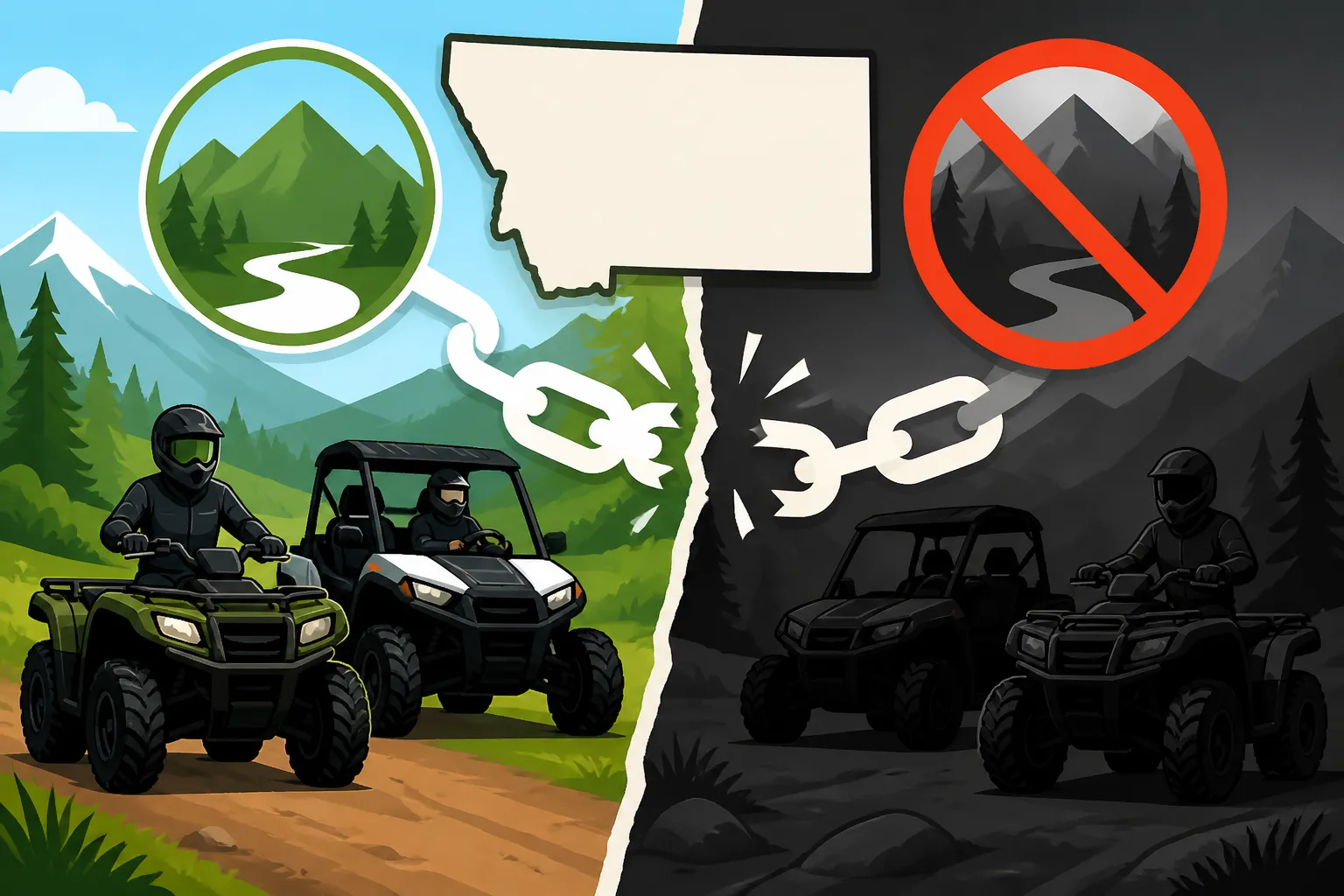
A Montana sticker or registration may not be enough to ride public trails in another state, and an out-of-state permit may not cover Montana trails. The confusion comes from treating reciprocity as a universal rule. It is not: each state sets its own access and funding requirements, so riders need to check the rules for the place where they plan to ride.
What “reciprocity ended” means for Montana riders
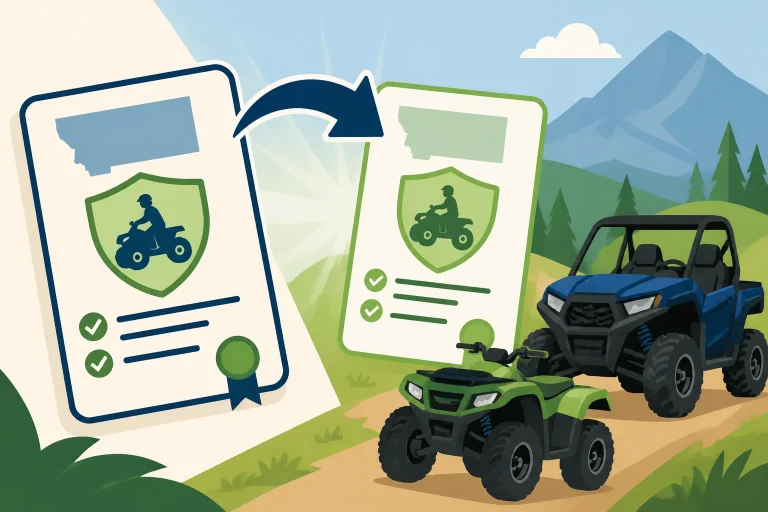
Reciprocity is an arrangement in which one state accepts a permit, registration, or other credential issued by another state. It is not a nationwide OHV pass, and it does not automatically make a machine legal everywhere. States can have different rules for trail access, vehicle registration, road use, and safety requirements.
When riders say reciprocity ended for Montana, they are usually talking about trail access: a credential from the rider’s home state should not be assumed to satisfy Montana’s requirements. Montana has its own system for residents and nonresidents, and riders should confirm which permit or registration applies to their machine and intended route. The practical change is less about a Montana registration becoming invalid and more about states no longer treating each other’s credentials as interchangeable for every kind of riding.
There is no single national agreement that guarantees a Montana rider can use the same pass in every neighboring state. An agreement can be limited to certain states, credentials, vehicle types, or kinds of land. It may also change when a state updates its laws or how it funds recreation. That makes broad statements such as “Montana plates work everywhere” or “all states stopped honoring Montana” unreliable.
It helps to separate four things that often get mixed together:
| Credential or permission | What it generally addresses | What it does not automatically establish |
|---|---|---|
| Vehicle registration or title | Ownership and the vehicle’s registration status | Permission to ride every public trail |
| Trail pass or temporary-use permit | A state’s trail-use or recreation requirements | Permission to ride a road or enter restricted land |
| Road-use authorization | Whether a particular road is open to OHVs and what equipment or operator rules apply | Access to nearby trails |
| Land manager’s rules | Access to a specific forest, park, or other area | Recognition of another state’s permit |
The distinction matters because a machine can be properly registered but still need a separate trail permit. Likewise, a valid trail permit does not open a road that is closed to OHVs or authorize riding across private property. For the Montana-specific overview, see Reciprocity Montana Does Not Offer and Montana Rules for Visiting Riders.
Why states moved away from relying on another state’s credentials
There may not be one simple reason or one event that explains every change riders describe as the end of reciprocity. States have different OHV laws and permit systems, and any agreement depends on the details of those systems. The practical reasons for requiring a state’s own permit are easier to understand than the history of any particular agreement.
Trail funding needs to connect to trail use
States spend money on trail planning, maintenance, signs, access points, and related recreation services. If visitors use trails but their home-state credential does not contribute to the host state’s program, the host state may decide it needs a permit that directly supports its own system. A local permit also gives the state a way to track participation and manage access under its own rules.
That does not mean every permit dollar goes to a specific trail a rider uses. Funding can be allocated under state rules and may support a broader recreation program. But requiring a state-specific permit makes the connection between riding in that state and meeting its access requirements clearer.
Permit systems do not line up neatly
States may define an OHV differently, issue credentials for different lengths of time, or apply different requirements to residents and visitors. A sticker that satisfies registration rules in one state might not be a trail-use pass at all. Another state may require a separate permit for public lands, even if the vehicle is registered at home.
Those differences make blanket recognition difficult. A state deciding whether to accept an outside credential has to work out what that credential covers, which machines it applies to, and whether it meets local requirements. If those details do not match, a state-specific permit can be simpler for riders and administrators.
Trail access and road access are separate decisions
A state may recognize a vehicle’s registration without recognizing a home-state trail pass. Even then, registration does not make every road legal for OHV use. Road access may depend on the road owner, local rules, signs, vehicle equipment, and operator requirements.
That is why a rider should not use the word “reciprocity” as a substitute for checking the route. See Riding a Montana Machine in Another State for the distinction between taking a machine across state lines and meeting the destination state’s access rules.
These reasons describe why states may prefer their own permit systems. They should not be treated as a definitive account of the legislative history behind every change in reciprocity. If you need the legal reason for a particular rule, check the current information from the state agency responsible for OHV permits and trail access.
What a Montana rider should check before leaving the state
Start with the rules where you will ride, not just the paperwork attached to your machine. A Montana registration or decal may help show that the vehicle is registered, but it does not guarantee that another state accepts it as a trail pass. The same caution applies when a Montana rider visits federal or other public land: the land manager’s rules may add requirements beyond the state’s.
Before a trip, check these points:
- Find out whether your destination requires a trail permit. Check the destination state’s official OHV information. Look for rules that distinguish residents from nonresidents and identify which vehicle types the requirements cover.
- Check whether a permit is tied to the machine or the rider. Do not assume one permit covers multiple machines or that a borrowed vehicle is covered by your paperwork.
- Confirm what the credential actually permits. A trail pass may apply to designated trails but not roads, private land, or every public recreation area. For Montana’s nonresident system, see What the Non-Resident Permit Covers.
- Check road rules separately. A road may be closed to OHVs even if the surrounding trail network is open. In Montana, Does the Non-Resident Permit Allow Road Riding? explains why a permit should not be mistaken for road authorization.
- Review equipment and operator requirements. Helmet, safety-course, age, and road-equipment rules can differ by location and type of riding. A permit does not necessarily satisfy them.
- Carry proof that matches the machine. Keep the registration and permit information accessible, and make sure the vehicle identification details match the machine you are taking.
- Recheck shortly before the ride. Permit procedures, closures, and access rules can change. A past trip or another rider’s advice may not reflect the current requirements.
For Montana itself, nonresidents should check whether they need a temporary-use permit before riding. Permit coverage, purchase methods, and other conditions should be confirmed through the relevant official source rather than inferred from a home-state sticker. Montana’s Non-Resident Temporary Use Permit and Buying a Trail Pass Through FWP Online Licensing cover the Montana process.
Avoiding common assumptions about permits and reciprocity
A few misunderstandings lead to most cross-border permit problems.
“My machine is registered, so I can ride.” Registration and trail access are not always the same thing. The destination state may require a separate permit even when the machine has valid registration at home.
“The pass covers every place I want to go.” A state trail credential may not cover a road, a different agency’s land, or private property. Check the land manager’s rules and route status as well as the permit rules.
“The other state accepted it last year.” Rules and agreements can change. A previous trip is useful context, not proof that the same credential will be accepted now.
“A Montana registration gives me reciprocity elsewhere.” Do not treat Montana registration as a universal trail pass. Another state decides what it recognizes and what additional permits it requires. The same principle applies in reverse when an out-of-state rider comes to Montana.
“A permit means I can ride wherever the map shows a route.” Maps can show roads or trails that are closed to motorized use, temporarily inaccessible, or subject to restrictions. Confirm the route with the responsible agency before setting out.
For a trip involving several states, make a simple checklist for each destination: required permit, registration documents, rider qualifications, equipment, open routes, and any land-specific conditions. Keep the checklist tied to the state or area, rather than assuming one set of credentials carries across the whole trip. If you are unsure whether a credential is accepted, ask the responsible agency directly and save the answer with your trip paperwork.
The safest interpretation of “reciprocity ended” is straightforward: do not count on an out-of-state credential unless the state where you intend to ride says it accepts it for that exact purpose. Verify trail permits, registration, and road access separately. That small check can prevent a ride from starting with an avoidable access or enforcement problem.
Disclaimer
This article is for general informational purposes only and does not constitute professional advice. Laws, prices and regulations vary by location and change over time. Consult a qualified professional for guidance on your specific situation.