Replacing a Montana Safety Certificate
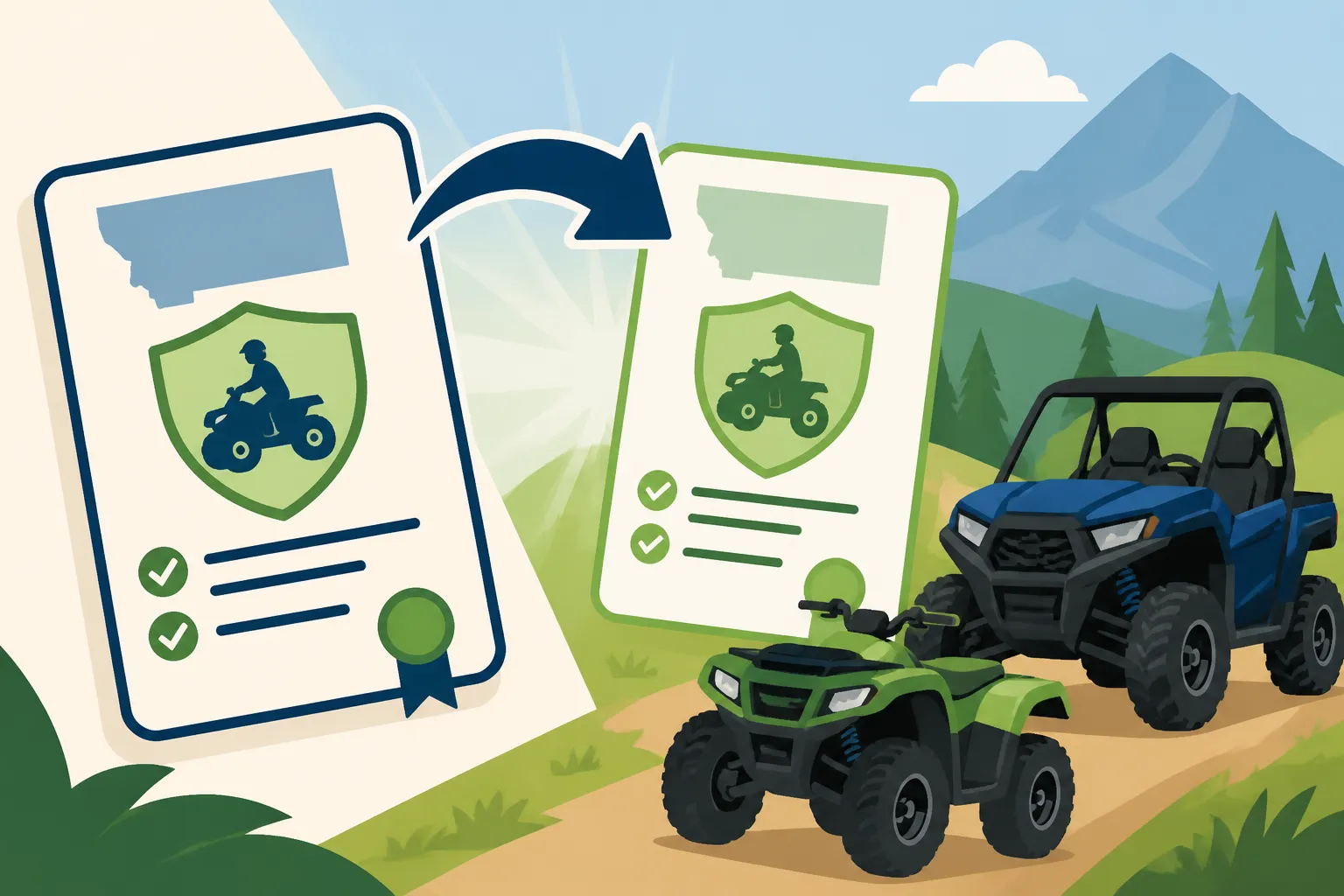
If you completed Montana’s OHV safety course but lost the certificate, you may not need to take the course again. Start with the provider that issued it and ask whether it can verify your completion or send replacement proof. The right next step depends on where you took the course, what records you still have, and why you need the certificate.
Start with the course provider
The course provider is usually the best first contact because it may hold the record of your completion. If you took the course online, look for the provider’s support or account-recovery option. If you attended an in-person class, contact the instructor or organization that arranged it. Ask specifically for a replacement certificate or another way to verify that you completed the course.
Before you contact anyone, check for records that can help locate your completion. Useful details may include:
- Your name as it appeared when you registered
- The email address or phone number you used
- The approximate date you finished the course
- Any confirmation email, receipt, or course-completion notice
- A certificate number or account login, if you have one
If you have changed your name or email address since taking the course, mention that. A provider may search under the information you used at the time rather than your current details. If you do not remember which provider you used, search old email accounts for terms such as “OHV safety,” “course completion,” or “certificate.” Check junk and archived folders too.
A helpful request is direct: explain that you completed Montana’s OHV safety course, say when and how you took it, and ask what proof the provider can issue. It might be able to restore access to an online account, resend a completion notice, or explain how to request a replacement document. The available option depends on the provider’s records and procedures, so do not assume that every course uses the same certificate format.
If the course was arranged through a school, club, dealer, or other organization, ask that organization who maintains the official completion record. The person who taught the class may be able to point you to the right records contact, even if they cannot issue a replacement themselves.
If you cannot remember who issued it
Look through old email, text messages, browser history, and saved files for a course link or registration confirmation. If you paid to take the course, a transaction record may help identify the provider. Do not send sensitive personal or payment information to an unverified contact; first confirm that you are using the provider’s official contact channel.
If you still cannot identify the provider, ask Montana Fish, Wildlife & Parks (FWP) what record or verification route applies to your situation. Describe where and roughly when you took the course, and ask whether FWP can direct you to the record holder. Do not assume FWP can recreate a certificate issued by a separate course provider.
The general requirement and course options are covered in Montana OHV Safety Education Requirements and Taking the Montana Course Online. Those topics can help you identify whether the course you took was the relevant one, but the issuing provider is still the practical place to start for a missing completion record.
Confirm what proof you actually need
Before requesting a replacement, find out why you need to show the certificate. The answer affects what counts as adequate proof. A provider may be able to verify completion even if it cannot produce the same card or document you originally received. Ask the person or organization requesting proof whether they will accept a digital copy, a provider confirmation, or another record.
For example, you may be preparing to ride, responding to a question from an official, or checking whether a young rider has met an education requirement. Those situations may involve different documents. A course certificate is not the same thing as machine registration, an OHV decal, a trail pass, or a non-resident permit.
| What you need to establish | What to check |
|---|---|
| You completed the course | Ask the original provider to verify its completion record |
| You need a replacement document | Ask whether the provider can resend, reprint, or restore access to it |
| You need to show proof for a particular ride | Confirm which proof is accepted for that riding situation |
| You are unsure whether the course is required | Check the rule that applies to the rider’s age and where the machine will be used |
| You took a course outside Montana | Confirm whether that specific certificate is accepted in Montana |
A missing certificate does not automatically mean that you have to repeat a course. First establish whether the provider can find your record and whether the proof you need can be supplied another way. If the provider cannot locate a record, ask what information it searched and whether there is another way to confirm your identity or course date.
If a rider needs the course but has not completed it, a lost document and an unfinished course are different problems. Do not treat a receipt, registration confirmation, or account login as proof of completion unless the provider or the relevant authority confirms that it is acceptable. Likewise, do not assume that simply having taken a similar course elsewhere satisfies Montana’s requirement. Check Who Must Take the Montana Course and Out-of-State Certificates Montana Accepts if either question applies.
Certificate, permit, and registration are separate
A safety certificate is evidence of course completion. A permit or pass relates to permission or eligibility to ride in a particular setting, while registration concerns the machine. One document generally does not replace the others. If you are planning a trip, check the requirements for both the rider and the machine rather than relying on the safety certificate alone.
For non-residents, a Montana permit may be a separate requirement from safety education. See Montana’s Non-Resident Temporary Use Permit and What Montana Riders Need Before They Ride to check the broader paperwork picture. Riders looking specifically at youth requirements can also review [Montana Permit Rules for Youth Machines].
If the provider cannot locate your record
A provider may not find a record on the first search, especially if the course was taken a long time ago or you have changed your contact information. Follow up with the details you can confirm: the name used at registration, approximate completion date, course format, and any old email address. If you have an old certificate image or course receipt, include it when the provider says it is safe to do so.
Ask the provider to clarify whether the problem is a search issue, an incomplete record, or a record that is no longer available. Those are not the same outcome. If it cannot find the completion, ask whether a supervisor, records team, or course administrator can review the information. Keep copies of any replies and confirmation numbers.
If the provider confirms that it has no record, contact FWP or the official office responsible for the requirement and ask what proof or next step applies. Give a concise account of what happened: where you took the course, approximately when, who you contacted, and what the provider said. This makes it easier to get an answer about your particular record rather than a general description of the course rules.
Retaking the course may be a practical fallback if no completion can be verified and you need to satisfy a requirement. But confirm that it is actually necessary before starting over. A second course may take time and may not solve a separate issue, such as needing a permit or proving that a particular rider is eligible for a specific type of riding. [Does a Montana Safety Certificate Expire?] is useful if your concern is whether an older certificate is still valid, rather than whether the document itself is missing.
Keep replacement proof accessible
Once you have confirmed your completion, save the replacement in more than one place. Keep a digital copy in a secure email account or document folder, and store a printed copy with your other riding paperwork if that is useful. If the provider restores an online account, note the login and recovery details somewhere secure. A screenshot can be handy for personal reference, but ask the provider whether it counts as acceptable proof before relying on it.
For a family with more than one rider, keep each person’s certificate or confirmation clearly identified. Do not rely on one family member’s course record to establish another rider’s completion. If a name has changed, keep any supporting documentation needed to explain why the certificate and current identification differ.
When you are preparing to ride, check the requirements for the specific activity and location. A safety certificate may not answer questions about registration, decals, road use, trail access, or non-resident permits. The relevant rules can depend on the rider, machine, and place of use. For roadside questions, see Carrying a Safety Certificate on a Road Ride; for the course requirement itself, see Montana OHV Safety Education Requirements.
The simplest approach is to contact the original course provider, confirm what proof it can issue, and ask the relevant authority if the provider cannot verify your record. That avoids repeating a course unnecessarily while also making sure you have the right documentation for the ride you plan to take.
Disclaimer
This article is for general informational purposes only and does not constitute professional advice. Laws, prices and regulations vary by location and change over time. Consult a qualified professional for guidance on your specific situation.