Montana Rules During Hunting Season
Hunting season can make an ordinary ride feel like part of a hunt, but Montana draws a firm line between riding an OHV and using it to hunt or handle wildlife. Know that boundary before you leave the trailhead. This guide explains what is prohibited, which OHV paperwork still matters, and how to plan travel without mistaking a trail permit for permission to hunt from a vehicle.
The key line: riding is not hunting from an OHV
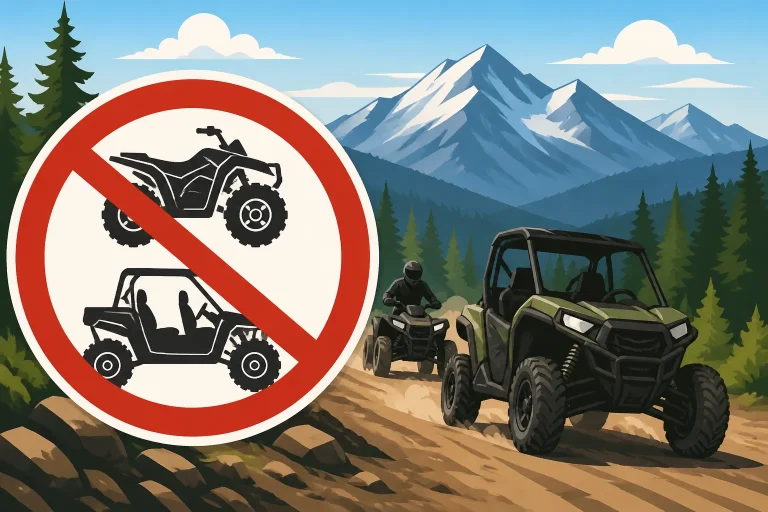
Montana Fish, Wildlife & Parks says it is strictly illegal to hunt from an OHV or another motorized vehicle unless you have a special-use permit, such as a Permit to Hunt from a Vehicle for disabled hunters. That exception matters, but it does not make an ordinary trail pass or registration a hunting permit.
Montana Fish, Wildlife & Parks also prohibits using an OHV to concentrate, drive, rally, stir up, corral, or harass wildlife. In practical terms, don’t use a machine to push animals toward another hunter, flush them from cover, surround them, or interfere with their movement. A hunting purpose does not make those actions acceptable just because the machine stays on a trail.
The distinction is about what you are doing with the machine, not only where you ride it. Riding to a lawful destination and using the OHV to pursue or manipulate wildlife are different activities. If a plan involves leaving the route to approach an animal, positioning the machine to influence its movement, or taking a shot from the vehicle, stop and confirm the rules before proceeding. Do not assume that a road, trail, or vehicle-accessible spot creates an exception.
| Situation | What to keep in mind |
|---|---|
| Riding an OHV on public land or trails | Display the required permanent registration decal in a conspicuous location, according to Montana Fish, Wildlife & Parks. |
| Riding on a paved highway | The OHV must be street legal and have a license plate attached to the rear, according to Montana Fish, Wildlife & Parks. |
| Hunting from an OHV or another motorized vehicle | Prohibited unless you have a special-use permit, according to Montana Fish, Wildlife & Parks. |
| Using an OHV around wildlife | Do not use it to concentrate, drive, rally, stir up, corral, or harass wildlife, according to Montana Fish, Wildlife & Parks. |
| Planning a vehicle-based hunt under an exception | Confirm that the special-use permit applies to your situation; an OHV trail pass is not that permit. |
A general OHV permit addresses machine access, not every activity you might do while riding. For public-land riding details, see Montana Permit Rules on Public Land. If you are unsure whether a route or parcel is open to motorized use, check the applicable land manager’s current directions rather than relying on what appears rideable.
This is especially important during hunting season, when a route may be used by hunters, other riders, and people on foot. Stay on routes where motorized use is allowed, respect posted restrictions, and give wildlife room. If you are considering an exception to the rule against hunting from a vehicle, confirm the permit requirements directly with Montana Fish, Wildlife & Parks before setting out.
Trail permits and hunting permissions are not interchangeable
Montana OHV paperwork can be easy to confuse because several forms of authorization may matter on the same trip. A registration or trail permit relates to operating the machine under the applicable OHV rules. A special-use permit for hunting from a vehicle is a separate matter. Having one does not establish that you have the other.
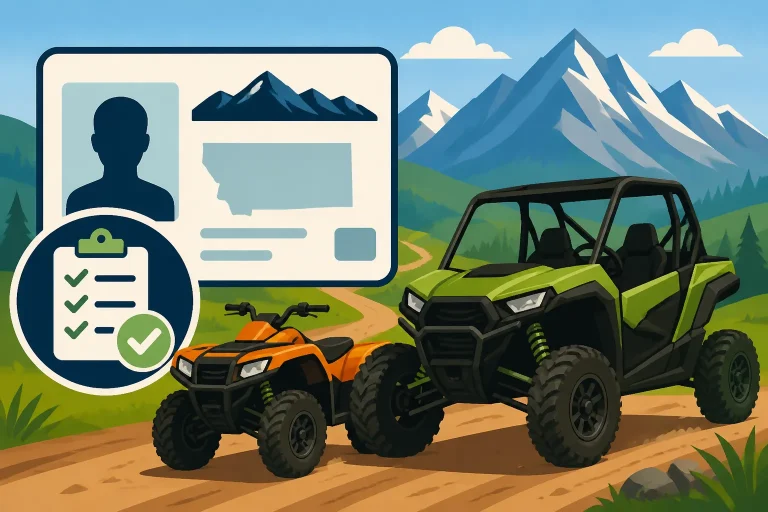
Montana Fish, Wildlife & Parks requires a permanent registration decal to be displayed conspicuously when an OHV is ridden off-highway on public land or trails. That decal is an operating requirement; it does not authorize hunting from the machine or wildlife harassment. If you are preparing for public-land riding, What Montana Riders Need Before They Ride offers a related starting point, while Montana Rules on Private Land addresses a different access setting.
Permit categories also depend on residency. Montana Fish, Wildlife & Parks lists the Resident OHV Trail Pass at $20 and the Nonresident Temporary Use Permit at $35, as of November 2026. Those amounts concern OHV access paperwork, not a special-use permit to hunt from a motorized vehicle. Check Montana Fish, Wildlife & Parks for current requirements and the permit that applies to your machine and trip.
The rules can change according to where you ride and how the vehicle is used. A resident exemption for a machine used exclusively on private property does not erase the separate restrictions on hunting from a motorized vehicle. Montana Fish, Wildlife & Parks describes that private-property exemption as applying to fees, registration, permits, and titles for resident owners whose OHV use is exclusively on private property. If your route includes public trails or land, do not assume the private-property exemption applies to that part of the ride.
A sensible way to sort out the paperwork is to ask two different questions:
- May this machine be operated here? Confirm the registration, trail pass, and access rules for the location and type of riding.
- May I hunt from or use the machine in this way? Confirm whether a special-use permit is required and whether you qualify for the applicable exception.
If either answer is unclear, resolve it before the trip. A permit for one purpose should not be treated as permission for another. For more on what can happen when a machine is used outside authorized access, see Montana Trespass Law for Riders. For enforcement-related questions, What a Montana Officer Asks For may also help you think through what documentation to have available.
Plan the route and machine use before the hunt
Before leaving, identify the roads and trails you intend to use, then confirm that motorized travel is allowed on them. A route shown on a map, visible on the ground, or commonly used by other riders is not enough by itself to establish that it is open. Check the current information from the land manager responsible for the route. If the trip involves national forest or BLM land, the related resources Montana Rules on Forest Service Roads and Montana Rules on BLM Roads can help focus your questions.
Keep the riding purpose distinct from the hunting purpose. If the plan is to travel to camp or a lawful access point, avoid using the OHV to pursue, flush, or direct wildlife along the way. If a hunt depends on operating or shooting from a motorized vehicle, confirm the special-use permit requirement with Montana Fish, Wildlife & Parks before making plans. Don’t treat a regular OHV permit, a street-legal plate, or landowner permission as a substitute for the hunting-specific authorization.
Also consider whether any part of the route uses a paved highway. Montana Fish, Wildlife & Parks says an OHV ridden on a paved highway must be street legal and have a license plate attached to the rear. The agency also requires at least one properly functioning stop lamp and a rearview mirror for an OHV operated on a paved highway. These are highway-operation requirements; they do not change the restrictions on hunting from a vehicle.
The details for motorcycles and quadricycles are not identical to the general OHV rules. Montana Fish, Wildlife & Parks says motorcycle operators on public roads must have a motorcycle endorsement on their driver’s license. It also requires people under 18 who operate or ride a motorcycle or quadricycle on streets or highways to wear a helmet meeting DOT or Snell standards. If you are using a motorcycle or quadricycle, confirm the requirements for that specific machine rather than assuming every OHV rule applies in the same way.
Keep the same distinction in mind when choosing gear. A helmet, communication device, or other item you buy through a retailer such as Amazon may help with preparation, but equipment does not change where you may ride or whether you may hunt from a vehicle. Use official land and wildlife rules to settle those questions.
For a trip connected to a camp or harvest, Riding to a Montana Elk Camp and Packing Out an Elk by OHV are related topics to review. The title of a resource does not replace checking the route, access conditions, and applicable wildlife rules for your own plan. If the route passes through private property, get the necessary access permission; permission to cross land still should not be confused with permission to use a machine to affect wildlife.
A practical pre-ride check
Use this checklist before a hunting-season ride. It is designed to catch the common mistake of treating all permits and permissions as if they cover the same thing.
- Confirm the route. Check that each road or trail is open to motorized use and identify any route restrictions that affect your plan.
- Check the machine paperwork. Make sure the registration decal or other applicable OHV authorization is in order for the kind of riding planned.
- Separate access from hunting authorization. If you intend to hunt from a motorized vehicle, confirm whether you need a special-use permit and whether it applies to you.
- Remove wildlife interference from the plan. Do not use the OHV to concentrate, drive, rally, stir up, corral, or harass wildlife.
- Check highway requirements if relevant. If the route includes a paved highway, confirm that the OHV meets the applicable street-legal requirements.
- Ask about unclear situations before departure. Contact Montana Fish, Wildlife & Parks or the relevant land manager rather than interpreting a general trail permit as permission for a hunting activity.
A short planning conversation can prevent a costly misunderstanding. Describe the machine, the location, the intended route, and exactly how you plan to use the vehicle. Broad questions such as “Can I take my OHV hunting?” may not capture the key distinction. Be specific about whether you are riding to a destination, traveling on a public route, or proposing to hunt from the vehicle.
If the plan changes in the field, reassess it before acting. A route that leads closer to wildlife does not create permission to use the machine to influence the animals. If you cannot confirm that a proposed activity is allowed, leave the vehicle out of that activity and seek an authoritative answer before trying it.
Sources
- Montana Fish, Wildlife & Parks — ACTIVITIES :: Off-Highway Vehicles | Montana FWP (checked November 3, 2026)
- Montana State Parks — ohv-brochure_2021_final.pdf (checked November 3, 2026)
Disclaimer
This article is for general informational purposes only and does not constitute professional advice. Laws, prices and regulations vary by location and change over time. Consult a qualified professional for guidance on your specific situation.