Registration That Ends When You Sell the Machine
One of the most common points of confusion for both buyers and sellers of ATVs and UTVs in Montana revolves around registration. Many folks assume that once a machine is registered, that registration simply "goes with" the vehicle to its new owner. Unfortunately, that's not how it works here in the Treasure State, leading to frustrating delays and sometimes even penalties if you're not prepared. This guide will walk you through exactly what happens to your Montana OHV registration when you sell your machine and what both parties need to do to ensure a smooth, legal transaction.
The Montana OHV Registration System: An Overview
Let's start by clarifying how Montana approaches off-highway vehicle (OHV) registration in the first place, because it's a little different from how passenger vehicles are handled. Many states have annual renewals or multi-year registrations that stay with the vehicle. Here, we have a unique system designed to simplify things in the long run, but it can cause a head-scratcher when a sale happens.
Permanent Registration for Residents
For Montana residents, many OHVs qualify for a [Montana's One-Time Permanent OHV Registration]. This sounds fantastic, doesn't it? A one-and-done deal, and you never have to think about it again! And for as long as you own that particular machine, it largely is. You pay a specific fee, you get a registration, and you're good to go on public lands and designated routes. This permanent registration means you won't be heading back to the county treasurer's office every year, which is a real time-saver for folks who just want to hit the trails. It covers the machine for its entire lifespan, as long as the original owner keeps it. It's a system designed for convenience, aimed at reducing administrative burden on the state and on OHV enthusiasts alike.
The Role of the County Treasurer
When you register your OHV, whether it's a new purchase or an out-of-state machine you're bringing in, you'll be dealing with your local county treasurer's office. This is the hub for all things registration and titling for vehicles in Montana, including your quad or side-by-side. They process the paperwork, collect the fees, and issue your registration and decals. While the registration itself might be permanent for the owner, the transaction at the treasurer's office is where the details of ownership are tied to that specific registration number. Understanding that this office is your go-to resource can save you a lot of guesswork. You can learn more about this process by looking into [Montana County Treasurer OHV Registration].
Why a Montana Registration Does Not Follow the Machine
This is the core concept that often trips people up: [Why a Montana Registration Does Not Follow the Machine]. Unlike a car's license plates, which might stay on the vehicle in some states, a Montana OHV registration is not "attached" to the machine itself in a way that transfers automatically with ownership.
Registration Is Tied to the Owner, Not the Vehicle
The key distinction in Montana is that the OHV registration is largely a record of you as the owner, and your legal permission to operate that specific machine on public lands. When you register an ATV or UTV, the state records your name, address, and the machine's Vehicle Identification Number (VIN). This creates a unique link. It's not just a permit for the machine; it's a permit for you to operate your machine. Because of this personal tie, when you sell the machine, that personal permission essentially expires for the seller. The new owner, being a different individual or entity, needs to establish their own, new permission by registering it themselves.
What Permanent Registration Actually Means
The term "permanent registration" can be misleading if you're not familiar with Montana's specific system. It means permanent for the original owner. It doesn't mean that the physical decal and paperwork are valid for the machine no matter who sits behind the handlebars. Think of it like a personalized pass to a national park that you bought for the year. That pass is valid for your entry. If you give your friend your car and they go to the park, they still need their own pass, even if your pass is "valid" for your car. The same principle applies here. When the machine changes hands, the new owner needs to begin a fresh registration process to establish their own "permanent" registration. If you want a deeper dive, check out [What Permanent Registration Actually Buys You].
What Happens When You Sell Your Machine?
So, you've found a buyer for your trusty quad or side-by-side. Congratulations! But now what about that registration you've held onto for so long? It's important to understand your responsibilities as the seller to avoid any future headaches.
Your Registration Becomes Invalid
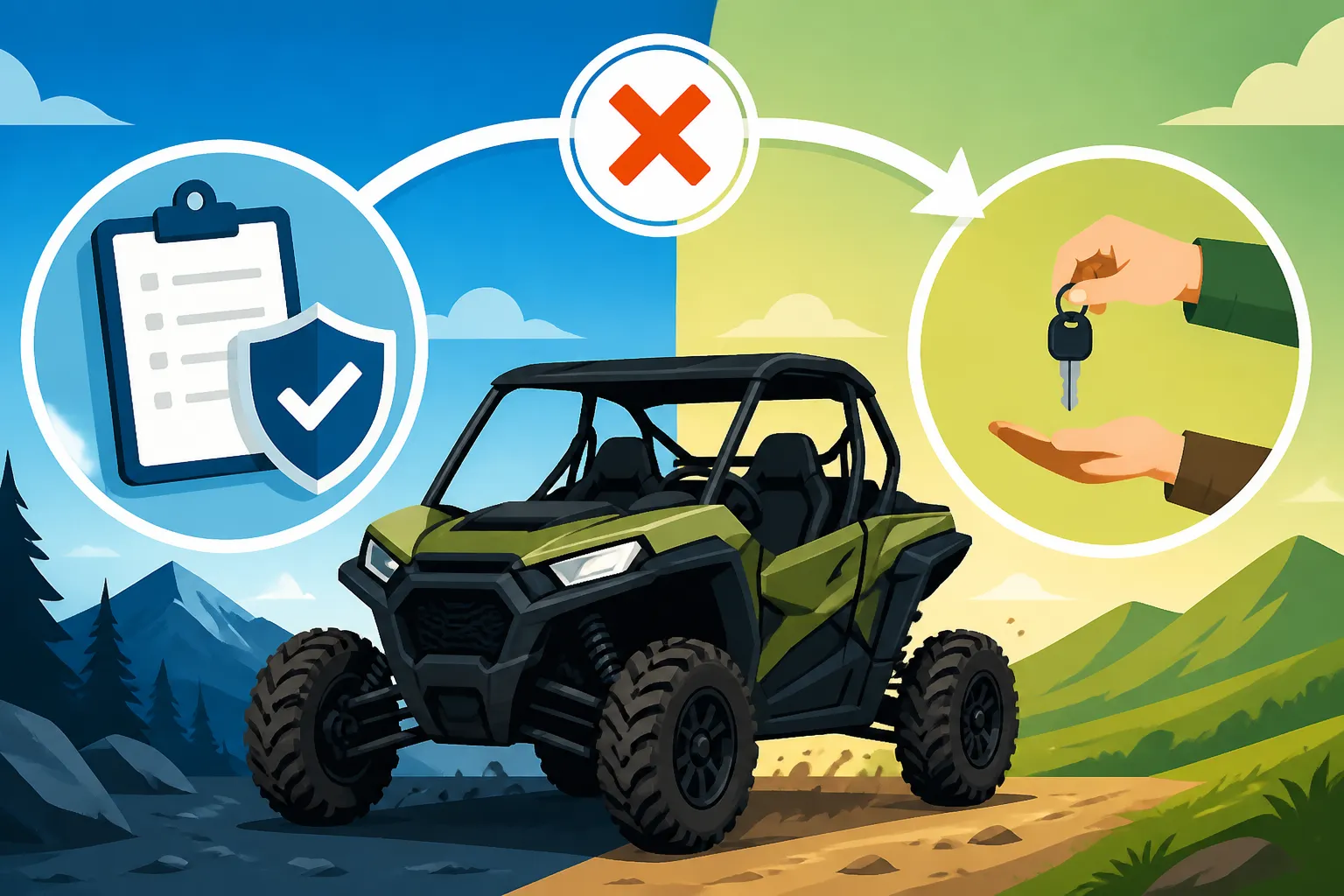
The moment you sell your ATV or UTV, the registration that you obtained becomes invalid for that machine. This is a crucial point because it means the new owner cannot legally use your old registration. The physical decal on the machine, the one you proudly affixed, is no longer valid proof of registration once the machine is out of your possession. It’s Registration That Ends When You Sell the Machine, plain and simple. This system is in place to ensure that current ownership is accurately reflected in state records, which is important for everything from trail management to law enforcement.
Seller's Responsibilities After the Sale
As the seller, your main responsibility, beyond signing over the title, is typically to remove the old registration decals from the machine. This helps prevent any confusion for the new owner or for law enforcement officials. While Montana doesn't have a formal "notify the MVD that you sold it" process for OHVs like it does for cars, ensuring the buyer takes the title and registers it is ultimately in your best interest. Make sure you provide a clear [What a Montana Bill of Sale Should Say] and retain a copy for your records. Using a reliable template, perhaps from a resource like LawDepot, can help ensure all the necessary details are included and legally sound, protecting both parties. This documentation is your proof that the machine is no longer your responsibility.
Why a Sold Machine Loses Its Registration
The underlying reason for this non-transferability is to maintain a clean chain of ownership and accountability. If registrations simply transferred with the machine, it would be much harder for the state to track who is responsible for a particular OHV at any given time. Imagine if a new owner commits a violation on the trails using your old registration – that could potentially lead back to you! By making the registration tied to the individual owner, the system ensures that the person operating the machine is the one who is registered and accountable. This also applies when the machine is no longer yours; you are no longer liable for its operation in most cases. You can read more about this in [Why a Sold Machine Loses Its Registration].
New Owner Responsibilities: Getting Started
As the new owner, your journey begins immediately after the purchase. You can't just hop on the machine and hit the trails, even if it has an old decal on it. Your first stop, after shaking the seller's hand, should be the county treasurer's office.
Titling the Machine in Your Name
The very first and most critical step for any new OHV owner in Montana is to get the machine's title transferred into your name. The title is the definitive proof of ownership, and without it, you can't register the machine. The seller should provide you with a properly signed-over title. You'll take this, along with a [What a Montana Bill of Sale Should Say] and valid identification, to your county treasurer's office. This is where you officially become the recognized owner of the ATV or UTV. If you're wondering about the exact process, [Titling an OHV in Montana] covers it in detail. Ensure the VIN on the title matches the machine perfectly.
Re-Registering Your Newly Acquired OHV
Once the title is securely in your name, you can proceed with [Re-Registering a Machine You Just Bought]. You will apply for a brand-new registration. This will typically involve paying the necessary fees, which are often a one-time charge for the "permanent" registration. The county treasurer will process your application, and once approved, you'll receive a new registration card and fresh decals bearing your name and the machine's information. These new decals are what you'll affix to your OHV to show that it is legally registered under your ownership. The good news is, like the seller before you, this new registration should be permanent for you as long as you own that specific machine.
Documents to Bring to the County Treasurer
To make your trip to the county treasurer's office as smooth as possible, gather all necessary documents beforehand. This typically includes:
- The properly signed-over title from the seller.
- A bill of sale, especially important for proving the purchase price and date, and often required if the title doesn't clearly state the sale price. A template from a service like LawDepot can be quite helpful here to ensure you have all the necessary legal jargon.
- Your valid photo identification.
- Proof of residency in Montana (if applicable).
- The necessary funds for the titling and registration fees.
Being prepared with all the correct paperwork will save you a second trip and get you out on the trails faster. For a complete list, consult [Documents to Bring to a County Treasurer].
Here’s a quick overview of the key differences in responsibilities:
| Aspect | Seller's Responsibility | Buyer's Responsibility |
|---|---|---|
| Registration Status | Old registration becomes invalid. | Must obtain a new registration. |
| Decals | Remove old decals. | Affix new decals upon receipt. |
| Title | Sign over the existing title to the buyer. Provide a lien release if applicable. | Present signed title to county treasurer for transfer. |
| Bill of Sale | Provide an accurate bill of sale to the buyer. | Obtain a bill of sale as proof of purchase. |
| Fees | No further registration fees to pay. | Pay new titling and registration fees. |
| Accountability | No longer legally responsible for machine's operation. | Becomes legally responsible for machine's operation. |
Common Misconceptions and What to Watch For
The intricacies of OHV registration in Montana can lead to some common misunderstandings. Knowing these pitfalls can save you time, money, and potential legal trouble.
The "Permanent" Decal Confusion
As discussed, the biggest misunderstanding comes from the "permanent" nature of the registration. Many people see the decal and assume it's like a brand on the machine that never changes. However, as we've clarified, it's permanent for the original owner. If you buy a used machine and it still has the old owner's decal, do not assume you are good to go. That decal is legally useless to you. You are required to get your own new registration and decal. Ignoring this can lead to fines for an unregistered OHV. Penalties can be significant, so don't risk it; ensure your machine carries your current, valid registration. You can learn about the consequences in [Penalties for an Unregistered OHV in Montana].
The Importance of a Clean Title
While registration is non-transferable, the title is paramount. Always ensure you are receiving a clear, properly signed-over title from the seller. A title with a lien that hasn't been released, or one that's been lost or damaged, can severely complicate your ability to register the machine. Never buy an OHV without a title, or at least a very clear understanding of how to obtain a [Bonded Title for an ATV in Montana] if the situation warrants it. The title is your legal proof of ownership, and without it, you'll be hitting a major roadblock at the treasurer's office. You want to make sure the VIN on the title matches the machine perfectly; otherwise, you'll be looking into [Fixing a Wrong VIN on a Montana Title].
Avoiding Legal Pitfalls for Both Parties
For sellers, failure to remove old decals might lead to confusion but usually doesn't create major legal issues beyond that. However, for buyers, operating an OHV with the previous owner's registration is akin to operating an unregistered vehicle. This can result in citations and fines. Both parties should retain copies of the bill of sale for their records. For instance, if you used a LawDepot bill of sale, keep that document safe. This document serves as a record of the transaction date, purchase price, and confirms the transfer of ownership. It protects the seller by proving they no longer own the machine, and it protects the buyer by proving their ownership before they've had a chance to get the title and registration officially transferred.
Preparing for the Sale: Your Checklist
Selling an OHV, especially one you've enjoyed for years on Montana's incredible trails, can be bittersweet. Make sure the paperwork is as smooth as the trails you've ridden.
Gathering Your Documents
Before you even list your ATV or UTV, make sure you have all your ducks in a row. The absolute must-have document is your original title, free of any liens. If you have any questions about [Proof of Ownership for a Montana Title], now is the time to confirm everything. If your title is lost, you'll need to apply for a replacement well in advance of the sale. Having all this paperwork ready will make the transaction much faster and instill confidence in potential buyers. Also, consider having a bill of sale template prepped. Resources like LawDepot can provide customizable templates that fit Montana's requirements, making sure you don't miss any critical clauses.
Finalizing the Bill of Sale
A comprehensive bill of sale protects both the buyer and the seller. It should include the full names and addresses of both parties, the date of sale, the purchase price, and a detailed description of the OHV, including the VIN, make, model, and year. It's also a good idea to include a statement that the machine is sold "as-is, where-is" if that's the agreement, to clearly define the responsibilities after the sale. Both parties should sign and date the document, and each should retain a copy. This simple piece of paper is invaluable proof of the transaction and critical for the buyer's new registration.
Removing Decals and Notifying Authorities (If Applicable)
Once the sale is complete and the title is signed over, your final physical step as a seller is to remove the old registration decals from the ATV or UTV. This visually signifies that your registration is no longer valid for that machine. While there's no formal notification system for the MVD about an OHV sale like there is for motor vehicles in some states, retaining a copy of the bill of sale for your records is sufficient proof of divestment. For the buyer, this makes it clear they need to get their own new decals and registration. This prevents any ambiguity and ensures the new owner takes the proper steps for their own [Montana OHV Decals and Rear Placement].
Disclaimer
This article is for general informational purposes only and does not constitute professional advice. Laws, prices and regulations vary by location and change over time. Consult a qualified professional for guidance on your specific situation.