A Montana Registration in Two Names
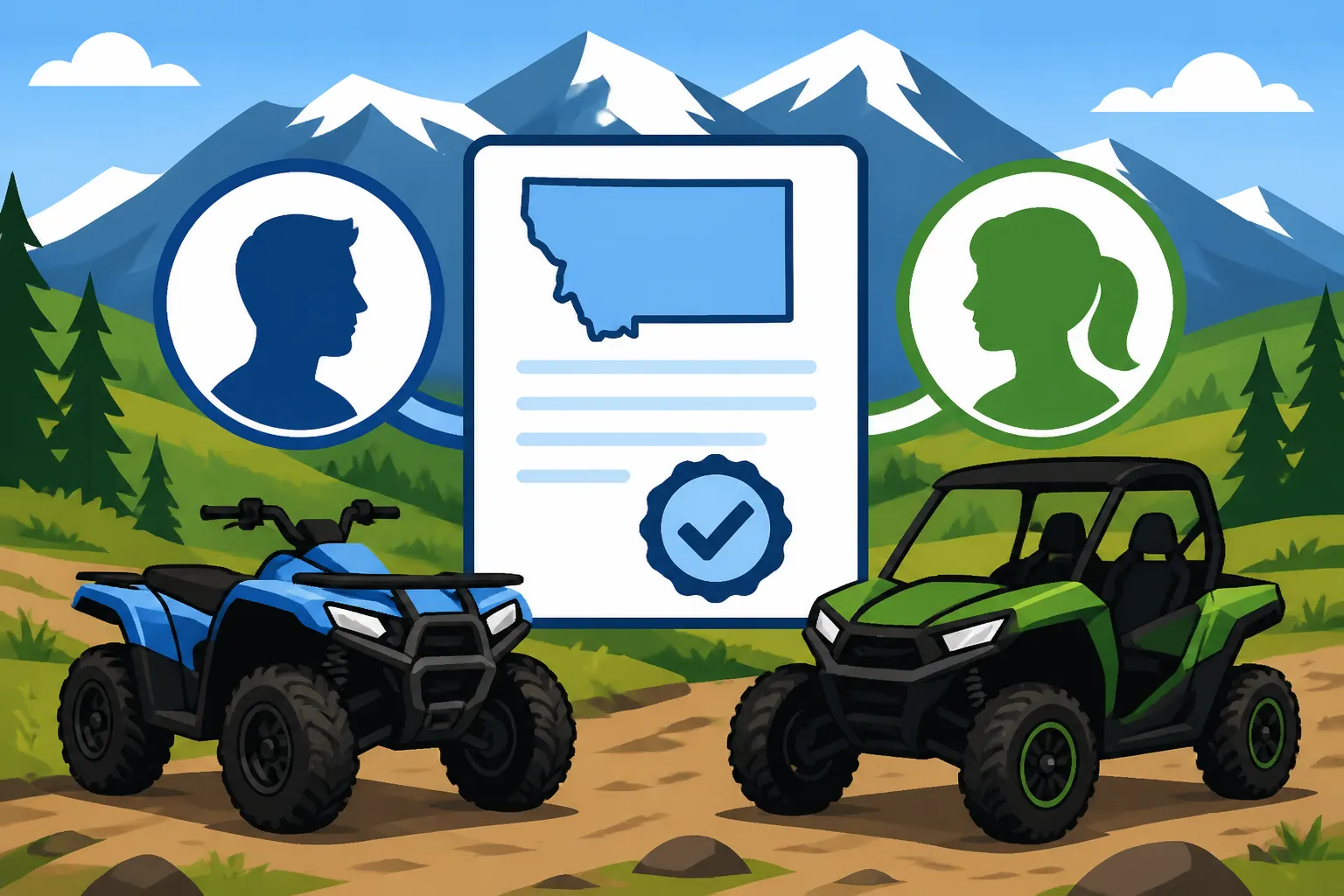
It's an exciting time when you and a partner, a spouse, or even a good friend decide to invest in an ATV or UTV together here in Montana. You're dreaming of epic rides through the Lolo National Forest or tackling the trails near Shepherd Ah Nei. But then the practical questions hit: how exactly do you handle the registration when two people own the machine? This guide will walk you through the nuances of putting multiple names on a Montana OHV registration, explaining the process, the implications, and what to consider before you head to the county treasurer.
Why Consider Two Names on Your Montana OHV Registration?
When you're buying a side-by-side or an ATV with another person, whether it's for shared adventures, splitting costs, or simply as a joint asset, the question of whose name goes on the paperwork inevitably comes up. Many folks naturally assume both names should be on the registration, and for good reason. It can offer clarity and protection for all parties involved, ensuring that ownership is equally recognized from the start.
Sharing the Investment and Responsibilities
Often, the decision to put two names on a registration stems from a shared financial investment. Maybe you and your spouse bought a new Polaris Ranger as a joint recreational vehicle, or perhaps you and a buddy went in on a used Can-Am Defender for hunting season. When both parties contribute financially, having both names on the official documents, like the title and registration, reflects that shared commitment. It signifies that both individuals have a vested interest in the machine, and ideally, a shared responsibility for its care, maintenance, and safe operation. It's a tangible way to say, "This is ours."
Beyond the financial aspect, joint registration can also imply shared responsibility for things like maintenance schedules, insurance, and even storage. If something goes wrong, or if there's a question about who is responsible for a repair bill, having both names on the paperwork sets a foundational understanding. It’s a way to avoid potential misunderstandings down the line, especially when planning for future costs or deciding how the machine will be used.
Planning for the Future: Joint Ownership Benefits
Considering future scenarios is a crucial, though sometimes overlooked, aspect of joint registration. Life happens, and thinking about what would occur if one owner wants to sell, or, more somberly, if one owner passes away, can save a lot of heartache and legal wrangling later. Montana recognizes different forms of joint ownership, and the way names are listed on a title can have significant implications.
For example, if you register the machine as "Joint Tenants with Right of Survivorship," it means that if one owner dies, their share automatically passes to the surviving owner without needing to go through the often lengthy and complex probate process. This can be a huge relief during an already difficult time. Conversely, if it's registered as "Tenants in Common," each owner's share can be bequeathed to their heirs, which might be what some families prefer but requires more planning. Understanding these distinctions is critical, and making the right choice at the time of registration is a form of proactive planning for all future eventualities. While the registration itself doesn't always dictate the deep legal ownership, it often follows the title, which is where these designations are formally made. You might find it helpful to review [Transferring a Montana OHV After an Owner Dies] for more details on this.
How to Register an OHV in Montana With Multiple Owners
The process for registering an OHV with multiple owners in Montana is very similar to registering it with a single owner, but with specific requirements for each individual listed. You'll primarily be dealing with your local county treasurer's office, and they'll need documentation from all parties. The key is ensuring that all required information and signatures are present for everyone who will be listed on the registration.
Gathering the Necessary Documents for All Parties
When you're heading to the county treasurer, it's not just about one person's paperwork. You'll need to gather everything for each individual who will be listed as an owner. This typically includes:
- Proof of Ownership: This is usually the manufacturer's certificate of origin (MCO) for a new machine, or a properly assigned title for a used one. If you're coming from a state that doesn't issue titles for OHVs, you might need a bill of sale and previous registration. The MCO or title needs to be signed off by the previous owner, if applicable, and prepared for transfer. Without clear proof of ownership, the treasurer's office simply cannot proceed, regardless of how many names are involved. Make sure to understand [Proof of Ownership for a Montana Title].
- Identification: Each owner will need to present a valid form of photo identification, such as a driver's license or state ID card. This is crucial for verifying identities and ensuring the correct names are recorded.
- Bill of Sale: While not always strictly required if you have a clear title, a detailed bill of sale signed by both the buyer(s) and seller can strengthen your proof of ownership, especially if there are any discrepancies or if the machine is older. A well-written bill of sale should clearly list all buyers' names. You can find more information on [What a Montana Bill of Sale Should Say].
- Application for Title and Registration: This form will be provided by the county treasurer's office, or sometimes available for download online. Each owner will typically need to sign this form, acknowledging their intent to be listed on the title and registration. This is where you'll indicate the type of joint ownership (e.g., joint tenants, tenants in common) if you're titling it with those distinctions.
It's always a good idea to call your specific county treasurer's office ahead of time. Offices in [Registering an ATV in Yellowstone County], [Registering an OHV in Gallatin County], or [Registering an OHV in Flathead County] might have slightly different local procedures or preferred forms, so a quick phone call can save you a trip.
The Role of the County Treasurer's Office
The county treasurer's office is your primary stop for getting your OHV registered in Montana. They are the gatekeepers of the official records and will process all the paperwork. When you arrive with multiple owners, they will review all the documents to ensure they are complete and accurate for each person.
- Verification of Identities and Signatures: They will verify the identification of all listed owners and ensure that all required signatures are present on the application forms and any other ownership documents. If one owner cannot be present, you might need a notarized power of attorney, allowing another owner to sign on their behalf. This is a common hurdle for couples or friends who might have busy schedules.
- Processing Fees: You will pay the applicable fees for titling and registration. Montana offers a [Montana's One-Time Permanent OHV Registration] option, which is a popular choice for many residents. These fees cover the administrative costs of processing your paperwork and issuing the new title and registration. While the exact amounts can change, the treasurer's office will have the most current figures.
- Issuance of Registration and Decals: Once everything is approved and fees are paid, they will issue your temporary registration and provide you with your OHV decals. The official title will typically be mailed to the primary owner listed on the application a few weeks later. It's important to keep a copy of your temporary registration with you while you wait for the permanent documents. Remember that [What Permanent Registration Actually Buys You] is primarily trail access and a one-time fee.
Implications of Joint Ownership on Your Montana OHV
Joint ownership of an OHV in Montana carries various implications that extend beyond just splitting the initial purchase price. These implications can affect how you manage the machine, how you sell it, and what happens in unforeseen circumstances like divorce or death. Understanding these aspects upfront can prevent complications and ensure a smoother ownership experience.
Selling a Jointly Owned OHV
When it comes time to sell an OHV that's registered in two names, the process generally requires the cooperation of both owners. This means:
- Both Signatures Required: Typically, both owners listed on the title will need to sign off on the title transfer when selling the machine. This is a protective measure to ensure that one owner cannot unilaterally sell an asset that is jointly owned. Imagine one person deciding to sell the side-by-side without the other's knowledge or consent – joint signatures prevent this.
- Consent and Agreement: Before listing the machine for sale, it's wise for both owners to discuss and agree on the selling price, the terms of the sale, and how the proceeds will be divided. While the registration itself doesn't dictate these personal agreements, it sets the stage for mutual consent.
- Dealing with the Title: The physical title document, when it arrives from the state, will likely have both names on it. When selling, you'll transfer this title to the new owner, and both original owners will need to sign the "assignment of title" section. Without both signatures, the new owner may struggle to [Titling an ATV at a Montana County Treasurer] in their own name, leading to headaches for everyone involved.
If, for some reason, one owner is unavailable to sign, a notarized power of attorney might be an option, but this needs to be discussed well in advance. Clear communication and mutual agreement are paramount to a smooth sale process for jointly owned machines.
Navigating Life Changes: Divorce and Death
Unfortunately, life isn't always smooth sailing, and events like divorce or the death of an owner can complicate jointly owned property. Planning for these scenarios, even if they seem unlikely, is part of responsible ownership.
- Divorce or Separation: In the event of a divorce or separation, the jointly owned OHV becomes part of the marital or shared assets that need to be divided. This usually means one person buys out the other's share, or the machine is sold, and the proceeds are split. If one owner wants to keep the machine, the other's name must be officially removed from the title and registration. This process involves the person taking full ownership applying for a new title in their sole name, often requiring the other party to sign off their interest. Removing a name can be a detailed process; you might want to look into [Removing a Name After a Split] for guidance.
- Death of an Owner: As mentioned earlier, the type of joint ownership designated on the title is critical here. If the title explicitly states "Joint Tenants with Right of Survivorship," the surviving owner automatically becomes the sole owner without needing probate court intervention for that specific asset. However, if it's "Tenants in Common," the deceased owner's share may need to go through probate as part of their estate. This means the ownership could pass to heirs, who then might need to negotiate with the surviving co-owner. Having a clear plan or an explicit ownership agreement can make these difficult times a little easier. For such situations, drafting a formal agreement using a service like LawDepot could help clarify intentions beyond just the title itself. This could specify how the machine should be handled, protecting both parties and their families. For a general understanding, [Inheriting an ATV in Montana] provides further context.
When Two Names Might Not Be the Right Fit
While joint registration offers many benefits, it's not always the best solution for every situation. There are specific scenarios where putting two names on the Montana OHV registration could create more complications than it solves, or where an alternative arrangement might be more practical. It's crucial to consider these possibilities before committing to joint ownership.
Situations Leading to Potential Disagreements
Joint ownership, by its very nature, implies shared decision-making. While this works wonderfully when all parties are on the same page, it can become a source of contention if opinions diverge.
- Unequal Use or Maintenance: What if one owner uses the ATV far more often than the other, or causes more wear and tear? Or what if one person is diligent about maintenance, and the other is not? These disparities can lead to resentment and arguments over who pays for repairs or who is responsible for overdue service. The registration itself won't solve these interpersonal dynamics, but the shared ownership status can bring them to the forefront.
- Disagreement on Modifications or Upgrades: Many OHV enthusiasts love to customize their machines. Imagine one owner wanting to add a lift kit and bigger tires, while the other prefers to keep it stock to save money. Or perhaps one wants to accessorize for hunting, while the other wants it set up for trail riding. When two names are on the registration, any significant changes or investments in upgrades should ideally be agreed upon by both owners. Without a clear understanding, these differences can quickly escalate into disputes.
- Financial Discrepancies: Even if the initial purchase was split evenly, ongoing costs like insurance, fuel, or unforeseen repairs can create friction. If one owner is consistently unable or unwilling to contribute their share to these expenses, the other owner might feel burdened. While the registration legally binds them as owners, it doesn't enforce individual financial contributions beyond the initial purchase. In such cases, a separate written agreement, perhaps drafted with a service like LawDepot, outlining financial responsibilities for maintenance and upgrades could be invaluable.
Alternatives to Joint Registration
If the potential for disagreements or the complexities of future scenarios outweigh the benefits of joint registration, there are other ways to manage shared use or investment in an OHV.
- Single Owner with a Formal Agreement: One common alternative is to have only one name on the official title and registration, but with a robust, written agreement between all parties outlining the terms of use, financial contributions, responsibilities, and future sale or transfer. This agreement can specify who pays for what, how much usage each person gets, and what happens if the machine needs major repairs or if one party wants out. This approach keeps the official paperwork simple while still protecting everyone's interests. Using a legal document service like LawDepot can help you create a comprehensive and legally sound co-ownership agreement that addresses all these specific concerns without complicating the state's registration process.
- Registering Under a Business Entity: For some, especially those using OHVs for commercial purposes, ranching, or with a larger fleet, registering the machine under a business entity (like an LLC or corporation) might be a better fit. This separates the machine from personal assets and can offer certain legal and tax advantages, though it also comes with its own set of administrative requirements. This is a common path for those running guided tours or larger farming operations. For more on this, you might be interested in [Registering an OHV Under a Montana Business] or [Registering an OHV Under an LLC in Montana].
- Simple Lending/Borrowing Agreement: For very casual arrangements, where one person mostly uses the machine and another contributes occasionally, a simple lending agreement might suffice. This is typically less formal and might not involve equal financial investment beyond specific agreed-upon contributions. However, it offers less legal protection for the non-registered party and should only be considered for very trusting relationships with clear communication.
Here's a quick comparison of common ownership scenarios:
| Ownership Structure | Title / Registration | Key Feature(s) | Implications for Sale/Transfer | Implications for Death |
|---|---|---|---|---|
| Single Owner | One individual's name | Simplest administrative process. | Owner signs title over to buyer. | Machine becomes part of owner's estate, subject to probate/will. |
| Joint Tenants (with Survivorship) | "Name A OR Name B" or "Name A AND Name B, JTWROS" | Automatic transfer to surviving owner upon death. | Both owners typically need to sign off on sale. | Surviving owner automatically inherits full ownership. |
| Tenants in Common | "Name A AND Name B, Tenants in Common" | Each owner holds a distinct, transferable share. | Both owners typically need to sign off on sale. | Deceased owner's share passes to their heirs, not automatically to co-owner. |
| Business Entity (LLC/Corp) | Business name | Machine is an asset of the business; separation from personal assets. | Business entity (through authorized agent) sells the machine. | Ownership by business entity continues; management passes according to business's operating agreement/bylaws. |
| Single Owner with Agreement | One individual's name (only) | Written agreement defines rights and responsibilities of non-registered parties. | Registered owner signs title over. Agreement governs distribution of proceeds to non-registered parties. | Machine becomes part of registered owner's estate. Agreement determines what happens to non-registered parties' interests. |
Choosing the right structure depends heavily on your specific relationship with the co-owner, the intended use of the OHV, and your comfort level with potential future legal and financial complexities. Always weigh the pros and cons carefully, and don't hesitate to seek advice on formal agreements if needed.
Disclaimer
This article is for general informational purposes only and does not constitute professional advice. Laws, prices and regulations vary by location and change over time. Consult a qualified professional for guidance on your specific situation.