Why Montana Plates Draw Attention Elsewhere
It's a common story: you've found the perfect ATV or UTV, maybe even at a great price, but then the thought of sales tax, annual registration fees, and the general hassle of dealing with your home state's DMV starts to weigh on you. Many off-highway vehicle (OHV) enthusiasts, especially those from states with high sales taxes or complex registration processes, have heard whispers about Montana's seemingly lax rules. This guide will delve into why Montana vehicle registrations, particularly for ATVs and UTVs, often catch the eye of law enforcement and tax authorities in other states, and what that can mean for out-of-state owners.
The Allure of Montana Registration for Out-of-Staters
Let's be honest, the thought of saving a significant chunk of change on a new or new-to-you side-by-side is incredibly appealing. Montana has built a reputation, whether deserved or not, as a haven for vehicle owners looking to bypass certain costs. For ATVs and UTVs, this often boils down to a few key factors that make Montana's system look incredibly attractive on paper.
No Sales Tax Allure
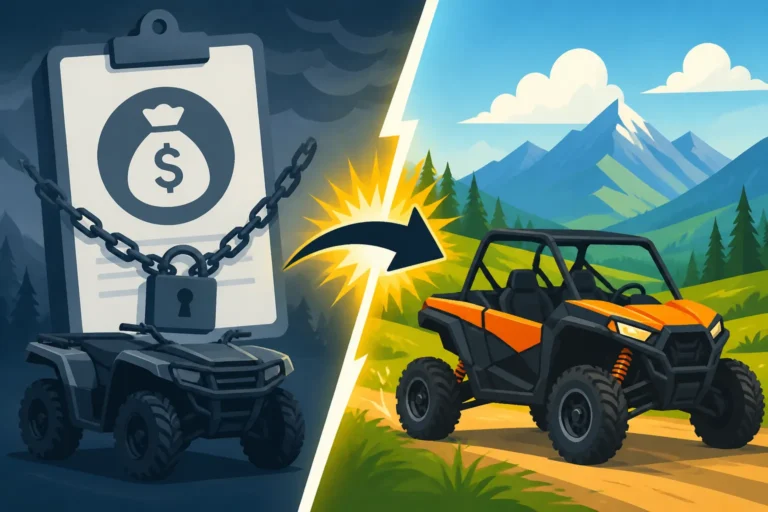
One of the biggest draws is Montana's lack of a general sales tax. This isn't just a small perk; for an expensive UTV, a 6-8% sales tax can add thousands of dollars to the purchase price. When you're dropping a substantial amount on a machine, avoiding that extra percentage can feel like winning the lottery. People quickly do the math, imagining those savings going into better accessories, more fuel for adventures, or even another machine. It’s a powerful motivator, and it's why many people start looking into the possibility of registering their OHV in Montana, even if they live far away. We've talked extensively about this in posts like [No Sales Tax on a Montana Machine Purchase] and [Why Montana Has No General Sales Tax].
Permanent Registration Appeal
Beyond sales tax, Montana offers what's often referred to as "permanent registration" for OHVs. This means a one-time fee, and you're done. No more annual renewals, no more stickers to update every year, no more worrying about mailing in forms or standing in line at the county treasurer's office. For folks used to yearly reminders and recurring costs, this "set it and forget it" system sounds like a dream. It simplifies ownership and eliminates a persistent administrative chore. The convenience is a huge draw, and it's easy to see why someone would want to take advantage of something like [Montana's One-Time Permanent OHV Registration] if they could.
The LLC Angle
For out-of-state residents, simply registering a vehicle in Montana isn't enough, as you generally need a Montana address to do so. This is where the Montana Limited Liability Company (LLC) comes into play. People create an LLC in Montana, then register their OHV under the LLC's name, which provides a legitimate Montana mailing address. The machine is technically owned by the Montana LLC, not the individual, allowing them to benefit from Montana's tax and registration structure. This strategy has become quite popular, and for many, it seems like a perfectly legal loophole. However, the legitimacy of this practice for out-of-state residents is where things get complicated, and it's a topic we've covered in depth with posts like [The Montana LLC and Why Out-of-State Buyers Use It].
The Red Flags for Other States
While the allure of Montana's system is strong, other states aren't blind to these tactics. Your home state, which relies on sales tax revenue and vehicle registration fees, has a vested interest in ensuring its residents pay their fair share. When they see a Montana-plated ATV or UTV consistently operating within their borders, it can raise a few eyebrows and signal potential tax avoidance.
Discrepancy in Residency
The most glaring red flag is often the discrepancy between where the vehicle is registered and where its primary operator lives. If you reside in, say, California, and your Polaris RZR is always parked in your driveway, trailered to local California riding areas, and routinely driven on California roads where permitted, but it sports a Montana plate, that's going to draw attention. It's a clear signal that the vehicle isn't genuinely based in Montana. Local law enforcement, or even just observant neighbors, might start to wonder why a machine that clearly lives locally is registered over a thousand miles away. This can initiate inquiries from state tax departments who are always on the lookout for lost revenue.
Expensive Machines, Low Tax States
The type of vehicle involved also plays a role. While a simple utility quad might not garner much notice, a brand-new, high-end side-by-side, costing upwards of twenty or thirty thousand dollars, registered through an LLC in Montana, is a flashing beacon. These are the machines where the sales tax savings are most substantial, and thus, where states have lost the most potential revenue. Tax authorities are particularly keen to investigate cases where significant amounts of tax might have been evaded. They understand that most people aren't going through the hassle of setting up an LLC and distant registration for a small, inexpensive machine.
Your Home State's Use Tax
Most states have what's called a "use tax." This tax is essentially a sales tax on items purchased outside the state but brought in for use within the state. The idea is to level the playing field for local businesses and prevent residents from avoiding sales tax by buying out of state. If you buy an OHV in Montana and avoid sales tax there, but then bring it back to your home state (which likely has a sales tax), your home state will often expect you to pay their equivalent use tax. This is where the "attention elsewhere" really comes into play. States like California, Washington, and Colorado are particularly aggressive in pursuing these unpaid use taxes. They know people try to bypass these taxes, and they have systems in place to identify potential scofflaws. You can read more about this in [Use Tax Your Home State Still Wants].
Here's a quick overview of why Montana's system is appealing and why it draws unwanted attention:
| Feature | Allure for Out-of-Staters | Reason for Out-of-State Scrutiny |
|---|---|---|
| Sales Tax | No sales tax on purchase, saving thousands on expensive OHVs. | Home state loses significant sales tax revenue. |
| Permanent Registration | One-time fee, no annual renewals, simplified ownership. | Suggests vehicle isn't primarily based in Montana. |
| LLC Structure | Provides a Montana "address" for registration purposes. | Often indicates an attempt to establish a legal fiction of residency. |
| Type of Machine | Higher savings on costly, new ATVs/UTVs. | High-value items draw more attention due to larger tax losses. |
| Physical Location | Machine is primarily used and stored outside Montana. | Visible operation in the home state without local registration. |
The Consequences of Getting Caught
So, what happens if your home state decides to investigate that Montana-plated side-by-side? It's rarely a slap on the wrist. The consequences can range from financial penalties to more severe legal troubles, turning those initial savings into a much larger, more stressful burden. It's important to understand that the perceived "loophole" can quickly become a very expensive trap.
Back Taxes and Penalties
The most immediate consequence is typically a demand for unpaid use taxes. Your home state will calculate the sales tax you would have paid if you had registered the machine locally, and then demand that amount. But it doesn't stop there. They'll also add significant penalties and interest, which can quickly multiply the original tax burden. Imagine buying a $20,000 UTV, saving $1,200 in 6% sales tax, only to be hit with a bill for $1,200 plus another $500-$1,000 in penalties and interest. Suddenly, that initial saving evaporates, and you're paying more than if you had simply complied from the start. These agencies are usually quite aggressive once they start an investigation, and they don't back down easily. For more on this, check out [Back Taxes and Penalties After an Audit].
Legal Repercussions Beyond Fines
Depending on your home state's laws and the specific circumstances, the consequences can go beyond just financial penalties. Deliberate tax evasion can be considered a criminal offense. While it might start with a civil demand for taxes, persistent non-compliance or a pattern of intentional deception could lead to more serious charges. States are becoming increasingly savvy at tracking down these vehicles, often using sophisticated data analysis or even tips from concerned citizens. Your home state may have laws about how long a non-resident vehicle can be operated within its borders before needing to be registered locally, often around 30 days. Ignoring these can lead to fines for illegal registration. We've seen how serious this can get in posts like [Felony Charges Over a Montana LLC Registration] and [States That Chase Montana-Plated Vehicles].
The Cost of the Montana LLC Itself
Let's not forget that setting up and maintaining a Montana LLC isn't free. There are initial filing fees, ongoing registered agent fees (because you need a physical address in Montana for the LLC, which is typically provided by a third-party service), and annual report fees. While these costs might seem minor compared to the sales tax savings on a very expensive machine, they add up over time. If you eventually decide to dissolve the LLC or register the machine in your home state, you've essentially paid extra for a temporary solution. Using services like LawDepot can help you generate the necessary legal documents for setting up an LLC, but the ongoing costs and complexities remain. You should always factor in [What a Montana LLC Costs to Set Up] when considering this route.
Avoiding Unwanted Attention
The goal isn't to discourage anyone from enjoying the great outdoors with an OHV, but to encourage responsible and compliant ownership. If you're considering a Montana registration for your ATV or UTV, it's crucial to understand the rules and weigh the risks honestly. There are legitimate reasons for a Montana LLC, but using one purely to avoid taxes in your home state is a risky proposition.
Understanding Your Home State's Rules
The absolute best way to avoid unwanted attention is to be fully informed about your own state's vehicle registration and tax laws. Each state has specific rules regarding new purchases, out-of-state purchases, and how long a non-resident vehicle can operate within its borders before requiring local registration. Many states, for example, have a "30-day rule" where if a vehicle is primarily garaged or operated in the state for more than 30 consecutive days, it must be registered there, regardless of where it was purchased or titled. Ignorance of the law is rarely an excuse that holds up. Take the time to visit your state's Department of Motor Vehicles (DMV) or Department of Revenue website and understand exactly what's required of you. This proactive approach can save you a lot of headaches, as explored in [How the 30-Day Rule Works in Your Home State].
When a Montana LLC is Legitimate
It's important to clarify that forming a Montana LLC is a perfectly legal and legitimate business practice for many reasons. If you genuinely own a business based in Montana, or you are a Montana resident, using an LLC to own your vehicles, including ATVs and UTVs, is entirely proper. The issues arise when an out-of-state resident creates an LLC in Montana solely to register personal vehicles there, with no other legitimate business purpose in the state. If your LLC has actual Montana-based operations, employees, or investments, and your OHV is genuinely used as part of that business in Montana, then the registration is less likely to draw negative attention from other states. The critical distinction lies in the true intent and primary situs (location) of the machine's operation.
Prioritizing Compliance
Ultimately, the peace of mind that comes with full compliance is invaluable. The stress of worrying about being caught, dealing with audits, and potentially facing hefty fines or legal action can quickly outweigh any initial financial savings. If you're a resident of a state with sales tax and annual registration fees, the most straightforward and least risky path is to pay those taxes and fees. Consider it part of the cost of ownership, just like fuel and maintenance. If you're setting up an LLC for a vehicle, ensure you fully understand the implications and consult with a legal professional who specializes in business and tax law in both Montana and your home state. While resources like LawDepot can help you get the foundational documents for an LLC, they don't replace expert legal advice on complex tax implications. Being upfront and compliant allows you to fully enjoy your Montana ATV & UTV adventures without the dark cloud of potential legal and financial repercussions hanging over your head.
Disclaimer
This article is for general informational purposes only and does not constitute professional advice. Laws, prices and regulations vary by location and change over time. Consult a qualified professional for guidance on your specific situation.