Strapping a Machine Down for a Montana Pass
It’s a familiar feeling for anyone who loves exploring Montana's wild trails on an ATV or UTV: that knot of worry in your stomach as you head over a steep mountain pass, with your expensive machine strapped onto a trailer behind you. Our roads, while breathtakingly beautiful, can be winding, bumpy, and unpredictable, and the last thing anyone wants is their quad or side-by-side shifting, rocking, or, heaven forbid, breaking loose. This guide is all about giving you the peace of mind and the practical know-how to secure your machine properly for any Montana journey, from a quick trip down the highway to a slow crawl over a remote pass.
Why Proper Securement is Non-Negotiable on Montana Roads
Montana's landscape is magnificent, but it's also rugged, and that ruggedness extends to many of our roads. Whether you're navigating I-90 over Homestake Pass or a gravel Forest Service road deep in the Lolo National Forest, you’re going to encounter bumps, turns, and elevation changes that demand absolute confidence in how your ATV or UTV is secured. This isn't just about avoiding a ticket; it's about safety, protecting your investment, and respecting other drivers on the road.
The Hazards of Shifting Loads
Imagine hitting an unexpected pothole on a backroad in the Bitterroot Valley, or having to brake suddenly as a deer leaps onto Highway 200 near Lincoln. If your machine isn’t properly secured, that sudden jolt or deceleration can cause it to lurch forward, backward, or sideways. Even a small shift can start a chain reaction. This movement can stress your trailer’s frame, weaken your tie-downs, and put immense pressure on your tow vehicle. In the worst-case scenario, an unsecured machine can break free, becoming a dangerous projectile on the highway, putting innocent lives at risk. It’s a terrifying thought, and one that proper securement can prevent.
Our mountain passes, like those crossing the Continental Divide, aren't just straight shots. They involve steep ascents and descents, sharp corners, and sometimes unpredictable weather conditions that can make driving even more challenging. A machine that’s only loosely tied down will fight against your trailer and your vehicle, affecting your handling and stability, especially around those tight bends that Montana is famous for. You’ll feel every wobble, and it can quickly drain your confidence on the road.
Protecting Your Investment
Beyond the immediate safety concerns, think about your valuable machine. An ATV or UTV isn't a cheap investment, and a rogue bump or sudden swerve on a twisty Montana pass can turn a minor jostle into significant damage – to the machine itself, your trailer, or even your tow vehicle. You could dent fenders, bend axles, crack plastics, or even damage critical engine components from excessive vibration and banging around. This isn't just a hassle; it’s an expensive repair bill that could have been avoided.
This is why having robust insurance is crucial, but also keeping all your essential paperwork in order is a good backup. If you're looking for reliable templates for important documents like a bill of sale for your machine or even for the trailer you’re using, resources like LawDepot can be incredibly helpful for keeping your affairs squared away. Imagine explaining to your insurer why your brand-new side-by-side now has a crumpled front end because it bounced off the front rail of your trailer. Documenting everything, from ownership to purchase, gives you peace of mind and a clear path forward if the unthinkable happens. [Insuring an ATV in Montana] is a vital step here, but so is diligent record-keeping.
The Right Tools for the Job: Straps, Chocks, and More
You wouldn’t go on a serious trail ride without the right gear, and the same goes for hauling your machine. The quality and type of your tie-downs and accessories can make all the difference between a secure load and a white-knuckle drive. Don’t skimp here; it’s an investment in safety and peace of mind.
Choosing Quality Tie-Downs
When it comes to tie-downs, you essentially have two main categories for securing an OHV: ratchet straps and cam buckle straps. For most ATVs and UTVs, especially when traversing significant distances or challenging roads, ratchet straps are your best friend. They allow for much greater tensioning, ensuring a super tight hold. Look for straps with a high working load limit (WLL), not just breaking strength. The WLL is the maximum weight a strap is designed to safely hold in daily use. For heavy UTVs, you'll want straps with a WLL of at least 1,000 to 1,500 pounds each, and you should use at least four of them.
Cam buckle straps are good for lighter loads or securing smaller items, but they just can't achieve the same tension as a good ratchet strap. Always inspect your straps before each trip: check for fraying, cuts, rust on the hooks or ratchets, and any signs of wear. A compromised strap is a dangerous strap. If you're buying a used side-by-side, it's a good idea to refresh all your tie-downs. You can learn more about securing your purchase by reading [Buying a Used Side-by-Side in Montana: The Paperwork].
Essential Accessories
Beyond the main tie-downs, a few key accessories can significantly improve your securement strategy:
- Wheel Chocks: These are absolute game-changers, especially for machines with independent suspension. Placing chocks in front and behind the tires on your trailer prevents the machine from rolling or rocking, even if your straps loosen slightly. They bear the brunt of any forward or backward momentum, providing an extra layer of stability that's invaluable on bumpy roads or during sudden stops.
- Soft Ties/Axle Straps: These are specialized straps designed to wrap around axles, A-arms, or through wheels, providing a strong anchor point without scratching or damaging your machine's frame or suspension components. They create a loop for your main ratchet strap's hook. This is far better than hooking directly onto a painted frame or a vulnerable plastic part, which can easily scuff or break.
- Corner Protectors: If your straps run over sharp edges on your trailer or machine, these can prevent fraying. They're small, inexpensive, and can drastically extend the life of your straps, especially if you're frequently hauling.
- Tarps or Covers: Not strictly for securement, but important for protecting your machine from road grime, rocks, and weather, especially during a long haul over dusty Montana roads or through a sudden mountain downpour. They keep your machine looking good and prevent unnecessary wear from the elements.
Here’s a quick comparison of strap types:
| Strap Type | Max Tension | Ideal Use | Pros | Cons |
|---|---|---|---|---|
| Ratchet Strap | High | Heavy ATVs/UTVs, long hauls, rough roads | Extremely secure, very tight hold | Can over-tighten, requires care to release, bulkier |
| Cam Buckle | Medium | Lighter loads, securing fuel cans, gear bags | Quick to use, easy to release, gentler on items | Less tension, can loosen over time, not for primary OHV |
| Soft Tie/Axle | High | Protecting machine, creating secure anchor | Prevents scratches, ideal for suspension components | Requires additional ratchet strap, specific use |
Remember, any crucial document, like a detailed maintenance log for your machine or a warranty agreement, can be safely organized using templates from a provider like LawDepot. This ensures you have comprehensive records for all your valuable equipment, whether it’s on the trail or on the trailer, offering another layer of protection for your investment.
The Art of Securement: Step-by-Step for Montana Passes
Properly strapping down a machine is more than just throwing a few straps over it. It's a methodical process that ensures your valuable cargo stays put, no matter what Montana's highways or backroads throw at you. A little extra time spent at the beginning can save you a lot of headache, or worse, heartbreak, down the road.
Pre-Trip Inspection and Preparation
Before you even think about attaching straps, do a thorough check of your entire towing setup. Start with your tow vehicle: check tire pressure, brakes, fluid levels, and hitch connection. Then move to the trailer. Are the tires properly inflated and in good condition? Are the wheel bearings serviced? Are the lights working correctly? [Trailer Registration for Hauling ATVs in Montana] will cover the legal side of things, but the physical condition is equally critical. You don't want to find yourself stranded on a remote mountain pass because of a preventable issue.
When loading your ATV or UTV, focus on weight distribution. Ideally, about 10-15% of your total trailer weight (machine included) should be tongue weight – the weight pressing down on your hitch. Too little tongue weight can lead to dangerous trailer sway, especially at highway speeds or on downhill grades. Too much can overload your tow vehicle's rear axle. Center your machine over the trailer axles as much as possible, adjusting slightly forward or backward until you get that ideal tongue weight. Try to ride your machine onto the trailer slowly and carefully, then engage the parking brake.
The "X" Pattern and Other Strapping Techniques
Once your machine is positioned, it's time to secure it. Here’s a tried-and-true method that has served countless Montana riders well:
- Chock the Wheels: Place wheel chocks securely against the front and rear of at least two wheels, if not all four. This significantly limits fore and aft movement, acting as a crucial first line of defense against any rolling.
- Attach Soft Ties: If using them, wrap soft ties around sturdy, non-moving parts of the machine's suspension (like the A-arms or axles). Avoid hooking directly onto plastic, brake lines, or moving parts. This prevents damage to your machine and provides a much more robust anchor point for your main straps.
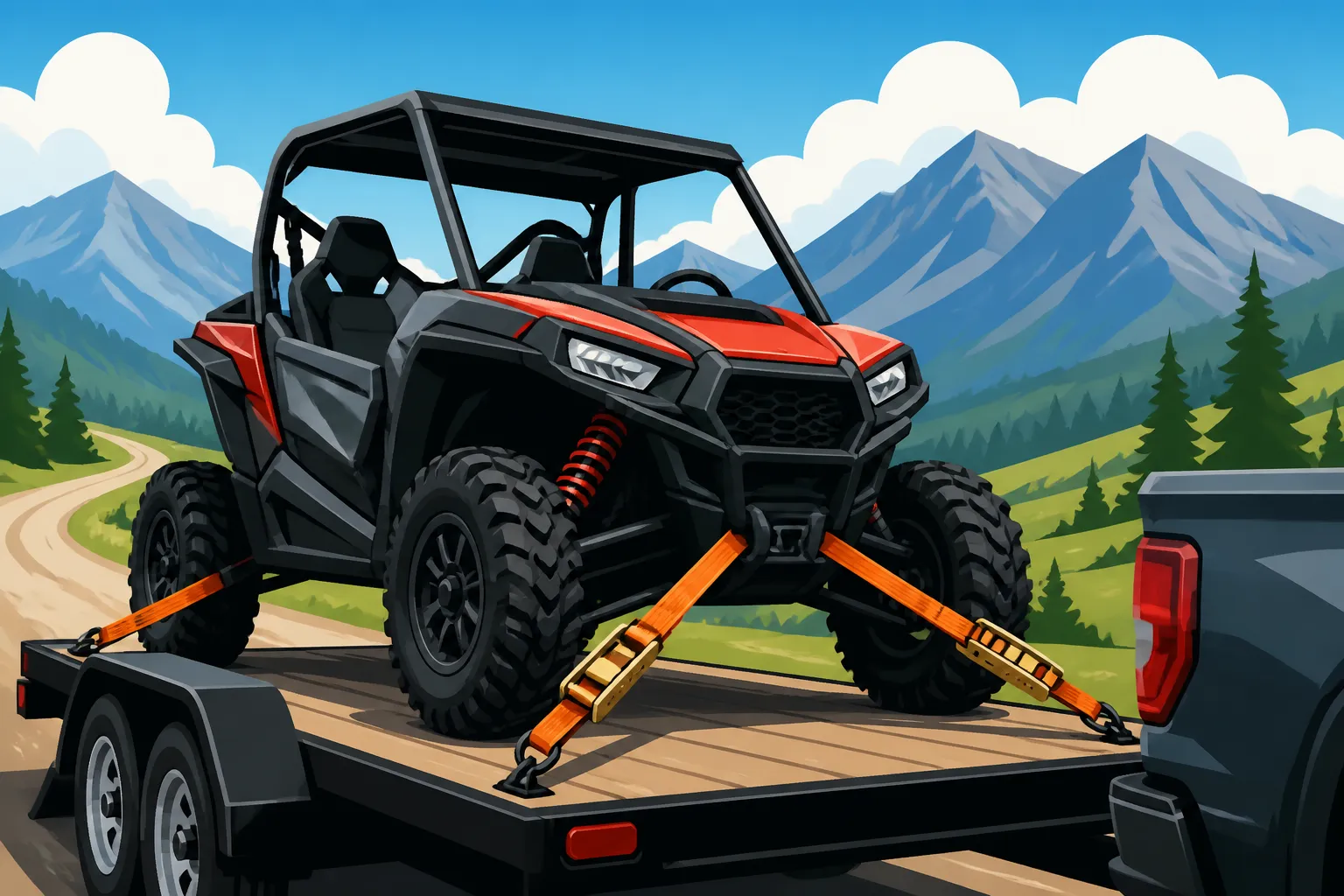
- The "X" Pattern: This is the gold standard for securement. Attach your first two ratchet straps from the front corners of your machine (using soft ties if applicable) diagonally back to the rear corners of your trailer. This creates a powerful X-pattern that resists both forward and sideways movement. Cinch these down tightly, but not so tight that you fully compress the machine’s suspension. A little suspension movement is good; it helps absorb road shock, allowing the machine to ride with the trailer rather than fighting it.
- Straight Back/Forward Straps: Next, use two more ratchet straps. Attach one from a sturdy point on the rear of your machine straight back to the rear of the trailer. Do the same from the front of the machine straight forward to the front of the trailer. These resist rocking and additional lateral movement, providing critical redundancy. Some prefer over-the-tire straps, which secure the tire directly to the trailer deck, preventing any suspension compression whatsoever. This is another excellent, very secure method, especially for those with dedicated ATV/UTV trailers.
- Secure Loose Items: Don’t forget about fuel cans, spare tires, coolers, or toolboxes you might have on your machine or trailer. These need their own securement. A small bungee net or cam strap can work wonders for these smaller items, preventing them from bouncing out and becoming road hazards. [What a Montana Bill of Sale Should Say] is a good read if you're dealing with the sale or purchase of such accessories as well, ensuring you have proof of ownership for everything you haul.
It’s tempting to compress the suspension of your ATV or UTV when strapping it down, thinking it’s more secure. However, this can put undue stress on your suspension components and even the straps themselves. The goal is to secure the machine firmly to the trailer, allowing its suspension to still have a little give to absorb bumps, which helps reduce strain on both the machine and the tie-downs over long, bumpy hauls.
Final Checks and Roadside Adjustments
Before you pull out of your driveway or trailhead, perform a "wiggle test." Grab the machine and try to rock it. It should feel like it's an extension of the trailer, with minimal movement. Double-check all your strap connections and ensure no straps are rubbing against sharp edges. Tuck away any excess strap webbing so it doesn't flap in the wind, which can damage the straps or distract other drivers. This also prevents them from becoming tangled or caught on something.
After driving a few miles, especially if you’ve gone over a particularly bumpy section or started climbing a pass, pull over safely and re-check your straps. Road vibrations and initial settling can sometimes cause them to loosen. A quick re-tensioning can make all the difference for the rest of your journey. This quick stop is worth the time, every single time. It's often the small, proactive steps that prevent big problems on Montana's long stretches of road, ensuring your [Montana Trails That Reach a Lookout Tower] or other destination is reached safely.
Common Pitfalls and How to Avoid Them
Even seasoned riders can make mistakes when strapping down their machines. Being aware of these common errors can help you ensure a smoother, safer journey to and from your favorite Montana riding spots, whether they’re in the Custer Gallatin National Forest or closer to home.
Over-Tightening and Under-Tightening
It's a delicate balance. Under-tightening is an obvious hazard – if your straps are loose, your machine will shift, bounce, and potentially break free. This is especially risky on our rough gravel roads and during sudden stops, where every jolt can exacerbate a loose connection. On the flip side, over-tightening can also cause problems. Excessively compressing your machine's suspension can damage its shocks, springs, and bushings over time. It also puts undue stress on your straps, potentially causing them to fail prematurely, especially if they are exposed to sun and weather degradation. You want your machine to be snug and secure, almost like it's "part of" the trailer, but still allowing for a tiny bit of flex in its own suspension. The goal is to remove slack, not to crush the machine.
Sometimes people rely on too few straps, thinking if they crank those two or three straps really tight, it's enough. Always use at least four high-quality straps, ideally with the "X" pattern as described earlier. Think about how much your machine is worth and the potential liability of an unsecured load. You can learn more about protecting your assets by reviewing information from sources like LawDepot for legal document needs, which offers templates for various agreements.
Ignoring Weight Distribution and Tongue Weight
As mentioned earlier, proper weight distribution is paramount for safe towing. If your machine is loaded too far back, resulting in insufficient tongue weight, your trailer will sway violently from side to side, especially at highway speeds or in crosswinds. This can be incredibly dangerous, leading to loss of control and potentially an accident. Conversely, too much tongue weight (machine loaded too far forward) can overload your tow vehicle's rear tires and suspension, making steering difficult and potentially damaging your vehicle's components, not to mention reducing your braking effectiveness.
Take the time to position your ATV or UTV correctly on the trailer. A general rule of thumb for conventional trailers is 10-15% of the total trailer weight as tongue weight. You can even get a simple tongue weight scale to verify this if you're frequently hauling different machines or loads. Remember, a machine like a side-by-side is heavy, and its placement drastically affects towing stability, especially when you’re driving through high winds coming across the plains or descending a steep mountain pass. This is just as critical for a [Montana Trails Suited to a 50-Inch Machine] as it is for a wider UTV.
Forgetting About the "Little Things"
It’s easy to focus on the big straps, but sometimes the smallest oversights can lead to the biggest headaches.
- Loose Gear: Any gear stored on your ATV or UTV – fuel cans, coolers, toolkits, spare tires – needs to be individually secured. A flying gas can on the highway is a serious hazard, not just to your property but to other drivers. Double-check everything, as [Fuel Planning for a Montana Trail Day] is useless if your fuel container is bouncing around.
- Sharp Edges: Check that no straps are running over sharp edges on your trailer or machine. This can fray and weaken the strap, leading to failure. Use corner protectors or position straps carefully to extend the life of your straps and ensure continuous securement.
- Lights and Chains: Don't forget your trailer safety chains and ensure they are crossed under the tongue. Double-check that all trailer lights – brake, turn signals, and running lights – are fully functional before you hit the road. [Montana OHV Decals and Rear Placement] discusses visibility for the machine, but for your trailer, working lights are non-negotiable for legal and safety reasons.
- Roadside Plan: Even with the best preparation, things can go wrong. Have a plan for a flat tire, a loose strap, or a minor breakdown. Carry basic tools, a spare tire for your trailer, and know how to safely pull over on a busy Montana highway or narrow mountain road. Carrying some emergency documentation, which you might prepare with tools from LawDepot, can be helpful if you need to contact authorities or your insurance from the roadside. Understanding [Montana OHV Accident Reporting Rules] can also be crucial in an emergency.
By paying attention to these details, you not only protect your machine and others on the road but also ensure your Montana adventures start and end on a high note, free from unnecessary stress or accidents. The freedom of riding in Montana is immense, and getting there safely is the first step.
Disclaimer
This article is for general informational purposes only and does not constitute professional advice. Laws, prices and regulations vary by location and change over time. Consult a qualified professional for guidance on your specific situation.