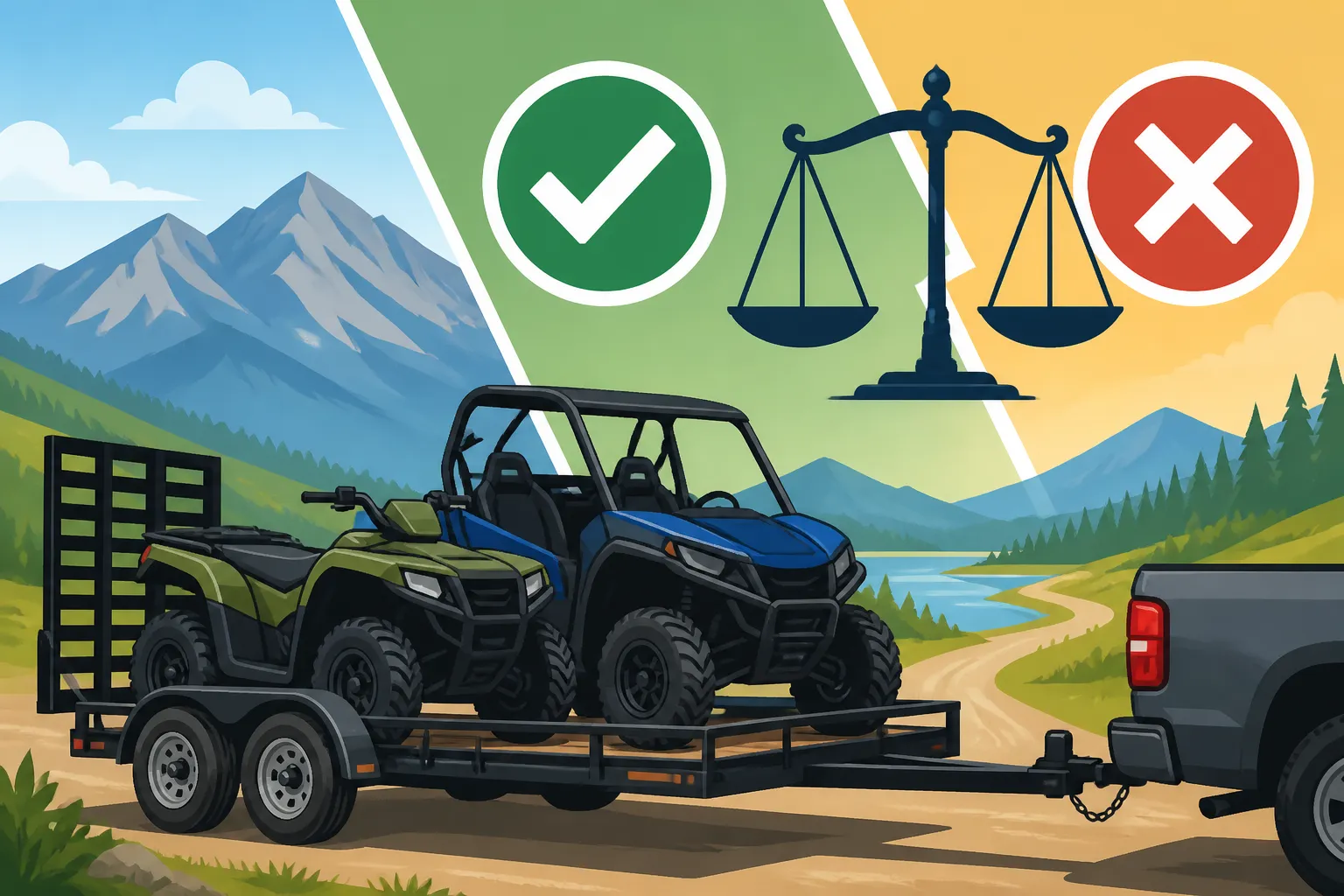
Do You Need a Trailer Title in Montana?
Hauling your ATV or UTV out to those amazing Montana trails often involves a trailer, and if you're like many folks, you might be scratching your head about whether that trailer needs its own title here in the Treasure State. It's a common point of confusion, and frankly, the rules can feel a bit murky compared to registering your side-by-side itself. This guide is going to clear up all that head-scratching, walking you through exactly when a trailer needs a title in Montana, how to get one, and why it matters for your adventures.
The Montana Trailer Title Requirement: Understanding the Basics
Let's get straight to it: for most of the trailers you'd use to haul your ATVs or UTVs, yes, you absolutely need a title in Montana. This isn't just about showing you own it; it's a fundamental part of the state's system for tracking vehicles and ensuring clear ownership, especially for machines that will be on public roads. Think of it this way: a trailer is an extension of your towing vehicle on the highway, and just like your truck, it needs to be properly identified and legally recognized.
When a Title is Absolutely Required
The rule of thumb in Montana is that any trailer that weighs more than 1,000 pounds (empty, without your machines on it) is required to have a title. This covers the vast majority of utility trailers, car haulers, and even most mid-sized ATV/UTV trailers. If you've got a sturdy tandem-axle trailer, or even a heavy-duty single-axle designed to carry a couple of bigger side-by-sides, it's almost certainly going to tip the scales over that 1,000-pound mark.
The title serves as the official proof of ownership, containing vital information like the Vehicle Identification Number (VIN), make, model, and year. When you buy or sell a trailer in Montana, the title is the primary document that changes hands, just like with a car or your OHV itself. Without a proper title, proving you legally own the trailer, or transferring that ownership to a new buyer, becomes a huge headache. It's not just a suggestion; it's a legal necessity for these heavier trailers traveling our Montana roads.
The Weight Breakpoint: What You Need to Know
That 1,000-pound empty weight threshold is the key figure to remember. If your trailer's unladen weight (that's the weight of the trailer itself, before you load anything onto it) is 1,001 pounds or more, it needs a Montana title. How do you figure out the unladen weight? Often, it's listed on a manufacturer's sticker or plate somewhere on the trailer frame, usually near the tongue or an axle. If you can't find it, a quick trip to a local scale (like a truck stop or recycling center) can give you an accurate measurement.
What happens if your trailer is exactly 1,000 pounds or less? These smaller, lighter trailers – often called "light trailers" – are actually exempt from the title requirement in Montana. This might include those tiny single-axle trailers you use for a single dirt bike or a very small ATV, or perhaps a small utility trailer for yard work. Even if they don't need a title, they still need to be registered and display a license plate if they're going to be on public roads. It's a subtle but important distinction that can save you a trip to the county treasurer if your trailer truly is light enough to qualify for the exemption.
Exceptions and Special Cases
While the 1,000-pound rule covers most scenarios, there are a few exceptions and special cases that are worth noting. For instance, trailers manufactured before July 1, 1970, are also exempt from titling, regardless of their weight. These older trailers, often heirlooms or vintage finds, simply operate under a different set of rules due to their age. However, they still need to be registered if used on public roadways.
Homemade trailers present another unique situation. If you've welded together your own trailer to haul your quad or gear, you'll still need to get it titled and registered if it's over the 1,000-pound limit. The process for a homemade trailer usually involves a safety inspection, a certification of weight, and possibly obtaining a VIN if one wasn't assigned during construction. This is where it's crucial to follow all the steps to ensure your custom creation is road-legal and safe. You'll need to gather all your receipts for parts, and you might even need to get a notary for certain affidavits. For documenting the build and ensuring you have all the necessary paperwork, a resource like LawDepot might offer templates for affidavits of construction or bills of sale for component parts, which can be useful to keep on hand.
Getting Your Trailer Titled in Montana: The Step-by-Step Process
So, you've determined your trailer needs a title. Now what? The process, while involving a bit of paperwork, is manageable if you know what to expect and what documents to bring. It largely mirrors the process for [Titling an OHV in Montana] or other vehicles.
Necessary Documents and Where to Go
To title your trailer, you'll need to visit your local Montana County Treasurer's office. This is the one-stop shop for all things vehicle titling and registration in Montana. When you go, be prepared with the following documents:
- The previous title: If you bought the trailer from a private party or a dealer, the previous owner should have signed off on their title, transferring it to you. Make sure all names are legible and signatures are present.
- Bill of Sale: Even if you have the title, a comprehensive bill of sale is highly recommended. It serves as an additional record of the transaction, detailing the sale price, date, and identifying information for both buyer and seller and the trailer itself. A good bill of sale protects both parties. [What a Montana Bill of Sale Should Say] covers essential details you'll want to include.
- Proof of Identification: Your valid driver's license or state ID.
- Proof of Montana Residency: If you're a new resident, you might need to show utility bills or other documents to prove your current Montana address.
- Lien Release (if applicable): If there was a loan on the trailer, you'll need a document from the lender proving the lien has been satisfied.
- Manufacturer's Statement of Origin (MSO) or Certificate of Origin (MCO): For a brand-new trailer bought from a dealer, this is the document the dealer provides in lieu of a title.
Having all these documents organized before you arrive will make your visit to the county treasurer much smoother. Don't forget that [Montana County Treasurer OHV Registration] information often applies to trailers too, as many of these functions are handled in the same office.
Dealing with No Title: Bonded Titles and Other Solutions
Sometimes, you might acquire a trailer that legitimately should have a title, but for whatever reason, the previous owner never had one, or it's been lost to time. This can be a frustrating situation, but it's not always a dead end. Montana offers options like a bonded title.
A bonded title is essentially a way to establish ownership when the original title is missing or unobtainable. It involves purchasing a surety bond, which acts as insurance against any prior claims of ownership on the trailer. The county treasurer can guide you on the specific requirements for a bonded title, but generally, it involves:
- Checking the VIN: Ensuring the trailer isn't reported stolen. Running the VIN through state and national databases is crucial.
- Affidavits: You may need to sign affidavits stating how you acquired the trailer and why you don't have the original title.
- Appraisal: The trailer might need to be appraised to determine the bond amount.
- Application: Submitting a special application for a bonded title to the state.
This process can take time and involves additional costs, but it's a legitimate pathway to getting your trailer legally documented. It's similar in concept to obtaining a [Bonded Title for an ATV in Montana] if you find yourself in a similar predicament with a quad. For creating affidavits or other legal documents, tools like those offered by LawDepot can provide helpful templates and guidance to ensure you're including all the necessary information.
What to Expect at the County Treasurer's Office
When you walk into the county treasurer's office, be prepared for a process that involves reviewing your documents, entering information into their system, and processing fees. The staff there are generally very helpful, but having your paperwork in order significantly speeds things up.
You'll pay a titling fee and, if applicable, a registration fee. Remember, [Montana Charges No Sales Tax on a Machine] or a trailer, so you won't be paying that at the treasurer's office. However, if you bought the trailer from an out-of-state seller, be aware of any use tax obligations your home state might impose if you don't live in Montana. They will verify the VIN on your trailer against the documents you provide, so make sure it's accessible and clearly legible. Once everything is approved, they will issue you a temporary registration and plate, and your official title will typically be mailed to you within a few weeks.
Beyond the Title: Registration, Plates, and Other Considerations
A title is just one piece of the puzzle. For your trailer to be legally on Montana roads, it also needs proper registration and a license plate. These are annual requirements, distinct from the one-time titling process.
Understanding Montana Trailer Registration
Even if your trailer is under the 1,000-pound titling threshold, it still needs to be registered with the state if it's going to be used on public roads. Registration typically happens at the same county treasurer's office where you handle titling. The registration fees for trailers vary depending on factors like weight and type.
Unlike the [Montana's One-Time Permanent OHV Registration] that many ATV and UTV owners enjoy, trailer registration in Montana is typically renewed annually. You'll receive a renewal notice in the mail, and you can usually renew online, by mail, or in person. This annual registration ensures your trailer has current plates and is authorized for road use. The fees collected go towards road maintenance and other state services.
Plate Placement and Renewal
Once your trailer is registered, you'll be issued a license plate. This plate must be securely attached to the rear of the trailer, clearly visible, and kept clean. It's a critical identifier for law enforcement and emergency services. Just like your vehicle plates, make sure the plate isn't obscured by your ATV or UTV when loaded, or by any other cargo.
Renewal is an annual process. You'll get a sticker for your plate once you've paid the registration fees. Missing a renewal can lead to fines, so it's best to keep track of your expiration date. The cost of renewing your trailer plate will depend on the trailer's weight class and possibly its age, but generally, the [Montana Trailer Plate Cost] is reasonable.
Selling Your Titled Montana Trailer
If you decide to sell your trailer in the future, having a clean, properly transferred title is invaluable. It makes the sale process smooth and instills confidence in the buyer. When you sell, you'll sign over the title to the new owner, indicating the sale date and price. It's always a good idea to create a new bill of sale for this transaction, detailing the transfer of ownership. LawDepot can be a useful tool for generating a professional bill of sale template that covers all the necessary legal points.
Make sure the new owner understands their responsibility to take the signed title and bill of sale to their county treasurer's office to title and register the trailer in their name. If they don't, you could potentially remain liable for any issues related to that trailer. This transfer process is crucial to fully divest yourself of ownership.
Why This Matters for Your Montana ATV or UTV Adventures
Understanding these trailer title and registration rules isn't just bureaucratic red tape. It directly impacts your ability to enjoy the vast trail systems and backcountry Montana has to offer with your OHVs.
Avoiding Headaches on the Road
Imagine you're cruising down I-90 or a scenic byway, heading to a prime riding spot near the Bitterroot National Forest, and you get pulled over for a routine traffic stop. If your trailer isn't properly titled and registered, you could face fines, delays, and a whole lot of frustration. Law enforcement officers, whether it's a highway patrolman or a county sheriff, have every right to check the registration and ownership of anything on the road, including your trailer. Being fully compliant means a quick chat with the officer and you're back on your way. Not being compliant could mean a ticket or even having your trailer impounded if the issues are severe enough.
It's also about roadside assistance. If you have a breakdown with your trailer, having proper documentation makes it easier to prove ownership and arrange for repairs or towing. Unregistered or untitled trailers can present complications for service providers.
Protecting Your Investment and Legal Standing
Your trailer, especially one capable of hauling multiple ATVs or a large UTV, is a significant investment. Having a title is the ultimate proof of that investment. It protects you from claims of prior ownership and provides a clear record if the trailer is ever stolen. Without a title, proving ownership to an insurance company or law enforcement can be incredibly difficult, complicating recovery or insurance claims.
Furthermore, if you ever need to use your trailer as collateral for a loan, a clean title is absolutely essential. Banks and lenders require clear proof of ownership to secure a loan against an asset. Proper documentation provides you with clear [Proof of Ownership for a Montana Title] and for your trailer, ensuring your legal standing is rock solid.
Planning for Out-of-State Travel with Your Trailer
Many Montana ATV and UTV enthusiasts love to explore beyond state borders, venturing to Idaho, Wyoming, or further afield. When you cross state lines, your Montana-titled and registered trailer must meet the requirements of those other states, or at least show that it's compliant with its home state's laws.
Generally, other states will honor your valid Montana registration and title. However, if your trailer isn't properly documented in Montana, you could run into trouble in another state. State troopers elsewhere might be even less forgiving if they find a large, untitled trailer on their roadways. Ensuring your trailer is fully legal in Montana saves you from potential legal entanglements and fines no matter where your OHV adventures take you. It's just one less thing to worry about when you're focused on hitting the trails.
Disclaimer
This article is for general informational purposes only and does not constitute professional advice. Laws, prices and regulations vary by location and change over time. Consult a qualified professional for guidance on your specific situation.