Montana County Treasurer OHV Registration
Alright, let's talk about getting your off-highway vehicle (OHV) legal and ready for the amazing trails Montana has to offer. It can feel like a maze sometimes, figuring out where to go and what paperwork you need, especially if you're new to the world of ATVs and UTVs or just trying to navigate the system for the first time. This guide is going to walk you through everything you need to know about registering your OHV at your local Montana County Treasurer's office, from what documents to gather to what to expect when you get there.
Understanding the County Treasurer's Role in OHV Registration
When you're looking to get your ATV or UTV registered in Montana, the County Treasurer's office is your primary destination. It's not like registering a car entirely at the Department of Motor Vehicles; for OHVs, the county level is where the magic happens. Many folks assume all vehicle-related tasks are centralized, but for quads and side-by-sides, it's a more local affair, which can sometimes catch people off guard.
The Central Hub for Titles and Plates
Your local County Treasurer's office handles a surprising array of vehicle services, and OHV registration is definitely one of their core functions. Think of them as the front line for getting your machine titled, registered, and out on the trail legally. They're equipped to process new registrations, renewals, and even title transfers when you buy a used machine. It saves you from having to hop between multiple state agencies just to get your papers in order.
This local approach means you'll be dealing with people who are often very familiar with the specific quirks and questions of your particular county. While the general rules are state-mandated, the interpretation and common issues can sometimes vary slightly from one county to the next, so having a local expert is really helpful. They're there to help clarify any confusion you might have about your specific situation.
Why Your County Treasurer, Not the DMV
Many people wonder why they can't just go to a typical DMV office for their ATV or UTV. The Montana Department of Justice's Motor Vehicle Division (MVD) primarily handles on-road vehicles. While they set some of the overarching rules, the actual processing for off-highway vehicles, especially the titling and registration, is delegated to the county level. It's a system designed to streamline local services and keep things accessible.
This separation can initially be a source of frustration, especially if you're accustomed to other states where all vehicle services might be under one roof. However, once you know this distinction, it simplifies your planning. You won't waste a trip to the wrong office, and you'll know exactly where to direct your questions or concerns about your specific machine. Your County Treasurer's office is genuinely the right place to start and finish for most OHV registration needs.
Documents You'll Need to Bring
One of the biggest headaches when dealing with any government office is showing up only to realize you're missing a crucial piece of paper. For OHV registration, having your documents in order before you even walk through the door will save you immense time and frustration. It's worth spending a few minutes to double-check everything rather than making multiple trips.
Proof of Ownership Is King
Whether you're registering a brand-new side-by-side or a vintage ATV you just bought from a private party, proof of ownership is the cornerstone of the entire process. Without it, the County Treasurer simply cannot issue a title or registration in your name. This is where many private party sales hit a snag, especially if the seller wasn't as diligent with their paperwork as they should have been. [Proof of Ownership for a Montana Title] is absolutely critical.
For a new machine, this usually means a Manufacturer's Certificate of Origin (MCO) or a Manufacturer's Statement of Origin (MSO), often provided by the dealer. If it's a used machine, you'll need the previous owner's signed-over title. If there's no title for an older machine (sometimes true for very old models, though less common now), you'll need a bill of sale and possibly other supporting documents to establish a chain of ownership. Always, always make sure you get these documents at the time of purchase.
The All-Important Bill of Sale
Even if you have a signed-over title, a bill of sale is still a really good idea, especially for private party transactions. It serves as a clear record of the sale, detailing who bought what, for how much, and when. This can be invaluable if any questions arise later about the transaction or if you need to prove the purchase price for tax purposes (though Montana has no sales tax on machines, your home state might impose a use tax if you're an out-of-state buyer).
A good bill of sale should include the full names and addresses of both buyer and seller, the date of sale, the purchase price, and a complete description of the OHV, including its make, model, year, and crucially, its Vehicle Identification Number (VIN). There are many templates available online, or you can use a service like LawDepot to generate a professional-looking document to ensure all necessary details are covered. This can prevent misunderstandings down the line and solidify your claim to the machine. You can find more details on [What a Montana Bill of Sale Should Say].
Valid Identification and Payment
Of course, you'll need to prove who you are when you're registering your OHV. A valid driver's license or state-issued ID is standard practice. They need to verify that the person registering the machine is indeed the person named on the ownership documents. Don't forget this simple step, as it's a quick way to halt your progress at the counter.
And then there's the payment. While I can't give you exact figures, there are various fees associated with OHV registration, including the title fee and the registration fee itself. The County Treasurer's office typically accepts cash, checks, and often credit/debit cards, though there might be a small processing fee for card transactions. It's always a good idea to call ahead or check your county's website for their accepted payment methods and approximate costs. Be prepared to cover these fees so your transaction goes smoothly.
The Registration Process at the Treasurer's Office
Once you've gathered all your documents and know where you're going, the actual process at the County Treasurer's office is usually straightforward. It involves presenting your paperwork, having it reviewed, paying the necessary fees, and then receiving your new registration and decal. It's typically a one-stop shop for both titling and registering your machine.
Presenting Your Documents
When you approach the counter, you'll hand over all the documents you've carefully assembled. This includes your proof of ownership (MCO/MSO or signed title), your bill of sale, and your personal identification. The clerk will review these documents to ensure everything is in order, that the VINs match up, and that the chain of ownership is clear. This is where any discrepancies or missing information will be flagged, so having everything prepared is key.
If you're dealing with a complex situation, like titling a machine where the seller never signed, or one that's older than the typical record-keeping, the clerk might need to consult with a supervisor or guide you through additional steps. They are generally very helpful and want to get your machine registered correctly. Just be patient and cooperative, and they'll help you navigate any bumps in the road.
Paying Fees and Receiving Your Decal
After the documents are approved, you'll be informed of the total fees due. As mentioned before, these typically include a title fee and the registration fee. Montana famously has [No Sales Tax on a Montana Machine Purchase], which is a nice benefit, but there are still administrative costs. Once you've paid, the clerk will process your registration, issue you a temporary registration (if applicable), and provide you with your new OHV decal.
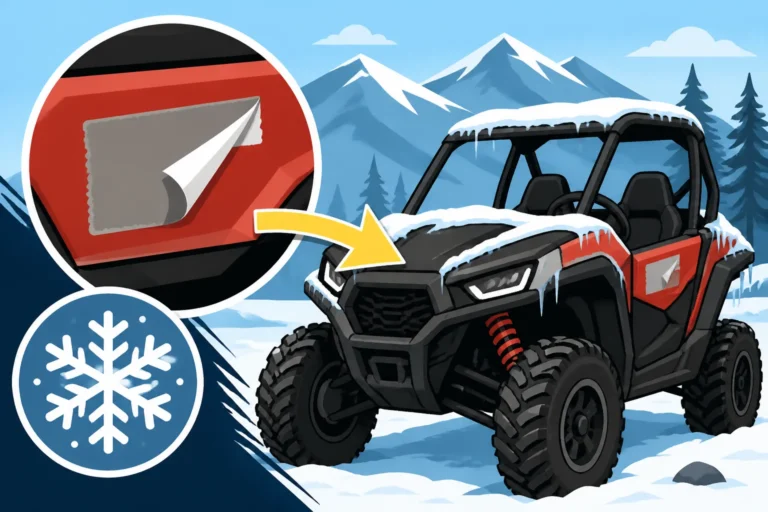
The decal is extremely important. It's your visible proof of registration and must be affixed to your machine in a specific location, usually on the rear. We'll talk more about [Where a Montana OHV Decal Goes] in a bit, but for now, know that receiving it means you're almost ready to ride. The clerk will usually print out your permanent registration certificate at that time, and your actual title certificate will often be mailed to you within a few weeks.
Special Cases: New Residents and Transfers
If you're a new resident moving to Montana, the process is very similar, but you'll also be converting an out-of-state title to a Montana title. You'll need your out-of-state title and registration, along with your proof of Montana residency. The County Treasurer's office is equipped to handle these conversions smoothly. [Montana Registration for a New Resident] means getting everything officially updated for your new Big Sky Country life.
For machines that are being transferred from one owner to another within Montana, the previous owner's signed title is paramount. If the machine already has a "permanent" registration, that registration does not transfer with the sale. [Why a Montana Registration Does Not Follow the Machine] means you, as the new owner, will need to go through the registration process yourself, even if the machine was previously registered in Montana. This is a common point of confusion, so always plan to re-register after a private party purchase.
What Your Montana OHV Registration Entails
Getting your ATV or UTV registered in Montana is more than just a formality; it unlocks legal access to a vast network of trails and provides a layer of identification for your machine. Understanding what your registration actually buys you can clarify why it's such an important step.
Permanent Registration for Many Machines
One of the unique aspects of Montana OHV registration is the "permanent" option for many machines. Unlike annual vehicle renewals, many ATVs and UTVs can be registered once, and that registration remains valid as long as you own the machine. This is a huge convenience, eliminating the yearly hassle of renewal stickers and fees. [What Permanent Registration Actually Buys You] is peace of mind and less administrative burden.
However, "permanent" registration doesn't mean you're done with all fees forever. While the core registration is permanent, you still need to purchase and display a Resident OHV Trail Pass (or Non-Resident Temporary Use Permit if you're visiting) annually if you plan to ride on designated public OHV trails. This trail pass directly funds trail maintenance and development, ensuring you have great places to ride. The County Treasurer's office can often sell you this annual trail pass at the same time you register your machine.
The Importance of the OHV Decal
Your OHV decal is the physical manifestation of your registration. It's a small sticker, but it tells law enforcement and land managers that your machine is legally registered in Montana. It must be displayed prominently on the rear of your machine. Without it, even if you have the paperwork in your glove box, you could face penalties. [Montana OHV Decals and Rear Placement] details exactly where it needs to go.
Enforcement officers, whether they're local sheriff deputies or Forest Service rangers, will be looking for this decal. It's a quick visual check that helps them ensure riders are compliant with state regulations. Losing or damaging your decal means you'll need to go through the process of [Replacing a Montana OHV Decal] at your County Treasurer's office, so treat it with care.
Trail Access and Compliance
Having a properly registered OHV means you can legally access countless miles of designated trails across Montana's national forests, BLM lands, and state parks, assuming you also have your annual trail pass. It's an investment in keeping these beautiful areas open and maintained for everyone to enjoy. Without registration and the trail pass, you're not only risking fines but also potentially contributing to the closure of trails due to unauthorized use.
It also means you're complying with Montana law. Riding an unregistered OHV on public lands or county roads (where permitted) can result in [Penalties for an Unregistered OHV in Montana], including significant fines. These rules are in place for safety, environmental protection, and ensuring funding for the OHV program, so compliance is beneficial for all riders and the resource itself.
Common Questions and Troubleshooting
Even with all the information in the world, things can sometimes go sideways, or you might have a unique situation that requires extra attention. The County Treasurer's office is there to help, but knowing some common issues beforehand can make your visit even smoother.
What if I Don't Have a Title?
This is a very common question, especially for older ATVs or machines purchased from private parties where titles might have been lost or never issued. In Montana, machines older than a certain year (this often varies, so confirm with your county) might not have had a title issued at all when new. For others, the title might simply be missing. [Titling a Machine the Seller Vanished On] can be a real headache.
If you don't have a title, you'll typically need to establish proof of ownership through a strong bill of sale and possibly other supporting documents like old registrations or insurance cards. In some cases, for very old machines or those with a murky ownership history, you might need to apply for a bonded title. This process involves posting a surety bond to protect against any unknown prior claims of ownership. It's more complex, but the County Treasurer's office can guide you on the specific requirements. Using a service like LawDepot to create a robust bill of sale from the get-go can help mitigate future title issues.
My VIN is Wrong or Unreadable
An incorrect or unreadable VIN is a major red flag for the County Treasurer's office because it's the primary identifier for your machine. If the VIN on your paperwork doesn't match the actual VIN on your OHV, or if the VIN plate is damaged and unreadable, you've got a problem. This often happens with older machines or those that have seen a lot of hard use. [Fixing a Wrong VIN on a Montana Title] is essential.
In such cases, you might need to have your VIN verified by a law enforcement officer or an authorized dealer. They can inspect the machine and confirm the correct VIN, providing you with documentation that the Treasurer's office can use to update their records. If the VIN is completely missing or appears tampered with, it can trigger a much more extensive investigation, potentially even involving law enforcement, to rule out theft. Always double-check the VIN before purchasing a used machine.
Renewing an Annual Trail Pass
Even with "permanent" OHV registration, the annual trail pass is a separate item that needs yearly renewal if you plan to ride on public trails. This is often done directly through Montana Fish, Wildlife & Parks (FWP) online licensing system or at one of their vendor locations. However, many County Treasurer offices also sell the resident trail pass, allowing you to handle both registration and pass acquisition in one go, if needed.
It's easy to forget the trail pass, especially if you're used to the "permanent" nature of the base registration. But remember, the trail pass is what grants you access to those beautiful public lands. Make it a routine to check the expiration date on your trail pass each year, usually before your first big ride of the season. It’s a small fee that goes directly back into maintaining the trails you love.
| Document Type | Required for New Machines | Required for Used Machines | Notes |
|---|---|---|---|
| Manufacturer's Cert. of Origin (MCO/MSO) | Yes | No | Provided by dealer for new machines. |
| Signed-Over Title | No | Yes | From previous owner. Must be original, not a copy. |
| Bill of Sale | Recommended | Highly Recommended | Proves purchase, details sale. Use LawDepot for a good template. |
| Valid Photo ID | Yes | Yes | Driver's license or state-issued ID. |
| Payment for Fees | Yes | Yes | Cash, check, or card (check county for accepted methods). |
| Out-of-State Title/Reg. | No | Yes (for new residents) | If moving to Montana, bring these to transfer. |
Disclaimer
This article is for general informational purposes only and does not constitute professional advice. Laws, prices and regulations vary by location and change over time. Consult a qualified professional for guidance on your specific situation.