Storing a Quad Through a Montana Winter
Montana winters hit hard, and if you're a quad or side-by-side owner, you know that leaving your machine out in the elements without proper care is just asking for trouble. From freezing temperatures and heavy snow to opportunistic critters looking for a warm, dry place to nest, the cold months can do a real number on your off-highway vehicle (OHV). This guide will walk you through exactly how to prepare your ATV or UTV for its long winter nap, ensuring it comes out in spring ready to hit the trails without a hitch.
Why Winterizing Matters in Big Sky Country
You've probably heard the old adage about an ounce of prevention, and when it comes to your ATV or UTV and a Montana winter, it couldn't be more true. Our winters are beautiful, but they are absolutely brutal on machinery. Ignoring proper winterization can lead to a whole host of headaches, from minor annoyances to major, costly repairs.
Protecting Against the Elements
Montana's cold isn't just a little chilly; it plunges well below freezing for extended periods. This isn't just uncomfortable for us, it's destructive for your machine. Think about the fluids in your engine, transmission, and cooling system. While modern fluids are designed to withstand cold, extreme temperatures can still thicken oils, degrade fuel, and put unnecessary strain on components. Moisture, which is everywhere in a Montana winter, can seep into places you don't expect – brake lines, electrical connections, and even your fuel tank if it's not full. This moisture can then freeze, expand, and potentially crack hoses, seals, or even engine casings. It’s not just about starting it up in spring; it’s about preventing that microscopic expansion and contraction that slowly eats away at your machine’s integrity.
Battling the Critters and Corrosion
Beyond the cold, Montana winters bring out the critters. Mice, pack rats, and even squirrels are always on the hunt for a cozy, sheltered spot, and the nooks and crannies of your ATV or UTV offer just that. They love to chew through wiring harnesses, build nests in air boxes, and even gnaw on seats and plastic components. I’ve seen machines come out of winter storage with thousands of dollars in damage from tiny teeth.
Then there's corrosion. All that snow, ice, and road salt (if your machine has been exposed to winter roads, even on a trailer) can cause rust to form on exposed metal parts. Brake calipers, suspension components, and exhaust systems are particularly vulnerable. Even if your machine is tucked away, condensation can still form, slowly eating away at metals and connections. A thorough winterization routine acts as a shield, protecting against both the elements and these unwelcome guests. It's about preserving your investment so you're not facing unexpected repairs when the first warm days of spring beckon.
Pre-Storage Checklist: Getting Your Machine Ready
Getting your quad or side-by-side ready for winter storage is a systematic process. Think of it as putting your machine down for a deep, restful sleep rather than just tucking it into bed. Each step is crucial for preventing common winter woes.
Fuel System Preparation
This is one of the most important steps, especially with modern ethanol-blended fuels. Ethanol can attract moisture and separate from gasoline over time, forming gummy deposits that can clog carburetors or fuel injectors.
- Add Fuel Stabilizer: Start by adding a quality fuel stabilizer to your gas tank. Read the product's instructions carefully for the correct ratio.
- Top Off the Tank: After adding the stabilizer, top off your fuel tank completely with fresh fuel. A full tank minimizes the air space inside, which reduces condensation build-up and helps prevent rust in metal tanks.
- Run the Engine: Start your machine and let it run for about 10-15 minutes. This circulates the stabilized fuel throughout the entire fuel system – lines, carburetor (if applicable), and injectors – ensuring every component is protected. If your machine has a fuel shut-off valve and a carburetor, you might even consider turning off the fuel and letting the engine run until it sputters out, completely emptying the carburetor float bowl. This step is particularly vital to prevent gummy fuel from seizing up your jets. For more on keeping your machine healthy, check out our guide on [Why a Montana Registration Does Not Follow the Machine].
Oil Change and Fluid Checks
Leaving dirty oil in your engine over the winter is a recipe for accelerated wear. Used oil contains contaminants and acidic byproducts that can degrade engine components during prolonged storage.
- Change the Engine Oil and Filter: It's always best to change the oil and oil filter before storage. This ensures that only fresh, clean oil protects your engine's internals during its dormancy. This fresh oil has its full lubricating and protective properties intact.
- Check Other Fluids: While you're at it, inspect your other fluid levels: transmission fluid, differential fluid, and especially coolant. Ensure your coolant is at the proper level and has the correct antifreeze/water mix for Montana's extreme cold. If it's weak, drain and refill it to prevent potential engine block damage from freezing. Check your brake fluid level as well; if it's low, investigate why, but avoid topping it off until you address any leaks, as a full reservoir often indicates pad wear.
Battery Care
Batteries can suffer greatly in cold weather, especially if left connected and unmaintained. A discharged battery can freeze, crack, and become permanently damaged.
- Remove the Battery: Disconnect and remove the battery from your OHV.
- Clean and Inspect: Clean the battery terminals thoroughly to remove any corrosion. Inspect the battery case for cracks or swelling.
- Store and Maintain: Store the battery in a cool, dry place where it won't freeze, such as a garage or basement. Connect it to a "smart" trickle charger or battery tender. These chargers monitor the battery's charge and provide just enough power to keep it topped up without overcharging, preventing sulfation and extending battery life. I run mine through a [Montana Winter Road Riding Rules] and it always fires right up.
Tire Pressure and Suspension
Tires can develop flat spots if left under full load for months, and suspension components can also benefit from some attention.
- Increase Tire Pressure: Overinflate your tires by about 5-10 PSI beyond the recommended operating pressure. This helps prevent flat spots from forming when the machine sits stationary for a long time. Remember to reduce them back to normal pressure in the spring.
- Consider Lifting the Machine: If possible, consider placing your OHV on stands to get the tires completely off the ground. This completely eliminates the risk of flat spots and takes the load off your suspension components, including shocks and bushings.
- Lubricate Moving Parts: Give all accessible grease zerks a fresh pump of grease. Lubricate pivot points, cables, and linkages with a suitable lubricant to protect them from rust and keep them moving freely.
Cleaning and Protecting the Exterior
A clean machine is less likely to harbor moisture and provides less incentive for critters.
- Thorough Wash: Give your OHV a good, thorough wash to remove all dirt, mud, and grime. Pay special attention to the undercarriage where mud can trap moisture.
- Dry Completely: Ensure the machine is completely dry before storage. Water left in crevices can freeze or promote rust. A leaf blower works wonders for drying hard-to-reach spots.
- Apply Protectant: Apply a protectant spray to plastic and vinyl surfaces to prevent cracking and fading. A coat of wax on painted surfaces (if any) offers an extra layer of protection.
- Critter Prevention: This is where you get creative. Place dryer sheets, mothballs, or even some pepper spray-soaked rags in the air box, exhaust pipe (with a screen or steel wool plug to keep critters out but let air circulate), and any other appealing entry points. This helps deter rodents. For official documentation related to your machine's history or care, especially if you plan to sell it later, consider using templates from resources like LawDepot for maintenance logs or bills of sale.
Exhaust and Air Intake Blockage
Blocking the exhaust and air intake can prevent moisture and critters from entering crucial engine components.
- Block Exhaust: Once the engine is cool, stuff a rag or steel wool into the exhaust pipe. This keeps out moisture and prevents critters from nesting inside. Just make sure to put a bright tag or reminder on your handlebars so you don't forget to remove it in the spring!
- Block Air Intake: Cover the air intake opening (usually where the air filter box draws air) with a secure plastic bag or a rag. Again, this is to keep out unwanted pests and moisture. Don't forget the reminder tag here too.
Documentation and Record-Keeping
Even for storage, keeping records can be beneficial, especially if you ever need to document your machine's condition for an insurance claim or sale. You might even use a service like LawDepot to draft a simple agreement if someone else is storing your machine for you. This could outline responsibilities for battery charging, cleaning, and security, avoiding misunderstandings down the line. It's a small step, but good documentation always pays off.
Where to Store Your OHV for the Winter
The best storage location largely depends on what you have available, but understanding the pros and cons of each can help you make the smartest choice for your machine in Montana's climate.
Heated Versus Unheated Indoor Storage
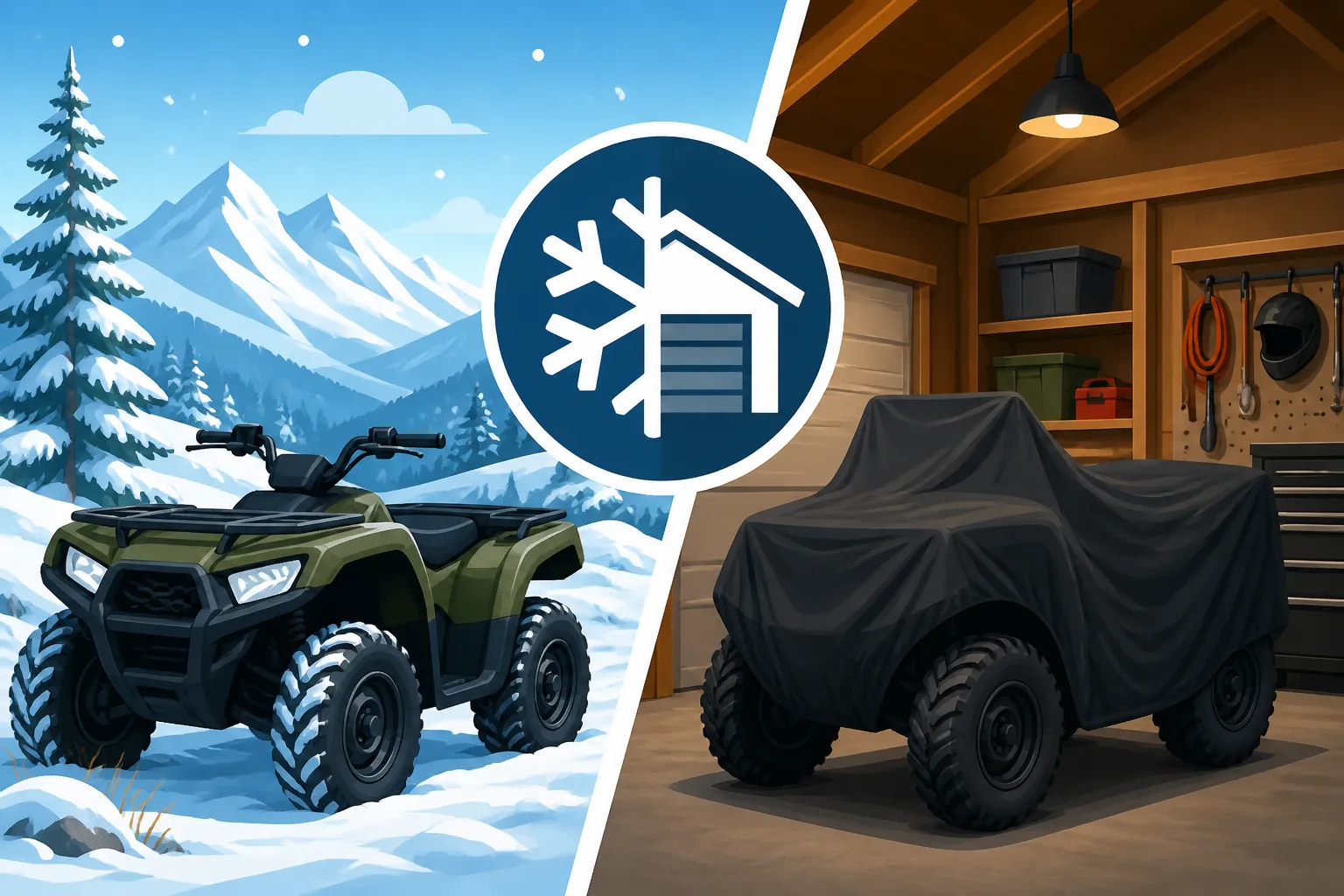
The gold standard for winter storage is a heated garage or shop.
-
Heated Indoor Storage:
- Pros: This is ideal. Consistent, warm temperatures prevent fluids from freezing, drastically reduce condensation, and keep all components in optimal condition. It also provides the best security against theft and absolute protection from the elements and critters. Your battery will hold its charge better, and starting up in spring will be a breeze.
- Cons: Not everyone has access to a heated space large enough for an OHV. Cost can be a factor if you're renting storage or running heating.
- Recommendation: If you have this option, use it. Your machine will thank you. Consider checking your [Montana OHV Registration Cost at the Treasurer] annually, regardless of where you store it.
-
Unheated Indoor Storage (Garage, Shed, Barn):
- Pros: Still a very good option. It keeps your machine dry, out of the wind and snow, and offers a good level of security. It’s far better than outdoor storage for preventing rust and protecting plastics. Critters are still a threat, but less so than outdoors.
- Cons: Temperatures will still fluctuate and drop below freezing. This means you still need to be diligent with fuel stabilization, coolant levels, and battery care. Condensation can still be an issue if the ambient temperature changes rapidly.
- Recommendation: This is a common and perfectly acceptable option for many Montana riders. Just make sure your winterization steps, particularly those involving fluids and the battery, are robust.
Outdoor Storage with Proper Covering
Sometimes, indoor storage isn't an option. If your quad or side-by-side has to brave the Montana winter outdoors, meticulous covering is paramount.
- The Challenges of Outdoor Storage:
- Extreme Exposure: Your machine will face the full brunt of Montana's winter: heavy snow, freezing rain, high winds, and extreme cold.
- Condensation: This is a huge enemy. Temperature swings under a tarp can cause significant condensation, leading to rust, mold, and general deterioration.
- Critters and Security: Outdoor machines are more vulnerable to both pests and theft.
- Best Practices for Outdoor Covering:
- Elevate the Machine: If possible, get the tires off the ground to prevent flat spots and moisture wicking up from the ground. Use sturdy blocks or stands.
- Moisture Barrier Underneath: Place a tarp or heavy plastic sheeting on the ground underneath the machine to minimize ground moisture.
- High-Quality, Breathable Cover: Invest in a cover specifically designed for OHVs that is waterproof but breathable. This helps prevent moisture from getting in while allowing some condensation to escape. A cheap blue tarp will likely trap moisture and lead to more problems.
- Create an Air Gap: If using a non-breathable tarp, try to create some air circulation by draping it over a frame (like PVC pipes or a small temporary shelter) rather than directly on the machine. This helps reduce condensation.
- Secure the Cover: Montana winds are no joke. Use bungee cords, ropes, or specialized tie-downs to secure the cover tightly, ensuring it won't flap in the wind and abrade your machine's finish or blow off entirely. If you're concerned about your machine's security, you might find articles like [Insuring an ATV in Montana] helpful.
Security Measures for Stored Machines
No matter where you store your OHV, security should be a priority. Thieves know that machines are often tucked away for winter and might be less actively monitored.
- Locks and Chains: Use heavy-duty chains and disc locks to secure your machine to an immovable object (if possible). Lock your trailer if it's attached.
- Alarms: If stored in a garage or shed, consider motion-sensor alarms.
- Visibility: If storing outdoors, choose a spot that's not easily visible from the road but still within sight of your house or a neighbor's.
- Documentation: Keep records of your VIN and any identifying marks. Photos can also be helpful for insurance claims. Even a simple record of your machine's condition, potentially drafted using a template from a resource like LawDepot, can serve as valuable proof if issues arise during storage or if you ever need to process a claim. Should your [Montana OHV Decals and Rear Placement] go missing for some reason, having good records helps.
| Storage Location Type | Pros | Cons | Winterization Effort | Security Level |
|---|---|---|---|---|
| Heated Indoor (Garage) | Optimal protection, no freezing/condensation, easy access. | Costly, not always available, takes up space. | Low-Moderate | High |
| Unheated Indoor (Shed) | Good protection from elements, decent security. | Freezing possible, condensation risk, critters. | Moderate | Moderate |
| Outdoor (Covered) | Only option for some, doesn't use garage space. | Full exposure to cold/snow/wind, high condensation risk, critters. | High | Low-Moderate |
Post-Winter Revival: Getting Back on the Trails
Ah, spring in Montana! The snow melts, the sun shines, and the urge to hit the trails becomes irresistible. But don't just jump on your quad after its long winter slumber. A little preparation now will save you a lot of grief later. This is especially true if you plan on exploring some of Montana's stunning areas like the [Montana's Lolo National Forest OHV Trails].
Battery Reconnection and Initial Checks
Your first step should always be with the battery.
- Reinstall the Battery: If you removed your battery for winter, clean the terminals again, then carefully reinstall it, connecting the positive (+) cable first, then the negative (-) cable. Ensure connections are tight.
- Check All Fluids Again: Even though you checked them before storage, give all your fluid levels another quick look. Check engine oil, coolant, brake fluid, and differential fluids. If anything looks low or unusual, address it before starting.
- Tire Pressure Adjustment: If you overinflated your tires, now's the time to bring them back down to the manufacturer's recommended operating pressure. Inspect the tires for any cracks, bulges, or signs of dry rot.
- Look for Critter Damage: Before you even think about turning the key, do a thorough visual inspection for any signs of critter activity. Look for chewed wires, nests in the airbox, or blockages in the exhaust. Check all hoses and cables for gnawing. This is a critical step that can prevent major electrical issues or engine damage.
First Start-Up and Inspection
With the battery back in and a quick visual, it's time for the moment of truth.
- Remove Plugs/Covers: Remember those rags or steel wool you put in the exhaust and air intake? REMOVE THEM NOW! Forgetting this step is a common mistake and can cause significant engine damage.
- Choke and Start: Depending on your machine, you might need to use the choke. Turn the key or push the start button. If it doesn't fire up immediately, don't just crank it endlessly. Give the starter a break to cool down. If it's still hesitant, double-check your fuel, spark plugs, and air filter.
- Listen and Observe: Once running, let the engine idle for a few minutes. Listen for any unusual noises – knocking, ticking, or grinding. Keep an eye on your dashboard warning lights and temperature gauge.
- Check for Leaks: While the engine is warming up, carefully inspect underneath and around the machine for any fluid leaks – oil, coolant, brake fluid, or fuel. A small leak can quickly become a big problem.
- Test Brakes and Lights: Before you move, test both front and rear brakes for proper function. Check all your lights – headlights, taillights, and brake lights – to ensure they are working correctly. This is vital, especially if you plan on [Riding an OHV on the Road in Montana] at any point.
A Gentle Test Ride
Once everything looks good and the engine is warm, it's time for a short, gentle test ride.
- Easy Does It: Start with a slow ride around your yard or a short, flat area. Don't immediately hit challenging trails or wide-open throttle.
- Listen and Feel: Pay attention to how the machine feels. Does the steering feel right? Are the brakes responsive? Are there any strange vibrations or noises? Does the transmission shift smoothly?
- Gradual Increase: Gradually increase your speed and test the brakes more firmly. Ensure everything is operating as it should before heading out on a longer adventure. If you discover any issues, address them immediately. Riding a machine that isn't running perfectly can be dangerous and lead to further damage. Regular checks ensure your machine is ready for whatever Montana trails, like those you can find by checking [Where to Ride an OHV in Montana], throw at you.
By following these steps, you'll ensure that your quad or side-by-side emerges from its winter hibernation refreshed and ready for another season of adventure across Montana's incredible landscapes.
Disclaimer
This article is for general informational purposes only and does not constitute professional advice. Laws, prices and regulations vary by location and change over time. Consult a qualified professional for guidance on your specific situation.