Montana Helmet Rules for Riders Under 18
Navigating the world of off-highway vehicles (OHVs) in Montana, especially with younger riders in tow, can feel like a minefield of regulations. One of the most common points of confusion and genuine concern for parents and guardians revolves around helmet laws, particularly for those under 18. It's not always clear where the rules apply, what kind of helmet is required, or what the real implications are if you don't follow them. This guide aims to demystify Montana's helmet rules for young OHV riders, helping you keep your family safe and legal on the trails and roads.
The Foundation of Montana's Helmet Law for Young Riders
When you're out enjoying Montana's incredible backcountry on an ATV or UTV, safety should always be your top priority. For younger riders, this isn't just common sense; it's a matter of law, specifically concerning helmet use. Montana has clear statutes designed to protect its most vulnerable OHV enthusiasts. These aren't just suggestions; they are enforceable rules established to mitigate the severe risks associated with off-road riding. The state recognizes the dynamic and sometimes unpredictable nature of OHV operation, and head protection is universally acknowledged as a critical layer of defense against serious injury.
Why Age is the Key Factor
In Montana, the determining factor for mandatory helmet use on an OHV boils down to age: specifically, whether the rider is under 18 years old. This isn't an arbitrary cutoff; it's based on legislative decisions aimed at safeguarding minors. Children and teenagers, generally speaking, have less developed motor skills, decision-making capabilities, and risk perception compared to adults. They might be more prone to impulsive maneuvers, overestimating their abilities, or reacting less effectively to unexpected obstacles or terrain changes.
Furthermore, the physical characteristics of a developing skull and brain make younger individuals more susceptible to severe and lasting injury from head trauma. A seemingly minor fall or collision that an adult might shrug off could have much more significant consequences for a child or adolescent. Because of these developmental considerations, Montana's law doesn't leave helmet use for minors up to individual discretion; it mandates it. It's about providing an essential layer of protection when they're engaging in an activity that, while incredibly fun and rewarding, inherently carries risks.
What "Under 18" Really Means on an OHV
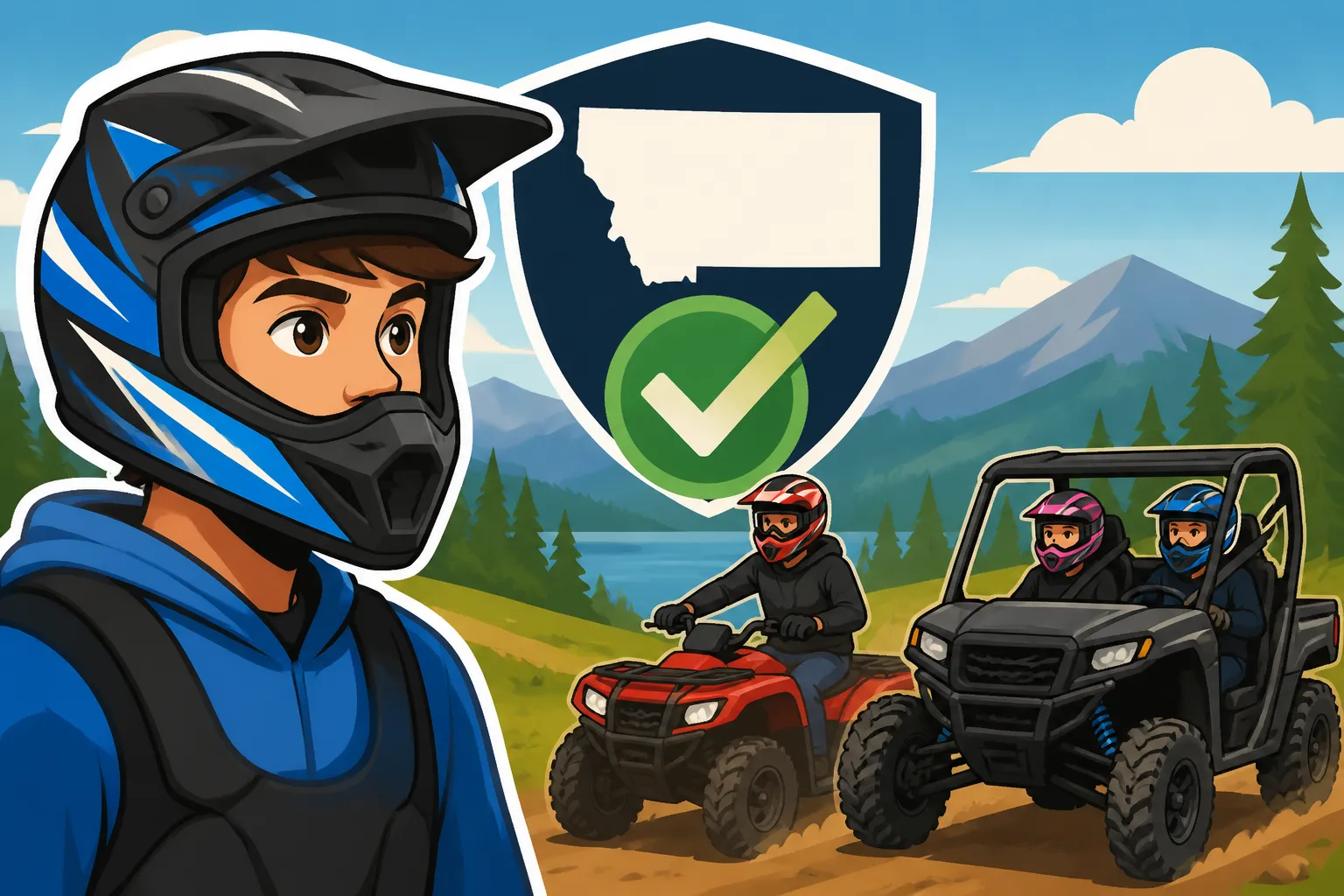
When the law states "under 18," it means exactly that: from the moment a child is old enough to legally operate or ride as a passenger on an OHV, up until their eighteenth birthday. This applies regardless of their experience level, the type of machine they're on, or where they're riding – with some very specific exceptions we'll dive into later. It’s important to understand this isn't just about the operator; it encompasses any passenger who is also a minor. So, if your 10-year-old is driving and your 15-year-old is riding shotgun in the side-by-side, both must have helmets securely fastened.
The spirit of this law is to create a consistent and unambiguous standard for youth safety across the board. It simplifies enforcement and removes any gray areas that could lead to misunderstandings or non-compliance. For families, this means that equipping every minor with a properly fitted, approved helmet is a non-negotiable part of preparing for any OHV adventure. Ignoring this simple rule not only puts your child at risk but also exposes you to potential legal repercussions. Remember, even if your child is incredibly skilled and responsible, accidents can happen due to external factors, and a helmet provides that crucial last line of defense.
Specific Requirements for Riders Under 18
Montana's commitment to youth OHV safety goes beyond just saying "wear a helmet." The law is quite specific about who needs to wear one and what kind of helmet is acceptable. This level of detail is critical because not all head coverings are created equal when it comes to impact protection. A bicycle helmet, for example, is designed for different types of impacts and speeds than an OHV helmet and would not meet the legal requirements or provide adequate safety.
Who Must Wear a Helmet, No Exceptions
In Montana, any person operating or riding as a passenger on an OHV who is under 18 years of age must wear a safety helmet. There are no "ifs, ands, or buts" about it when it comes to public lands, designated trails, or public roads where OHVs are permitted. This rule applies whether they are riding a full-sized ATV, a smaller youth model, or an adult-sized UTV. If they haven't celebrated their eighteenth birthday yet, that helmet needs to be on their head and properly secured.
This blanket requirement removes the guesswork for parents. You don't have to wonder if it applies to certain trails or only when crossing a paved road. If your child is under 18 and on an OHV, the helmet is mandatory. This is a critical point for ensuring compliance and, more importantly, maximizing safety. Even if you're just putting around camp or exploring a short two-track, the law stands. The only true exception often applies to OHVs used exclusively for ranch or agricultural work on private land, but even then, it's wise to consider safety first. For more on this, you might find [Montana OHV Rules for Ranch Machines] helpful.
The Importance of a DOT-Compliant Helmet
It's not enough for a helmet to simply be on a young rider's head; it must be a safety helmet that meets specific standards. In Montana, as in most places, this means the helmet must be certified by the U.S. Department of Transportation (DOT). A DOT-compliant helmet has been tested and proven to meet minimum performance standards for impact absorption, penetration resistance, and retention system effectiveness. You'll typically find a DOT sticker on the back of any approved helmet.
Purchasing a cheap, uncertified helmet might save a few dollars upfront, but it's a false economy when it comes to protecting a child's brain. These helmets often lack the multi-layer construction, energy-absorbing foam, and robust shell materials necessary to adequately cushion a blow. When you're looking for gear, whether it's from a local shop or a reputable online retailer like SuperATV, always prioritize DOT certification. This ensures that the helmet provides the level of protection intended by the law and, more importantly, by safety experts. Don't compromise on this vital piece of equipment; it's an investment in your child's well-being.
Understanding the "Where" of Helmet Rules
Montana is a vast state with a diverse landscape, offering countless opportunities for OHV recreation. From rugged mountain trails to wide-open plains and even some town streets, you might find yourself riding in many different environments. The "where" you ride can sometimes influence other aspects of OHV law, but when it comes to youth helmet rules, the law is quite consistent across most public riding areas.
Public Lands and Designated Trails
Most of Montana's incredible OHV opportunities exist on public lands, including national forests, Bureau of Land Management (BLM) lands, and state parks. These areas are specifically managed for various uses, including motorized recreation, and come with their own set of rules and regulations. On these lands and the designated trails within them, Montana's youth helmet law is in full effect. If your child is under 18 and on an ATV or UTV, they must be wearing a DOT-compliant helmet.
This includes popular riding spots in the Flathead National Forest, the Custer Gallatin trails near Bozeman, or the Shepherd Ah Nei area outside Billings. Wherever there's an official trail or open riding area, the expectation for youth helmet use is clear. It doesn't matter if the trail is easy or challenging, smooth or rocky; the rule applies. Wardens and law enforcement officers patrol these areas, and they will enforce these safety regulations. Knowing this helps you prepare adequately for any trip to Montana's [Montana's National Forest Trail Systems].
Riding on Montana Roads and Highways
Montana has a unique approach to OHV road access, allowing OHVs on certain county roads, and in some towns, even on municipal streets, provided specific conditions are met. However, the ability to ride an OHV on a public road does not diminish the helmet requirement for minors. In fact, if anything, riding alongside other vehicles, even on less-trafficked county roads, arguably increases the need for protective gear due to higher speeds and potential interaction with cars and trucks.
So, if you're legally riding a county road, perhaps connecting one trail system to another, or making your way from a campsite into a small town, any rider or passenger under 18 must have their helmet on. This rule is often overlooked by riders who assume that because they are on a "road," different rules apply, but for minors, the helmet mandate remains firm. Understanding [Montana City Streets and Municipal Ordinances] can help clarify local road access, but always assume the youth helmet rule is in force when on public roadways. Remember, this applies to paved, gravel, or dirt roads maintained by the county or state.
Private Property and Ranch Lands
Here's where things can sometimes get a little nuanced, though safety should always be the priority. Montana's OHV laws, including helmet mandates, generally apply to public lands and roads. On private property, the landowner typically has the authority to set their own rules. This means if you're riding exclusively on your own ranch, or a friend's private land with permission, the state's mandatory helmet law for minors might not technically apply in the same way it would on a public trail.
However, and this is a huge "however," foregoing a helmet on private land is a decision that comes with immense risk. Serious head injuries can occur at low speeds, on familiar terrain, and even from seemingly minor tumbles. Many ranch families, despite not being legally compelled, still insist on helmets for their children for their own safety. It's simply the smart thing to do. If you're using a utility machine for work, as covered in [Montana OHV Rules for Ranch Machines], while the strict legal mandate may not extend to your private acres, the medical and personal reasons for wearing a helmet are just as strong, if not stronger. Don't let the absence of a direct legal penalty tempt you into compromising safety.
Passengers and the Youth Helmet Rule
When thinking about OHV safety, our minds often jump straight to the person at the controls. But for families enjoying Montana's trails together, passengers are just as much a part of the equation, especially if those passengers are young. Montana's helmet law for minors doesn't differentiate between operators and passengers; if you're under 18 and on the machine, you need a helmet. This is a crucial point for families who frequently double up on ATVs or pack multiple kids into a side-by-side.
When a Passenger is Also "Under 18"
It's a common scenario: a parent drives a UTV, and their child, who is under 18, rides in the passenger seat. In this instance, that child passenger is legally required to wear a DOT-compliant helmet. The same applies if an older sibling (who is themselves under 18) is driving, and a younger sibling (also under 18) is a passenger. Essentially, if anyone on the machine has not yet reached their eighteenth birthday, they must be helmeted. This rule helps ensure comprehensive protection across the board for all young individuals involved in OHV recreation.
The reason for this is clear: passengers are exposed to many of the same risks as the operator, including impacts, rollovers, and unforeseen obstacles. While they may not be steering, their heads are just as vulnerable. It’s important to make sure that not only are helmets available for all young passengers, but that they fit correctly and are worn throughout the entire ride. For families, this means having enough properly sized helmets for every child who might be joining an adventure. You'll want to review [Montana Rules for a Child Passenger] for broader context on safely carrying young riders.
Adults Setting an Example (Though Not Legally Required)
While Montana law does not mandate helmet use for adult OHV operators or passengers, every responsible adult knows that leading by example is the most effective way to instill good safety habits in children. When kids see adults consistently wearing helmets, it normalizes the behavior and reinforces its importance. If a parent insists a child wear a helmet but doesn't wear one themselves, it sends a mixed message that can inadvertently diminish the perceived necessity of the rule.
Consider the positive impact of everyone in your riding group, regardless of age, donning a helmet. It creates a unified front for safety and demonstrates a shared commitment to minimizing risk. Even though a SuperATV helmet might be technically optional for you as an adult, choosing to wear it sends a powerful signal. It teaches children that safety isn't just about following rules to avoid a ticket, but about valuing one's own well-being and making responsible choices. This cultural shift within a riding group or family can have a profound, long-term impact on how young riders approach safety as they grow older.
Consequences of Non-Compliance
Ignoring Montana's helmet rules for riders under 18 isn't just a minor oversight; it carries both legal and, far more critically, physical consequences. While no one wants to receive a ticket, the potential for severe, life-altering injury should always be the paramount concern for any parent or guardian. Understanding these ramifications can help underscore the importance of consistent helmet use.
Fines and Citations for Unhelmeted Minors
If a minor is caught operating or riding as a passenger on an OHV without a DOT-compliant helmet where one is legally required, the adult responsible for that minor or the OHV operation can face fines and citations. The specific amount of the fine can vary, but generally, law enforcement officers, including sheriff's deputies and Fish, Wildlife & Parks wardens, have the authority to issue tickets. These aren't usually warnings; they are formal penalties designed to enforce the law and encourage compliance.
Beyond the immediate financial sting, repeated offenses could lead to more serious legal entanglements or increased scrutiny during future interactions with law enforcement. While the goal of the law is education and safety, officers will not hesitate to enforce it when they see minors at risk. It's a reminder that these laws are in place for a reason, and ignoring them can lead to tangible, negative consequences that extend beyond a lecture. For broader context on penalties, see [Montana Penalties for an Unregistered OHV in Montana] to understand the seriousness the state places on OHV compliance.
The Far Graver Risks Beyond a Ticket
A citation is certainly an inconvenience, but it pales in comparison to the potential for catastrophic injury. Head injuries are among the most common and most serious types of trauma sustained in OHV accidents. Even at relatively low speeds, a fall or collision can result in concussions, skull fractures, brain hemorrhages, or diffuse axonal injury. These injuries can lead to long-term cognitive impairments, physical disabilities, personality changes, and in the most tragic cases, death.
An unhelmeted child is exponentially more vulnerable to these outcomes. A helmet acts as a crucial barrier, distributing impact forces over a wider area, absorbing energy, and preventing direct contact between the skull and the ground or other objects. Without it, the delicate structures of the brain are left exposed. While we all hope accidents never happen, the reality is that they do. Equipping a child with a helmet isn't about adhering to a bureaucratic rule; it's about providing the best possible chance for them to walk away from an incident with their life and faculties intact. Thinking about [Montana OHV Accident Reporting Rules] highlights the unfortunate reality that accidents are a part of OHV riding, making prevention all the more vital.
Practical Advice for Parents and Guardians
As parents, we want our children to experience the joy and freedom of OHV riding in Montana, but never at the expense of their safety. Adhering to helmet laws for young riders is a critical part of this, but there's more to it than simply buying a helmet. Proper fit, ongoing education, and leading by example all play a massive role in fostering a truly safe riding environment.
Choosing the Right Helmet Size and Fit
This is perhaps the most crucial step after deciding to buy a DOT-compliant helmet. A helmet that is too large will shift around, obstructing vision and offering inadequate protection during an impact. One that is too small will be uncomfortable and may not fully cover the head. Here’s how to get it right:
- Measure the Head: Use a cloth measuring tape to measure the circumference of your child's head at its widest point, just above the eyebrows and ears.
- Consult Size Charts: Every reputable helmet manufacturer (including brands that might be carried by SuperATV dealers) provides a size chart. Match your child's measurement to the corresponding helmet size.
- Try It On: The helmet should feel snug all around the head, without any painful pressure points. When buckled, it should not move independently of the head when you try to rock it side-to-side or front-to-back. The cheek pads should press against the cheeks, and there should be no gaps.
- Chin Strap: Ensure the chin strap is securely fastened. It should be tight enough that you can't easily slip more than one or two fingers under it, but not so tight that it chokes the rider.
- Field of Vision: Check that the helmet doesn't obstruct peripheral vision.
- Replace Regularly: Helmets have a lifespan, typically 5-7 years, even if not crashed. The internal materials degrade over time. Crucially, a helmet that has been involved in an impact should always be replaced immediately, even if it looks undamaged. The internal protective layers might be compromised.
Educating Young Riders on Safety
Rules are far more effective when understood, not just enforced. Take the time to explain to your children why helmets are required and why they are so important. Talk about the potential dangers of head injuries in a way that is age-appropriate but realistic. Involve them in the process of choosing their helmet, making them feel ownership over their safety gear.
Beyond helmets, teach them about responsible riding habits:
- Staying on Designated Trails: Emphasize the importance of respecting trail boundaries and private property.
- Speed Management: Discuss appropriate speeds for different terrains and conditions.
- Scanning for Hazards: Teach them to constantly look ahead for obstacles, other riders, and wildlife.
- Machine Limits: Help them understand the capabilities and limitations of their OHV.
- Riding Within Their Skill Level: Encourage them to gradually increase their skill rather than attempting maneuvers beyond their ability.
- Proper Gear: Helmets are just one piece; explain the importance of eye protection, gloves, sturdy boots, and long pants/sleeves.
Consider enrolling them in an approved OHV safety course. While Montana's safety education requirements apply to riders aged 12-15 operating on public land, the knowledge gained is invaluable for all young riders, regardless of age or where they primarily ride. For more details, you can look into [Montana Safety Course Cost] and [Montana Age Rules for Riders Under 16].
Leading by Example and Promoting a Culture of Safety
We touched on this earlier, but it bears repeating: your actions speak louder than your words. If you want your children to take safety seriously, you must demonstrate that commitment yourself. Always wear your own helmet, even when it's not legally required for you. Don't engage in risky behavior or cut corners on safety precautions. When you consistently prioritize safety, you create a family culture where responsible riding is the norm, not the exception.
This culture extends beyond just helmets. It means doing pre-ride checks on your machines, knowing [Where to Find the VIN on a Polaris Ranger] or other brands, carrying appropriate recovery and first-aid gear, and respecting environmental regulations. It means being patient and teaching, rather than pushing, young riders. When safety becomes a shared value, rather than a grudging compliance with rules, everyone benefits. It ensures that Montana’s beautiful landscapes can be enjoyed responsibly for years to come, and that your family can create lasting, positive memories without preventable injury.
Common Misconceptions and Clarifications
Despite the clear language of Montana's laws and the universal message of safety advocates, certain misconceptions about youth helmet rules persist. These misunderstandings can inadvertently put young riders at risk or lead to unnecessary frustration for parents. Let's tackle a couple of the most frequent ones.
"But We're Only on the Back Roads!"
This is a refrain often heard from riders who believe that if they're not on a highly technical trail or a busy highway, the rules might be relaxed. The misconception is that "back roads" or "gravel roads" are somehow exempt from the same safety standards as designated trails or main thoroughfares. However, when it comes to the mandatory helmet law for riders under 18 in Montana, this distinction often doesn't matter if the road is public.
Montana law applies to OHV operation on public lands and public roadways. A county gravel road, even a very remote one, is still considered a public roadway. While traffic might be lighter and speeds lower than a paved highway, the risks of collision with another vehicle, an animal, or losing control on loose gravel are still very real. A child's head is just as vulnerable to impact on a quiet back road as it is anywhere else. Therefore, if your child is under 18 and riding on a public back road, the helmet is still legally required. The "where" only truly changes when you are exclusively on private property, as discussed earlier. For details on various road types, see [Montana Rules on Forest Service Roads] or [County Commissioners and Montana County Roads].
Is a Safety Course Enough Without a Helmet?
Montana has specific requirements regarding OHV safety education for certain age groups, particularly those between 12 and 15 years old who wish to operate an OHV on public lands. Successfully completing one of these approved safety courses is a great step and provides invaluable knowledge and skill development. However, a safety certificate is not a substitute for a helmet for any rider under 18.
The two requirements serve different, albeit complementary, purposes. A safety course teaches theoretical knowledge and practical skills, aiming to prevent accidents from happening in the first place. A helmet, on the other hand, is a piece of protective equipment designed to mitigate injury when an accident occurs, despite all preventative measures. Even the most skilled and educated young rider can encounter an unexpected obstacle, be involved in a collision caused by another party, or simply misjudge terrain. In such situations, their safety course knowledge won't cushion their head; only a properly worn, DOT-compliant helmet will. Think of them as two crucial layers of an onion: education is the outer layer preventing impact, and the helmet is the inner layer protecting if impact occurs.
Disclaimer
This article is for general informational purposes only and does not constitute professional advice. Laws, prices and regulations vary by location and change over time. Consult a qualified professional for guidance on your specific situation.