Montana’s Rule for Riders Aged 12 to 15
If you're a parent in Montana with a 12 to 15-year-old who's itching to hit the trails or even just ride down a county road, you're probably wrestling with a whole lot of questions. It's tough to figure out what's allowed and what's not, especially when you just want to share the joy of off-road adventure with your kids. This guide is here to untangle the specific rules and realities for young ATV and UTV riders in the Big Sky Country, helping you understand how to keep them safe, legal, and truly enjoying their time outdoors.
The Basics: Who Can Ride What, Where, and When in Montana
Montana wants its young riders to be safe and responsible, and that means certain rules are in place, particularly for kids aged 12 to 15. These aren't arbitrary hoops to jump through; they're designed to protect your children and ensure everyone has a good experience on our beautiful public lands. It's a balance, for sure, between fostering that love for the outdoors and making sure they're equipped for the challenges.
Age-Specific Restrictions on Public Lands Beyond Roads
When it comes to hitting the designated OHV trails and open riding areas, your 12 to 15-year-old has a fair bit of freedom, but it's not a free-for-all. For starters, the state mandates that anyone under the age of 16 must be directly supervised by an adult at least 18 years old. This isn't just a suggestion; it's a legal requirement. That supervising adult needs to be within direct visual contact, close enough to intervene if needed, and ready to guide their young rider through any tricky spots. It's about more than just keeping an eye on them; it's about active mentorship on the trail, teaching them how to read the terrain and respect other users.
Engine size also plays a significant role in what machines your 12 to 15-year-old can operate. Generally, for kids under 16, there are limits on engine displacement to match their developing skills and physical strength. For example, some rules specify that youth under 16 cannot operate an ATV or UTV with an engine size exceeding a certain cubic centimeter (cc) limit on public lands. This is to prevent situations where a young, less experienced rider might be overwhelmed by a machine that's too powerful or heavy for them to safely control. It's always a good idea to check the most current regulations regarding [Youth Machine Size Rules Montana Parents Ask About] to ensure the machine your child is riding meets these requirements.
Beyond the legalities, there's the practical side of parental responsibility. You know your child best. While the state sets minimums, you might decide your 12-year-old isn't quite ready for a particular type of terrain or a specific machine, even if it falls within the legal limits. It's crucial to assess their individual skill level, maturity, and physical capabilities. Starting them on easier, less technical trails and gradually increasing the challenge as they gain experience is a smart approach. This progressive learning builds confidence and ensures they develop fundamental skills before tackling more demanding rides, ultimately making for a more enjoyable and safer experience for everyone involved.
The Importance of a Montana OHV Safety Certificate
One of the most foundational requirements for any young rider in Montana, especially those aged 12 to 15, is obtaining an OHV Safety Certificate. This isn't just another piece of paper; it's a critical component of responsible riding and a mandatory step for anyone under the age of 16 who wants to operate an ATV or UTV on public lands. The state firmly believes that education is key to preventing accidents and fostering good riding habits from a young age, and this certificate is the primary way they ensure that basic safety knowledge is imparted.
The OHV safety course covers a wide array of essential topics, far beyond just how to start and stop a machine. It delves into crucial areas like proper riding techniques, understanding different types of terrain, pre-ride inspections, environmental stewardship, and emergency procedures. Participants learn about the proper use of protective gear, how to navigate obstacles safely, and the importance of riding within their limits. It also educates them on Montana's specific laws and regulations, ensuring they understand the legal framework of OHV use. For a detailed look at what's covered and who needs to take it, you'll want to review information on the [Montana Safety Education Requirement] and [Who Must Take the Montana Course]. These resources outline exactly what's expected and how to fulfill this important prerequisite.
Parents often ask about the best way to get this certification. Montana offers approved courses that can often be completed online, providing flexibility for busy families. There might also be in-person courses available through local clubs or agencies, which can offer hands-on components. While the online option is convenient, consider if an in-person course might offer additional benefits, especially for younger riders, by providing direct interaction with instructors and perhaps even practical riding exercises in a controlled environment. Regardless of the format, the goal is the same: to equip your child with the knowledge to make informed decisions and react safely when out on the trails. Ensuring they complete this course thoroughly is an investment in their safety and enjoyment for years to come.
Helmet and Protective Gear Requirements
Safety isn't just about knowing the rules; it's about protecting yourself physically, and that starts with proper gear. For riders under the age of 18 in Montana, wearing an approved helmet is not just a recommendation—it's the law, whether they're on a trail, private land, or a permitted road section. This is a non-negotiable rule, and for good reason: head injuries are among the most severe and preventable outcomes of OHV accidents. A properly fitted helmet, certified by standards like DOT, can significantly reduce the risk of serious injury.
Beyond the helmet, eye protection is equally critical. Kicking up dust, flying debris, branches, and insects are all common occurrences on the trail, and any of these can cause a sudden loss of vision, leading to a dangerous situation. Goggles or a face shield on a full-face helmet are essential for maintaining clear vision and protecting sensitive eyes. This isn't just about comfort; it's about being able to see where you're going and reacting to changes in the trail quickly.
While not always legally mandated beyond helmets and eye protection, other safety gear is highly recommended, especially for young, developing riders. Sturdy over-the-ankle boots protect feet and ankles from impacts and provide better grip. Long pants and long-sleeved shirts or jackets, even in warmer weather, offer protection against scrapes, abrasions, and sun exposure. Gloves can prevent blisters, improve grip, and offer protection in a fall. Think of this gear as an investment in your child's well-being. Accidents can happen even to the most experienced riders, and having the right protective equipment can turn a potentially serious incident into a minor scrape. Understanding and enforcing these rules is part of your responsibility as a parent, ensuring your young rider is as protected as possible every time they throw a leg over their machine. For more specific details on helmet rules, check out [Montana Helmet Rules for Riders Under 18].
Navigating Montana's Road Access Rules for Young Riders
This is where things can get a little tricky, and it's often the source of the most frustration for families wanting to enjoy Montana's vast landscapes together. While the state is generally very OHV-friendly on designated trails, riding on public roads—especially for riders aged 12 to 15—comes with much stricter limitations. It's a key distinction that every parent needs to understand to avoid disappointment or, worse, a citation.
The Core Rule: Age and Driver's License for Road Use
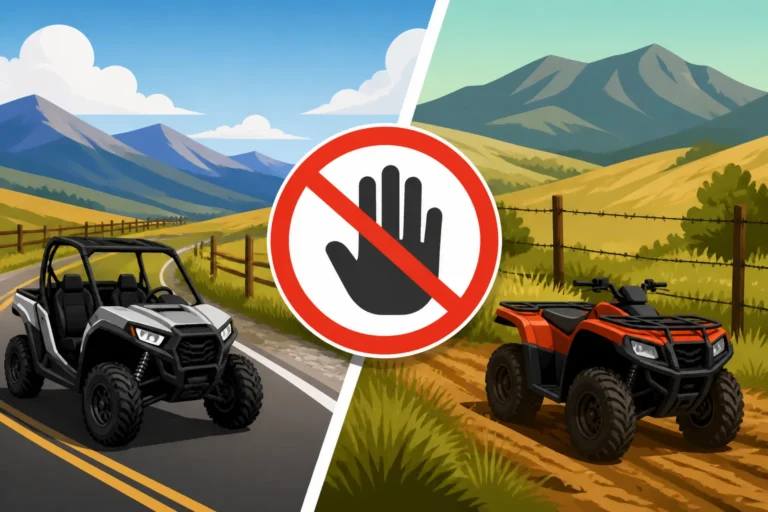
Let's cut right to the chase: In Montana, if you're between the ages of 12 and 15, you generally cannot operate an ATV or UTV on a public road, county road, or highway. The fundamental reason for this restriction is tied directly to driver's licensing requirements. To legally operate a motor vehicle (including a street-legal OHV) on public roads in Montana, you must possess a valid driver's license. Since individuals in the 12-15 age range typically do not have a full, unrestricted driver's license, they are automatically excluded from riding OHVs on most public roadways. This rule is in place because driving on roads requires a different set of skills and judgment than off-road riding, including understanding traffic laws, sharing the road with other vehicles, and reacting to unpredictable situations.
This can be incredibly frustrating for families. Imagine you're staying at a cabin and just want to ride your side-by-side to the nearest trailhead a mile down a gravel county road. If your 14-year-old is a skilled rider and wants to drive their own machine, this rule means they can't. The expectation is that an adult with a valid driver's license would be operating the OHV on any public road section. This clear distinction between trail use and road use is a common point of confusion, but it's a very firm line in Montana's regulations. For more on the specifics, consult [Driver's License Rules for Montana Road Riding] and [Montana Rules for a 12-Year-Old on a Road]. It really highlights that while your young rider might be competent on the trail, the road presents an entirely different legal and safety landscape.
Exceptions: Private Land and Designated OHV-Friendly Towns
While the general rule is quite restrictive, there are specific situations where a 12 to 15-year-old might be able to operate an OHV. The most straightforward exception is riding on private property. If you own the land, or have express permission from the landowner, your child can ride their ATV or UTV there, provided they are under the direct supervision of an adult and wearing appropriate safety gear. This is often where many young riders first develop their skills, learning the ropes in a controlled and safe environment away from public roads and traffic. It's a great way to introduce them to the sport without the added complexities of public land regulations.
Beyond private property, Montana does have a limited number of towns and counties that have passed specific ordinances allowing OHVs on certain designated streets or county roads within their jurisdiction. These are usually small, rural communities that embrace OHV tourism and recognize the practical needs of residents. However, it's absolutely crucial to understand that these ordinances are highly localized and can vary wildly from one place to another. A town might allow OHV use on specific streets for direct access to trailheads, but restrict it on main highways or through residential areas. Furthermore, even in these OHV-friendly towns, the state's age and driver's license requirements often still apply, meaning a 12 to 15-year-old without a valid driver's license might still not be able to operate a machine on those roads, even if an adult could.
Therefore, before planning any road-riding within a town or county, it is imperative to directly contact the local county sheriff's office, city hall, or county commissioners' office to confirm current ordinances and, critically, any age or licensing restrictions that might still apply to youth. Never assume. The rules can change, and what's allowed in one town might be strictly prohibited just a few miles down the road. For insights into which communities might be more accommodating, you could look into [Montana Towns That Allow OHVs on Their Streets] or explore the role of [County Commissioners and Montana County Roads] in setting local access rules.
Crossing Highways and Designated Crossings
Even if riding on a public road is largely off-limits for your 12 to 15-year-old, there might be instances where they need to cross a highway or a paved road to get from one section of a trail to another. Montana law does make provisions for OHVs to cross public roadways, but these crossings are strictly regulated and require extreme caution, especially with young riders involved. It's not a free-for-all dash across traffic; it's a carefully executed maneuver.
When crossing a highway, all riders, including youth, must come to a complete stop before entering the paved surface. They must yield to all oncoming traffic, waiting until the road is completely clear and it's safe to proceed. The crossing must be made at approximately a 90-degree angle to the road, essentially going straight across the shortest distance possible. It's not permissible to ride along the shoulder or on the pavement for any distance to reach a crossing point; you must wait for a clear break in traffic and make the direct traverse. For your 12 to 15-year-old, direct adult supervision is absolutely critical during these crossings. The supervising adult should go first or position themselves to ensure the young rider makes the crossing safely and correctly.
These rules exist because highway crossings, even brief ones, are inherently dangerous points of interaction between OHVs and much faster, heavier highway traffic. The risk of collision is significant if proper procedures aren't followed. Teaching your child the absolute importance of looking both ways multiple times, waiting for a completely clear path, and crossing efficiently is a vital safety lesson. Emphasize that patience is key – it's always better to wait for an extended break in traffic than to rush a crossing. For more details on the legalities of this, refer to [Crossing a Montana Highway on an OHV]. Safety should always be the top priority, and understanding these specific rules is crucial for preventing accidents.
Understanding Machine Eligibility and Size Restrictions
It's not just about the rider's age and experience; the machine itself plays a big role in what's allowed for young riders in Montana. The state has specific guidelines regarding the size and type of OHV a 12 to 15-year-old can operate, all designed to ensure that the machine is appropriate for their physical capabilities and skill level. It's a thoughtful approach to minimize risk and make sure the machine isn't overpowering the operator.
Engine Size Limits for Young Riders
Montana has specific rules outlining the maximum engine displacement for OHVs operated by young riders on public lands. Generally, for those under 16, there are limits on the cubic centimeter (cc) size of the engine. For instance, a common guideline might be that riders under 16 cannot operate an ATV or UTV with an engine exceeding a certain size. This isn't just a number plucked from thin air; it's based on the understanding that larger engines equate to more power, higher top speeds, and heavier machines that require greater strength, control, and judgment to operate safely.
Consider the physical demands of controlling a powerful machine. A smaller, lighter 12 or 13-year-old might struggle to safely maneuver a full-size ATV designed for adults, especially on uneven terrain or during an emergency braking situation. The weight of the machine, its acceleration, and its stability characteristics are all factors that are carefully considered when these limits are set. Exceeding these limits not only puts the young rider at greater risk but also creates a legal liability for the supervising adult. It's an easy rule to overlook, but a critical one to adhere to.
Before you purchase or allow your child to ride an OHV, double-check the current regulations regarding [Youth Machine Size Rules Montana Parents Ask About]. This will provide the most up-to-date and specific engine size limits for different age groups. It's essential to match the machine to the rider, not just their age, but their individual size, strength, and experience level. Starting with a smaller, less powerful machine allows them to build fundamental skills and confidence before graduating to larger, more capable vehicles, ensuring a safer and more positive introduction to the world of OHV riding.
Single-Rider vs. Multi-Passenger Machines
The type of machine your child is riding also dictates whether they can carry a passenger or even be a passenger themselves, particularly for those aged 12 to 15. The general rule for ATVs (all-terrain vehicles) is that they are designed for a single operator. Unless the ATV is specifically manufactured with a designated passenger seat and footrests (which are less common for youth-sized machines), carrying a passenger is generally prohibited and extremely dangerous. Adding an extra person on a single-rider ATV can drastically alter its balance and handling characteristics, making it much harder to control, especially for a young rider who is still developing their skills.
Side-by-sides (UTVs), on the other hand, are designed with multiple seats and roll cages, making them inherently safer for carrying passengers. However, even with side-by-sides, there can be specific rules regarding the age of passengers, especially if the operator is a minor. A 12 to 15-year-old operating a UTV on public land or trails (under adult supervision) might be restricted from carrying passengers, even if the machine has multiple seats, or there might be requirements for the age and size of the passenger. The rationale here is that operating a multi-passenger vehicle requires an even higher level of judgment and responsibility, as the operator is responsible for the safety of others.
The safest approach, especially when your 12 to 15-year-old is the operator, is to ensure they are the only person on the machine, whether it's an ATV or a UTV, unless specific regulations and the machine's design clearly permit a passenger. This allows them to focus solely on operating the machine and navigating the terrain. For comprehensive information on this, particularly concerning road use, you should refer to [Montana Passenger Rules on a Road Section]. Always prioritize safety and err on the side of caution when it comes to carrying additional riders, especially with young operators.
Modifying Machines for Youth Riders and Why It's Tricky
Many parents, in their effort to make riding safer and more accessible for their kids, consider modifying youth OHVs. While some modifications can indeed enhance safety, it's a path that requires careful consideration to ensure you're not inadvertently violating regulations or creating new safety hazards. The goal is always to match the machine's capabilities to the rider's skill level, and sometimes a few tweaks can help achieve that.
Discretionary modifications often focus on limiting speed and power. Throttle restrictors, for instance, are common aftermarket additions that prevent the throttle from opening fully, thereby reducing the machine's maximum speed. Similarly, some parents might look into governor adjustments if the machine allows for it. These types of modifications can be particularly useful for younger or less experienced riders, allowing them to gain confidence and master control at lower speeds before progressing to the machine's full potential. When considering such modifications, choosing reputable brands that specialize in OHV parts is crucial. For example, SuperATV offers a range of durable aftermarket parts that could include things like enhanced protective guards or even components designed for greater stability, though specific speed limiters might be a more generalized youth-focused product.
However, there's a fine line between enhancing safety and modifying a machine beyond its intended design or the state's regulations. Modifying an engine in ways that increase its power beyond youth limits, or altering critical safety features, is a definite no-go. Such changes could void warranties, compromise the machine's structural integrity, and most importantly, put your child at significant risk. Always ensure any modifications are reversible, safety-focused, and, most importantly, do not push the machine beyond the legal engine size or power limits for their age group. The best practice is to consult the machine's owner's manual and, if uncertain, seek advice from a certified mechanic or your local OHV dealer before making any significant changes.
Registration, Permits, and Paperwork for Young Riders' Machines
Even though the rider is young, the machine they're operating is subject to the same registration and permit requirements as an adult's OHV in Montana. This is a crucial administrative step that ensures the machine is legally recognized, helps fund trail maintenance, and establishes ownership. Overlooking these details can lead to fines and a quick end to an otherwise fun day on the trails.
Registering a Machine a 12-15 Year Old Rides
When a 12 to 15-year-old is going to be riding an OHV, the machine itself must be properly registered in Montana. However, since a minor cannot legally own a motor vehicle, the registration will typically be in an adult's name – usually a parent or legal guardian. This means that while your child is the primary operator, you, as the adult, hold the legal responsibility for the machine's compliance. The process involves taking proof of ownership and identification to your local county treasurer's office.
Montana offers a unique "one-time permanent" OHV registration, which is a fantastic benefit for residents. Once you pay this fee, your machine is registered for as long as you own it, eliminating the need for annual renewals. This makes the administrative side of things much simpler in the long run. When you register, you'll receive a registration card and a decal that must be prominently displayed on the machine. This decal signals to law enforcement and trail managers that your OHV is legally cleared for use on public lands. For a full breakdown of the process, including what documents you'll need, refer to [Registering an OHV in Montana] and [Montana's One-Time Permanent OHV Registration]. It's a straightforward process, but it's one that cannot be skipped.
It's also important to remember that this registration is specifically for the machine. It doesn't grant the operator any special privileges regarding age or licensing. So, while the machine might be legally registered, the young rider must still comply with all age, supervision, and safety certificate requirements. The registration is essentially the machine's legal identity, separate from the operator's legal qualifications. Keeping the registration current and easily accessible is part of responsible OHV ownership in Montana.
The Resident OHV Trail Pass and Non-Resident Temporary Use Permit
Beyond the initial machine registration, nearly every rider, regardless of age, needs a specific permit to use Montana's public OHV trails. This applies to your 12 to 15-year-old just as it would to an adult, and it's a vital component of funding the maintenance and development of the very trails you enjoy. These fees directly contribute to signage, bridge repairs, erosion control, and other crucial infrastructure that keeps our trail systems open and safe.
For Montana residents, once your OHV is registered, you'll also need to acquire a Resident OHV Trail Pass. This is typically a small annual fee that helps support the state's OHV program. It's often purchased through the Fish, Wildlife & Parks (FWP) licensing system, which can sometimes be done online or at various vendors. While the machine registration is permanent, the trail pass is an annual requirement. For all the details on what it covers and how to obtain it, check out [Montana's Resident OHV Trail Pass]. It's a minimal cost for the immense value of accessing Montana's incredible trail network.
If you're visiting Montana with an out-of-state registered machine, your 12 to 15-year-old (and any other rider in your group) will need a Non-Resident Temporary Use Permit. This permit is designed for visitors who don't permanently register their machines in Montana but still wish to use the state's public OHV trails. This permit is also usually an annual purchase and ensures that out-of-state users contribute to the upkeep of the trails they enjoy. It's especially important to secure this before you arrive or at the earliest opportunity, as wardens do check for compliance. More information on this can be found at [Montana's Non-Resident Temporary Use Permit]. Regardless of residency, ensuring every rider, especially youth, has the proper permits is not just about compliance, but about contributing to the future of OHV recreation in Montana.
Carrying Required Documents While Riding
Imagine you're out on a beautiful Montana trail with your 12 to 15-year-old, enjoying the scenery, when a warden or sheriff's deputy approaches. The last thing you want is a legal headache because you don't have the necessary paperwork. Just like with a car, there are specific documents you're required to carry when operating an OHV on public lands, and this applies even more stringently when you have a young rider under supervision.
For the machine itself, you absolutely need to carry the current registration card. This proves that the OHV is legally registered in Montana. This card should be kept in a waterproof bag or container, either on your person or securely on the machine, where it won't get lost or damaged. For the young rider (and any adult operators), they must carry proof of their Montana OHV Safety Certificate. If the supervising adult is operating the machine on a permitted road section, their valid driver's license would also be required. It’s a good idea for the supervising adult to also carry their own identification.
The rationale is clear: law enforcement needs to verify that both the machine and its operator (and supervisor) are compliant with state laws. Failure to produce these documents upon request can lead to citations and even the impoundment of the machine in some cases. It's a simple, yet often overlooked, part of responsible riding. Before every ride, make a quick checklist to ensure all necessary documents are packed. This small habit can save a lot of trouble and ensures that if you encounter an officer, the interaction will be brief and smooth. For additional guidance on what paperwork to keep handy, refer to [Do You Carry Paperwork on a Montana Trail?].
Supervision and Parental Responsibilities
When a 12 to 15-year-old is riding an OHV in Montana, the role of the supervising adult moves beyond mere oversight—it becomes a legal and moral responsibility. The state places a significant emphasis on adult supervision for youth riders, recognizing that while young people can develop excellent riding skills, they often lack the judgment, experience, and immediate risk assessment capabilities of an adult.
Direct Supervision Requirements
Montana law is quite explicit about the need for direct supervision for riders under 16 years of age on public lands. This isn't just about being in the same general area; it requires the supervising adult to be within "direct visual contact." This means you need to be able to see your 12 to 15-year-old at all times they are operating the OHV. You should be close enough to communicate with them, to observe their riding style, and, most importantly, to intervene quickly if a dangerous situation arises.
The idea behind direct visual contact is to ensure that the adult can actively monitor the young rider's decisions and reactions, providing immediate guidance or correction. For example, if your child is approaching a steep decline or a rocky section that might be beyond their current skill level, you should be able to signal them to stop, offer advice, or even lead them through it. This level of supervision also helps with teaching proper trail etiquette, such as yielding to uphill traffic or respecting wildlife encounters. For more detailed information on what constitutes appropriate supervision, check out [Adult Supervision Expectations in Montana]. It’s about being an active participant in their learning and safety, not just a passive observer.
This requirement also means that you can't have your young rider disappear around a bend while you linger behind. It demands a level of proximity that fosters safety and enables effective teaching. If you're riding with multiple young riders, you might need additional adults to maintain direct supervision over each child, ensuring no one is out of sight or beyond immediate assistance. This might mean adjusting your group's riding formation or choosing trails that are more conducive to maintaining visual contact with all young riders.
The Role of a Safety-Conscious Adult
Beyond the legal requirements of direct supervision, the role of a safety-conscious adult extends into actively mentoring and modeling responsible behavior for young riders. It's not enough to just be there; you need to be an instructor, a guide, and a role model. This means setting clear expectations for safe riding, consistently enforcing those expectations, and demonstrating good habits yourself. If your child sees you cutting corners or disregarding rules, they are likely to follow suit.
A truly safety-conscious adult will emphasize pre-ride checks, ensuring the machine is in good working order before heading out. They'll teach their young rider how to read trail signs, understand trail difficulty ratings, and always ride within their limits, never pushing themselves or their machine beyond what's safe. This also involves teaching environmental responsibility—staying on marked trails, packing out trash, and respecting private property boundaries. Instilling these values early helps create a new generation of respectful and sustainable OHV enthusiasts.
This role also includes preparing for the unexpected. Teaching your child basic troubleshooting for minor mechanical issues, what to do if they get separated from the group, or how to signal for help can be invaluable. It's about empowering them with knowledge and confidence, not just restricting them. Being a safety-conscious adult means making a conscious effort to educate, reinforce, and lead by example, ensuring that your 12 to 15-year-old develops not only riding skills but also a deep understanding of safety, respect, and responsibility on the trails.
Consequences of Non-Compliance
Ignoring Montana's OHV rules, especially those pertaining to young riders, carries real and often unpleasant consequences. These aren't just minor infractions; they can range from monetary fines to more serious penalties, all designed to deter unsafe and illegal riding practices. As the supervising adult, you bear the primary responsibility for ensuring your 12 to 15-year-old complies with all regulations, and therefore, you're usually the one facing the repercussions if something goes wrong.
The most common consequence is a citation, which comes with a monetary fine. For example, if your child is caught operating an OHV without a required safety certificate, or if they're riding unsupervised, you could face a significant fine. These penalties are not trivial and can quickly add up, turning an enjoyable outing into an expensive lesson. Furthermore, repeated violations or particularly egregious acts of non-compliance could lead to more severe actions, such as the temporary suspension of riding privileges for both the child and the supervising adult, or even the impoundment of the machine. Imagine having your side-by-side towed away from a remote trailhead—that's a situation no one wants to experience.
Beyond the legal and financial penalties, there's the moral consequence. Allowing your child to ride unsafely or illegally puts them and others at risk. An accident, particularly one that could have been prevented by following regulations, carries a far greater burden than any fine. The state's rules are in place for a reason: to promote safety and preserve access to our public lands. Adhering to them ensures that everyone, especially our young riders, can enjoy Montana's natural beauty responsibly. For an overview of potential fines and penalties, you might want to review [Penalties for an Unregistered OHV in Montana], as many of those principles apply broadly to other violations as well. Understanding these consequences is a powerful motivator for compliance.
Practical Tips for a Safe and Enjoyable Experience
Ensuring your 12 to 15-year-old has a safe and enjoyable time on their ATV or UTV in Montana goes beyond just following the rules; it involves proactive planning and instilling good habits. The more prepared you are, and the more prepared your young rider is, the more positive their experiences will be, fostering a lifelong love for off-road recreation.
Pre-Ride Safety Checks and Maintenance
A crucial habit to instill in any rider, especially a young one, is the importance of a thorough pre-ride safety check. This routine inspection, performed before every single ride, is your first line of defense against unexpected mechanical failures on the trail. It's a hands-on way to teach responsibility and basic machine knowledge. Start with the "T-CLOC" mnemonic often taught in safety courses: Tires and Wheels, Controls, Lights and Electrics, Oil and other Fluids, and Chassis.
For tires, check the pressure, look for cuts or bulges, and ensure the lug nuts are tight. Verify that all controls—throttle, brakes (front and rear), steering—operate smoothly and are not sticking. If your machine has lights (headlights, taillights, brake lights), check that they are functional, especially if you plan to be out near dusk or on roads. Ensure all fluid levels are adequate, including oil, coolant, and brake fluid. Finally, inspect the chassis, looking for loose bolts, damaged suspension components, or anything that looks out of place. It’s also wise to check the chain or drive belt for proper tension and wear. Using quality parts for any necessary replacements can make a difference in durability and performance; for instance, some riders opt for components from SuperATV when looking for robust aftermarket solutions to ensure their machine can stand up to rugged Montana conditions.
Beyond daily checks, regular maintenance according to the manufacturer's schedule is paramount. This includes oil changes, filter replacements, spark plug checks, and suspension lubrication. Teaching your 12 to 15-year-old how to perform some of these basic checks themselves not only empowers them but also helps them understand the mechanics of their machine, fostering a deeper respect for it and a greater awareness of its condition. A well-maintained machine is a safer machine, and it contributes significantly to a worry-free riding experience for the entire family.
Choosing Appropriate Trails and Riding Conditions
Montana boasts an incredible network of OHV trails, but not all trails are created equal, especially when riding with a 12 to 15-year-old. Matching the trail's difficulty to your child's skill level and the capabilities of their machine is key to preventing accidents and ensuring a fun, confidence-building experience. Overly challenging terrain can quickly lead to frustration, fatigue, and dangerous situations.
Before heading out, research the trails you plan to ride. Utilize resources like Forest Service Motor Vehicle Use Maps (MVUMs), online trail guides, and local OHV club information. These resources often include difficulty ratings, elevation profiles, and descriptions of potential obstacles. For a young rider, start with trails rated as "easy" or "moderate." Look for trails that are relatively smooth, wide enough for comfortable passage, and have gradual inclines and declines. Avoid trails with large rocks, deep mud, steep side-hills, or sharp, blind turns until your child has significantly more experience and skill.
Moreover, always be aware of the current riding conditions. Montana weather can change rapidly, and trail conditions can be drastically different after rain or snowmelt. A trail that's easy and fun when dry can become a dangerous, muddy mess when wet. Check conditions before you go, especially concerning [Montana Trail Conditions After Snowmelt] or potential [Montana Trail Closures in Fire Season]. A trail that's closed due to fire danger or excessive mud isn't just an inconvenience; riding it can lead to resource damage, fines, and unsafe conditions. Teaching your child to respect trail conditions and closures is a vital part of responsible off-road ethics.
Communication and Emergency Preparedness
Even with all the planning and precautions, the backcountry always holds the potential for unexpected situations. That's why good communication within your riding group and robust emergency preparedness are absolutely essential, especially when you have 12 to 15-year-olds along for the ride. Equipping them with the knowledge and tools to handle emergencies is just as important as teaching them how to ride.
First, establish clear communication protocols within your group. Teach your young rider standard hand signals for stopping, slowing down, turning, and indicating hazards. Discuss what to do if they get separated from the group: always stop, stay put, and wait for the adults to return. Consider equipping each rider with a two-way radio or a whistle for short-range communication. In areas with no cell service (which is common in much of Montana's backcountry), a satellite messenger device can be a literal lifesaver, allowing you to send emergency messages even when out of range. Knowing [What to Carry on a Remote Montana Ride] is a key part of this preparedness.
Your emergency kit should be comprehensive. A well-stocked first-aid kit is non-negotiable, capable of handling everything from minor scrapes to more significant injuries. Carry basic tools for minor repairs (tire plug kit, air pump, basic wrench set), extra fuel, water, and emergency food. A tow strap or winch can be invaluable for recovery; consider equipping your machine with a reliable winch, for example, from SuperATV, known for their durable recovery gear. Teach your child basic first aid and what to do if an adult is injured. Discuss potential hazards like wildlife (especially bears in Montana) and how to react safely. By being prepared for the unexpected, you empower your young rider and ensure that even if things go awry, you have the resources and knowledge to manage the situation safely.
The "Spirit" of the Rule: Why These Restrictions Exist
It's easy to feel frustrated by rules and regulations, especially when they limit the freedom of your eager young riders. However, understanding the underlying "spirit" or intent behind Montana's restrictions for 12 to 15-year-olds can help shift perspective. These rules aren't designed to be arbitrary obstacles; they are carefully considered measures to ensure safety, promote responsible recreation, and protect the future of OHV access for everyone.
Protecting Young Riders and Other Trail Users
At its core, Montana's age and licensing restrictions for young OHV riders, particularly concerning road access, are about protection. Young riders, while often quick to learn the physical act of riding, are still developing critical cognitive skills such as judgment, risk assessment, and quick decision-making under pressure. Navigating traffic, anticipating the actions of other drivers, and understanding complex road signs demand a level of maturity that typically comes with age and extensive driving experience. Placing a 12 to 15-year-old in a road environment where they might encounter high-speed vehicles, unexpected hazards, or complex intersections simply isn't safe for them or for other road users.
Off-road, these protective measures extend to things like engine size limits and supervision requirements. These rules recognize that an overpowered machine can overwhelm a young rider, leading to loss of control, accidents, and potential injury. Likewise, direct adult supervision ensures that an experienced eye is present to guide, instruct, and intervene, preventing mishaps and reinforcing safe practices. It’s about creating a safe learning environment, reducing the likelihood of accidents, and minimizing conflicts between different types of recreational users on multi-use trails. The goal is not to exclude young riders, but to integrate them safely and responsibly into the OHV community.
Promoting Responsible OHV Recreation
Another vital aspect of these regulations is to promote a culture of responsible OHV recreation across all age groups. By establishing clear guidelines for youth, Montana aims to instill good habits and a strong sense of stewardship from an early age. The mandatory safety education course is a prime example of this; it's not just about passing a test, but about educating young people on the broader impact of their actions on the environment, other users, and the longevity of trail access.
When young riders are taught to respect engine size limits, adhere to trail rules, stay on designated routes, and ride with proper supervision, they learn that their actions have consequences. This understanding translates into greater respect for the natural environment, less trail damage, and fewer conflicts with other outdoor enthusiasts like hikers, equestrians, and mountain bikers. These rules are part of a larger strategy to ensure that Montana's natural beauty and its recreational opportunities remain viable and enjoyable for future generations. It’s about building a sustainable model for OHV use.
Preparing for Future Riding Opportunities
Finally, these rules, while they might feel restrictive now, are ultimately designed to prepare young riders for greater freedom and responsibility in the future. By requiring safety education, adult supervision, and adherence to machine limits, the state is ensuring that riders aged 12 to 15 are building a solid foundation of skills, knowledge, and judgment. This structured learning process equips them to become highly capable and responsible operators when they reach the age of 16 and can obtain a driver's license.
Think of it as an apprenticeship. The current restrictions allow for controlled learning and skill development, minimizing high-risk situations. Once they are 16 and have a valid driver's license, they will have earned the privilege to operate an OHV on legally designated roads, and to ride with more independence on trails. They will be better prepared to handle complex situations, make sound decisions, and fully appreciate the responsibility that comes with greater freedom. These early lessons are invaluable, ensuring that when the time comes, they can truly enjoy all that Montana's OHV opportunities have to offer, safely and confidently.
| Aspect | Riders Aged 12-15 on Public Trails (with supervision) | Riders Aged 12-15 on Public Roads (county roads, streets, etc.) |
|---|---|---|
| Driver's License | Not required (but adult supervisor needs one) | Generally NOT allowed (unless specific local ordinance allows, and rider possesses valid driver's license, which is rare for this age) |
| OHV Safety Course | MANDATORY | MANDATORY (if operating, but road operation is restricted) |
| Helmet | MANDATORY (under 18) | MANDATORY (under 18) |
| Eye Protection | Highly Recommended | Highly Recommended |
| Direct Supervision | MANDATORY by an adult 18+ | MANDATORY by an adult 18+ (if allowed at all) |
| Machine Registration | Required (in adult's name) | Required (in adult's name) |
| OHV Trail Pass | Required | Not applicable for road operation itself, but needed for trails |
| Engine Size Limits | Specific limits apply (e.g., usually based on cc) | Specific limits apply (if allowed at all) |
| Passenger Carrying | Generally restricted on ATVs; UTVs vary (check rules) | Generally restricted on ATVs; UTVs vary (check rules) |
Disclaimer
This article is for general informational purposes only and does not constitute professional advice. Laws, prices and regulations vary by location and change over time. Consult a qualified professional for guidance on your specific situation.