Headlight and Taillight Rules in Montana
Riding your ATV or UTV on Montana's roads can be an incredible experience, offering a unique way to connect trail systems or simply navigate from your ranch to the general store. However, the excitement can quickly turn into frustration if you're not absolutely sure about the rules, especially when it comes to something as fundamental as your machine's headlights and taillights. Many riders feel a knot in their stomach wondering if their factory setup is enough, or if they need to invest in upgrades just to legally cross a county road. This guide is here to untangle those rules, explaining exactly what Montana expects from your off-highway vehicle's lighting system when you venture onto public roadways.
Why Proper Lighting Is Non-Negotiable on Montana Roads
When you bring your off-highway vehicle (OHV) onto a paved or gravel county road in Montana, you're entering a shared space with other vehicles that often move much faster and are accustomed to certain visibility standards. It's not just about what you can see; it's crucially about what other drivers can see of you. The open road, even a quiet one, demands a different level of visibility than a remote two-track trail deep in the forest. Montana's regulations reflect this need, ensuring that all road users, including those on ATVs and UTVs, are adequately equipped to prevent accidents and maintain safety.
Safety First: Visibility for You and Others
Think about those moments when you've been driving your truck and suddenly a deer darts out, or a cyclist appears seemingly out of nowhere. That jolt of surprise is what we're trying to avoid when you're on your OHV. Proper lighting isn't just a suggestion; it's a lifeline. Headlights illuminate the road ahead, revealing potholes, wildlife, and oncoming hazards, giving you precious seconds to react. Taillights, on the other hand, are your machine's way of saying "I'm here!" to anyone approaching from behind, especially at dusk, dawn, or in adverse weather. Without them, your side-by-side or quad becomes a shadowy, almost invisible obstacle, a danger to yourself and everyone else sharing the road. This becomes particularly critical when navigating less-trafficked rural roads where other drivers might not expect to encounter an OHV.
Beyond just the basic visibility, well-maintained and correctly aimed lights also reduce driver fatigue during longer stretches of road riding. Squinting into the darkness or constantly worrying if you're visible behind you adds mental strain, which can lead to mistakes. Investing a little time in understanding and ensuring your lighting is up to par is a small price to pay for peace of mind and, more importantly, safety. It ensures your machine is a predictable and visible presence, rather than a hidden hazard, no matter the conditions you're riding in.
Legal Necessity: Avoiding Tickets and Trouble
While safety is paramount, let's be honest: no one wants a ticket, especially when you're just trying to enjoy a ride. Montana law is clear about what's required for OHVs on public roads, and these rules are enforced by local sheriff's deputies, county commissioners, and even [Sheriff Enforcement on Montana Back Roads]. An officer stopping you for non-compliant lighting can not only issue a citation but might also prevent you from continuing your ride until the issue is resolved, which could ruin your whole day. The fines associated with violating lighting regulations can range from a slap on the wrist to a significant dent in your wallet, depending on the severity and whether it's a repeat offense.
Beyond fines, non-compliance can have far-reaching implications, particularly if you're involved in an accident. If your machine's lighting is found to be inadequate or not functioning correctly, it could complicate insurance claims, potentially leaving you liable for damages or injuries. This isn't just a theoretical concern; it's a real-world risk that can turn a fun outing into a legal and financial headache. Understanding and adhering to these rules is a fundamental part of responsible OHV ownership in Montana, ensuring you stay on the right side of the law while enjoying the privilege of [Riding an OHV on the Road in Montana].
Specific Headlight Requirements for Montana Road Use
When you're rolling your ATV or UTV onto a Montana road, your headlights aren't just for seeing what's directly in front of your machine on a dirt trail. They transform into a crucial safety device, signaling your presence and direction to other motorists, and illuminating the pavement or gravel surface you're sharing. Montana's regulations specify certain criteria for these lights, ensuring they meet a minimum standard for road safety. It's not enough to just have a light; it needs to be the right kind of light, functioning correctly.
When Your Headlights Must Be On
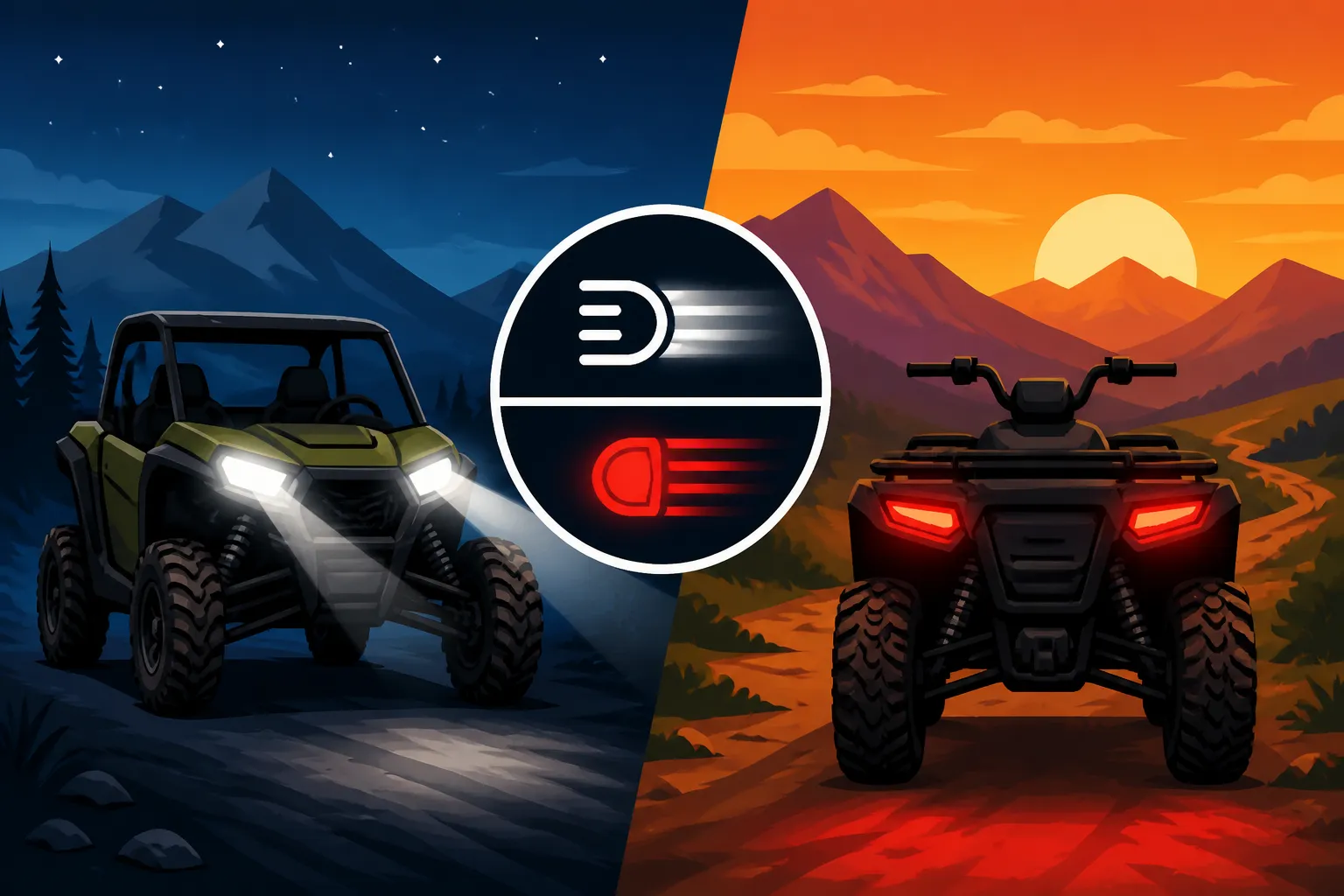
In Montana, the law generally requires your headlights to be on from one-half hour after sunset to one-half hour before sunrise. This is the standard twilight and nighttime rule for all vehicles, and your OHV is no exception when on a public road. However, many riders, myself included, will tell you that it's a good practice to keep your [Lights On at All Times in Montana] when operating an OHV on a public roadway, regardless of the time of day. This dramatically increases your visibility, especially on winding roads or through shaded sections where you might be less noticeable.
Additionally, if visibility is poor due to weather conditions like fog, heavy rain, or snow, your headlights must be illuminated. These conditions reduce visibility for all drivers, and an OHV, being smaller than a typical car or truck, can be particularly hard to spot. Many modern UTVs come equipped with daytime running lights, or riders add aftermarket options like those from SuperATV, which can serve this purpose well. But always remember, a proper headlight system is designed to provide maximum illumination and visibility for night driving and adverse conditions.
Beam Intensity and Aim
Montana law dictates that headlights must be powerful enough to project a white light capable of illuminating objects at least 500 feet ahead under normal atmospheric conditions. This isn't just about brightness; it's about effective projection. You can't just slap on the brightest LED bar and call it good. The beam needs to be focused and aimed correctly to effectively light up the road without blinding oncoming traffic. Improperly aimed headlights are not only a nuisance but can create a dangerous situation for others. Imagine a side-by-side with high beams pointed straight into your eyes on a dark road – it's a serious hazard.
Manufacturers design OHV headlights for general off-road use, but when adapting for road legal status, it’s often necessary to check the aim. If you've installed an aftermarket light kit, perhaps a robust system from SuperATV, you'll want to ensure it complies with the aiming regulations. Typically, this means the beam should be directed slightly downwards to light the road surface and minimize glare. If your machine only has off-road-style lights that spray light everywhere, they likely won't meet the legal requirements for beam intensity and aim on public roads, and you might need additional, road-legal headlights installed.
Number and Placement
For road-legal operation, Montana requires an OHV to have at least one, but no more than two, headlights on the front of the vehicle. These headlights must be mounted at a height between 24 inches and 54 inches from the ground. While many ATVs come with a single headlight and UTVs often have two, ensuring they fall within this height range is crucial. A light mounted too low might not project effectively over the road, while one mounted too high could interfere with the vision of other drivers.
Consider a rider upgrading their older ATV for road use. They might find their original headlight is sufficient, but if it's damaged or too dim, they might choose to install a new, brighter replacement. For UTVs, the factory headlights usually meet the "two headlight" requirement, but riders might choose to add auxiliary lights for trail riding. It's important to remember that these auxiliary lights, like powerful LED light bars, are generally not considered legal for use on public roads when traffic is present due to their intense, unfocused beam that can blind other drivers. They are designed for off-road use only, and must be covered or switched off when on public roads.
Specific Taillight and Brake Light Requirements
Just as important as seeing where you're going is ensuring that everyone behind you knows you're there and what your intentions are. Taillights and brake lights serve this critical function, providing rearward visibility that can literally save lives. When you're driving your OHV on a Montana road, you're not just a lone rider; you're part of a complex traffic ecosystem, and clear signals are paramount for preventing rear-end collisions and confusion.
Rear Visibility: Why It's Critical
Picture this: you're cruising down a gravel road in your UTV, enjoying the scenery, maybe a little dusty. Suddenly, you need to slow down for a deer crossing or a sharp turn. The driver behind you, perhaps in a larger pickup truck, needs to know your intentions immediately. If your taillights are dim, covered in mud, or simply non-existent, that driver has no warning. That's a recipe for disaster. Taillights provide continuous illumination, making your machine visible from a safe distance, day or night. [Montana OHV Decals and Rear Placement] helps with daytime visibility too, but at night, only proper lights will do.
Brake lights are an even more urgent signal. When you hit the brakes, that sudden flash of bright red light tells the driver behind you, "Warning! I'm decelerating quickly!" This instant communication is vital for maintaining safe following distances, especially when speeds are higher on open county roads. Without functional and visible brake lights, your OHV is a silent, unpredictable hazard, massively increasing the risk of a rear-end collision. This is particularly true if you are carrying passengers or cargo that might obscure any other visual cues.
Number, Color, and Brightness
Montana law requires an OHV to be equipped with at least one taillight, which must emit a red light visible from at least 500 feet to the rear. This taillight should be mounted at a height between 24 and 54 inches from the ground. While one is the minimum, many UTVs come standard with two, and for increased safety, having two functioning taillights is always a good idea. The red color is universally recognized as a rear-facing warning signal, and its consistency is crucial for driver expectation.
In addition to the basic taillight, your OHV must also have at least one brake light, which also emits a red light visible from 500 feet to the rear when the brakes are applied. This brake light can be integrated into the same housing as your taillight, which is a common setup for most ATVs and UTVs. The key is that it must become distinctly brighter when the brakes are engaged, clearly signaling your intention to slow or stop. If you've modified your machine, always double-check these functions. Many riders install replacement LED taillight assemblies, for example, which can offer increased brightness and longevity compared to traditional incandescent bulbs.
Brake Lights and Turn Signals
While taillights provide constant rear visibility and brake lights signal deceleration, turn signals communicate your intended change in direction. In Montana, if you plan on [Riding an OHV on the Road in Montana] and frequently making turns, especially on roads with other vehicle traffic, turn signals are typically required. The law states that every motor vehicle, when required to be equipped with a stop lamp or lamps, shall also be equipped with electric turn signal lamps. These must be capable of displaying a flashing amber or red light at the rear and a flashing white or amber light at the front.
It's common for OHV owners to add aftermarket turn signal kits to meet this requirement. Companies like SuperATV offer complete street-legal kits that include turn signals, horns, and mirrors, making it easier to ensure full compliance. These kits usually come with clear instructions for installation. Ensure that your turn signals flash distinctly, are visible from at least 500 feet, and are correctly wired to your machine's electrical system. For both brake lights and turn signals, regular checks are essential. Before every road ride, do a quick walk-around and test, especially after a particularly dusty or muddy trail adventure. Ensuring your [Brake Requirements for a Montana Road Ride] and [Turn Signals on a Montana Machine] are functional is critical.
| Lighting Component | Montana Requirement | Purpose on Road | Important Notes |
|---|---|---|---|
| Headlights | 1-2, white, 500ft visibility, 24-54" high | Illuminate road ahead, show presence to oncoming traffic | Must be on from 1/2 hour after sunset to 1/2 hour before sunrise, and in low visibility. Proper aim prevents blinding. |
| Taillights | At least 1, red, 500ft visibility, 24-54" high | Show presence to vehicles behind | Provides continuous rear visibility. Often integrated with brake lights. |
| Brake Lights | At least 1, red, 500ft visibility, brighter than taillight | Signal deceleration/stopping to vehicles behind | Crucial for preventing rear-end collisions. Must activate reliably with brake pedal/lever. |
| Turn Signals | Front (amber/white) & Rear (amber/red), flashing | Communicate change of direction | Required for most road-legal OHVs. Often part of aftermarket street-legal kits. |
| Reflectors | Red at rear, visible 50-300ft | Passive visibility in low light/power failure | Supplemental to active lighting, good backup. |
Other Lighting and Visibility Considerations
While headlights, taillights, brake lights, and turn signals form the core of your OHV's road-legal lighting system in Montana, there are other elements that contribute to overall visibility and compliance. Thinking holistically about how your machine presents itself to other drivers can prevent close calls and ensure you're as safe as possible. These additional considerations often relate to supplementary lighting, signaling devices, and even general maintenance practices.
Reflectors and Auxiliary Lights
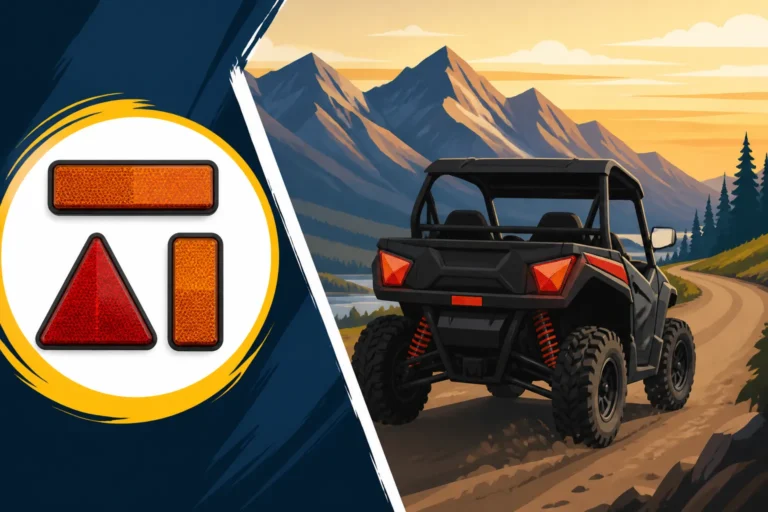
Even the best electrical system can fail, which is why passive reflectors are a mandated backup for road-going vehicles, including OHVs. Montana law specifies that your machine must have at least one red reflector on the rear, mounted between 20 and 60 inches from the ground, visible from 50 to 300 feet. These simple, inexpensive devices don't require power, offering a crucial layer of visibility if your primary lighting system experiences an issue. They catch the light from other vehicles' headlights, providing a silhouette of your machine. You'll often find these integrated into taillight assemblies or as separate stick-on or bolt-on units.
When it comes to auxiliary lights, such as large LED light bars or cube lights, it's vital to remember their intended purpose. These are designed for intense off-road illumination and are generally not street legal for use when other vehicles are present. Their broad, unfocused beams can severely blind oncoming drivers. If you have these on your machine for trail riding, you must ensure they are either covered or switched off and disconnected when operating on public roads. Using them improperly can lead to tickets and dangerous situations. However, smaller, well-aimed auxiliary lights that comply with headlamp regulations might be permissible as supplemental lighting, but always confirm local regulations.
Daytime Running Lights and Enhancements
Many newer UTVs come equipped with factory daytime running lights (DRLs), which are lower-intensity lights designed to increase your machine's visibility during daylight hours. While not always a specific requirement for OHVs on Montana roads (beyond the general "lights on in low visibility" rule), DRLs are an excellent enhancement for safety. They make your machine more conspicuous to other drivers, especially when they might not be actively looking for a smaller OHV. Aftermarket DRL kits are also available, and they can be a worthwhile addition if your machine doesn't have them.
Beyond DRLs, other enhancements can significantly boost your visibility. Reflective tape on various parts of your machine, while not specifically required for OHVs by Montana law, can add another layer of passive safety. Helmets with reflective elements or bright colors also help make the rider more visible. Furthermore, maintaining clean lenses on all your lights is incredibly important. Mud, dust, or snow can drastically reduce the effectiveness of even the brightest lights, so a quick wipe-down before hitting the pavement can make a huge difference.
Mirrors and Horns
While not strictly lighting components, [Mirrors Montana Road Riding Calls For] and [Montana Horn Requirements for Road Use] are absolutely essential for road-legal operation in Montana, as they significantly contribute to overall situational awareness and signaling. Montana law requires an OHV operated on a public road to have at least one rearview mirror, installed in a position that enables the operator to view traffic behind the vehicle. This is critical for changing lanes, merging, or simply being aware of approaching vehicles.
A working horn is also required. This isn't just for sounding off in frustration; it's a vital safety device to alert pedestrians, other drivers, or even wildlife to your presence. A quick "beep" can prevent an accident. Most street-legal kits, such as those from SuperATV, will include both a mirror and a horn to ensure full compliance. Always test these before your ride, just like your lights. The ability to see behind you and audibly warn others is as crucial to road safety as visible lights.
Compliance and Enforcement on Montana Roads
Navigating the various rules and regulations for OHV use on Montana roads can feel like a maze, and the lighting requirements are just one piece of that puzzle. However, understanding how these rules are enforced and what the consequences of non-compliance are is crucial for any responsible rider. It’s not just about avoiding a fine; it’s about contributing to a safe environment for everyone sharing Montana's beautiful scenery.
Understanding Montana's Regulations
Montana's road-legal OHV rules are primarily found within the state's motor vehicle statutes, specifically those pertaining to off-highway vehicles and general traffic laws. These laws define what is required in terms of equipment, including the type, number, color, and visibility range for headlights, taillights, brake lights, and turn signals. It's important to remember that these state-level regulations set the minimum standard. Individual counties or towns, through their commissioners or municipal ordinances, may have additional rules for [Montana Towns That Allow OHVs on Their Streets] or specific county roads. Always check with the local authorities if you plan to ride in a new area.
For example, while state law mandates basic lighting, a specific county might have an ordinance requiring additional reflectors or a more robust signal system if OHVs are heavily integrated into their road network. Resources like the Montana Fish, Wildlife & Parks (FWP) website or a quick call to a county treasurer's office can often provide clarity on specific local nuances. Staying informed is your best defense against inadvertently breaking a rule. Knowing [What Montana Requires on an OHV Road Ride] means more than just basic lights.
Consequences of Non-Compliance
Operating an OHV on a Montana road without the proper lighting can lead to a range of consequences, from minor inconveniences to serious legal trouble. The most immediate impact is often a traffic citation. A sheriff's deputy or local law enforcement officer who observes your machine operating with inadequate or non-functional lights can pull you over and issue a ticket. The specific [Montana OHV Ticket Costs by Violation] will vary depending on the exact infraction, but even a small fine can be frustrating.
Beyond the financial penalty, an officer might deem your machine unsafe for road use and instruct you to cease operation on public roads until the issue is rectified. This means you could be stranded, needing to arrange for transport for your OHV, which is a major hassle. More gravely, if you are involved in an accident and your lighting is found to be non-compliant, it could lead to increased liability. Your insurance company might refuse or reduce coverage, leaving you personally responsible for damages or medical expenses. In extreme cases of negligence or repeated offenses, more severe penalties could apply.
Finding Your Way Through the Rules
Deciphering all the legal jargon can feel overwhelming, but there are resources available to help you ensure your OHV is fully compliant. Start by reviewing the official Montana statutes regarding OHV operation on roads, which are often available online. Many riders also find it helpful to consult with local OHV clubs or powersports dealers, as they often have practical experience with what passes inspection and what doesn't. Dealerships that sell street-legal kits, like those from SuperATV, are usually knowledgeable about the specific requirements their products aim to meet.
Don't be afraid to ask questions. If you're unsure about a particular aspect of your lighting setup, contact your local law enforcement agency's non-emergency line or a county treasurer's office. Their goal isn't to trick you; it's to ensure public safety. They can often provide clarification on what they specifically look for when enforcing these rules. Ultimately, a proactive approach to understanding and implementing Montana's lighting regulations will keep you safe, legal, and enjoying those incredible road connections between trails or towns.
Disclaimer
This article is for general informational purposes only and does not constitute professional advice. Laws, prices and regulations vary by location and change over time. Consult a qualified professional for guidance on your specific situation.