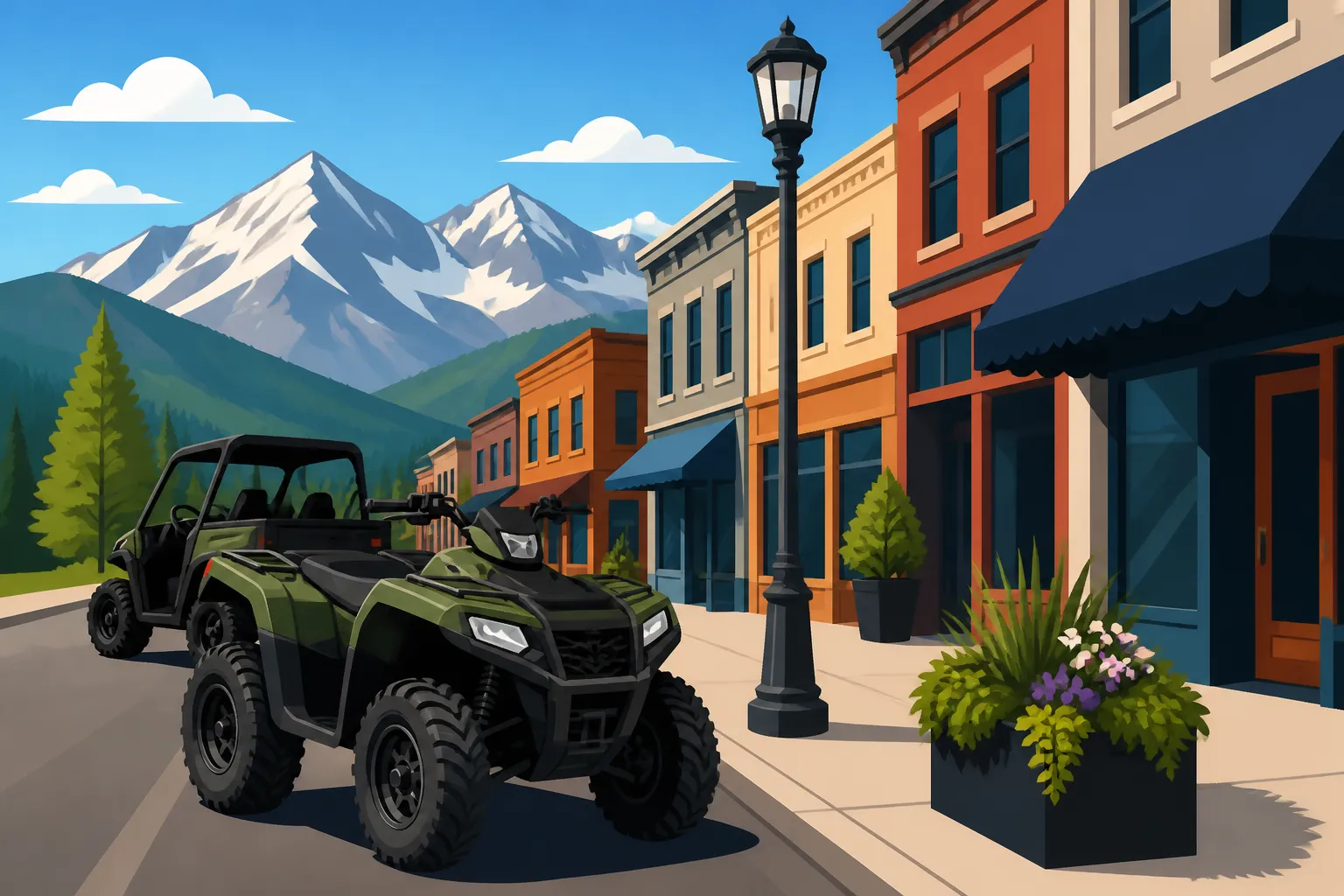
Parking an OHV on a Montana Main Street
It's an experience many of us cherish: riding the backcountry trails all day, dust on our boots, engine still warm, and then deciding to roll into a charming Montana small town for a burger and a cold drink. But as you slow down and look for a spot, a common question pops into your head: can I actually park this off-highway vehicle (OHV) on Main Street like a car, or am I asking for a ticket? This guide is here to clarify the often-confusing landscape of parking your ATV or UTV in Montana towns, making sure your pit stop for provisions doesn't turn into a headache.
Navigating Montana's OHV Road Access and Parking Laws
Montana has a unique approach to OHV road access, often leaving riders to piece together state law with local ordinances. While the state provides the overarching framework for where OHVs can generally operate, parking regulations often fall squarely into the hands of local municipalities. This means that what's perfectly acceptable in one trail town might get you a warning or even a fine just a few miles down the road.
State-Level Guidelines for OHV Use
At the state level, Montana permits OHVs on certain public roads and highways, primarily those maintained by counties or the Forest Service, provided the machine is properly registered and equipped. This includes having proper lights, brakes, and other safety gear required for road use. However, these state statutes typically focus on the operation of the machine, not necessarily its parking once you reach your destination. Think of it this way: the state might say you can drive from the trailhead to town, but it's the town that decides if you can parallel park in front of the diner. [Montana Rules for a 15-Year-Old on a Road]
For many riders, the assumption is that if you can legally drive an OHV on a particular street, you can also park it there. While this logic seems sound, it's not always the case. Many town ordinances regarding parking were written long before OHVs became a common sight on public streets and therefore may not explicitly address ATVs or UTVs. This can lead to ambiguity, where local law enforcement often defaults to treating an OHV as any other motor vehicle, or in some cases, a recreational vehicle that has different parking rules altogether. It's this gray area that causes a lot of frustration for riders simply trying to enjoy their day.
The Role of Local Municipal Ordinances
This is where the rubber meets the road, quite literally. Most cities and towns in Montana have their own set of ordinances that govern parking within their corporate limits. These ordinances will specify where you can park, for how long, and what types of vehicles are allowed in certain zones. For example, a town might have designated "motorcycle only" parking spots, or specific zones for oversized vehicles, but rarely will you see "OHV parking." This forces OHV operators into a position of interpreting existing rules, which can be a gamble. [Montana City Streets and Municipal Ordinances]
It’s not uncommon for smaller, trail-friendly towns to be more lenient or even have specific language accommodating OHVs, understanding that they are an economic driver. Larger towns, or those less accustomed to OHV traffic, might be much stricter. Imagine riding through the remote forests of the [Lolo National Forest OHV Trails] and then rolling into a bustling town like Missoula or Kalispell. Their city parking regulations will be far more complex and rigorously enforced than those in a tiny town like Polaris or Wisdom. Always assume the local rules will be the most restrictive and govern your parking choices.
Understanding Specific Parking Scenarios
When you're looking for a place to leave your OHV while you grab a bite or explore a shop, there are a few common scenarios you'll encounter. Each comes with its own set of considerations, from legality to security.
Street Parking on Main Street
Parking your OHV directly on a main street is usually the most convenient option, but also the one most likely to be subject to strict rules. Generally, if OHVs are allowed on the streets in that particular town, you'll need to follow the same parking rules as cars. This means looking for legal parking spaces, adhering to time limits (e.g., "2-hour parking"), avoiding no-parking zones, and ensuring you're not blocking fire hydrants, driveways, or crosswalks. The problem is, an OHV doesn't always fit neatly into a standard parking spot, and leaving it sticking out can invite unwanted attention or even a ticket.
Furthermore, some towns might have specific prohibitions against parking certain types of vehicles on main thoroughfares, or they might have specific requirements about how a vehicle must be oriented. You might pull up to a curb and think you're fine, only to find out the local ordinance prohibits parking "non-standard vehicles" in parallel spaces, or that OHVs are relegated to specific, less visible zones. It pays to look for signs, and if in doubt, choose an alternative. This frustration is real – you've driven responsibly to town, and now you're left guessing.
Utilizing Designated OHV Parking Areas
The best-case scenario is when a forward-thinking town has actually created designated OHV parking areas. These are typically found in trail-friendly communities that embrace OHV tourism. These spots might be clearly marked, often near trailheads, restaurants, or local businesses. They're a fantastic solution because they remove all doubt about legality and often provide enough space for larger UTVs or multiple ATVs. If you see signs for "OHV Parking" or "Trail Access Parking," make a beeline for them.
These dedicated areas also often come with better security considerations, sometimes being visible from businesses or even having security cameras. They might be gravel lots just off the main drag, or a section of a public parking lot set aside for your kind of machine. If a town goes to the effort of providing these, it’s a clear signal they welcome OHV riders, which is always a good sign. Always respect these spaces and their rules; they are a privilege that helps keep the peace between riders and residents.
Parking in Private Business Lots
Many riders opt to park in the private lots of businesses they plan to patronize, like a restaurant, hardware store, or gas station. This is generally a safer bet than street parking, provided you actually are patronizing that business. The key here is implied permission. If you're buying gas and a sandwich, parking in their lot is usually fine. However, you can't just park in a grocery store's lot and then wander off to another block for an hour. That becomes unauthorized parking on private property and could lead to towing or a complaint.
When parking in a private lot, try to choose a spot that's out of the way, not taking up prime real estate that a car might need, and not blocking traffic flow. For larger UTVs, finding an end spot or an area away from the main entrance is a courteous move. If you're unsure, or if you plan to be in town for a while, it's always a good idea to pop inside and ask the business owner or manager if it's okay to leave your machine there. Most will be accommodating, especially if you explain you're a customer. This simple act of communication can prevent a lot of potential problems.
Practical Considerations for Parking Your OHV
Beyond the legalities, there are several practical aspects to consider when parking your ATV or UTV in a Montana town. These largely revolve around security, visibility, and minimizing your impact on the local community.
Security Measures and Theft Prevention
Leaving your OHV unattended on a main street, even for a short time, can make it a target. ATVs and UTVs are valuable, and unfortunately, theft is a real concern. Always take basic precautions, just as you would with any vehicle. Lock your ignition, remove the keys, and consider additional security devices. A heavy-duty chain lock securing your machine to a fixed object (like a light pole or sturdy bike rack, if permissible) can be a strong deterrent. Disc locks for disc brakes are also good. [What Insurers Ask After a Theft]
For UTVs, make sure any valuable gear inside the cab is either removed or locked away. If you have a storage box, ensure it’s secured. Remember, opportunist thieves are looking for easy targets. Making your machine harder to steal dramatically reduces the risk. Many riders invest in robust security systems, and products from companies like SuperATV offer a range of locks, winches, and even secure storage boxes that can deter thieves and keep your gear safe while you’re enjoying a meal or shopping. Don't make it easy for someone to simply drive off with your investment.
Visibility and Public Perception
Your OHV stands out. It's not a car, and it often takes up more space, or is perceived as taking up more space, than a motorcycle. This means how you park can significantly influence how residents and other visitors perceive OHV riders. Parking courteously and without causing obstruction goes a long way. Don't park haphazardly, taking up multiple spots, or blocking sidewalks. This just creates resentment and can lead to calls to local authorities.
Think about how a local resident might see your machine. Is it parked neatly? Is it clean (or at least not actively dripping mud everywhere)? Is it making excessive noise? Being mindful of your machine's presence and its impact on others is crucial for maintaining good relationships between the riding community and local towns. A little bit of courtesy goes a long way in ensuring towns continue to welcome OHV riders.
Minimizing Impact and Maintaining Etiquette
When you roll into town from the trails, your OHV might be dirty, dusty, or even muddy. Try to be mindful of where this dirt might end up. Avoid parking directly on pristine paved areas if you can help it, especially if mud is actively falling off. If you're coming off a particularly muddy trail day, consider a quick stop at a self-serve car wash just outside of town before hitting Main Street, if one is available. This isn't just about cleanliness, it's about respecting the local environment and businesses.
Also, be aware of noise. While on the trails, the rumble of your engine is part of the experience, but on a quiet Main Street, it can be disruptive. Turn off your engine when parked, and avoid unnecessary revving. If you're with a group, keep conversations at a reasonable volume, especially if you're close to residences or outdoor dining areas. Remember, you're an ambassador for the entire OHV community when you're in town. [Mufflers and Spark Arresters in Montana]
| Parking Scenario | Pros | Cons | Best Practice |
|---|---|---|---|
| Street Parking (General) | Convenient, often close to amenities | Ambiguous rules, potential for tickets, security concerns | Follow all car rules, check local signs, be visible, secure machine. |
| Designated OHV Parking | Clear legality, often better security | May be further from some businesses, not always available | Always use if available, follow specific rules. |
| Private Business Lots | Usually accepted if you're a customer, often more space | Risk of towing if not a customer, can block others if not careful | Ask permission if staying long, park respectfully and out of the way. |
Common Misconceptions and What to Avoid
Navigating the nuances of OHV rules in Montana can be tricky, and there are several common misunderstandings that can lead to problems, especially when it comes to parking in town.
Assuming "Street Legal" Means "Park Anywhere"
Just because your OHV is equipped to be street legal in Montana (meaning it has the required lights, mirrors, horn, etc., and is properly registered) does not automatically grant you the right to park it anywhere a car can park. "Street legal" primarily refers to the operation of the vehicle on public roads. Parking is a separate issue governed by local ordinances, which can differentiate between vehicle types, or have specific rules that, while not explicitly targeting OHVs, might inadvertently make parking difficult. [What Montana Requires on an OHV Road Ride]
Think of it like a large RV. It's perfectly street legal to drive an RV on most roads, but you can't just park it anywhere on a residential street or Main Street for extended periods. OHVs can sometimes fall into similar categories under local interpretations. Always remember that local rules can impose greater restrictions than state law, and for parking, they almost always do.
Ignoring Posted Parking Signs and Time Limits
This might seem obvious, but it's a mistake riders sometimes make. Whether you're in an OHV or a car, posted parking signs are gospel. If a sign says "2-Hour Parking," "No Parking Anytime," or "Permit Parking Only," those rules apply to your OHV just as they would to any other vehicle. Time limits are particularly important in busy downtown areas. Overstaying a limit, even by a few minutes, is an easy way to get a parking ticket.
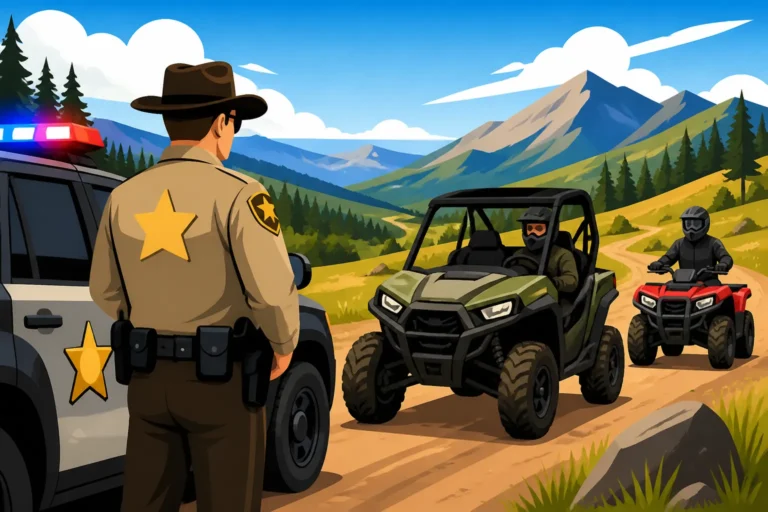
In small towns, enforcement might not be as rigorous as in larger cities, but it's still a risk. And in some communities, an OHV parked illegally might draw more attention from local law enforcement than a car, simply because it's less common. Don't assume that because your machine is different, the rules don't apply. They do. Respect the signage, and if you plan to be longer, seek out an alternative parking spot or move your machine.
Believing All Montana Towns Are OHV-Friendly
Montana is celebrated for its vast open spaces and numerous trails, and many towns are incredibly welcoming to OHV riders. However, it's a big state, and not every community embraces OHV traffic with open arms. Some towns, especially those that are more residential or don't have direct trail access, may have ordinances that heavily restrict or even prohibit OHV use on their streets, which would naturally extend to parking. [Montana Towns With Blanket OHV Ordinances]
It's always a good idea to do a quick check on a town's local ordinances if you plan to visit a new area with your OHV. A simple online search for "OHV rules [Town Name] Montana" can often provide the information you need. If you're unsure, or if you can't find clear information, plan to park your OHV just outside of the main town area, perhaps at a designated trailhead or a business on the outskirts, and walk or use another mode of transportation into the core downtown. This proactive approach ensures you avoid any potential conflicts or fines.
Final Tips for Parking Your OHV in Montana Towns
Making your OHV experience enjoyable, from the trail to the town, often comes down to preparation and respect. Here are a few final pointers to keep in mind.
Research Before You Ride
The absolute best advice for parking your OHV in a Montana town is to do a little homework before you even leave your driveway. If you know which town you're heading to, a quick search for their municipal code regarding OHVs or parking can save you a lot of hassle. Many towns, especially those popular with riders, will have information posted on their official websites or by their local Chamber of Commerce. Look for phrases like "OHV ordinance" or "street legal ATV rules." This small step can make all the difference between a relaxing visit and a frustrating encounter.
Knowing whether a town is generally OHV-friendly, and if they have specific designated parking, can help you plan your route and make smarter parking choices. For instance, if you're riding near West Yellowstone, you might find more specific guidance on [Riding an OHV Into West Yellowstone]. Similarly, [OHV Access on Red Lodge Streets] might offer different insights.
Have a Backup Plan
Sometimes, despite your best efforts, you might arrive in a town and find street parking impossible, or realize there are no designated OHV spots. Have a backup plan. This could involve identifying a larger, out-of-the-way parking lot (like a supermarket or hardware store on the edge of town, with their permission if you're staying long), or even opting to park further out and walk or bike into the main street area. For those running a larger UTV with significant modifications, such as heavy-duty protection from SuperATV, you might be particularly conscious of needing extra space, making a backup plan even more crucial.
Another backup plan might be to call a local business you plan to visit and ask them directly about parking options. A quick phone call can clear up a lot of uncertainty and ensures you don't waste time driving around looking for a spot. Being flexible and prepared for alternatives means your day stays fun, not frantic.
When in Doubt, Ask a Local
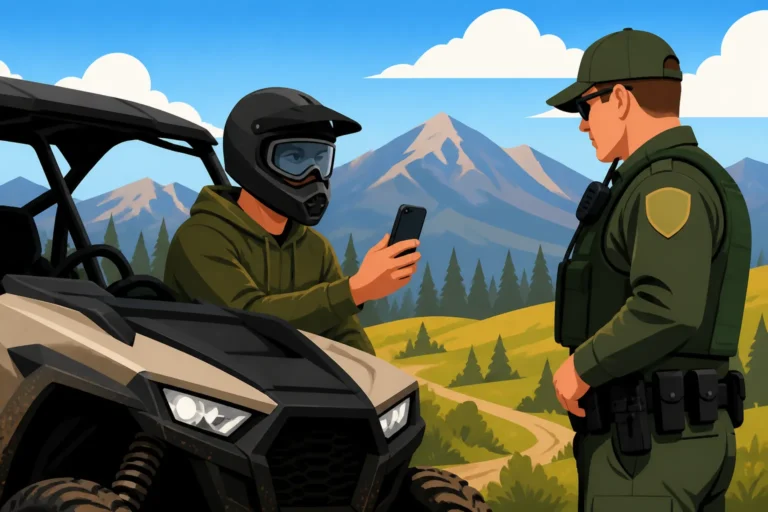
Montana is full of friendly people. If you find yourself in a new town and aren't sure about the parking rules, don't hesitate to ask a local business owner, a resident walking by, or even a local law enforcement officer if you see one. Politely explain your situation, mention you're visiting and want to be respectful, and ask where the best place to park your OHV would be. Most people will be happy to point you in the right direction. This approach not only gets you the information you need but also fosters positive relationships between riders and the communities they visit.
Remember, the goal is to enjoy your time in Montana, both on the trails and in its charming towns. A little forethought and common sense when it comes to parking your OHV can ensure your Main Street stops are as pleasant and hassle-free as your backcountry rides.
Disclaimer
This article is for general informational purposes only and does not constitute professional advice. Laws, prices and regulations vary by location and change over time. Consult a qualified professional for guidance on your specific situation.