Proving Insurance to a Montana Officer
You're out enjoying a fantastic ride on your ATV or UTV through Montana's stunning landscapes, perhaps navigating a scenic county road to access a new trail system or just heading into a small town for lunch. Suddenly, you see those flashing lights in your rearview mirror, and an officer waves you over. After asking for your driver's license and machine registration, the next question often hits: "Can I see your proof of insurance?" For many riders, this can be a moment of uncertainty. What exactly do they need to see, and what happens if you don't have it immediately on hand? This guide is here to clear up the confusion, walking you through exactly what Montana expects when you need to prove your OHV insurance to an officer, helping you ride confidently and stay compliant.
Why Montana Officers Ask for OHV Insurance Proof
It's a common misconception that because ATVs and UTVs are "off-highway vehicles," the same rules for street-legal cars don't apply. While much of your riding will indeed be off the pavement, Montana has specific regulations that kick in once your machine touches a public road, even briefly. An officer's request for proof of insurance isn't just arbitrary; it's rooted in the state's efforts to ensure responsible operation and financial accountability.
When you're operating your OHV on any public road, highway, or street in Montana where OHV use is permitted, the state's liability insurance requirements come into play. This isn't just about covering your machine, it's about protecting others in case of an accident. Just like with your car, if you cause damage or injury while operating your OHV on a public thoroughfare, you need to be able to cover those costs. Officers are simply ensuring that riders are adhering to these crucial safety and financial responsibility laws.
Furthermore, even if you’re primarily riding off-road, an incident might occur that brings law enforcement into the picture. Perhaps there’s an accident involving another rider, a collision with a vehicle at a crossing, or even just a report of reckless operation that leads to a stop. In any scenario where a law enforcement officer, be it a county sheriff, city police, or a Montana Fish, Wildlife & Parks (FWP) warden, investigates an incident or pulls you over on a public way, proving your insurance coverage becomes a critical part of the process. Understanding these situations upfront can save you a lot of hassle and stress down the line. You can learn more about specific coverage in [Liability Insurance for Montana Road Riding].
What Counts as Valid Proof of Insurance in Montana
Navigating what an officer will accept as proof of insurance can sometimes feel like a puzzle. Luckily, Montana's requirements are fairly straightforward, much like proving insurance for your car or truck. The key is to have something tangible or readily accessible that clearly identifies your vehicle, the policy holder, the insurance carrier, the policy number, and the effective dates of coverage.
Physical Proof: The Tried-and-True Insurance Card
For years, the go-to method for proving insurance has been a physical insurance card. This small, laminated (or sometimes just heavy paper) card is issued by your insurance provider and contains all the essential details an officer needs. It typically lists your name, your vehicle's information (like the VIN or unit number), the policy number, and the valid dates of coverage.
Keeping a physical card is a reliable method, especially in Montana's backcountry where cell service can be spotty at best. Many riders tuck it into a waterproof pouch, a wallet, or a dedicated compartment on their machine. A sturdy storage solution, perhaps from a brand like SuperATV, can help keep this important document safe and dry even on the dustiest or wettest rides. Make sure the card is current; an expired card is as good as no card at all. If you've just renewed, always double-check that you have the most recent version.
Digital Proof on Your Smartphone: Is It Accepted?
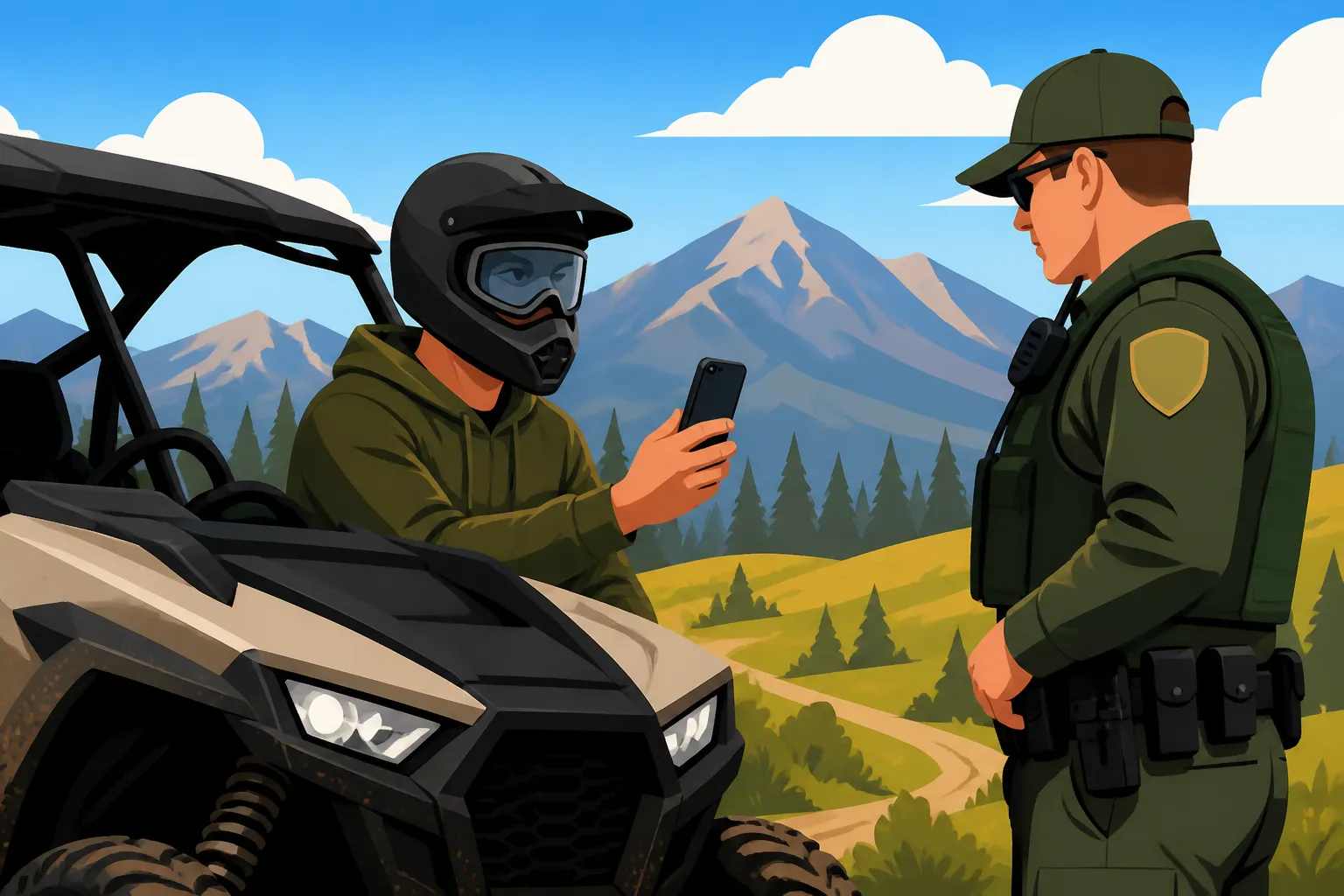
In our increasingly digital world, many people wonder if showing proof on a smartphone is acceptable. The good news is that Montana generally accepts digital proof of insurance. This means a picture of your insurance card, an email from your provider, or using your insurer's official app to display your policy information, can often satisfy an officer's request.
However, there are a few caveats. While digital proof is convenient, it relies entirely on your phone being charged and having a screen that isn't cracked or obscured. Imagine trying to show your policy details on a phone with 2% battery life in a cold snap, or one that just took a tumble. It’s always a good idea to have a backup plan. Some riders will take a screenshot of their digital card, just in case they lose cell service or the app is slow to load. While digital is widely accepted, an officer always has the discretion to ask for a more formal or clearer presentation if they cannot verify the information presented on a phone.
Policy Documents and Declarations Pages
While an insurance card (physical or digital) is usually sufficient for a routine stop, there might be specific situations, such as after a more serious accident or if there's a discrepancy in records, where an officer might request more detailed policy information. This is where your full policy documents or a "declarations page" come into play.
A declarations page is a summary of your insurance policy, outlining your coverage types, limits, deductibles, and the specific vehicles insured. It provides a comprehensive overview that goes beyond the basic information on a small card. You're not expected to carry these bulky documents on every ride, but it's wise to know where to access them. Keeping a digital copy on a cloud service or accessible via your insurer's portal on your phone can be a good idea for these less common, but potentially critical, scenarios. For most routine checks, however, the card itself is the expected document.
Real-World Scenarios Requiring Insurance Proof
Knowing what counts as valid proof is only half the battle; understanding when you'll need to present it is just as important. In Montana, OHV riders will most commonly encounter requests for insurance proof in a few distinct situations, primarily tied to operating on public roads or after an incident.
Routine Stops on Permitted Roads
Montana allows OHVs on many county roads and even certain city streets, provided specific rules are followed regarding equipment and registration. If you're utilizing these legal road sections, you're essentially operating your OHV as a registered motor vehicle on public roads. This means you're subject to traffic laws, just like any car or truck.
During a routine traffic stop for a minor infraction, or even a checkpoint to ensure compliance with [What Montana Requires on an OHV Road Ride], an officer will almost certainly ask for your proof of insurance, along with your driver's license and OHV registration. This is the most common scenario where you'll need to quickly and clearly present your insurance information. Many riders, especially those who have added road-legal accessories from companies like SuperATV, ensure their documents are stored in an easily accessible and protected location on their machine.
After an Accident or Incident
No one ever plans for an accident, but they happen. Whether it's a fender bender with another OHV on a trail, a collision with a car at a road crossing, or even a single-vehicle incident that requires law enforcement presence, you will need to provide proof of insurance. This is crucial for reporting the incident, exchanging information with other involved parties, and initiating any potential claims.
In these situations, the officer will document your insurance information as part of their official report. If you cannot provide it, it can complicate the investigation and potentially lead to citations for driving without insurance, in addition to any charges related to the accident itself. Knowing how to quickly access your insurance details in a stressful situation can make a significant difference in the aftermath of an unforeseen event. Familiarize yourself with [Montana OHV Crash Reporting] to understand the full scope of what's needed.
When Crossing Private Land or Special Access Areas
While insurance is primarily a requirement for public road use, there are instances involving private land or special access areas where proof might be requested. If you have a permit or agreement to cross private land to reach public trails, the landowner or manager might require proof of liability insurance to protect themselves from any potential incidents while you're on their property. This might not be a direct request from a law enforcement officer, but rather a condition for access.
Similarly, some organized events, races, or guided tours in Montana might require participants to show proof of insurance as part of their entry or participation agreement. While less common for casual riding, it's a good reminder that your insurance policy is not just a legal document for public roads, but a personal safety net for various riding contexts. Always check the rules and requirements for any specific area or event you plan to attend.
Navigating a Stop Without Immediate Proof
It happens to the best of us: you're confident you have insurance, but when an officer asks, the card isn't where it should be, or your phone battery dies. Facing a law enforcement officer without immediate proof of insurance can be a stressful situation, but understanding the potential consequences and how to handle it can help mitigate further issues.
Understanding the Consequences of No Proof
In Montana, operating an OHV on a public road without the required liability insurance can lead to a citation. The specific [Montana OHV Ticket Costs by Violation] and penalties can vary depending on the jurisdiction and the officer's discretion, but typically involve a fine. Unlike some states, Montana does not have a general sales tax, but it does have specific rules and fees associated with OHV registration and operation.
Beyond the immediate fine, being cited for no proof of insurance can potentially lead to other complications. If you were involved in an accident, not having proof could mean you're personally liable for damages, and your riding privileges could be affected if it's a repeat offense. It's not just about the monetary penalty; it's about the broader implications for your financial responsibility and your ability to enjoy Montana's OHV trails and roads legally.
Steps to Remedy a Missing Proof Situation
If you're stopped and can't immediately produce proof of insurance, don't panic. The first step is always to be courteous and cooperative with the officer. Explain your situation calmly. They might give you a grace period to produce proof at a later date, such as by presenting it at the local sheriff's office or court within a certain number of days.
If given this opportunity, make it your absolute priority to find your proof of insurance and present it within the specified timeframe. This might mean contacting your insurance company directly to have a copy faxed or emailed, or simply locating the physical card you know you have somewhere. If you can provide valid proof that you were indeed insured at the time of the stop, the initial citation for no proof of insurance might be dismissed or reduced. Always ensure you have your policy number and agent's contact handy, possibly even stored in your phone, for quick retrieval.
Proactive Tips for Staying Compliant
The best way to avoid the stress of proving insurance is to be prepared. Here are a few proactive tips to ensure you always have your proof readily accessible:
- Keep a Physical Copy: Even if you prefer digital, having a physical insurance card stored in a waterproof bag or small compartment on your OHV is a fail-safe. Consider a small, lockable box for sensitive documents.
- Take a Screenshot: For digital users, take a screenshot of your insurance card on your phone. This way, you don't need cell service or a running app to display it.
- Program Your Insurance Info: Save your insurance company's customer service number and your policy number in your phone's contacts. This allows for quick access if you need to call them from the roadside.
- Check Expiration Dates: Before each riding season, or at least annually, verify that your insurance policy is current and that the dates on your card are valid. If you modify your machine with aftermarket parts, such as those from SuperATV, always check if your policy needs updating to cover the new value.
- Understand Your Coverage: Know what your policy covers. Is it just liability for road use, or does it include comprehensive and collision for off-road incidents? This will help you understand your rights and responsibilities. [Does Homeowners Insurance Cover a Quad?] can offer insights into alternative coverage.
- Regularly Review [Keeping Registration Papers on the Machine]: Treat your insurance card with the same importance as your registration and driver's license. All three are essential when operating your OHV on public roads.
By taking these steps, you can ride Montana's spectacular trails and roads with confidence, knowing you're prepared for any officer inquiries about your insurance coverage.
| Type of Proof | Description | Acceptance by Officers | Best Practice |
|---|---|---|---|
| Physical Card | Paper or plastic card from your insurer | Generally accepted without issue | Keep in a waterproof, easily accessible pouch on your OHV or in your wallet. |
| Digital Card | Photo, email, or insurer app display on a smartphone | Often accepted, but requires a functional device and good visibility. | Screenshot your card, ensure phone is charged, keep screen clean and intact. |
| Declarations Page | Detailed policy document summarizing coverage | Accepted, but typically not required for routine stops. | Keep a digital copy on cloud storage or accessible via insurer's portal for emergencies. |
Disclaimer
This article is for general informational purposes only and does not constitute professional advice. Laws, prices and regulations vary by location and change over time. Consult a qualified professional for guidance on your specific situation.