Sheriff Enforcement on Montana Back Roads
There's nothing quite like the freedom of exploring Montana's vast network of back roads on your ATV or UTV. But with all that wide-open space comes a bit of a gray area for many riders: who's actually out there enforcing the rules, and what should you expect if you encounter a sheriff deputy in the middle of nowhere? This guide is going to dig deep into the specifics of sheriff enforcement on Montana's back roads, helping you understand jurisdictions, common violations, and how to best prepare for a smooth ride.
Understanding the Jurisdiction: Who Polices Montana's Back Roads?
Montana's back roads are a patchwork of ownership and management, which can make understanding jurisdiction a bit like trying to follow a braided river. It's not always as simple as "county road, so sheriff." Knowing who has authority can help you understand what rules apply and who might be checking up on them.
County Sheriffs vs. State Highway Patrol vs. Forest Service/BLM
When you're out on a back road, you might encounter several different types of law enforcement, each with their own specific purviews.
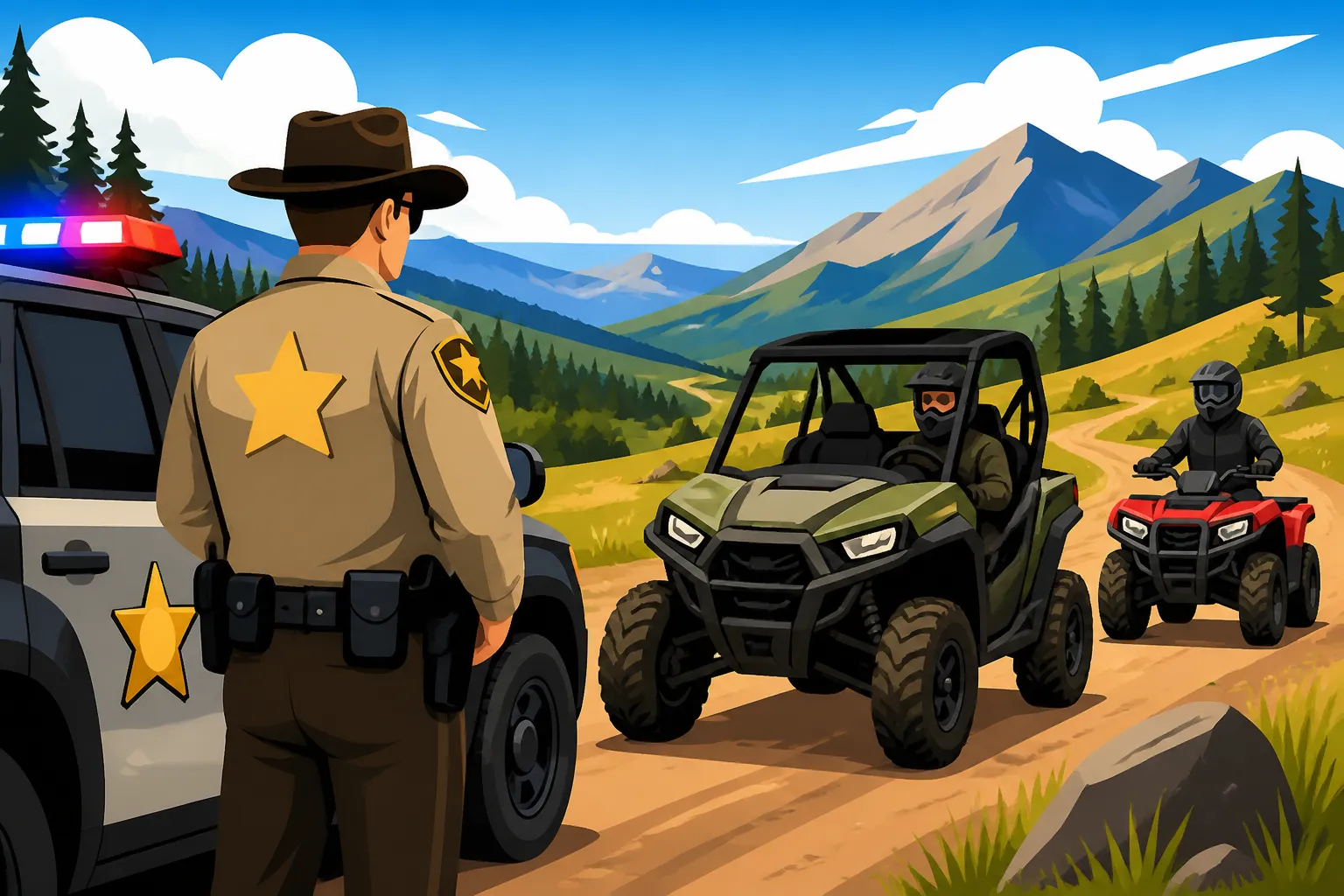
County Sheriffs are perhaps the most common sight on county roads and within the unincorporated areas of Montana. Their primary role is to enforce state laws and county ordinances within their specific county. This means they're responsible for everything from vehicle registration and driver conduct to responding to accidents and investigating crimes. If you're riding a designated county road that allows OHV use, the local sheriff's office is likely the main agency you'd interact with. They know the local landscape, the popular riding areas, and often work closely with the communities that rely on these roads. Their patrols might be less frequent on the most remote two-tracks compared to more traveled routes, but their jurisdiction extends to every corner of their county.
The Montana Highway Patrol (MHP) primarily focuses on state highways, interstates, and major arterial roads. While they do have statewide jurisdiction, you're less likely to see an MHP trooper deep on a gravel forest road unless they're responding to a serious accident or assisting another agency. Their enforcement efforts are generally concentrated on higher-speed roadways where traffic laws are paramount. If your designated OHV route crosses a state highway, or if you're briefly using a highway to connect trail systems where permitted, the MHP could technically enforce traffic laws there, but it's not their primary patrol area for OHVs specifically.
Then there are the federal agencies: the U.S. Forest Service (USFS) and the Bureau of Land Management (BLM). These agencies have their own law enforcement officers, often called Forest Protection Officers or Park Rangers, who patrol lands and roads under their direct management. Many of Montana's most scenic back roads and trails are on Forest Service or BLM land. These officers enforce federal regulations, which often include specific rules about OHV use, trail closures, spark arrestor requirements, and environmental protection. They also enforce state laws when applicable on federal lands. It's common for these federal officers to work in conjunction with county sheriffs, especially when there's an incident that crosses jurisdictional lines or requires additional resources. So, if you're riding on a Forest Service road, expect that you might encounter a Forest Service Law Enforcement Officer, in addition to or instead of a county sheriff.
The Overlapping Lines of Authority
The beauty and complexity of Montana's vast landscapes mean that jurisdictions often overlap, creating a dynamic environment for law enforcement. Imagine a county road that cuts through a section of national forest. On that stretch of road, both the county sheriff and a Forest Service officer could potentially pull you over or address a violation. This isn't usually a competition for authority but rather a collaborative effort to ensure safety and compliance across different land designations.
For riders, this overlapping authority primarily means that you need to be aware of the rules for all applicable jurisdictions. Just because a county road allows OHVs doesn't mean a Forest Service trail branching off it has the same rules, or that federal regulations don't apply. For example, a county sheriff might pull you over for speeding on a gravel county road, while a Forest Service officer might ticket you for riding off-designated trails on federal land adjacent to that road. Local ordinances, specific county commissioner decisions, and even town-specific rules can add further layers of complexity to this landscape. [County Commissioners and Montana County Roads] are often the ones who make the decisions about opening up county roads to OHV traffic in the first place, and those decisions come with specific stipulations. Understanding these layers is key to avoiding an unexpected chat with an officer, no matter their badge.
What Rules Do Sheriffs Enforce on OHVs?
When a sheriff deputy spots an ATV or UTV on a Montana back road, they're not just looking at the rider; they're assessing a whole range of compliance factors. These officers are often very familiar with the specifics of Montana's OHV laws, and they're looking to ensure everyone is riding safely and legally.
Registration, Titling, and Decal Compliance
One of the first things a sheriff deputy will check is whether your machine is properly registered and titled. In Montana, most ATVs and UTVs operated on public lands or roads must be registered. This isn't just a suggestion; it's a legal requirement. If you're on a public road or trail, you need to be able to prove your machine is legally registered. This usually means having current registration papers and a visible decal. [Montana County Treasurer OHV Registration] is the place to get this done, and they'll ensure you have the proper paperwork.
Sheriffs will be looking for:
- Current Registration: They'll want to see proof that your OHV's registration is up to date. For residents, this could be the [Montana's One-Time Permanent OHV Registration], but even that requires display of the annual decal.
- Visible Decals: The OHV decal needs to be correctly placed on your machine. For side-by-sides, this typically means on the rear. A faded, missing, or improperly placed decal is a quick way to draw attention. [Where a Montana OHV Decal Goes] and [Montana OHV Decals and Rear Placement] offer more details on correct placement.
- Proper Titling: While not always checked roadside, having a clear title is crucial for proving ownership. If there are questions about the machine's provenance, a deputy might dig into the title. [Titling an OHV in Montana] provides a full breakdown of this process.
Equipment Requirements for Road-Legal Use
If you're riding your OHV on a public road, even a county gravel road, it generally needs to meet certain equipment standards to be considered "street legal" for that specific application. This isn't about being fully street-legal like a car, but about meeting the minimum requirements for road use in Montana. Sheriffs are trained to spot non-compliant machines.
Key equipment a deputy will check includes:
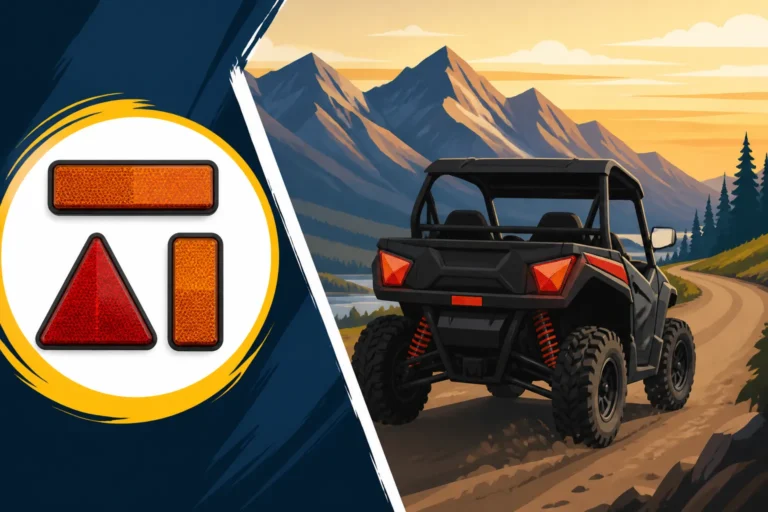
- Headlights and Taillights: Your machine needs functional headlights and taillights, and they often must be on at all times during road use, especially during dawn, dusk, or adverse weather. [Headlight and Taillight Rules in Montana] outlines these requirements. Many riders enhance their machines with brighter LED lights or light bars from brands like SuperATV to improve visibility and meet legal standards.
- Brakes: A functional braking system is non-negotiable. Deputies will expect to see working brakes on your OHV.
- Muffler and Spark Arrester: Noise pollution is a common complaint in rural areas, and spark arresters are critical for fire prevention on public lands. Sheriffs will often check for a muffler in good working order and the presence of an approved spark arrester. [Mufflers and Spark Arresters in Montana] goes into detail about these regulations.
- Rear-View Mirror: For road use, many jurisdictions require at least one functional rear-view mirror. This is an important safety feature that allows you to monitor traffic behind you. Aftermarket options from SuperATV can provide robust, trail-ready mirrors that also meet road requirements.
- Helmet and Eye Protection: While Montana's helmet laws are specific, especially for younger riders, a deputy will definitely be checking for compliance, particularly for anyone under 18. [Montana Helmet Rules for Riders Under 18] is an essential read for parents and young riders. Eye protection is also generally required for all riders on public roads.
Driver Conduct and Passenger Rules
Beyond the machine itself, the deputy will be observing how you're operating your OHV and who's riding with you. Safe and responsible operation is always paramount.
- Driver's License: If you're riding an OHV on a public road, you generally need to possess a valid driver's license. This isn't always the case for strictly off-road trail riding, but for any road access, it's a must. [Driver's License Rules for Montana Road Riding] clarifies this.
- Safety Education: While not all riders need to complete an OHV safety course, certain age groups do, especially for operating on public land. A deputy may inquire about this.
- Alcohol and Drug Impairment: This is a major enforcement priority. Operating an OHV under the influence of alcohol or drugs is illegal and extremely dangerous. Sheriffs are vigilant about impaired driving. [Montana Alcohol Limits for OHV Operators] explains the legal limits and consequences. A DUI on an OHV carries serious penalties, just like a DUI in a car.
- Speed Limits: Just because it's a gravel road doesn't mean speed limits don't apply. Sheriffs enforce posted speed limits, and even on unposted roads, they'll be looking for safe and reasonable speeds appropriate for conditions.
- Passenger Rules: Carrying passengers beyond the manufacturer's designed capacity, or having passengers ride unsafely (e.g., standing up), can lead to a citation. Seat belt use in UTVs, where equipped, is also generally expected on roads.
- Trespassing: Riding on private property without permission is illegal, and sheriffs will respond to complaints from landowners. [Montana Trespass Rules Along Roads] covers important details about staying on public easements and respecting private land.
Common Violations Sheriffs Look For
Montana sheriff deputies are on the lookout for specific violations that not only break the law but also pose safety risks or harm the environment. Knowing what catches their eye can help you avoid a citation.
Unregistered or Improperly Equipped Machines
This is often one of the easiest violations for a deputy to spot, and it's a frequent reason for an OHV stop on a back road. If your machine is out on public land or a county road, it needs to be registered.
- No Current Registration: Picture this: You've just bought a shiny new side-by-side, maybe even added some cool SuperATV accessories like a new windshield or cargo box, and you're eager to hit the trails. But you forgot to swing by the county treasurer's office to get it registered. A deputy sees you cruising down a county road. No current decal, no registration papers. That's an immediate red flag. The deputy isn't just being nitpicky; proper registration helps fund trail maintenance and enforcement efforts, and it's a record of ownership for theft prevention. Expect a citation if you're caught without it. [Fines for an Unregistered Machine in Montana] can be significant.
- Missing or Improper Decal: Even if your machine is registered, if the decal isn't visible, current, or correctly placed, it can still lead to a stop. Imagine your decal peeled off over the winter, and you just haven't gotten around to replacing it. Or maybe you stuck it on your fender instead of the rear of your UTV as required. A deputy might interpret this as an attempt to avoid identification or simply as non-compliance. [Montana Penalties for a Missing Decal] exist for a reason, as the decal is the quick visual confirmation of a valid registration.
- Road Equipment Deficiencies: Sheriffs know the rules for [What Montana Requires on an OHV Road Ride]. If you're on a public road at dusk without working headlights, or if your UTV is missing a required rear-view mirror for road use, you're inviting a conversation with a deputy. Many riders purchase conversion kits or specific road-legal parts from places like SuperATV to ensure their machines meet these standards when venturing off the trail onto a county road. The key is that if you're using a road that's open to other vehicle traffic, your OHV needs to operate safely alongside them, and proper lighting, braking, and visibility are critical.
Impaired Driving (DUI on an OHV)
This is perhaps the most serious violation a sheriff deputy will be looking for. Montana takes impaired driving very seriously, whether you're in a pickup truck or on a four-wheeler. Back roads, especially those leading to popular camping or fishing spots, can be prime locations for deputies to monitor for impaired OHV operators.
- Obvious Signs of Impairment: Deputies are trained to recognize the signs of impaired driving. This could include erratic driving, swerving, operating at an unusually slow or fast speed, or having trouble maintaining control of the machine. If a deputy observes these behaviors, they have probable cause to initiate a stop.
- Open Containers: While often associated with vehicles, open container laws can apply to OHVs too, especially when operating on public roads or lands. Even if a rider isn't actively impaired, an open container can be a gateway to a DUI charge.
- Consequences are Severe: A DUI on an OHV in Montana carries the same gravity as a DUI in a standard vehicle. This means potential fines, jail time, loss of driving privileges (including your regular driver's license), and mandatory alcohol education. It's not just about losing your riding privileges; it can impact your ability to drive your personal vehicle. Deputies prioritize this enforcement because of the extreme danger impaired operation poses to the rider, passengers, and other users of the back roads. Remember, the goal is always to get home safe.
Trespassing and Resource Damage
Montana's landscape is a mix of public and private lands, and respecting property boundaries is crucial. Sheriffs respond to complaints from landowners and are also on the lookout for damage to public resources.
- Riding on Private Property: Many rural back roads run adjacent to, or even through, private property. It's incredibly easy to accidentally trespass if you don't know where property lines are, or if you ignore "No Trespassing" signs. Ranchers and private landowners in Montana are often very protective of their land, and they won't hesitate to call the sheriff if they see OHVs on their property without permission. A deputy responding to a trespassing complaint will investigate, and if you're found to be on private land without permission, you can face fines and legal action. [Montana's Purple Paint and Orange Post Marks] are clear indicators of private land, so learn to recognize them.
- Riding Off-Trail or in Closed Areas: On public lands, particularly Forest Service or BLM areas, there are designated trails and roads for OHV use, and areas that are explicitly closed to motorized traffic (e.g., wilderness areas, sensitive wildlife habitats, or areas closed due to fire risk). Riding off a designated trail, creating new routes, or entering closed areas causes resource damage—eroding soil, disturbing wildlife, and harming vegetation. Sheriffs often work with federal agencies on these issues, and they can issue citations for these types of violations.
- Littering and Vandalism: While not specific to OHVs, deputies patrolling back roads will enforce general laws against littering, dumping, and vandalism. Leaving trash behind, or damaging signs or property, reflects poorly on all riders and can lead to fines. Responsible outdoor ethics are expected from everyone enjoying Montana's beauty.
How to Interact with Law Enforcement on a Montana Back Road
Encountering a sheriff deputy on a remote back road can be surprising, but knowing how to interact calmly and respectfully can make all the difference for a positive outcome. It's about being prepared and understanding what's expected of you as a rider.
What to Do When Stopped
Just like with a regular vehicle, if a sheriff deputy signals you to stop, you need to comply promptly and safely. Trying to evade an officer is a serious offense and will only escalate the situation.
- Pull Over Safely: Find a safe place to pull your OHV completely off the main travel lane, if possible, where you won't obstruct traffic or create a hazard. Turn off your engine.
- Keep Hands Visible: Place your hands on the handlebars or steering wheel, or in your lap, where the deputy can see them. Avoid sudden movements or reaching into pockets or bags.
- Stay on Your Machine (Unless Asked to Step Off): Generally, it's best to remain seated on your ATV or UTV unless the deputy specifically instructs you to dismount.
- Be Respectful and Cooperative: Greet the deputy politely. They will likely explain why they stopped you. Listen carefully to their instructions and answer questions honestly. Arguing, becoming defensive, or making excuses will not help your situation.
- Provide Documents When Requested: The deputy will ask for your driver's license, registration, and proof of insurance (if applicable for road use). Have these easily accessible. [Carrying Registration Papers on the Machine] is a smart habit, often in a waterproof bag.
Remember, the deputy's primary concern is usually safety and compliance. A calm, respectful interaction often leads to a quicker resolution, even if you do end up with a warning or a ticket.
Carrying Required Documents
Being prepared with your documents is one of the easiest ways to ensure a smooth interaction with law enforcement. Don't make the deputy wait while you dig through a messy backpack.
Here's what you should always carry:
- Valid Driver's License: If you're on a public road, you absolutely need your driver's license. [Do You Need a Driver's License to Ride a Montana Road?] is clear on this.
- OHV Registration: Proof of your current Montana OHV registration. This is crucial for verifying your machine is legal for public use.
- Proof of Insurance: While not always required for all OHV use, if you're riding on roads where insurance is mandated (e.g., specific county roads or if required by your financing), you'll need this.
- Safety Certificate (if applicable): If you're a younger rider who falls under Montana's mandatory safety education requirements, carry your safety certificate.
Many riders keep these documents in a small, waterproof pouch or a durable plastic sleeve, tucked into a secure compartment on their machine, like a glove box on a UTV or a storage bag on an ATV. This keeps them safe from the elements and easily accessible.
What Happens During an OHV Checkpoint
While less common on remote back roads, sheriff deputies (sometimes in conjunction with other agencies like Forest Service or Fish, Wildlife & Parks wardens) may set up temporary checkpoints near popular trailheads or major access points to riding areas. These checkpoints are designed to ensure OHV riders are compliant with all relevant laws before heading out.
At a checkpoint, you can expect:
- Brief Stops: The officers will typically stop every OHV entering or exiting a specific area. These stops are usually brief, especially if everything is in order.
- Document Checks: They will ask to see your driver's license, OHV registration, and potentially proof of insurance and/or a safety certificate.
- Equipment Spot Checks: Officers might do a quick visual inspection of your machine for essential equipment like working lights, a muffler, and a spark arrester. They may also look for proper decal placement.
- Safety Briefings: Sometimes, officers will use checkpoints to provide brief safety reminders, inform riders about current trail conditions, fire restrictions, or temporary closures.
- Enforcement Action: If violations are found (e.g., no registration, underage uncertified rider, missing safety equipment), the officers will take appropriate enforcement action, which could range from a warning to a citation or even impoundment of the machine in serious cases.
Checkpoints are a proactive way for law enforcement to ensure the safety of all riders and to protect public lands. Approaching them with the same calm, cooperative attitude as a roadside stop will ensure a smooth process. Knowing that SuperATV offers a wide range of DOT-compliant accessories like turn signal kits and horns can give you peace of mind that your machine is ready for these checks.
Penalties and Consequences of Violations
Getting pulled over on your OHV in Montana can lead to various outcomes, depending on the nature and severity of the violation. It's crucial to understand that even on a back road, breaking the law has real consequences.
Fines, Impoundment, and Loss of Riding Privileges
For most common OHV infractions, the initial consequence will be a financial penalty, but things can escalate quickly for repeat offenses or more serious violations.
- Fines: These are the most common penalty. A deputy can issue a citation, much like a traffic ticket, with a set fine amount for offenses such as:
- Unregistered Machine: [Fines for an Unregistered Machine in Montana] can be substantial. This means paying the fine and still needing to register the machine properly.
- Missing or Improper Decal: While perhaps a smaller fine, it's still a penalty for non-compliance. [Montana Penalties for a Missing Decal] ensure you display your proof of registration correctly.
- Equipment Violations: Riding on a road without required lights, mirrors, or an approved spark arrester can lead to fines. For example, if you're riding after dark without proper illumination, a deputy might issue a ticket, even if you have great aftermarket lights from SuperATV but they aren't properly configured or legal for road use.
- Illegal Road Riding: Taking your OHV on roads where it's explicitly prohibited or without meeting specific road-legal requirements can result in fines. [Montana Fines for Illegal Road Riding] cover a range of scenarios.
- Trespassing: Riding on private land without permission can lead to fines and potentially civil damages if you've caused any harm to the property.
- Impoundment: This is a more serious consequence and usually reserved for significant violations. Your OHV could be impounded if:
- It's unregistered and you're a repeat offender: If you've been warned or cited before for an unregistered machine and continue to operate it illegally, a deputy might impound it until proper registration is secured.
- The operator is arrested for a DUI: If you're arrested for operating under the influence, your machine will almost certainly be impounded because you are not fit to drive it, and there's no one else immediately available to take legal custody of it.
- The machine is involved in a serious accident and is deemed evidence: In the case of a major crash, the machine might be held by law enforcement for investigation.
- The machine is stolen or has an altered VIN: If there are questions about the machine's legality or ownership, it could be impounded for investigation.
Impoundment means additional fees for towing and storage, on top of any fines or other legal penalties. It's a costly and inconvenient consequence that no one wants.
- Loss of Riding Privileges: For certain offenses, particularly repeat violations or serious infractions like DUI, your privilege to operate an OHV in Montana can be suspended or revoked. This might also extend to your regular driver's license.
The Impact of Serious Offenses
Beyond fines and impoundment, more serious offenses can have far-reaching and life-altering impacts.
- DUI Conviction: A DUI on an OHV is treated very seriously. A conviction will result in mandatory fines, potential jail time (even for a first offense), a suspended driver's license (not just your OHV privilege, but your ability to drive a car), mandatory alcohol education programs, and a criminal record. This can affect employment, insurance rates, and travel. It's a heavy price to pay for poor judgment.
- Serious Accidents: If you're involved in an accident that causes injury or significant property damage, especially if you were found to be at fault or impaired, the legal and financial consequences can be immense. You could face civil lawsuits for damages, criminal charges if negligence or impairment was involved, and long-term repercussions on your personal finances and freedom. Deputies will thoroughly investigate such incidents, and all the previous rules about registration, equipment, and conduct will be scrutinized.
- Felony Charges: While less common for typical OHV infractions, certain acts like severe resource damage, grand theft auto (if a machine is stolen and transported), or egregious assault while operating an OHV could lead to felony charges. These carry the most severe penalties, including lengthy prison sentences and significant fines, and they result in a permanent felony record.
Ultimately, sheriff enforcement on Montana's back roads isn't about ruining your fun; it's about ensuring everyone's safety, protecting the environment, and maintaining order. Riding responsibly, knowing the rules for both [Montana Rules on Forest Service Roads] and [Montana Rules on BLM Roads], and being prepared for an encounter with law enforcement will help ensure your adventures remain positive experiences.
Disclaimer
This article is for general informational purposes only and does not constitute professional advice. Laws, prices and regulations vary by location and change over time. Consult a qualified professional for guidance on your specific situation.