Brake Requirements for a Montana Road Ride
Hitting those beautiful Montana roads on your ATV or UTV can be an incredible experience, offering freedom and access to places cars just can't reach. But there's a serious component that often gets overlooked in the excitement: your brakes. It’s easy to assume your off-road machine is good to go, but when you transition from dirt trails to pavement, the demands on your braking system change drastically, and not being up to code can lead to dangerous situations or expensive tickets. This guide will walk you through everything you need to know about brake requirements for a safe and legal Montana road ride.
Why Your Brakes Matter So Much on Montana Roads
When you're out on the trails, navigating mud, rocks, and steep climbs, your brakes are crucial for control. But when you move onto county roads or even town streets, the game changes entirely. The speeds are often higher, the surfaces harder, and you're sharing the road with much larger, faster-moving vehicles. Suddenly, your brakes aren't just about stopping; they're about preventing collisions with cars, cyclists, and even pedestrians.
The Unexpected Challenges of Road Riding
Think about it: off-road, you might be creeping along, using engine braking, and a quick stop isn't usually from 45 mph. On the road, you could be traveling at the posted speed limit, say 55 mph on a county road, and suddenly need to stop for a deer, a sharp turn, or an unexpected vehicle ahead. Your machine's weight, combined with its off-road tires, can make stopping distance longer on pavement than you might anticipate. Plus, the constant application and release of brakes on paved roads generate a lot more heat, which can lead to brake fade if your system isn't robust enough. You'll want to be familiar with general [Riding an OHV on the Road in Montana] before heading out.
Safety First: Preventing Accidents
This isn't just about legal compliance; it's about your life and the lives of others. A malfunctioning or inadequate brake system is a recipe for disaster on the road. Imagine coming over a blind hill on a gravel road, only to find a parked school bus or a family walking along the shoulder. Being able to stop quickly and safely isn't a luxury; it's a fundamental necessity. Proper braking prevents rear-end collisions, allows you to react to unexpected hazards, and gives you the confidence to enjoy your ride without constantly worrying if you can bring your machine to a halt.
Avoiding Tickets and Fines
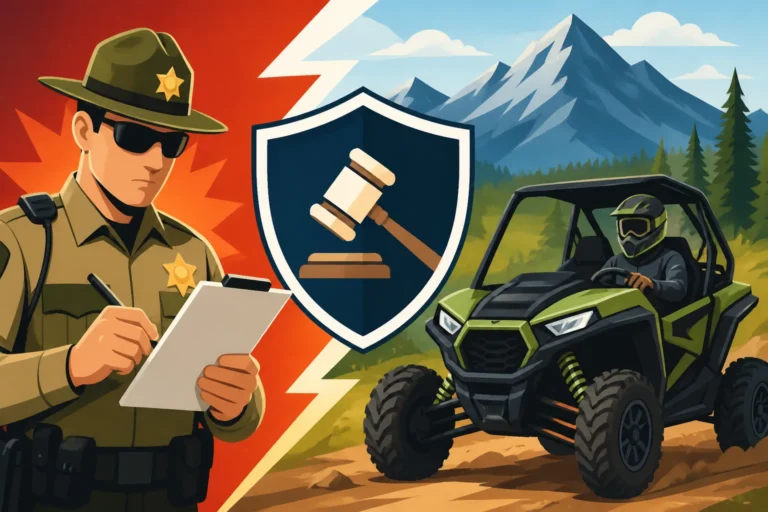
Montana law enforcement, from the local sheriff's department to the Highway Patrol, takes road safety seriously. An OHV riding illegally on public roads or with equipment that doesn't meet minimum safety standards is a red flag. While they might pull you over for a variety of reasons, inadequate brakes are a surefire way to get a citation. Nobody wants to cut a great ride short with a hefty fine or, worse, have their machine impounded because it's deemed unsafe for the road. Knowing [Montana Fines for Illegal Road Riding] can help you understand the risks involved if your machine isn't compliant.
Understanding Montana's Brake Requirements for OHVs on Roads
Montana law is pretty clear when it comes to what your off-highway vehicle (OHV) needs if you plan to hit the pavement. While the specific statute might sound a bit vague, it boils down to ensuring your machine is as safe as any other vehicle sharing the road. This means more than just having brakes; it means having effective brakes.
The Legal Minimum: What the Law Says
Montana statute (MCA 61-9-301) generally requires that "Every motor vehicle, other than a motorcycle or motor-driven cycle, when operated upon a highway, must be equipped with brakes adequate to control the movement of and to stop and hold the vehicle." For ATVs and UTVs, this translates to having both a service brake system (what you use with your foot or hand lever to slow down) and a parking brake system. The service brakes must be capable of stopping the vehicle within a certain distance at a specified speed, usually 20 mph, though the exact figures are more often applied to cars and trucks. The key takeaway for OHV riders is that your brakes must be in good working order and demonstrably capable of stopping your machine safely and effectively under normal operating conditions on a hard surface. If you're wondering [What Montana Requires on an OHV Road Ride], brakes are high on the list.
Parking Brake Necessities
It's not just about stopping while moving; it's also about staying stopped. Your OHV must have a parking brake capable of holding the vehicle stationary on any grade on which it is operated, with the transmission in neutral. This is especially critical in Montana, where you might be parking on an incline on a mountain pass or a sloped street in a trail town. A parking brake prevents your machine from rolling away, which could cause significant damage or serious injury. Make sure your parking brake engages firmly and holds securely. If it feels loose or slips, it’s time for an adjustment or repair.
What "Adequate Brakes" Really Means
"Adequate" might seem like a subjective term, but in the eyes of law enforcement, it means your brakes perform as expected for a safe road-going vehicle. This typically implies:
- Four-wheel braking (for most UTVs): While some older ATVs might only have rear braking, modern UTVs and many ATVs have four-wheel hydraulic disc brakes, which offer superior stopping power. If your machine only has two-wheel braking, it needs to be exceptionally well-maintained to be considered adequate on the road.
- Good condition: No worn pads down to the metal, no leaking fluid lines, no spongy pedal feel. Your brakes should engage smoothly and firmly.
- Balanced stopping: When you hit the brakes, your machine should slow down in a straight line, without pulling heavily to one side. Uneven braking can cause you to lose control, especially in an emergency stop.
- Sufficient power: Can your brakes bring your fully loaded machine, including passengers and gear, to a safe and controlled stop from your maximum road speed without excessive effort or fade? This is where standard off-road brakes might sometimes fall short if they're not robust enough for sustained road use.
Comparison of Typical OHV vs. Road Vehicle Brake Expectations
| Feature | Typical Off-Road OHV Brakes | Road Legal OHV Expectations (Montana) |
|---|---|---|
| Stopping Power | Designed for low-speed control, aggressive bite for traction. | Must provide swift, controlled stops from higher road speeds. |
| Heat Dissipation | Less critical for sustained high-speed braking. | Essential for preventing fade during repeated road braking. |
| Balance | Minor imbalance might be acceptable on loose terrain. | Must stop in a straight line; crucial for safety on pavement. |
| Parking Brake | Often mechanical, for holding on grades. | Must reliably hold vehicle on any grade; inspect regularly. |
| Durability | Tolerant of mud, water, and debris. | Must resist wear from harder surfaces, prevent premature failure. |
| Visibility | No specific brake lights required for off-road use. | Must have working taillights/brake lights (integrated with brakes). |
This table highlights why a standard off-road setup might need more attention or even upgrades if you're regularly riding on roads.
Practical Considerations and Maintenance for Your OHV Brakes
Just having brakes isn't enough; they need to be in top-notch condition. Regular maintenance and knowing what to look for can save you a lot of grief, expense, and potential danger. Think of your brakes like the tires on your machine – they’re a wear item and need attention.
Pre-Ride Checks: Don't Skip Them
Before every road ride, and honestly, before every ride period, give your brakes a quick once-over. This isn't just for mechanics; anyone can do it.
- Check Brake Fluid: If you have hydraulic brakes (most modern ATVs and UTVs do), check the fluid level in the reservoir. It should be between the min and max lines. Low fluid could indicate a leak or worn pads.
- Inspect Brake Lines: Look for any visible leaks, cracks, or chafing on the brake lines. A compromised line can lead to brake failure.
- Pad Wear: Peek through the caliper to check your brake pads. If they look thin (less than about 1/8 inch of pad material remaining), it's time for new ones. Worn pads drastically reduce stopping power and can damage your rotors.
- Rotor Condition: Check your rotors for excessive wear, deep grooves, or warping (which often causes pulsing in the brake pedal/lever).
- Brake Pedal/Lever Feel: Squeeze the brake lever or press the pedal. It should feel firm, not spongy or squishy. If it goes too far before engaging or feels soft, you might have air in the system or a master cylinder issue.
- Parking Brake: Engage the parking brake and give the machine a gentle push or try to put it in gear (if safe). It should hold firmly.
These quick checks take mere minutes but can prevent a major incident. It's a small investment of time for a huge return in safety.
Upgrading Your Brake System
If you're serious about road riding or if your machine feels a bit under-braked for the speeds you're reaching, consider upgrading. Many aftermarket companies, like SuperATV, offer enhanced brake components designed for better performance and durability. This isn't just for racers; it's a smart move for anyone pushing their OHV on paved surfaces.
- Performance Brake Pads: These can offer better friction, last longer, and handle heat more effectively than stock pads. They're a relatively inexpensive upgrade with a noticeable impact.
- Braided Steel Brake Lines: Unlike rubber lines that can expand slightly under pressure, braided steel lines provide a firmer, more consistent pedal feel and are more resistant to damage.
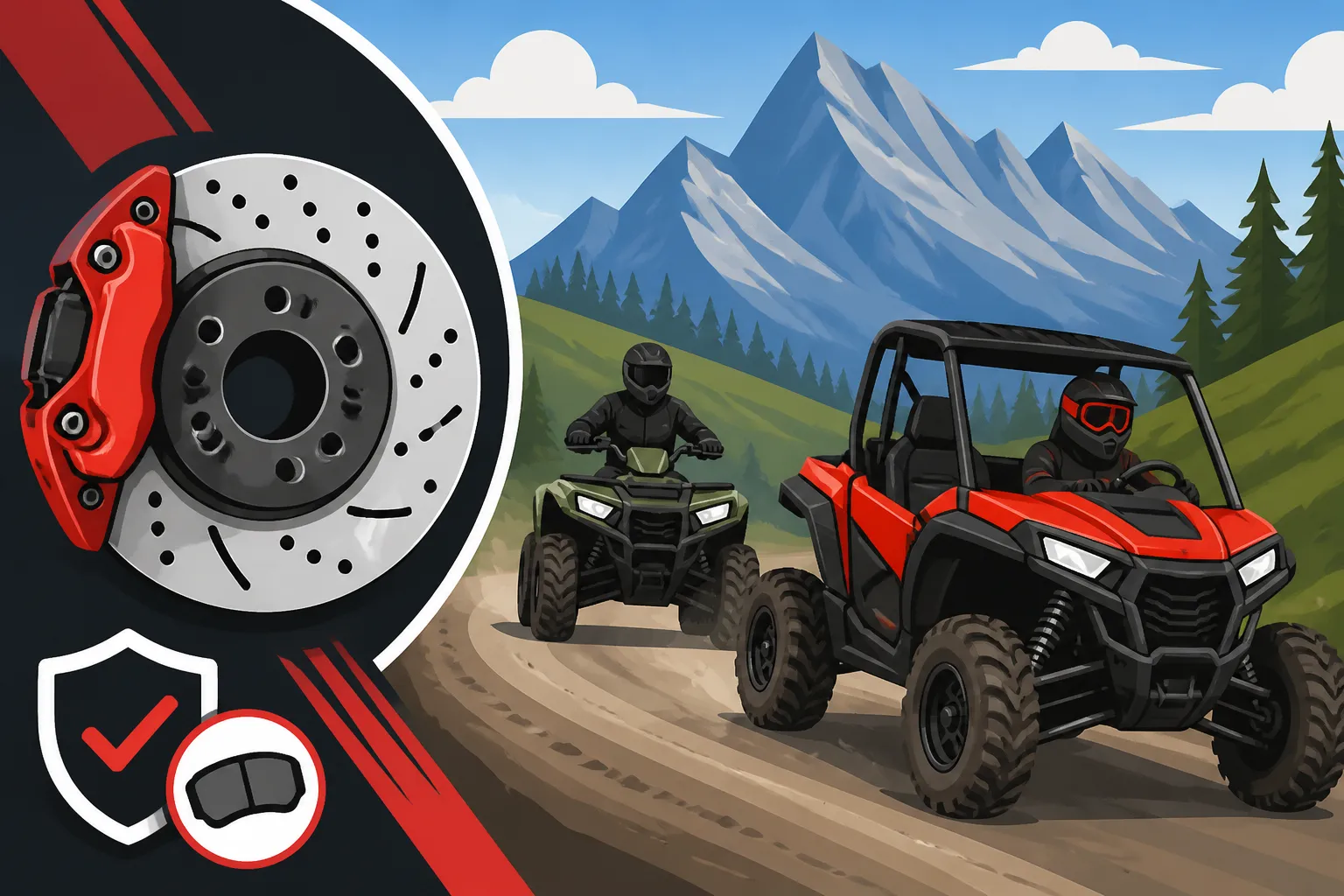
- Larger Rotors/Caliper Kits: For serious stopping power, you might look into larger diameter rotors or multi-piston caliper kits. These dramatically increase the braking surface and clamping force, significantly improving your ability to slow down quickly and reduce fade. SuperATV offers a range of durable brake components, from complete brake rotor and pad kits to individual replacement parts that can enhance your machine's stopping power and longevity, which is especially important for sustained road use.
Remember, any modifications to your brake system should be done by someone experienced or with careful attention to proper installation to ensure safety.
Common Brake Issues and How to Spot Them
Being aware of potential problems can help you address them before they become critical.
- Spongy or Soft Pedal/Lever: Often indicates air in the hydraulic system or a failing master cylinder. This needs immediate attention – bleeding the brakes is usually the first step.
- Squealing, Grinding, or Clicking Noises: Squealing often means worn pads or dirty rotors. Grinding usually means your pads are completely worn and you're metal-on-metal, which damages rotors rapidly. Clicking could be loose calipers or hardware.
- Vibration or Pulsation: A pulsating brake pedal or vibrating handlebars during braking usually points to warped rotors. This reduces braking efficiency and can be felt acutely on road surfaces.
- Machine Pulls to One Side During Braking: This is a serious issue that means one side of your braking system isn't engaging properly. It could be a seized caliper, a clogged brake line, or unevenly worn pads. This makes emergency stops extremely dangerous.
- Brake Fade: If your brakes start to feel less effective after repeated use (common on long descents or continuous road riding), they are fading due to excessive heat. This is a sign that your current system might not be adequate for the demands you're placing on it. SuperATV brake components are often designed to mitigate issues like fade through better materials and heat dissipation.
What Happens If Your Brakes Aren't Up to Snuff?
Riding with inadequate or faulty brakes isn't just a hypothetical problem; it has real-world consequences that can be severe. This isn't just about a minor inconvenience; it can impact your wallet, your driving privileges, and even your freedom.
Enforcement on Montana Roads
Montana law enforcement officers are trained to spot unsafe vehicles. If an officer pulls you over for any reason, they're likely to do a quick visual inspection of your machine's condition, including your tires, lights, and yes, your brakes. A noticeable brake issue, like grinding noises, excessive pedal travel, or a non-functioning parking brake, can easily lead to a citation. If the problem is severe enough that the officer deems your OHV unsafe for public roads, they have the authority to pull you off the road immediately. This could mean having your machine towed, leaving you stranded. When [Sheriff Enforcement on Montana Back Roads] gets involved, they prioritize safety, and brakes are a primary safety feature.
The Cost of Non-Compliance
The financial penalties for non-compliance can add up quickly. A ticket for faulty equipment can carry a significant fine, and that's just the start. If your machine is towed, you'll be on the hook for towing and impound fees. Then there's the cost of repairing or replacing the faulty brake components. If you're out on a trip, these unexpected expenses can ruin your budget and your adventure. Furthermore, such violations can impact your driving record, potentially leading to higher insurance premiums or even license points, just like a violation in a car.
Liability in an Accident
This is perhaps the most serious consequence. If you're involved in an accident on a Montana road and your brakes are found to be faulty or inadequate, you could face severe legal and financial repercussions. Even if you weren't "at fault" for the initial incident, if your inability to stop safely contributed to the severity of the crash, you could be held liable. This could mean paying for damages to other vehicles, medical bills for injured parties, and potential lawsuits. Your insurance company might even deny coverage if they determine you were operating an unsafe vehicle, leaving you to bear the full financial burden. This is why having proper [Montana Liability Insurance for Riders] is so important, but it doesn't excuse you from maintaining your vehicle. Investing in a robust braking system, perhaps with upgrades from a reputable brand like SuperATV, is a small price to pay for peace of mind and protection against devastating liability claims.
Remember, the goal of road riding on your OHV in Montana is to have fun safely and legally. Taking the time to understand and maintain your braking system is a fundamental step in achieving that goal. Don't let a preventable brake issue turn your epic Montana adventure into a roadside nightmare.
Disclaimer
This article is for general informational purposes only and does not constitute professional advice. Laws, prices and regulations vary by location and change over time. Consult a qualified professional for guidance on your specific situation.