Mirrors Montana Road Riding Calls For
Oh, the open road in Montana! There's nothing quite like connecting trails, popping into a small town for lunch, or just cruising a gravel county road on your ATV or UTV. But before you hit that pavement or graded dirt, there's often that nagging question: "What exactly does Montana expect from my mirrors?" It's not always crystal clear, and the last thing any rider wants is to get pulled over for something easily preventable. This guide is here to clear up the confusion, explaining Montana's mirror requirements for ATVs and UTVs when you're riding on public roads, so you can ride with confidence and keep your eyes on the horizon – and behind you!
Why Mirrors Aren't Just a Suggestion for Montana Road Riding
Riding an off-highway vehicle (OHV) on public roads in Montana is a privilege that comes with responsibilities, and chief among them is ensuring you can safely operate your machine. While the thrill of the trail is often about looking ahead, road riding demands a 360-degree awareness, and that's where mirrors become absolutely non-negotiable. It's not just about avoiding a ticket; it's fundamentally about protecting yourself and everyone else sharing the road.
The Core Reason: Safety and Situational Awareness
Think about it: when you're out on the open road, whether it's a paved highway shoulder, a bustling main street in a small town, or a dusty county connector, you're sharing that space with all kinds of other traffic. You might have semi-trucks thundering by, family cars out for a Sunday drive, cyclists enjoying the fresh air, or even other OHVs. Without proper mirrors, every time you need to check your six, you're forced to physically turn your head. This might seem minor, but even a second or two of taking your eyes off what's in front of you can lead to disaster, especially at speed or in dusty conditions.
Mirrors allow for quick, almost subconscious glances, keeping you aware of approaching vehicles, closing gaps, or potential hazards without ever losing focus on the road ahead. They give you the precious information you need to make safe lane changes, prepare for a stop, or simply confirm that it's clear to proceed. For both the rider's immediate safety and the safety of all road users, having a clear view of what's behind you is paramount.
Montana's Legal Mandate for Rearward Visibility
Montana state law, like most states, has general provisions regarding the equipment required for vehicles operating on public roadways. While these laws don't always single out ATVs or UTVs with hyper-specific language, the expectation is that any vehicle on a public road must be equipped to allow the operator to safely observe traffic to the rear. This typically translates to requiring at least one rearview mirror.
When a Montana county opens its roads to OHV use, or a town issues an ordinance allowing machines on its streets, these general traffic laws apply. You're not just on a trail anymore; you're operating a vehicle in a public thoroughfare, and that means adhering to the same safety standards, including visibility. So, while you might find yourself connecting between remote trailheads or just riding into town for a burger, the rules of the road are very much in effect. Understanding [Montana City Streets and Municipal Ordinances] often means understanding that they rely on broader state vehicle codes for requirements like mirrors.
Deciphering Montana's Mirror Requirements for OHVs
So, what does Montana actually expect when it comes to mirrors on your ATV or UTV for road riding? It boils down to a clear, unobstructed view of traffic approaching from behind. While there isn't always a specific line item in the statutes that says "All ATVs must have X mirror," the intent is very clear: you must be able to see what's coming up behind you.
What the Law Generally Expects
The core principle is having adequate rearward visibility. For most vehicles, this means at least one rearview mirror, typically on the left side, that allows the operator to see at least 200 feet behind them. For an ATV, this often means a handlebar-mounted mirror. For a UTV, with its wider stance and often more enclosed cab, side mirrors become even more critical, often complemented by a good center rearview mirror.
Consider a hypothetical scenario: you're riding your side-by-side on a county road outside of Bozeman, connecting to a popular riding area. A county sheriff is patrolling and notices you don't have mirrors. They aren't going to pull out a specific "OHV mirror law" book; they're going to apply the general vehicle code that says you need to see behind you to operate safely on their roads. This is where [What Montana Requires on an OHV Road Ride] comes into play – mirrors are part of the basic safety equipment expected. While a single, properly positioned mirror might satisfy the letter of the law, having two side mirrors (and maybe a center mirror for UTVs) provides a much safer, more comprehensive view, reducing blind spots significantly.
Types of Mirrors That Fit the Bill
When you're equipping your OHV for Montana road use, you've got a few options depending on your machine and riding style. The key is to choose mirrors that are both effective for visibility and durable enough for the terrain you'll encounter, because let's face it, even on the road, Montana has its share of bumps and dust.
-
Handlebar Mirrors: These are the most common choice for ATVs. They mount directly to your handlebars, similar to a motorcycle mirror. They're usually easy to install and provide a quick glance over your shoulder. However, on wider ATVs, or if you're pulling a small trailer, they might not give you the full field of view needed, and you'll still have blind spots. It's often best to ensure they extend far enough to clear your shoulders.
-
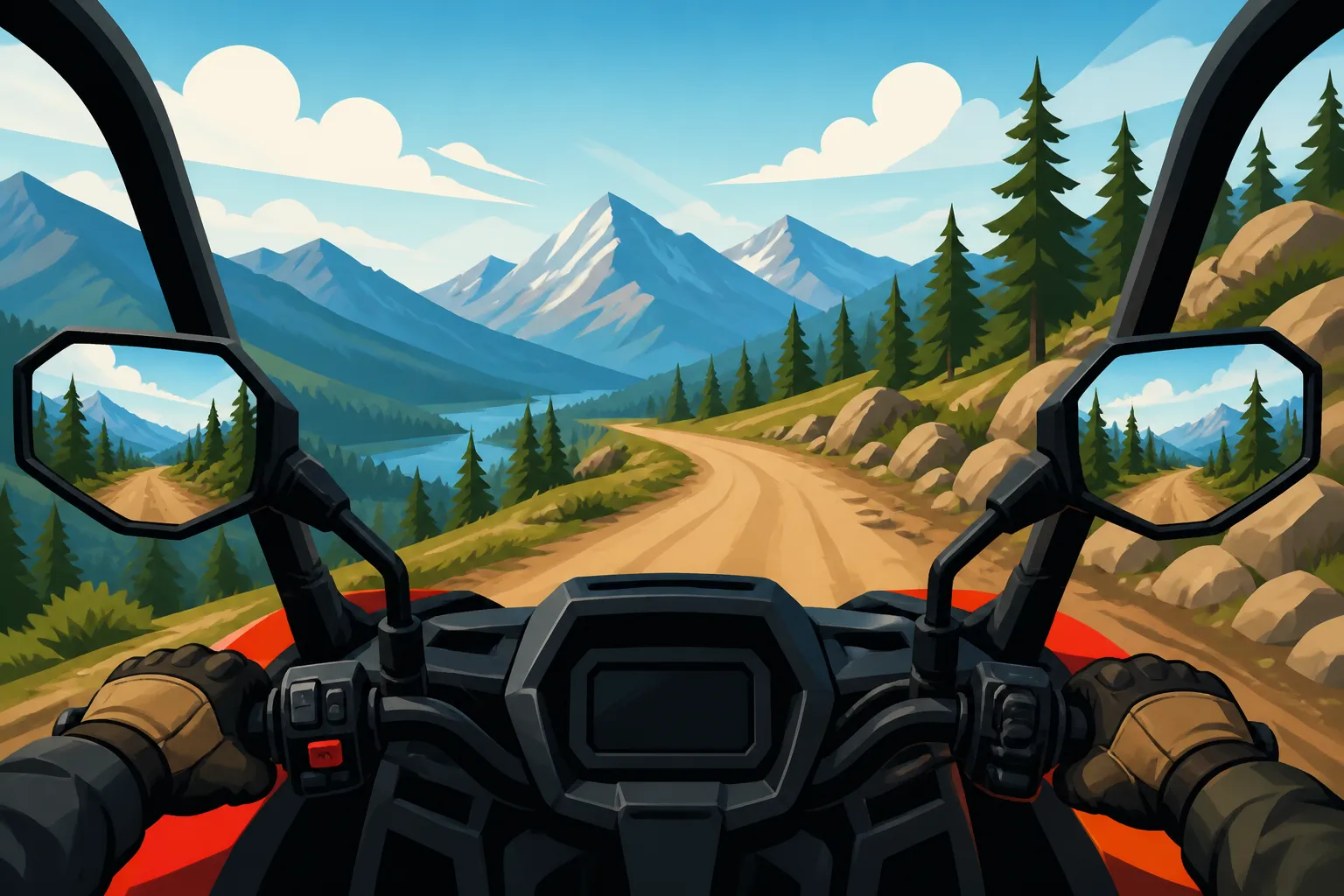
Side Mirrors (UTVs/Side-by-Sides): For UTVs, side mirrors are almost universally recommended, and often legally required when operating on roads. These typically clamp onto the roll cage or A-pillar of your side-by-side. Given the wider profile of UTVs, side mirrors are crucial for seeing vehicles in adjacent lanes or approaching from directly behind. They should be positioned so that you can see down the side of your machine and into the lane behind you without significant head movement.
-
Center Rearview Mirrors (UTVs): While not always legally mandated on their own for OHVs, a good center rearview mirror is an invaluable addition to any UTV, especially when combined with side mirrors. Mounted in the center of your roll cage, it provides a panoramic view directly behind your machine, great for seeing passengers, cargo, or just general traffic behind you. It complements the side mirrors by filling in the immediate center blind spot that two side mirrors might leave. Many riders find that a combination of side and center mirrors gives them the best possible rearward visibility. Aftermarket companies like SuperATV offer robust mirror kits specifically designed to mount securely to various UTV roll cages, ensuring they can handle both road vibrations and the occasional trail knock.
Choosing and Installing the Right Mirrors for Your Ride
Selecting the right mirrors for your ATV or UTV is more than just grabbing the first pair you see. Montana's diverse terrain and weather demand mirrors that are built tough and offer excellent visibility. From dusty backroads to paved mountain passes, your mirrors will take a beating, so investing in quality pays off in safety and longevity.
Factors to Consider When Buying Mirrors
When you're shopping for mirrors, think about how and where you ride. A cheap plastic mirror might look okay on the shelf, but it probably won't hold up to a summer of bouncing down gravel roads in the Bitterroot or the vibrations of a long ride through the Flathead.
- Durability: This is huge for OHVs. You need mirrors that can withstand constant vibration, accidental bumps from branches on narrower trails, and the general abuse of off-road conditions. Look for sturdy housings (often aluminum or reinforced plastic) and shatter-resistant glass. Mirrors designed specifically for off-road vehicles will generally be much tougher than generic automotive mirrors. Many riders turn to brands like SuperATV because their products are engineered for the harsh environments OHVs operate in, meaning they're built to last through countless Montana adventures.
- Visibility: Consider the type of mirror glass. Flat mirrors provide a true, unmagnified image, but offer a narrower field of view. Convex mirrors, on the other hand, give a much wider field of view, allowing you to see more, but objects will appear smaller and further away (hence the "objects in mirror are closer than they appear" warning). A combination, perhaps convex side mirrors and a flat center mirror, can offer a good balance.
- Mounting Options: Ensure the mirrors you choose are compatible with your machine. ATVs typically use handlebar mounts, while UTVs often have clamp-on designs for their roll cages or specific mounts for different models. Some even offer a magnetic or suction cup mount for temporary use, though these are less reliable for consistent road riding.
- Adjustability: You'll want mirrors that can be easily adjusted to suit different riders, or even for varying conditions. Being able to quickly pivot them in or out to avoid an obstacle, or fine-tune the angle for a new passenger, is a major plus.
- Breakaway Features: This is a fantastic feature for off-road mirrors. Breakaway mirrors are designed to fold in on impact (like hitting a tree branch) rather than snapping off. This protects the mirror and the mounting point, saving you money and hassle in the long run. When you're transitioning from a tight trail to a wide-open county road, this flexibility is invaluable.
Installation Tips for Optimal Safety and Compliance
Once you have your mirrors, proper installation is key to both their legal compliance and their effectiveness. A mirror that's constantly vibrating or incorrectly angled is practically useless. Just like [Montana Headlight Rules After Dark] or [Brakes a Montana Road Ride Requires], proper mirror setup is part of your safety system.
- Placement is Everything: For handlebar mirrors on an ATV, position them so they extend slightly beyond your widest point (usually your shoulders) and don't obstruct your view of the trail ahead or interfere with your controls. For UTV side mirrors, mount them far enough forward on the roll cage so that your door frame or other cab components don't block your view, but still within easy reach for adjustment. A center rearview mirror in a UTV should be high enough to clear passengers' heads and cargo, offering an unobstructed view out the back.
- Tighten Securely: This might seem obvious, but it's often overlooked. Vibrations from your engine and the terrain can loosen fasteners over time. Use threadlocker if recommended by the manufacturer, and periodically check all mounting bolts and clamps to ensure your mirrors aren't going to become loose and flop around or, worse, fall off mid-ride.
- Proper Adjustment: Sit on your machine in your normal riding position. Adjust each mirror so you can see a small portion of your own machine (like the rear fender or the side of the bed), and the rest of the mirror shows the road or trail directly behind you. For side mirrors, you want to minimize the blind spot on either side. Take a short test ride to make sure your adjustments are spot on and don't require awkward head movements.
- Regular Checks: Make mirror checks a part of your pre-ride ritual. A quick glance can confirm they're still tight, clean, and properly adjusted. Dust, mud, or even just bumping them while loading can throw them off.
| Mirror Type | Common for | Pros | Cons |
|---|---|---|---|
| Handlebar/Bar-End | ATV | Easy install, quick glance, less prone to trail damage (on ATV) | Limited rear view on wider machines, can vibrate |
| Side Mirrors (Clamp-on) | UTV | Excellent side visibility, crucial for wider machines, adjustable | Can be snagged by branches, must be durable |
| Center Rearview Mirror | UTV | Wide panoramic view behind, good for passengers/cargo, always visible | Can be blocked by tall passengers/cargo, only shows center rear |
| Breakaway Mirrors | UTV/ATV | Fold in on impact, prevent damage, often highly adjustable | Potentially higher cost, may need readjustment after impact |
Beyond Basic Compliance: Advanced Mirror Use and Maintenance
Just having mirrors isn't enough; you need to know how to use them effectively and keep them in top shape. Thinking of your mirrors as just another part you bolt on is missing the bigger picture of road safety. In Montana, where conditions can change quickly from high-speed pavement to dusty gravel, mastering mirror use and maintaining them properly becomes even more crucial.
The Art of Checking Your Mirrors
Operating an OHV on public roads requires a different kind of vigilance than trail riding. You're part of a dynamic traffic environment, and continuous situational awareness is your best defense. This means regularly scanning your mirrors, not just glancing once in a while.
- Scan Frequently: Make it a habit to check your mirrors every 5-8 seconds, or more often in heavy traffic. Before you brake, before you make any directional change (even a slight shift in your lane position), and especially before you cross a highway like [Crossing US-93 on an OHV], always check your mirrors. This constant scanning allows you to track vehicles behind you, anticipate potential problems, and be aware of any rapid approaches.
- Understand Blind Spots: Every machine has blind spots, even with perfectly adjusted mirrors. Know where your OHV's blind spots are and use quick head checks to verify those areas are clear before making a maneuver. This is especially true for UTVs, where the roll cage and body design can create specific hidden zones.
- Practice Makes Perfect: The more you ride with properly installed and adjusted mirrors, the more natural it will become to use them effectively. Practice in a safe, controlled environment first, focusing on integrating mirror checks into your riding routine. The goal is to make it second nature, an automatic part of your riding experience, much like checking your [Montana Helmet Rules for Riders Under 18] before hitting the road.
Keeping Your Mirrors Clear and Functional
Montana weather and trail conditions can be tough on equipment. Dust, mud, rain, and snow are all part of the experience, and they can quickly render your mirrors useless if you don't keep them clean.
- Cleanliness is Next to Safety: Carry a small microfiber cloth on your rides. Dust, mud splatters, and water spots can severely obscure your vision. Pull over safely and give your mirrors a quick wipe down whenever visibility starts to diminish. This is particularly important on those dry, dusty county roads common throughout Montana's warmer months.
- Address Damage Promptly: A cracked mirror, a loose mounting, or a mirror that won't stay in adjustment needs immediate attention. Don't put off repairs or replacements. A damaged mirror isn't providing the visibility you need and could lead to a safety issue or even a citation for not meeting [Montana Fines for Illegal Road Riding] standards if an officer deems your equipment unsafe.
- Weather Considerations: In adverse weather, mirrors can fog up, collect rain, or even ice over. Be aware of these limitations. Some aftermarket mirrors come with anti-fog coatings or can be treated with aftermarket sprays. In winter, even if you're riding your machine with tracks, keeping mirrors clear of snow and ice is paramount for your [Montana Winter Road Riding Rules]. Remember, reliable components from companies like SuperATV are built to withstand the elements, giving you confidence that your mirrors will function when you need them most, no matter what Montana throws at you.
Disclaimer
This article is for general informational purposes only and does not constitute professional advice. Laws, prices and regulations vary by location and change over time. Consult a qualified professional for guidance on your specific situation.