Turn Signals on a Montana Machine
Trying to figure out all the ins and outs of making your ATV or UTV truly road-ready in Montana can feel like navigating a maze. One minute you're thinking about mud and trails, the next you're wondering if your machine needs to blink like a regular car when you're just trying to get from one trailhead to another. This guide is here to clear up all that confusion about turn signals on your Montana machine and help you understand exactly when and why they become a non-negotiable part of your riding setup on public roads.
Why Are Turn Signals Even a Question for OHVs in Montana?
It’s a fair question, isn't it? When you bought your ATV or UTV, chances are you pictured wide-open trails, forest roads, and maybe some rugged mountain terrain. Turn signals probably weren’t high on the list of factory features you were looking for. And for pure off-road use, they're simply not necessary. But Montana, bless its heart, offers some incredible opportunities for riders to actually connect trails via county roads and even venture into small towns. That's where the "off-road" mindset collides with "on-road" realities, and suddenly, what seemed like an accessory becomes a requirement. It can feel like overkill when you're just trying to cross a county road, but there's a good reason for it – safety.
The Core Distinction: Off-Road vs. On-Road Riding
Most ATVs and UTVs roll off the assembly line designed specifically for dedicated off-highway use. This means they're built tough for dirt, rocks, and mud, but often lack some of the fundamental safety features you'd expect on a passenger car or truck. Turn signals fall squarely into this category. On a trail, hand signals might suffice, or you're simply following the rider in front of you. There aren't oncoming lanes of traffic to worry about, nor are there cars behind you expecting you to signal your intentions at an intersection.
However, once you leave the dirt and gravel of the backcountry and start operating on public roads, streets, or highways that are open to conventional vehicle traffic, the rules of the road apply. You're no longer just an off-highway vehicle; you're sharing the pavement with vehicles whose operators expect clear, standardized communication regarding your movements. This shift in environment is precisely why the need for turn signals arises.
Montana's Unique Road Access Laws
Montana has a reputation among OHV enthusiasts for being more accommodating when it comes to riding off-highway vehicles on public roads compared to many other states. This isn't a free-for-all, of course, but it does mean that certain county roads and, in some cases, designated city streets can be legally accessed by ATVs and UTVs. [Montana Towns That Allow OHVs on Their Streets] This progressive approach opens up a world of possibilities for riders – think connecting remote trail systems, riding into a small town for gas and lunch, or simply accessing private property via a county road.
But this freedom comes with a significant caveat: when you're using these public thoroughfares, your OHV must meet certain equipment standards to ensure the safety of all road users. Local jurisdictions, specifically county commissioners, often have the authority to designate which roads are open and what conditions apply. [County Roads and the Montana Commissioners' Say] These conditions almost always include having the same basic signaling capabilities as any other vehicle on the road, and that means turn signals. Without them, you're not just risking a ticket; you're creating a potentially dangerous situation for yourself and others.
When Turn Signals Become a Must-Have on a Montana OHV
Let's get straight to it: for the vast majority of situations where you're mixing your OHV with regular vehicle traffic in Montana, turn signals aren't just a nice-to-have; they're a must. There's no getting around it if you want to legally and safely navigate the state's open roads.
Riding on Public Roads, Streets, and Highways
The moment your tires hit a road that is open to other motor vehicles, whether it's paved or gravel, and you intend to make a turn or change lanes, you need to be able to signal your intentions. This applies whether you're cruising down a county road, crossing a state highway, or even just heading a few blocks through a small Montana town. The expectation from other drivers is that you will communicate your turns, just as they would.
It's not just about long stretches of road, either. Many riders use county roads to get from a staging area to a trailhead, or to access a specific hunting or fishing spot that's just off the beaten path. Even these short trips require compliance. While [Crossing a Montana Highway on an OHV] has its own specific rules, if you're riding on a highway, even for a short distance where allowed, turn signals are fundamental for safety. Imagine trying to make a left turn onto another road with a pickup truck behind you, and no clear way to show you're turning. It’s a recipe for confusion at best, and an accident at worst.
Specific Montana Requirements for Road-Legal OHVs
Montana law is pretty clear about what's required for an OHV to be considered "street legal" enough to operate on designated public roads. Beyond registration and a visible decal, your machine needs to be equipped with several key safety features. These generally include:
- Headlights: Capable of illuminating the road ahead. [Headlight and Taillight Rules in Montana]
- Taillights/Brake Lights: To signal your presence and when you're slowing down or stopping.
- Mirrors: Allowing you to see traffic behind you. [Mirrors Montana Road Riding Calls For]
- Brakes: Fully functional and capable of stopping your machine safely.
- Horn: To alert others if needed. [Montana Horn Requirements for Road Use]
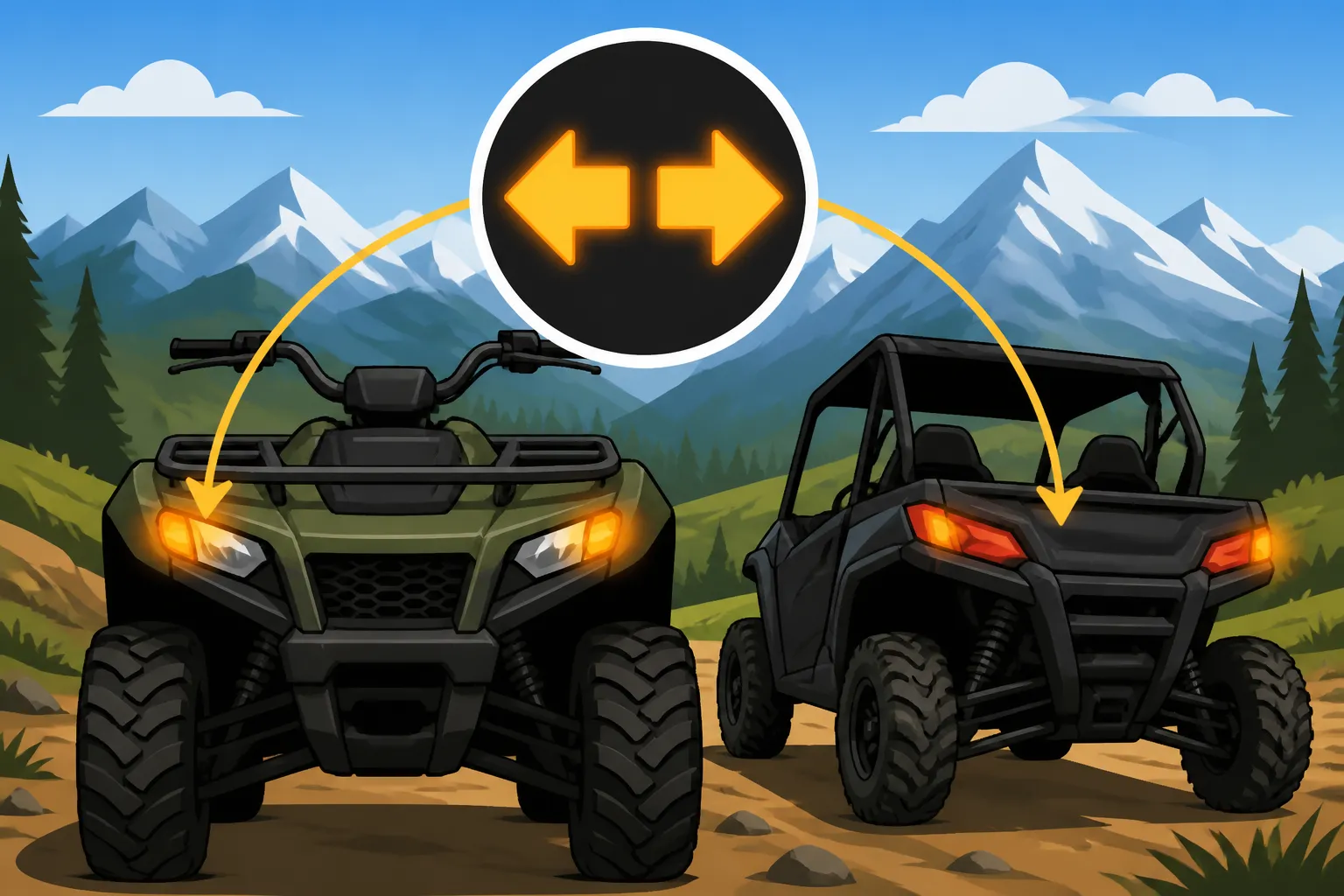
- Turn Signals: Front and rear, clearly visible, to indicate your intended direction of travel.
- Muffler and Spark Arrester: To control noise and prevent wildfires. [Muffler and Exhaust Noise Limits in Montana] [Spark Arrester Rules on Public Land]
The list essentially brings your off-highway machine up to a standard that aligns with what drivers of cars and trucks expect. While your factory OHV likely has headlights, taillights, and brakes, turn signals and a horn are almost always aftermarket additions. It’s about ensuring you can operate predictably and safely within the flow of traffic, minimizing risks for everyone on the road.
Navigating Aftermarket Turn Signal Kits for Your Machine
If your machine didn't come with turn signals (and most don't), don't fret! Adding them is a common upgrade for Montana riders who want to take advantage of the state's road access. It can seem daunting if you're not a wiring guru, but it's totally doable, and there are plenty of user-friendly kits out there.
What to Look For in a Turn Signal Kit
When you're shopping for a turn signal kit, you'll find a variety of options designed specifically for ATVs and UTVs. A good kit should be comprehensive and relatively straightforward to install. Here’s what to keep an eye out for:
- Complete Components: Look for a kit that includes everything you need: a control switch (often mounted on the handlebar or dash), a wiring harness designed for OHV use, LED lights for both front and rear, and a flasher relay. Some kits even integrate a horn button into the turn signal switch, knocking out another road-legal requirement.
- Durability and Weather Resistance: Your OHV lives a tough life, and so should its turn signals. Choose a kit with robust, waterproof (or highly water-resistant) lights and wiring. SuperATV is one of many reputable brands that offers these types of durable, purpose-built kits that can withstand the dust, mud, and occasional downpour Montana throws at you.
- Visibility: The lights themselves should be bright and clearly visible in various conditions, from bright sunshine to dusk. Amber is the standard color for turn signals, and having both front and rear indicators is critical for communicating with traffic from all directions.
- Vehicle-Specific or Universal: Some kits are designed for specific makes and models, which can simplify installation. Universal kits are also available and can be adapted to almost any machine, but might require a bit more DIY ingenuity.
Taking the time to research and pick a quality kit will save you headaches down the road and ensure your signals are reliable when you need them most.
Installation Tips and Best Practices
Once you've got your kit in hand, installation can be a fun project. Here are a few tips to make it go smoothly:
- Read the Instructions (Seriously): Every kit is a little different. Before you snip a single wire, read through the entire installation manual. It will often have diagrams specific to wiring your OHV.
- Plan Your Routing: Think about where you want your wires to run – out of the way of moving parts, protected from heat and abrasion, and hidden for a cleaner look. Use zip ties or cable clamps to secure the harness.
- Accessible Switch Placement: The turn signal switch needs to be easily reachable while you’re riding, ideally without taking your hand off the steering wheel or handlebar. Test different positions before you commit to a permanent mount.
- Power and Ground: Most kits connect directly to your machine's 12V power supply. Make sure you use a fused connection to protect your electrical system. A good, clean ground connection is also vital for proper function.
- Test as You Go: Before you button everything up, test each component. Do the front signals blink? Do the rears? Does the flasher relay work correctly? If your kit includes a horn, does it honk? Addressing issues as you go is much easier than troubleshooting after everything is installed.
- Weatherproof Connections: If your kit doesn’t have completely sealed connectors, consider adding dielectric grease or using heat-shrink tubing on splices to protect them from moisture and corrosion. SuperATV and other specialized brands usually design their kits with this in mind, but an extra layer of protection never hurts in Montana’s variable climate.
A properly installed turn signal system not only keeps you legal but significantly enhances your safety on Montana’s roads, giving you the confidence to communicate your turns clearly.
Consequences of Not Having Turn Signals (and Other Required Gear)
Ignoring the requirement for turn signals and other road-legal equipment on your Montana OHV isn't just a minor oversight; it can lead to real problems, from financial penalties to serious safety risks.
Fines and Legal Trouble
Montana law enforcement, including local police, sheriff’s deputies, and Fish, Wildlife & Parks wardens, actively enforce OHV regulations, especially on public roads. If you're pulled over and your machine lacks required equipment like turn signals, you can expect to receive a citation. These fines can quickly add up, turning what was supposed to be a fun ride into a costly headache. [Montana OHV Ticket Costs by Violation] It's not uncommon for officers to issue multiple tickets if your machine is missing several required items, such as mirrors, a horn, or proper lighting, in addition to turn signals. Beyond the immediate fine, you might also have to deal with court appearances or administrative fees, which can eat into your valuable riding time.
Safety Risks and Accident Liability
The most critical reason for having turn signals isn't about avoiding a ticket; it's about staying safe and preventing accidents. Turn signals are a fundamental tool for communication between drivers. When you're operating an OHV on a road without the ability to clearly signal your turns, you become an unpredictable element in traffic. A driver behind you won't know if you're continuing straight, turning left, or pulling off to the right. This ambiguity drastically increases the risk of a rear-end collision or a side-impact accident if you turn into another vehicle's path.
In the unfortunate event of an accident, not having required safety equipment like turn signals could also complicate insurance claims and potentially increase your liability. [Montana OHV Crash Reporting] Insurance companies and legal professionals will look at whether your vehicle met all legal requirements for road operation at the time of the incident. An improperly equipped machine could be seen as contributing to the accident, potentially affecting who is deemed at fault and impacting your ability to recover damages or requiring you to pay for another party's damages. Investing in proper signaling is a small price to pay for peace of mind and, more importantly, your safety and the safety of others.
Beyond Turn Signals: Other Montana Road-Legal Requirements
While turn signals are a major piece of the puzzle, getting your OHV fully road-legal in Montana involves a few other important considerations. Think of it as a checklist to ensure maximum safety and compliance, no matter where your adventure takes you.
Headlights, Taillights, and Reflectors
It's not enough to just have these; they need to be fully functional and meet specific visibility standards. For road use, your headlights must be capable of illuminating the road for a certain distance ahead, and your taillights must be clearly visible from the rear. Many jurisdictions require that headlights and taillights be illuminated at all times when operating on public roads, even during daylight hours. This isn't just for night riding; it's about making your machine visible to other drivers at all times, reducing the chances of an accident. Check out [Headlight and Taillight Rules in Montana] for more specifics. Additionally, adequate reflectors on the machine can add another layer of passive visibility, especially from the sides or in low-light conditions.
Mirrors, Brakes, and Mufflers
Beyond lighting, these three components are crucial for road safety:
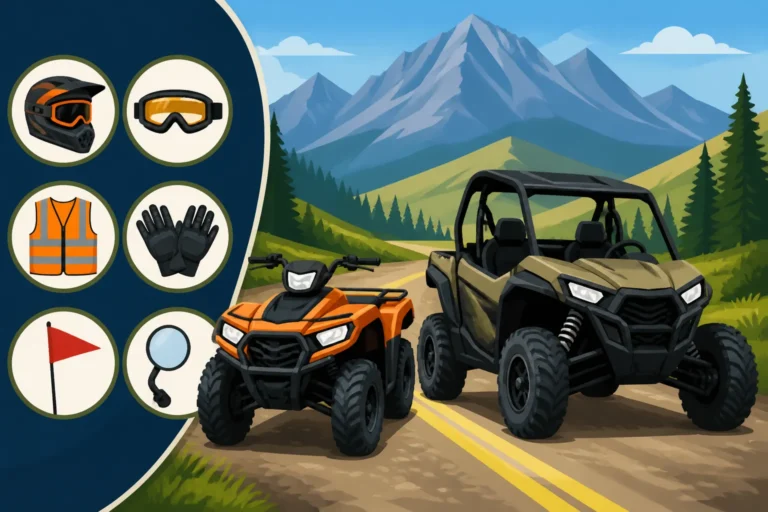
- Mirrors: You need at least one rearview mirror to see what's happening behind you. A single mirror on the left handlebar is often sufficient, but many UTV owners opt for a full rearview mirror and side mirrors for optimal visibility. [Mirrors Montana Road Riding Calls For]
- Brakes: Your OHV must have fully functioning service brakes on all wheels (or as designed by the manufacturer) and a parking brake. They need to be able to stop your machine safely and effectively.
- Mufflers and Spark Arresters: While primarily for noise reduction and fire prevention on trails, these are still requirements for road use. Mufflers keep your machine from being excessively loud, which is respectful in residential areas, and spark arresters prevent hot carbon particles from escaping the exhaust, a critical fire safety measure in Montana's dry landscape. [Muffler and Exhaust Noise Limits in Montana] and [Spark Arrester Rules on Public Land] are great resources for these rules.
Operator Licensing and Safety Training
Lastly, remember that the machine itself isn't the only thing that needs to be "legal"—the operator does too! For road riding, Montana typically requires operators to have a valid driver's license. This means a regular Class D driver's license, just like you'd use to drive a car or truck. [Driver's License Rules for Montana Road Riding]
For younger riders, or those new to OHVs, Montana also has specific safety education requirements. Riders under a certain age must complete an approved OHV safety course to operate on public lands, and these rules often extend to road access as well, sometimes with age-specific restrictions on engine size or the need for adult supervision. It’s always best to check the current rules regarding [Montana's Safety Education Requirement] and age restrictions, especially if you have younger family members who will be riding. Being prepared with both the right machine and the right qualifications ensures a worry-free ride.
Here's a quick comparison of typical off-road versus road-legal equipment for your Montana OHV:
| Feature | Pure Off-Road (Trails Only) | Road-Legal (Public Roads) |
|---|---|---|
| Turn Signals | Not typically required, often absent | REQUIRED (Front & Rear, clearly visible) |
| Headlights | Factory standard for illumination | REQUIRED (On & functional, often on during day) |
| Taillights/Brake | Factory standard for rear visibility/braking | REQUIRED (On & functional, often on during day) |
| Mirrors | Optional, rider preference | REQUIRED (At least one rearview mirror) |
| Horn | Optional, often absent | REQUIRED (Audible from a certain distance) |
| Brakes | Factory standard, functional | REQUIRED (Functional service & parking brakes) |
| Muffler | Factory standard, spark arrester often required | REQUIRED (Functional, with spark arrester) |
| License Plate | Not applicable | Not applicable for OHV registration (decal used) |
| Registration | OHV Registration & Decal | OHV Registration & Decal (Permanent or 1-time permanent) |
| Operator License | Not necessarily a driver's license | REQUIRED (Valid driver's license for road use) |
| Safety Education | Required for certain ages/areas | Often required for younger riders, recommended for all |
Disclaimer
This article is for general informational purposes only and does not constitute professional advice. Laws, prices and regulations vary by location and change over time. Consult a qualified professional for guidance on your specific situation.