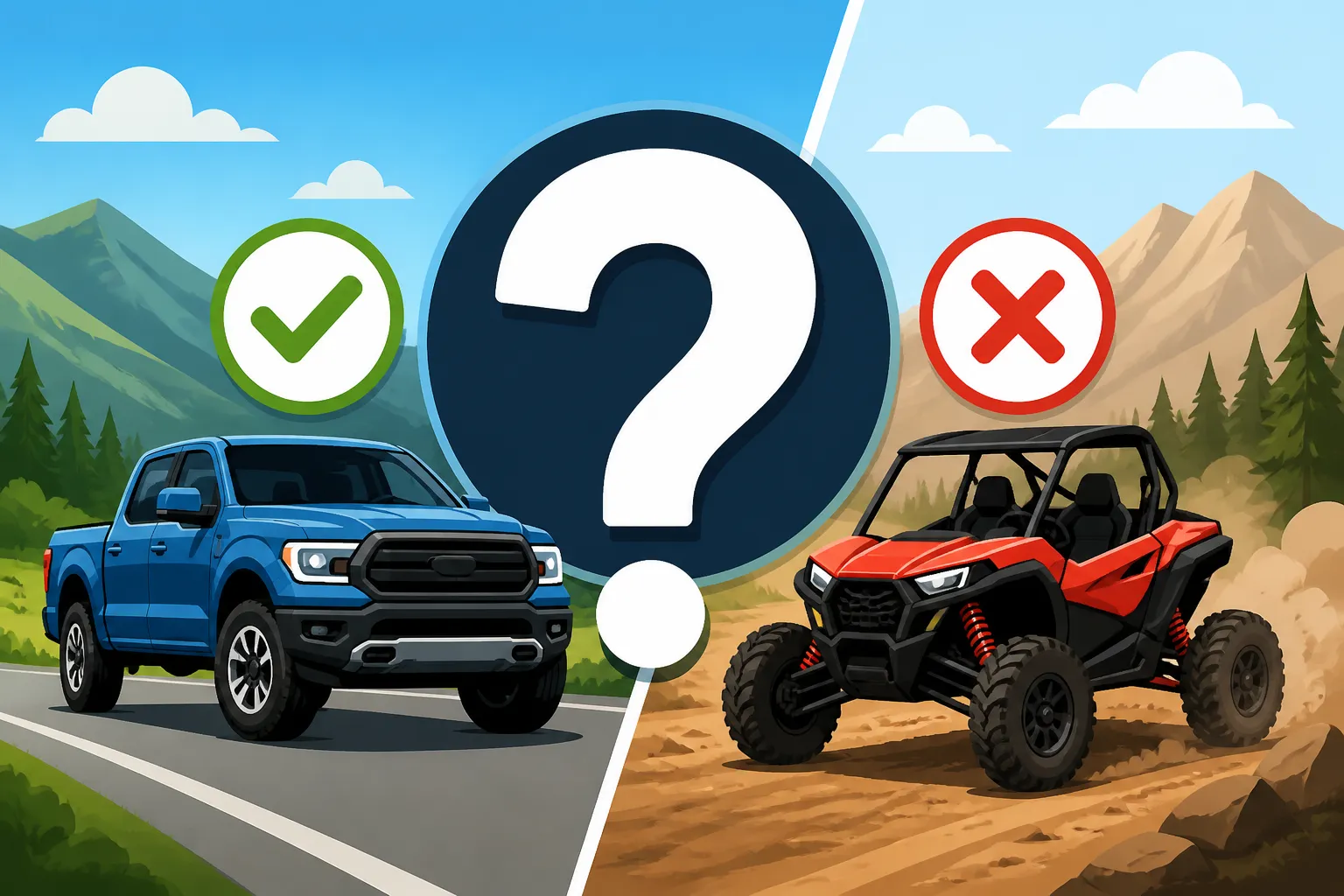
Do Licensed Trucks Need Montana OHV Registration?
It's a question we hear often from folks who love exploring Montana's incredible backcountry: "My pickup truck is a beast off-road, it's got a lift kit, big tires, and it's certainly an 'off-highway vehicle' to me when I'm out on a rough two-track. So, do I need to get a separate OHV registration for it, in addition to my regular license plates?" This guide will clear up that common confusion, explaining why your trusted truck, even if it's a true off-road warrior, generally falls under different rules than your ATV or UTV when it comes to state registration.
The Core Question: Is Your Truck an OHV in Montana?
The heart of the matter lies in how Montana law defines an off-highway vehicle (OHV) and how that definition applies to your everyday pickup truck, even one built for rugged terrain. It's easy to assume that any vehicle capable of going off-road should be lumped into the same category, but the state makes some clear distinctions that impact your registration obligations.
Defining an OHV in Montana
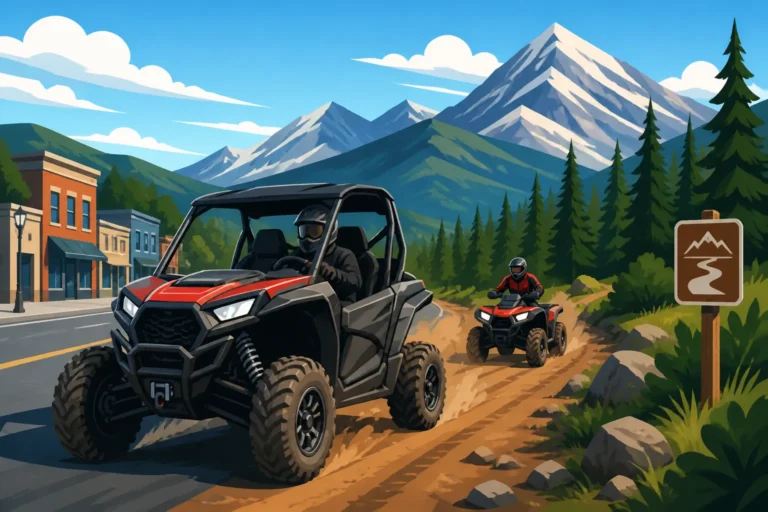
In Montana, an "off-highway vehicle" is typically defined as a motorized vehicle that is designed to travel on land other than a public highway. This includes machines like all-terrain vehicles (ATVs), utility terrain vehicles (UTVs or side-by-sides), dirt bikes, and sometimes snowmobiles (which have their own specific registration rules). These vehicles are generally not street legal from the factory. Their primary purpose is recreational travel on designated trails, unpaved roads, or private land. Think about the physical characteristics: they often lack turn signals, proper headlights/taillights for highway speeds, specific safety glass, or the other features required to meet federal motor vehicle safety standards for road use.
Your licensed truck, on the other hand, is built and designed specifically for operating on public roads, highways, and even paved city streets. It comes from the manufacturer with all the necessary equipment to be driven legally on asphalt, gravel, or dirt roads. While its four-wheel drive and robust suspension might make it excel off the beaten path, its fundamental design and legal classification are for on-road use. This distinction is crucial because the registration system is tied to the vehicle's intended primary use and design, not just its capability to venture off pavement.
What Standard Vehicle Registration Covers
When you register your truck with your county treasurer in Montana, you're obtaining standard vehicle registration. This registration allows you to legally operate your truck on public highways, county roads (where OHVs might be restricted), and city streets. The fees you pay for this registration contribute to the maintenance and improvement of Montana's vast network of roads and highways, ensuring smooth travel for all vehicles that share them. It covers liability, verifies ownership, and ensures your vehicle meets minimum safety standards for general road use.
However, this standard vehicle registration does not automatically grant you access to areas specifically designated as "OHV trails" or "OHV recreation areas." These areas are often managed by the Forest Service, Bureau of Land Management (BLM), or Montana Fish, Wildlife & Parks, and they have their own rules regarding vehicle types, width restrictions, and specific permit requirements. Your truck's registration is for the road system, not the off-highway trail system. Trying to navigate a standard truck on an ATV or UTV trail could lead to fines, trail damage, or simply getting stuck because the trail wasn't designed for a full-size vehicle. The systems are designed to be separate because their purposes are separate.
When the Lines Get Blurry: Exceptions and Gray Areas
While the general rule is clear, there are always scenarios that make people wonder if their truck might be an exception. Montana recognizes that vehicles serve multiple purposes, especially in a state with such vast expanses of rural and wild lands. Let's look at where the distinction can seem less obvious.
Trucks Used for Agricultural or Industrial Work
It's incredibly common in Montana to see trucks, often older models, used exclusively on ranches, farms, or for industrial purposes like logging or mining. These "ranch trucks" might spend their entire operational life on private property, navigating fields, pastures, or logging roads. In these specific contexts, where the truck is operating on private land or permitted industrial sites for work purposes and not for recreational off-highway riding on public trails, OHV registration is generally not required. The machine isn't being used as a recreational OHV on public lands; it's a piece of working equipment on private ground or under specific industrial permits.
The key here is the purpose and location of use. If your truck is hauling fence posts across your family's 5,000-acre spread or delivering equipment to a remote job site under a specific permit, it's not considered a recreational OHV for state registration purposes. The state offers certain [Farm and Ranch Exemptions in Montana] that apply to how these vehicles are used and registered, often allowing for operation without standard registration if they remain entirely on private property or within a limited scope of agricultural use on public roads. However, if you decide to take that same ranch truck out for a weekend of recreational trail riding on a designated public OHV system, you'd encounter the same restrictions as any other truck owner. It would still be classified as a full-size vehicle, not an OHV, and would need to abide by MVUMs and road regulations, not OHV trail rules. For more details on this, you can look into [Montana OHV Rules for Ranch Machines].
The "Modified for Off-Highway" Conundrum
Many truck owners pour significant time and money into modifying their vehicles for extreme off-road capability. We're talking about massive lift kits, huge mud tires, heavy-duty bumpers, winches, and sophisticated suspension systems. Brands like SuperATV offer a wide range of aftermarket parts that allow enthusiasts to transform their trucks into true backcountry explorers. You might install new axles, reinforced control arms, or rock sliders, making your truck capable of tackling terrain that would stop a stock vehicle dead in its tracks. With all these modifications, it certainly feels like an off-highway vehicle in spirit.
However, even with extensive modifications, if your truck remains legally registered for road use – meaning it still has license plates, current registration, and meets state requirements for street-legal operation – it continues to be classified as a truck, not an OHV, for registration purposes. Montana doesn't suddenly re-classify a street-legal pickup as an OHV simply because it's been upgraded to be more capable off-pavement. The defining factor for registration remains its original design and its status as a road-legal vehicle.
The confusion here often arises when people see highly modified Jeeps or other 4×4 vehicles on OHV trails. These are typically street-legal vehicles that also have access to certain designated multi-use trails, often referred to as "full-size vehicle trails," which are usually wider and more accommodating than trails designated exclusively for ATVs or UTVs. The key is that these vehicles are still operating under their standard vehicle registration and adhering to MVUMs that permit full-size vehicle access, not operating under an OHV registration. You can learn more about this by checking out [Plated Jeeps on Montana OHV Trails]. The state's OHV registration system is explicitly for those machines not primarily designed or registered for road use.
Why the Confusion and What It Means for You
The distinction between a licensed truck and an OHV, while seemingly pedantic, is actually quite practical and rooted in how Montana manages its vast public lands and allocates resources for recreational access. Understanding this separation can save you from fines, frustration, and inadvertently damaging sensitive ecosystems.
The Purpose of OHV Registration
The primary reason for separate OHV registration is resource management. Fees collected from OHV registrations and trail passes directly fund the development, maintenance, and signage of trails specifically designed for ATVs, UTVs, and dirt bikes. This money goes towards maintaining trail surfaces, building bridges over creeks, installing erosion control measures, and ensuring sustainable access for these smaller, lighter machines. It's a system designed to support a specific type of recreational activity and its associated infrastructure. For a deeper dive into where these funds go, check out [Where Montana OHV Fees Go].
Your truck's standard vehicle registration fees, on the other hand, are funneled into the much broader state highway and road fund. These funds pay for paving highways, repairing bridges on major thoroughfares, maintaining shoulders, and generally keeping the state's entire transportation network operational for everything from semi-trucks to sedans. These two funding streams are separate because the infrastructure they support is distinct. Asking a truck to carry OHV registration would be like asking an ATV owner to pay highway tolls for trails they can't even access.
Rules for Driving on Public Lands and Trails
This is where the rubber meets the dirt (or mud, or rocks, depending on your adventure!). When you're driving a licensed truck on public lands managed by the Forest Service or BLM, you are strictly governed by their Motor Vehicle Use Maps (MVUMs). These maps are your bible for understanding what's open to which type of vehicle. MVUMs clearly designate which roads are open to full-size vehicles, which are restricted to OHVs (ATVs, UTVs, dirt bikes), and which are completely closed to motorized use. Many trails designated for ATVs and UTVs are simply too narrow, too steep, or too fragile for a full-size truck.
Attempting to drive your licensed truck on an OHV-specific trail can lead to several problems. First and foremost, you risk causing significant trail damage, especially in wet conditions, due to the truck's weight and wider footprint. This damage degrades the trail for other users and can harm delicate ecosystems. Second, you could be cited for being on a restricted trail, which can result in hefty fines. Wardens and law enforcement patrol these areas, and they know the difference between a UTV and a Chevy Colorado. Understanding the intricacies of [Montana's National Forest Trail Systems] and knowing how to interpret [Reading a Montana Motor Vehicle Use Map] is paramount for any truck owner venturing onto public lands. Your truck might be incredibly capable off-road, but its access is still dictated by the MVUMs, not its perceived "OHV-ness."
Practical Advice for Montana Truck Owners
Navigating Montana's vast public lands in your truck is an incredible experience, but it requires diligent preparation and adherence to specific rules to ensure you're legal and respectful of the environment. Here's some practical advice to keep you on the right side of regulations.
Checking MVUMs and Local Ordinances
Before you even hitch up the camper or load the coolers, make it a habit to consult the relevant Motor Vehicle Use Maps (MVUMs) for the specific National Forest or BLM land you plan to visit. These maps are available for free at Forest Service or BLM district offices, or often online. They are regularly updated and show exactly which roads are open to full-size vehicles and when. Don't rely on old maps or vague memories; a road that was open last year might be seasonally closed or permanently restricted this year. Always be aware of [Montana Rules on Forest Service Roads] and [Montana Rules on BLM Roads].
Additionally, if your adventure takes you through or near smaller towns or involves county roads, it's wise to check for local ordinances. Some Montana counties and towns have specific rules about vehicle types on certain unpaved roads, especially those that might be shared with residential areas or sensitive natural resources. A quick call to the county commissioner's office or city hall can clear up any confusion before you hit the road. Being a responsible explorer means doing your homework.
When You're Hauling, Not Riding
It's important to remember that the registration for your truck is entirely separate from the registration for your actual OHV. When you're using your truck to haul your ATV, UTV, or dirt bike to a trailhead, your truck still requires its standard vehicle registration, plates, and current tabs. The OHV registration is for the machine being ridden on the trails, not the tow vehicle that gets it there.
Furthermore, if you're using a trailer to transport your OHV, that trailer itself will need to be properly registered and plated in Montana, or in your home state if you're an out-of-state visitor. This ensures that all components of your transportation setup are legal for highway travel. Thinking of it this way simplifies the process: the truck is for the highway, the trailer is for the highway (and often has its own set of rules), and the OHV is for the trail. Each component has its own set of requirements. For details on trailer registration, you can find information at [Trailer Registration for Hauling ATVs in Montana]. So, while your truck might feel like an off-road beast, when it comes to registration, it's still your reliable, road-legal pickup doing what it does best: getting you and your gear to the next adventure.
Disclaimer
This article is for general informational purposes only and does not constitute professional advice. Laws, prices and regulations vary by location and change over time. Consult a qualified professional for guidance on your specific situation.