Riding Back to Camp After Sunset
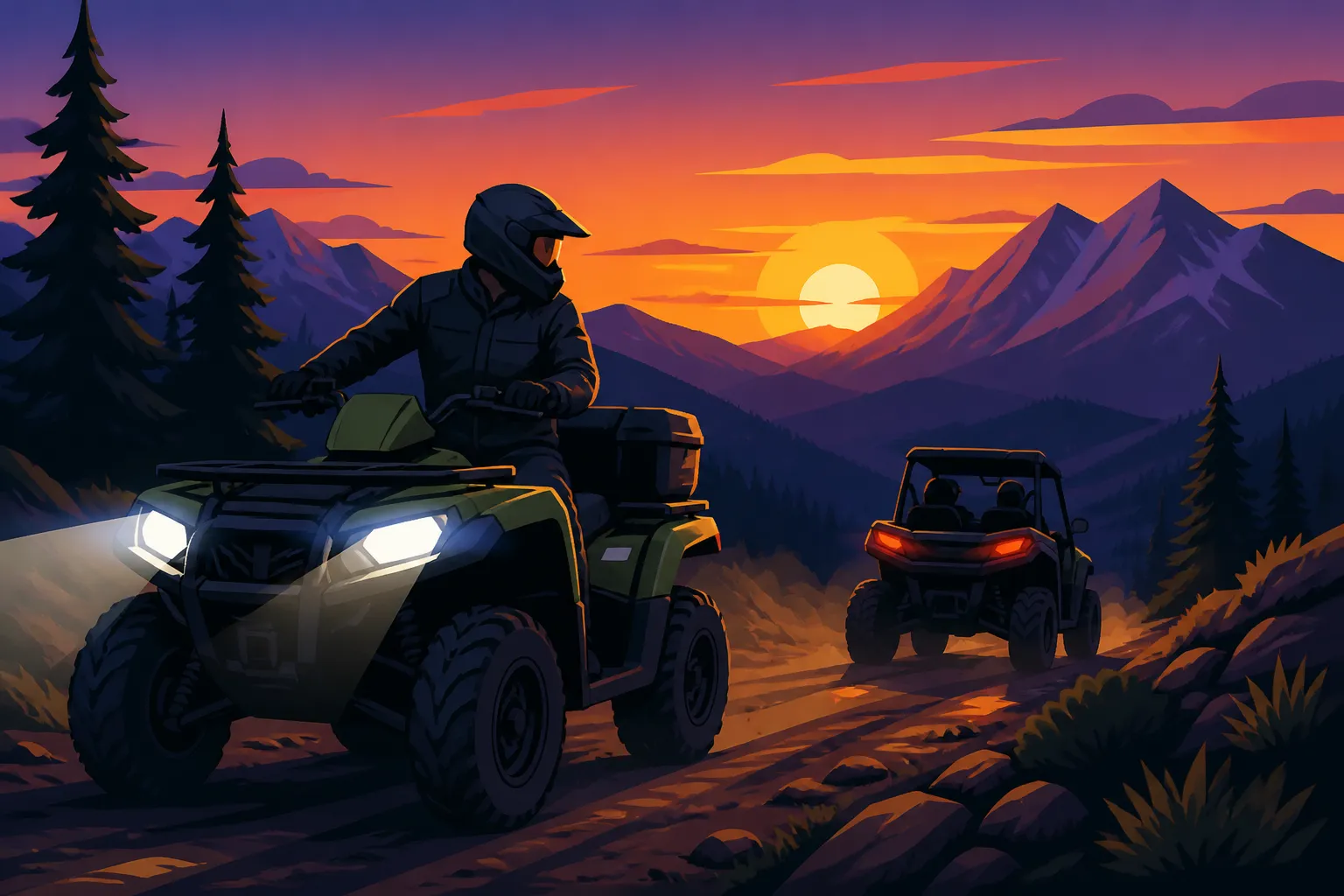
There's nothing quite like that last glorious stretch of trail as the sun dips below the rugged Montana horizon. The light gets golden, the air cools, and the day's adventure settles into a peaceful calm. But then, as dusk truly sets in, a new set of challenges quickly emerges. Suddenly, your easygoing ride back to camp can feel like a high-stakes navigation mission, especially when you're tired, the trail is unfamiliar, or an unexpected mechanical issue crops up. This guide is all about helping you confidently and safely make that journey back to your cozy campsite after the stars start to peek out, covering everything from essential gear to smart riding tactics and how to prepare for the unexpected.
The Unique Challenges of Night Riding in Montana's Backcountry
Riding an ATV or UTV in Montana's vast backcountry is an incredible experience, but when the sun goes down, the game changes dramatically. It's not just about flipping on your headlights; it's about a complete shift in perception, awareness, and preparedness. Many riders, even experienced ones, underestimate just how different things become once darkness fully descends.
Visibility Issues and Hidden Hazards
One of the most obvious, yet often underestimated, challenges is simply seeing where you're going. Those familiar trails that seemed so easy in daylight can suddenly look like a maze of shadows and indistinct terrain. What was a minor rut becomes a hidden trap, a subtle dip turns into a jarring drop, and the gravel that just crunched under your tires now blends seamlessly with the surrounding dirt. Dust, especially from other riders, can hang in the air and create blinding halos around your lights, making visibility even worse. Think about how many times you've noticed a rock or a branch in broad daylight at the last second; at night, that margin for error shrinks significantly. The nuances of the trail disappear, and your depth perception is severely compromised. This means obstacles that would be easy to avoid during the day can become serious hazards, leading to punctures, bent rims, or even rollovers. It's a frustrating feeling to suddenly feel out of control on a trail you thought you knew like the back of your hand.
Wildlife Encounters After Dark
Montana is rich with incredible wildlife, and while seeing a deer or an elk during the day is a treat, encountering them at night on an OHV can be downright dangerous. Many of Montana's larger animals, such as deer, elk, and moose, are most active at dawn, dusk, and throughout the night. Their eyes can reflect in your headlights, giving you a brief, startling glimpse, but often, they simply appear out of nowhere. A large animal stepping onto the trail directly in your path, especially at speed, is a terrifying prospect. Even smaller animals like raccoons or porcupines can cause a nasty surprise if you hit them. Beyond collisions, the presence of predators like mountain lions and bears, especially grizzlies in certain areas, adds another layer of awareness. While they typically avoid humans, a surprise encounter in the dark can be unnerving. Knowing how to react and making noise can be crucial. For more on safe practices, you might want to read [Riding Safely in Grizzly Country].
The Mental Game: Fatigue and Disorientation
By the time you're heading back to camp after sunset, you've likely had a full day of riding. Fatigue can set in, dulling your reflexes and slowing your decision-making. Combine that with the increased mental effort required to navigate in the dark, and you have a recipe for mistakes. Disorientation is another real threat. Without the familiar landmarks of daylight – a distant peak, a distinct rock formation, or a unique cluster of trees – trails can feel entirely different. Every turn might look the same, and what felt like a short stretch can seem to go on forever. This can lead to anxiety, especially if you're not entirely sure of your exact route or if your GPS starts acting up in a [Cell Dead Zones in Western Montana]. The frustration of feeling lost or unsure of your path when all you want to do is get back to camp for dinner and a warm fire is a common sentiment among riders who've been caught out after dark.
Essential Gear and Machine Prep for Dusk-to-Dark Rides
Successfully navigating Montana's backcountry after sunset isn't just about skill; it's heavily dependent on having the right equipment and ensuring your machine is ready for the task. Don't leave camp planning to rely solely on your factory lights – the stakes are too high.
Lighting Up Your Path: Headlights, Taillights, and Beyond
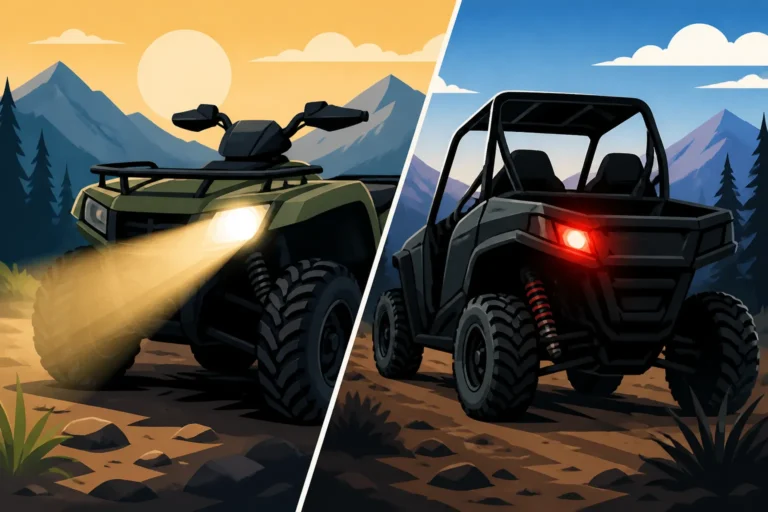
Your machine's factory headlights and taillights are the absolute minimum requirement, but in the vast darkness of Montana, they are often barely adequate. For serious night riding, you'll want to invest in significant upgrades. LED light bars are a game-changer, casting a wide, bright beam that turns night into a much more manageable twilight. Look for options that offer a good balance of flood and spot patterns to illuminate both the immediate trail ahead and the broader surroundings. Auxiliary pod lights, mounted to your A-pillars or bumper, can fill in dark spots and provide crucial side lighting, helping you spot wildlife or terrain changes off to the sides. Don't forget the rear! While your taillights are legally required and critical for other riders to see you, a rear-facing amber or red dust light can drastically improve your visibility, especially when riding in a group where dust is an issue. Even small utility lights or rock lights mounted under your machine can help illuminate obstacles directly beneath you if you need to stop and inspect something. Companies like SuperATV offer a huge range of robust lighting solutions designed specifically for off-road machines, built to withstand the bumps and vibrations of the trail. Remember, Montana has specific regulations regarding lights, so ensure your setup complies, especially if you plan on road sections. You can read up on [Montana Headlight Rules After Dark] and [One Headlight and One Taillight] for more details.
Rider Visibility: Making Yourself Seen
It's not just about your machine being visible; you, as the rider, also need to be easily seen, especially if you have to dismount for any reason. Wearing reflective gear is a must. A reflective vest, strips on your helmet, or reflective accents on your riding jacket can catch the light from other machines or even your own headlights if you're working on something in the dark. Headlamps are indispensable. A good headlamp frees up your hands for tasks like consulting a map, performing a quick repair, or even just setting up camp if you arrive late. Carry spare batteries! Glow sticks or small LED personal lights can also be attached to your pack or machine for added passive visibility, particularly if you're separated from your machine. These small, often overlooked items can make a huge difference in an emergency situation.
Communication and Navigation Tools
In the dark, clear communication and reliable navigation become even more critical. While your phone's GPS is handy, always carry a dedicated GPS unit or a reliable offline mapping app on a device like a tablet. Ensure it's fully charged and has downloaded maps of your specific riding area. Physical maps are also a vital backup, especially in areas with no cell service – [Carrying a Paper Map in Grizzly Country] is always a smart move. Two-way radios are excellent for group communication, allowing you to stay in touch even when dust or terrain separates you. Cell service in Montana's backcountry is notoriously spotty, so a satellite messenger device is highly recommended for emergencies, allowing you to send texts or even an SOS signal when regular communication is impossible. Finally, a small but powerful whistle can be surprisingly effective for signaling if you're on foot and need to alert your group.
| Item Type | Essential for Night Riding | Why It Matters |
|---|---|---|
| Machine Lighting | High-output LED light bar, auxiliary pod lights, rear dust light | Illuminate trail, spot hazards, increase visibility to others, fill dark spots |
| Personal Visibility | Reflective vest/gear, headlamp with spare batteries | Be seen if dismounted, hands-free light for tasks, emergency signaling |
| Navigation | GPS unit (dedicated/offline app), paper maps | Stay on track, backup for electronic failure, crucial in [Cell Dead Zones in Western Montana] |
| Communication | Two-way radios, satellite messenger | Group contact, emergency SOS, overcome lack of cell service |
| Safety & Repair | First-aid kit, tool kit, spare tire/plug kit, winching gear, bear spray | Handle injuries, basic repairs, self-recovery, wildlife defense (see [What to Carry on a Remote Montana Ride]) |
| Warmth & Sustenance | Extra layers, snacks, water, fire starter | Combat cold, maintain energy, emergency shelter (see [First Aid When Help Is Hours Out]) |
Smart Riding Strategies When the Sun Goes Down
Once your machine is prepped and your gear is ready, it's time to adjust your actual riding style. Night riding demands a different approach than daytime cruising, and adopting these strategies can significantly reduce your risk and make the experience more enjoyable.
Adjusting Your Speed and Riding Style
This is perhaps the single most important adjustment. What felt like a comfortable 25 mph during the day can become dangerously fast at night. Reduce your speed significantly – often by half or more – to give yourself more reaction time. Your headlights, no matter how powerful, only illuminate so far, and you need to be able to stop or maneuver within that illuminated zone. Focus on smooth, deliberate inputs. Avoid aggressive cornering or sudden braking, as compromised visibility can make these actions risky. Look further down the trail than you normally would, trying to pick out any anomalies or changes in terrain. If you're riding a wide side-by-side, be extra mindful of your machine's width, as trail edges can be harder to judge in the dark. On twisty, narrow trails, slow way down. The goal isn't to get back to camp as fast as possible, but to get there safely. Respecting the darkness by moderating your speed is a non-negotiable rule for night riding. Remember, speeding on certain roads can also lead to [Montana Speed Limits for OHVs on Roads] and associated fines.
Group Riding Tactics for Nighttime
If you're riding with a group, establish clear protocols before you head out. Designate a lead rider with the most powerful lights and a sweep rider at the back. Maintain closer distances than you would during the day, but not so close that dust becomes an issue. Use your rear dust lights to make yourself visible to the rider behind you. Regular check-ins via two-way radio are crucial to ensure everyone is accounted for and to relay any upcoming hazards. If someone stops, the whole group stops. Use hand signals or headlight flashes to communicate if radios aren't available, but remember these are less effective in the dark and dust. A simple rule is to always keep the taillight of the rider in front of you within sight. This ensures no one gets lost or separated, which can quickly become a serious problem in the dark, unfamiliar backcountry.
Dealing with Unexpected Stops and Breakdowns
Breakdowns are never fun, but at night, they can be particularly stressful. This is where your comprehensive gear list truly pays off. If you need to stop for any reason, pull your machine completely off the main trail if possible, to avoid becoming a hazard to others. Turn on your hazard lights (if your machine has them) or at least keep your taillights on. Immediately get out your headlamp or a powerful flashlight. Inspect the problem calmly. If it's a flat tire, you'll be glad you packed that tire plug kit. If it's a more serious mechanical issue, your tool kit might help. Remember your satellite messenger if you need to call for help, especially if you're in a remote area without cell service. Having a small fire starter and some emergency snacks can also turn a cold, frustrating wait into a more manageable situation if you end up stuck for a while. Being prepared for a breakdown isn't about expecting it, but about empowering yourself to handle it when it happens, minimizing discomfort and danger.
Legalities and Local Ordinances for Night Riding
Montana has specific rules that apply to OHVs, and these regulations don't go away just because the sun has set. In fact, some rules become even more critical or have added stipulations when riding after dark, particularly if you're using roads or are near developed areas. Ignorance of the law won't get you out of a ticket, and more importantly, following these guidelines is a key part of staying safe and respectful.
Montana's Lighting Requirements for OHVs
For any OHV operation after sunset or before sunrise, Montana law is pretty clear: your machine must have at least one headlight that emits a white light visible from 500 feet to the front, and at least one taillight that emits a red light visible from 500 feet to the rear. This applies whether you're on a designated OHV trail, a forest road, or a county road where OHVs are permitted. While your factory lights might meet these minimums, as discussed earlier, they might not be sufficient for safe navigation. Many riders also use additional aftermarket lighting, such as LED light bars. Just be mindful of how you use these. On some county roads, you might be required to dim or turn off excessively bright off-road lights when encountering oncoming traffic. Over-bright lights can temporarily blind other drivers, creating a hazard. Always ensure your lights are in good working order before you head out, and carry a spare bulb or two if your setup uses them. If a warden stops you, one of the first things they'll likely check is your lighting. Read up on [Montana Headlight Rules After Dark] to ensure you're compliant.
Respecting Curfews and Quiet Hours
When riding back to camp after sunset, you're often passing through areas where others might be sleeping or seeking quiet. This is especially true if your camp is near a developed campground, a small town, or private property. Many areas, particularly within or adjacent to campgrounds and small communities, have designated quiet hours or even curfews for motorized vehicles. While a loud exhaust might be thrilling on the open trail, it's a nuisance when people are trying to sleep. Make an effort to be as quiet as possible when nearing inhabited areas. Slow down, avoid revving your engine, and try to minimize any unnecessary noise. Be aware of your machine's exhaust noise; if you've installed an aftermarket system, ensure it still complies with [Mufflers and Spark Arresters in Montana] noise limits, especially in sensitive areas. Failing to respect quiet hours can lead to complaints, fines, or even the loss of OHV access in certain areas – and that's something no rider wants.
Understanding Road and Trail Access at Night
Just because a road or trail is open to OHVs during the day doesn't automatically mean it's fair game after dark. Some county roads or local ordinances might restrict OHV travel to daylight hours, or have specific curfews. This is particularly common in or around residential areas. Always check local regulations for the specific area you're riding in. Forest Service and BLM lands generally allow 24-hour access on designated motorized routes, but again, always refer to the specific Motor Vehicle Use Map (MVUM) for any area-specific rules. If you're crossing a state highway or riding a short section of county road to connect trails, remember that those roads often have stricter rules for OHVs, including speed limits, helmet laws (especially for younger riders—see [Montana Helmet Rules for Riders Under 18]), and even requirements for a valid driver's license. Riding illegally on a prohibited road, especially at night, greatly increases your risk of an encounter with law enforcement and potential [Montana Fines for Illegal Road Riding]. It's your responsibility to know the rules of the trail and the road you're on, day or night.
Disclaimer
This article is for general informational purposes only and does not constitute professional advice. Laws, prices and regulations vary by location and change over time. Consult a qualified professional for guidance on your specific situation.