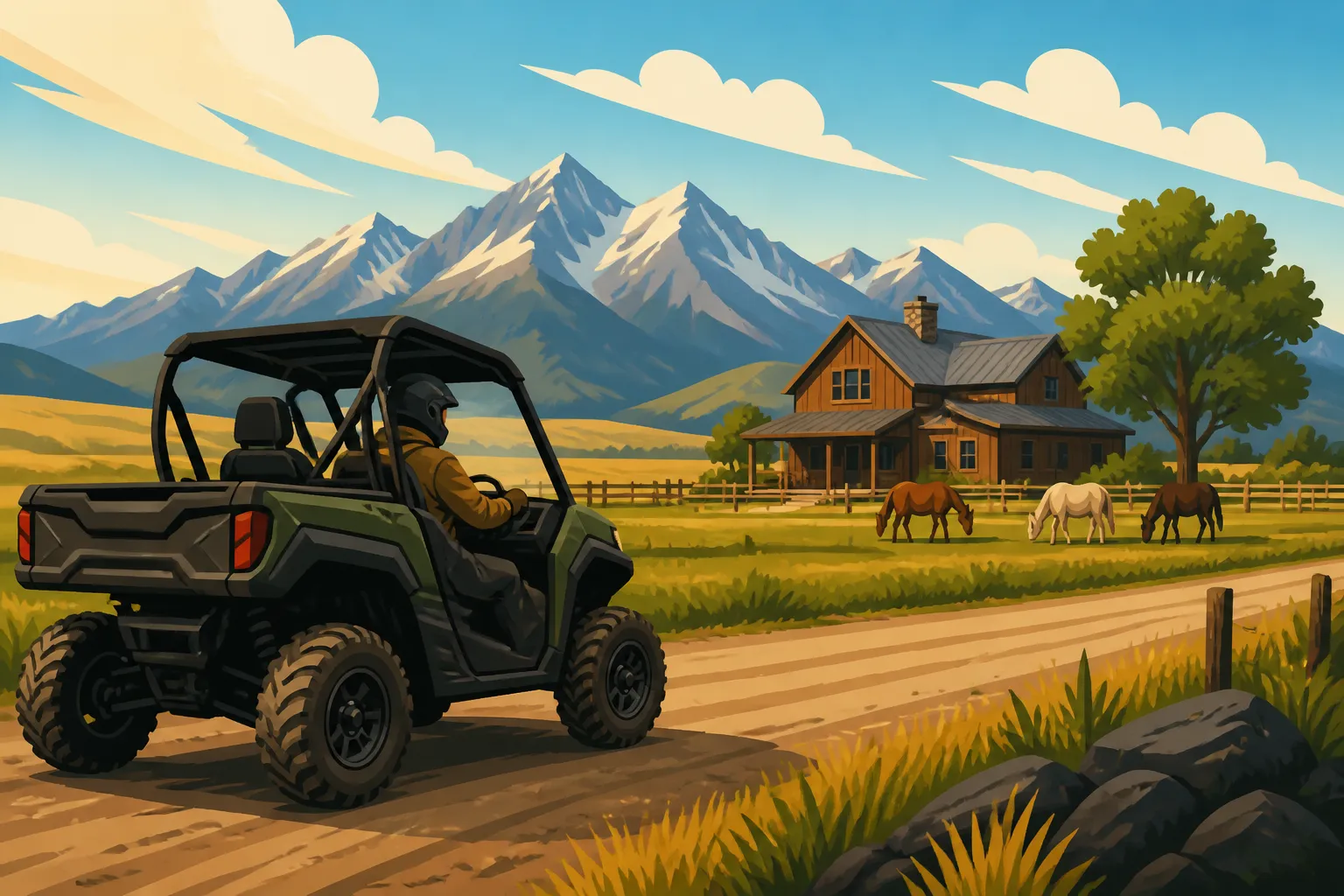
Riding Slowly Past Ranch Houses
We've all been there: enjoying a fantastic day out on our ATV or UTV, cruising along a beautiful Montana backroad, only to come across someone's home. Suddenly, the carefree throttle feels a bit heavy, and a common question pops into your head: How fast should I be going past this ranch house? It’s a genuine concern, and this guide will walk you through the etiquette, legalities, and practical steps to ensure you’re being a respectful and responsible rider when you encounter private residences on public access routes.
The Unwritten Rules of the Montana Backroad: Why Courtesy Matters
Riding an OHV through Montana's stunning landscapes is an incredible experience, but it also comes with a shared responsibility, especially when our routes intersect with private property. Passing a ranch house, a cabin, or even a remote homestead isn't just about adhering to the letter of the law; it's about showing respect for those who live and work in these areas. The sound of a roaring engine, a cloud of dust, or perceived carelessness can quickly turn a scenic ride into a nuisance for residents.
Think about it from their perspective. These folks live in the quiet beauty of Montana, and while they understand public access, they don't want their peace constantly disturbed. A loud exhaust or a speeding vehicle kicking up a rooster tail of dust can impact their air quality, startle their livestock, or simply ruin a quiet afternoon on their porch. That's why common courtesy often dictates more than the minimum legal requirement. It's about preserving the privilege of riding in these incredible places for everyone. Ignoring these unspoken rules can lead to resentment, complaints, and ultimately, calls for more restrictive regulations that could impact all riders. When you pass by a home, you're not just a rider; you're an ambassador for the entire OHV community.
The Impact of Noise and Dust
Noise and dust are the two biggest complaints that residents along rural roads typically have when off-highway vehicles pass by. The sound of an ATV or UTV, especially one with an aftermarket exhaust, can carry for miles in open country. While it might be music to your ears out on the trail, it can be a jarring intrusion for someone trying to enjoy their property or work without constant interruption. A momentary burst of acceleration might seem harmless, but if it happens multiple times a day from various riders, it adds up.
Similarly, dust can be a major issue. On dry Montana roads, even a modest speed can kick up significant dust, especially if you're riding a wider side-by-side or have an aggressive tire tread. This dust can settle on homes, gardens, and vehicles, creating a mess and even impacting air quality for residents. It can also blind oncoming traffic or obscure a resident trying to pull out of their driveway. If you're riding in a group, the combined dust from multiple machines can be particularly problematic. [Dust Behind You on a Ranch Road] is a real concern, and understanding how to minimize it is key to being a considerate rider.
Respect for Livestock and Pets
Many ranch houses are just that—working ranches with livestock. Cattle, horses, sheep, and even barn cats and dogs are common residents. The sudden appearance of an OHV, especially at speed or with excessive noise, can easily spook these animals. A startled horse might injure itself, cattle could stampede, or a family dog might chase after your machine, putting itself in danger. This is not only a safety concern for the animals and for you but also a major headache for the rancher.
Imagine you're driving past a pasture with horses. If you maintain a slow, steady speed and keep your noise levels down, they might barely acknowledge your presence. However, if you rip by, kick up dust, or rev your engine, those animals could react unpredictably, potentially causing damage to fences or even running into the road. Showing respect for their living environment means understanding that you're sharing the road with more than just other vehicles; you're sharing it with wildlife and domesticated animals too.
Legality and Local Expectations: What the Law Says About Passing Homes
While Montana is generally OHV-friendly, especially on designated routes and county roads, there are specific regulations and local expectations you absolutely need to be aware of when driving past private residences. It's not always as simple as "if the road's open, anything goes." Local ordinances and unwritten community standards often come into play, and misunderstanding them can lead to unpleasant encounters or even fines. [Riding an OHV on the Road in Montana] has its own set of rules, and additional considerations apply near homes.
Montana's laws permit OHVs on certain county roads, but that permission often comes with conditions designed to protect residents. Speed limits, noise restrictions, and even specific times of day for riding can be enforced, particularly in areas where homes are concentrated. It’s always a good idea to research the specific county or even municipal ordinances for the area you're riding in. [Montana City Streets and Municipal Ordinances] often have very strict rules that differ significantly from open county roads.
County Roads and Commissioner's Say
In Montana, county commissioners hold significant sway over what happens on county roads, including OHV access and specific rules for those roads. While state law might grant general access to county roads for OHVs, local commissioners can pass ordinances that impose stricter conditions, such as reduced speed limits in residential zones, noise curfews, or even seasonal closures near homes. This is often in direct response to complaints from residents about noise, dust, or perceived reckless driving.
For example, a county commissioner in rural Montana might implement a 15 mph speed limit on a specific stretch of gravel road that passes five ranch houses, even if the general county speed limit is 35 mph. They do this to mitigate dust and noise. Ignoring these local regulations, even if you weren't aware of them, won't save you from a ticket. It's crucial to pay attention to posted signs and, when in doubt, consult the county's transportation department or local sheriff’s office for clarification. They are often the first point of contact when [Neighbors Complain About Engine Noise].
Trespass Concerns and Posted Property
While you might be on a public road, the land immediately adjacent to it is almost certainly private property. This means you cannot leave the road, even momentarily, to stretch your legs, take a photo, or investigate something without explicit permission from the landowner. [Montana Trespass Rules Along Roads] are clear: staying on the public right-of-way is paramount. This right-of-way typically extends a certain distance from the center of the road, but it's often not as wide as many riders assume.
Ranchers are fiercely protective of their land, and for good reason. Trespassing can lead to property damage, fire hazards, and disturbances to livestock. If you pull off the road and onto private land, even for a moment, you could be cited for trespassing. It's not just about what you do on their land, but simply being on it without permission. Always keep your machine on the established public road, and if you need to stop, ensure you are fully within the public right-of-way and not encroaching on a resident's yard, field, or driveway.
| Consideration | Responsible Rider Action | Irresponsible Rider Action |
|---|---|---|
| Speed & Dust | Slow down significantly, especially on dry roads. | Maintain speed, kicking up large dust clouds. |
| Noise Levels | Reduce throttle, avoid revving, use stock or quiet exhaust. | Accelerate hard, use loud aftermarket exhaust without concern. |
| Proximity to Homes | Give homes a wide berth, stay central on the road. | Veer close to driveways or mailboxes, stare at houses. |
| Livestock/Pets | Slow to a crawl, be prepared to stop if animals are present. | Speed past, honk horn, risk startling animals. |
| Interaction with Locals | Offer a friendly wave, acknowledge their presence respectfully. | Ignore residents, act entitled to the road, glare. |
| Trash/Litter | Pack it in, pack it out; leave no trace. | Discard wrappers, bottles, or other trash along the roadside. |
| Road Condition | Avoid contributing to washboarding or ruts near homes. | Drive aggressively, creating ruts or washboards near residences. |
Minimizing Your Footprint: Practical Ways to Be a Good Neighbor
Being a responsible OHV rider in Montana isn't just about following rules; it's about actively working to minimize your impact on the environment and the people who call the backcountry home. When you're [Riding Slowly Past Ranch Houses], there are several practical steps you can take to ensure your presence is a welcome whisper, not an unwelcome roar. These actions demonstrate respect and help maintain positive relationships between riders and rural residents, ensuring that access to these beautiful areas remains open for all of us.
Many of these tips are simple common sense, but they are often overlooked in the excitement of a ride. Taking a moment to consider how your actions affect others can make a huge difference. From how you approach a homestead to the accessories you choose for your machine, every decision can either contribute to a good reputation for OHV riders or inadvertently fuel complaints. It's about being proactive and thoughtful, anticipating potential issues before they arise.
Controlling Speed and Dust Kick-Up
This is perhaps the most critical action you can take. When you see a ranch house, a mailbox, or any sign of habitation, immediately reduce your speed significantly. Aim for a speed that barely kicks up any dust – often 10-15 mph, or even slower if the road is extremely dry. This isn't about simply obeying a posted limit; it's about actively mitigating the impact. On a dry, gravel road, even 20 mph can create a substantial dust cloud. If you're riding a UTV, especially one equipped with larger tires or accessories from brands like SuperATV that might enhance traction, remember that your machine could kick up more dust than a smaller ATV. Therefore, you might need to slow down even more.
Consider the prevailing wind direction as well. If the wind is blowing towards the house, your dust will carry directly to them. In such cases, slowing down to almost a crawl might be necessary to avoid coating their home and property in fine silt. This small act of consideration goes a long way in building goodwill with residents. Remember, a brief slowdown for a few hundred yards is a minor inconvenience for you, but it can make a major difference in the daily life of a resident.
Managing Engine Noise
The sound of your engine can be highly disruptive, particularly early in the morning, late in the evening, or during quiet afternoon hours. While many modern ATVs and UTVs come with relatively quiet stock exhausts, aftermarket systems can significantly increase noise levels. If you're running a loud exhaust, be extra vigilant about throttling down to the absolute minimum when passing homes. [Mufflers and Spark Arresters in Montana] are regulated, and excessive noise can lead to fines, especially near residential areas.
When approaching a homestead, avoid any sudden accelerations, aggressive downshifts, or unnecessary revving of your engine. Maintain a steady, low RPM. If you ride with an aftermarket exhaust, consider whether it's truly necessary for your riding style, or if a quieter option would make you a better neighbor. Some riders even go so far as to install auxiliary mufflers for residential areas, though this might be extreme for most. The goal is to be heard as little as possible.
Waving and Acknowledging Residents
A simple wave can go an incredibly long way. When you pass a ranch house and see someone outside, a friendly nod or a wave acknowledges their presence and shows that you recognize you're in their neighborhood. It humanizes you as a rider and can transform a potential source of annoyance into a moment of shared courtesy. It breaks down the perception of an anonymous, careless rider.
This small gesture communicates respect and can diffuse any potential frustration a resident might feel about your presence. It says, "I see you, I respect your home, and I'm trying to be a good neighbor." Sometimes, a friendly wave is all it takes to turn a negative interaction into a positive one. This simple act of politeness fosters a more harmonious coexistence between OHV riders and rural residents.
What Happens When You Don't Slow Down? Potential Consequences
Ignoring the unwritten rules and legal expectations when passing ranch houses can lead to a host of negative outcomes, not just for you, but for the entire OHV community in Montana. The consequences can range from minor annoyances to serious legal trouble, and they often involve local residents becoming active advocates against motorized access. It's far easier and more beneficial to simply slow down and be respectful than to deal with the fallout of being a nuisance.
When you speed, kick up excessive dust, or make too much noise near someone's home, you're not just affecting that one household. You're creating a negative impression that can spread through a community, fueling calls for tighter restrictions on OHV use. This is why every rider's individual actions matter so much.
Complaints to Law Enforcement and County Commissioners
The most immediate consequence of being a disruptive rider is that residents will likely complain to local law enforcement or their county commissioners. In rural Montana, people know their local sheriff's deputies and often have direct lines of communication with their elected county officials. These complaints are taken seriously. A rash of complaints about OHV users in a specific area can lead to increased patrols, closer scrutiny of riders, and targeted enforcement actions. [What a Montana Warden Asks a Rider For] typically includes proof of registration and insurance, but they can also ask about your behavior.
Furthermore, persistent complaints can trigger discussions at the county commissioner level about enacting new ordinances or increasing existing restrictions. This might mean lowering speed limits, imposing stricter noise rules, or even restricting OHV access on certain roads altogether. It's a sad but common cycle: a few bad actors can ruin access for many responsible riders. Avoiding these complaints is not just about staying out of trouble yourself; it's about protecting riding opportunities for everyone.
Fines, Tickets, and Loss of Access
If law enforcement responds to a complaint and observes you violating speed limits, noise ordinances, or other local regulations, you can certainly receive a citation. [Montana Fines for Illegal Road Riding] can vary, but they can be substantial, especially if you're found to be acting recklessly or creating a public nuisance. A ticket can put a damper on your riding day and hit your wallet. For example, some areas might have specific rules about [Speed on a Montana County Road] near homes, and exceeding that could lead to a fine.
Beyond individual fines, repeated issues can lead to broader repercussions. If enough residents complain, a county might decide to implement permanent restrictions, such as seasonal closures or outright bans on OHV use on certain roads. This is the ultimate loss of access that no rider wants to see. It means that future generations of riders, and even you, might lose the ability to enjoy those scenic routes simply because a few individuals couldn't be bothered to slow down and show respect. By being a courteous rider, you contribute to the ongoing preservation of our riding privileges.
Negative Perception of OHV Riders
When riders are consistently seen as disruptive, loud, and inconsiderate, it fosters a negative perception of the entire OHV community. This stereotype makes it harder for rider advocacy groups to work with local governments, land managers, and residents to maintain or expand trail access. Instead of seeing OHV riders as responsible outdoor enthusiasts, they might be viewed as a noisy nuisance.
This negative perception can affect everything from trail funding to public support for new trail development. When land managers or county officials are considering new projects or access, a history of complaints from local residents due to reckless riding can tip the scales against OHV users. It's a collective responsibility to counter these negative stereotypes by consistently demonstrating respectful and responsible behavior, especially when passing someone’s home. The little things, like riding a machine that's not excessively loud – perhaps one you've thoughtfully outfitted with parts from a brand like SuperATV that focuses on quality and compliance – can make a positive impact on the overall image of riders.
Disclaimer
This article is for general informational purposes only and does not constitute professional advice. Laws, prices and regulations vary by location and change over time. Consult a qualified professional for guidance on your specific situation.