Whip Flags on a Montana Road Section
Navigating the rules for riding your ATV or UTV on Montana's roads can feel like a real maze. One minute you're out on the trails, and the next you're popping onto a county road to connect to another section, or perhaps even heading into a small town for lunch. Then the question pops into your head: "Do I need a whip flag here?" It's a common confusion because while some areas absolutely require them for off-road use, the rules often get blurry once you hit the pavement or gravel roads. This guide aims to clear up that confusion, diving deep into Montana's stance on whip flags for road sections and what you truly need to know to ride legally and safely.
Montana's General Requirements for OHVs on Roads
Montana’s landscape offers an incredible mix of sprawling trails and connecting roads, and it’s no wonder riders want to link them up. However, the move from dirt to gravel or asphalt brings a whole new set of rules to the table. Unlike designated off-road areas where whip flags are often a standard safety measure, the requirements for road use are generally different and can be a source of real head-scratching for riders.
The Core State Law and Local Ordinances
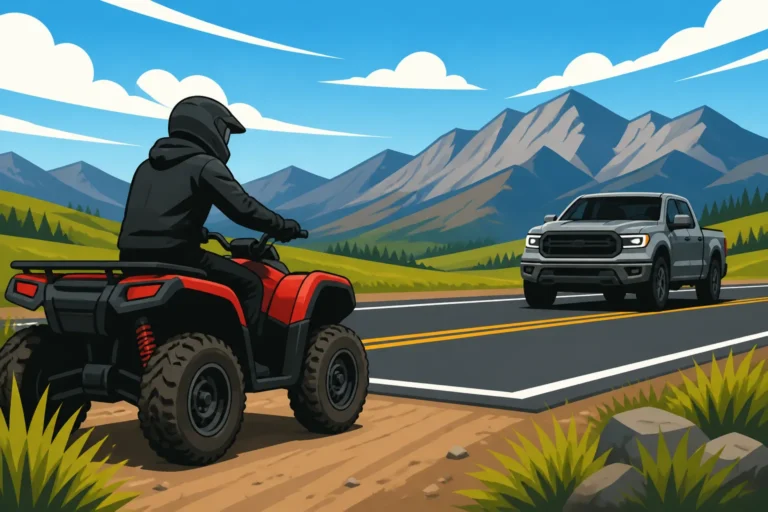
When it comes to off-highway vehicles (OHVs) and road use in Montana, the state's approach is somewhat decentralized. There isn't a blanket statewide law that simply declares all OHVs street-legal everywhere. Instead, [Riding an OHV on the Road in Montana] is typically dependent on the decisions of local governing bodies. County commissioners hold the power to open or close county roads to OHVs, and individual cities and towns can pass their own ordinances regarding OHV access on municipal streets. This patchwork system means that what's perfectly legal in one county or town might be prohibited just a few miles down the road. This local control is critical because it's often at this level that specific, additional safety equipment requirements, like whip flags, might occasionally appear, even if state law doesn't explicitly mandate them for general road use. Therefore, while the state provides a framework, the specifics often boil down to what the local folks have decided for their particular stretch of road.
This local variation can be incredibly frustrating for riders, especially those traveling through different jurisdictions. You might be accustomed to certain rules on the vast public lands, only to find a small town has a completely different set of expectations for your machine. This is why it’s always recommended to check with local authorities – like the county sheriff’s office or city hall – if you plan to ride your OHV on roads within their boundaries. Knowing these local nuances helps prevent unexpected fines or confrontations with law enforcement, ensuring your ride stays enjoyable and compliant.
Standard Road-Legal Equipment
When an OHV is permitted to operate on a public road in Montana, it must meet certain equipment standards to ensure it is visible and safe alongside other traffic. These requirements are generally consistent across the state for any road-legal machine, whether it's a car, truck, or an OHV like your side-by-side. You're going to need properly functioning headlights, taillights, and brake lights to ensure you can see and be seen, especially during dawn, dusk, or at night. [Headlight and Taillight Rules in Montana] are non-negotiable for road safety.
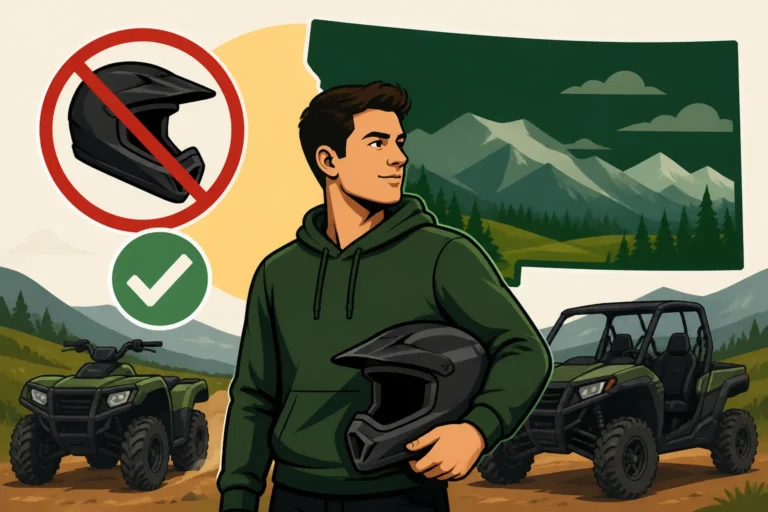
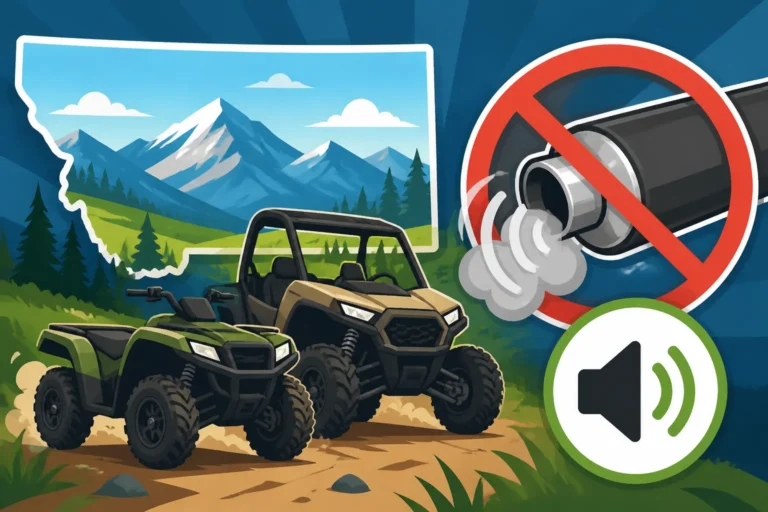
Beyond lighting, your machine must have functioning brakes, a horn, and a muffler system that complies with noise regulations to prevent excessive sound, which can be a point of contention in residential areas. A spark arrester is also required, primarily for fire prevention, especially when operating on public lands or roads leading through forested areas. For the rider, there are also personal safety gear requirements, such as helmets for anyone under 18 years of age, and generally, eye protection for all riders. These are the fundamental expectations for any vehicle sharing the road, designed to protect everyone.
These equipment standards are in place for a reason: to ensure your OHV can safely integrate with traditional road traffic. While they might seem like a lot to remember, they are essential for your safety and the safety of others. Unlike some off-road environments, where the primary concern might be being seen over dunes or in dense brush, on a road, you're interacting with cars, trucks, and often higher speeds. Understanding [What Montana Requires on an OHV Road Ride] is paramount, and it's these core elements that Montana's state law focuses on for road use, rather than specialized visibility aids like whip flags.
Do Montana Roads Specifically Require Whip Flags?
This is the million-dollar question for many riders, and it’s where the distinction between off-road trail rules and road rules becomes critical. The short answer for general road use in Montana is typically "no," but as with many things in life, there are layers of nuance and specific exceptions you absolutely need to be aware of.
Examining State-Level Regulations
When you dig into Montana's state statutes concerning off-highway vehicle operation on roads, you'll find a clear emphasis on standard motor vehicle equipment. The laws meticulously detail requirements for things like functioning headlights, taillights, brake lights, mirrors, a horn, and adequate braking systems. They also address personal protective equipment, notably helmets for younger riders and eye protection for all. However, in the general statewide framework for OHV road access, there is no explicit mention or requirement for whip flags. The state laws are designed to ensure your machine functions like any other vehicle on the road, with proper illumination and control, rather than requiring specialized off-road visibility markers.
This absence of a state-mandated whip flag rule for roads often surprises riders who are used to seeing them in other contexts or states. It highlights Montana's approach, which is more focused on traditional vehicular safety standards for road travel. The assumption is that on a road, a machine with proper lights and reflective elements, driven by someone with a valid driver's license (if required for the road section), provides adequate visibility. This means if you're just traveling a connecting county road that has been opened to OHV use, the state itself isn't demanding a tall, brightly colored flag waving above your machine.
Local Ordinances and Specific Road Sections
Now, here's where things get interesting, and why it's vital not to stop at the state-level answer. While the state might not demand whip flags for general road use, individual county commissioners or city councils have the authority to implement their own, more stringent requirements. For example, [Montana Towns That Allow OHVs on Their Streets] might, in their specific ordinance, include a provision for enhanced visibility, which could include whip flags, especially if those streets are narrow, winding, or see heavy mixed traffic. It's less common, but not impossible.
More frequently, you might encounter whip flag requirements on specific sections of road managed by other entities, even if they're considered public roads. Imagine a county road that cuts through a sand dune recreation area, or a forest service road that is heavily used by active logging operations. In such scenarios, the land management agency (like the Forest Service or BLM) or the county itself might impose a whip flag requirement for safety due to limited visibility, dust, or the presence of heavy equipment. These are not always explicitly "trail rules" but rather specific safety measures for hazardous road conditions. Always check local ordinances and any posted signs when entering areas where conditions might warrant extra caution.
This is precisely why you can’t make assumptions. A road that looks like any other county road could, at a particular stretch, fall under a unique regulation. Perhaps a short section of road acts as a staging area or connects two heavily used off-road parks. In such unique cases, local authorities or land managers might reasonably decide that the heightened visibility offered by a whip flag is a necessary safety measure. It's these specific, hyper-local rules that catch many riders off guard, so due diligence in researching your route is always your best defense against unexpected citations.
When and Where Whip Flags are Commonly Required (Even if not for "Roads")
To truly understand why the "road section" part of your question is so tricky, it helps to know where whip flags are traditionally required in Montana. This provides context and highlights the distinction. You'll almost always see whip flags mandated in:
- Sand Dune Areas: Places like Shepherd Ah Nei near Billings, where ATVs and UTVs churn up significant dust and operate over constantly shifting terrain, often require whip flags. The flags make machines visible over crests and through dust clouds, preventing collisions.
- Designated OHV Parks or Extreme Terrain: Some privately or publicly managed OHV parks, especially those with tight turns, blind hills, or areas of high traffic, may have their own rules requiring flags for all motorized vehicles.
- Organized Events and Races: Any sanctioned rally, race, or group event for OHVs will almost certainly mandate whip flags for participant safety and organizational control.
- Active Work Zones: On trails or even certain unpaved roads within active logging operations, mining sites, or construction areas, whip flags can be a requirement for OHVs to be visible to heavy machinery operators.
These are the typical environments where whip flags are considered essential. They are designed to elevate your machine's profile, making it easier to spot in situations where ground-level visibility is compromised. Because standard roads generally offer clearer lines of sight and less dust (though gravel roads can certainly kick it up!), the urgency for a whip flag often diminishes. However, as discussed, local variations are key, and a very short, specific "road section" connecting two high-risk off-road environments might be an exception to the general rule.
Why Riders Might Still Use Whip Flags on Montana Roads (Even if Not Required)
Even if Montana state law or local ordinances don't explicitly demand a whip flag for a particular road section, many riders choose to use them anyway. This isn't just about being overly cautious; it's often a smart, proactive approach to safety and a nod to good riding etiquette. When you're sharing the road with vehicles that are much larger and faster, every bit of visibility helps.
Enhanced Visibility and Safety
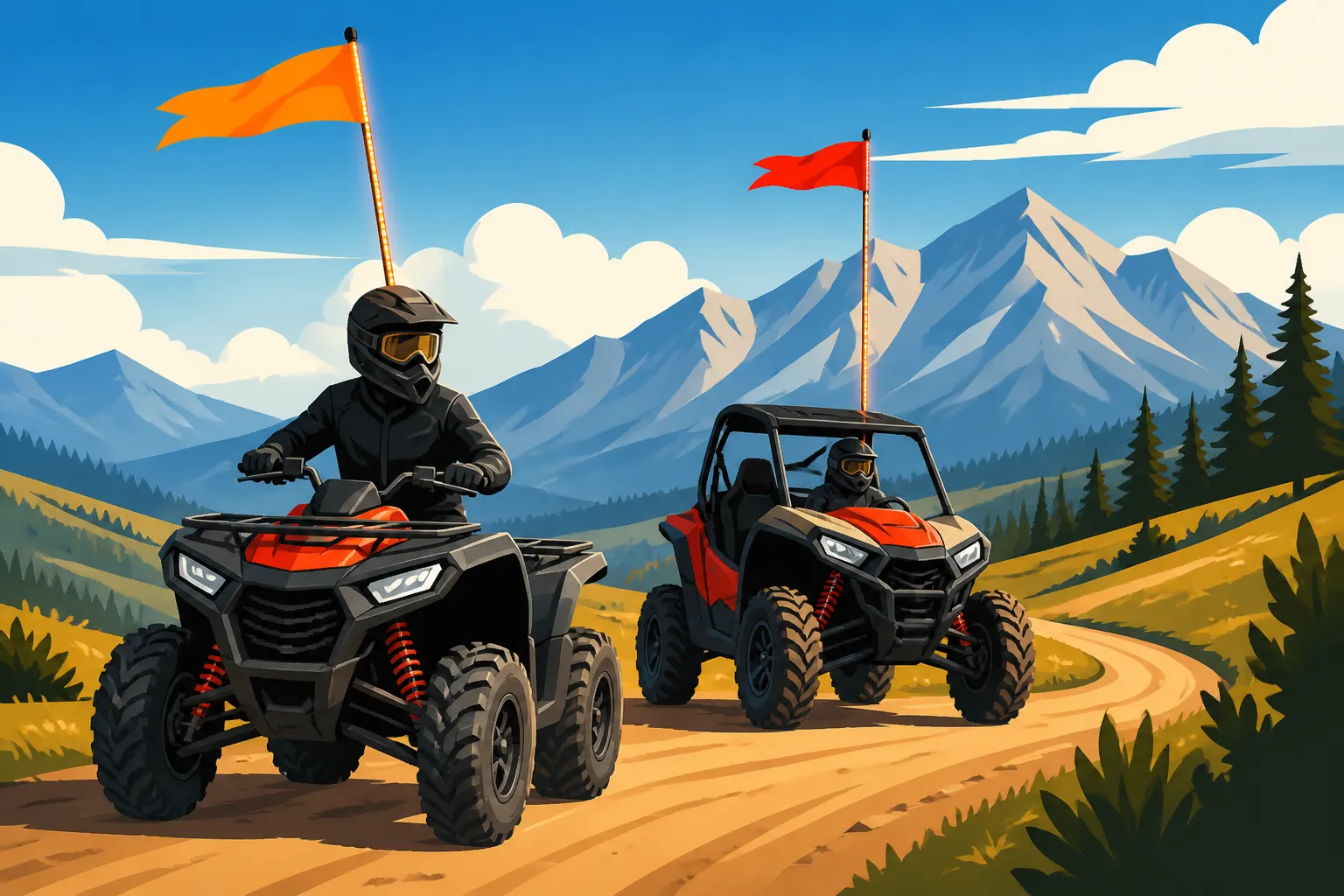
Let's be real: ATVs and UTVs, while awesome, are often quite a bit smaller and lower to the ground than the typical pickup truck or SUV you’ll encounter on a Montana county road. This difference in size can be a significant safety concern. A whip flag, especially one with a bright color or even LED lights, dramatically increases your machine's vertical profile. This means drivers in larger vehicles, especially those coming over a blind rise or around a curve, are much more likely to see you from a greater distance. It's a simple, effective way to make your presence known and give other drivers more time to react. Think of it as an extra layer of protection, particularly on dusty gravel roads where your taillights might get obscured or on busy stretches where drivers might not be expecting an OHV.
Beyond just general visibility, a whip flag can be a lifesaver in specific, challenging conditions. Imagine a dusty county road after a long dry spell, where vehicles kick up huge plumes of dirt. Your machine, especially if it's black or a dark color, can effectively disappear in that cloud from the perspective of an oncoming driver. A bright flag, soaring above the dust, can be the only thing that alerts them to your presence. Similarly, in areas with tall grasses or dense brush along the shoulders that might momentarily hide your machine as you enter a road section, a flag can provide that crucial advance warning. Companies like SuperATV offer a range of durable whip flags, from simple fiberglass poles with bright pennants to illuminated LED whips, giving riders plenty of options to boost their visibility and overall safety on any terrain, including road sections.
Group Riding Etiquette and Trail Transitions
If you're out riding with a group, whip flags can serve a crucial role in maintaining cohesion and ensuring everyone's safety, especially when transitioning between trails and road sections. When a long line of OHVs moves from a tight trail onto a more open road, it can be easy for machines to get separated or for drivers to lose sight of who's ahead or behind them. A uniform use of whip flags within a group can create a visual marker, making it easier for everyone to track the group's movement and stay together. It's a simple, unspoken signal that helps coordinate the pack.
Moreover, if your group has been riding on a trail system where flags are required, it's often just easier and safer to leave them on when you hit a connecting road section. There’s no need to stop and remove them, and they continue to offer that enhanced visibility. For groups that frequently link diverse terrain, maintaining consistency in safety equipment can streamline the riding experience and reduce potential confusion or delays. It's another example of how [Group Etiquette Riding Through a Montana Town] extends to the type of equipment you might carry.
Specific Conditions and Situational Awareness
Sometimes, the decision to run a whip flag on a road section isn't about state law or group etiquette; it's purely about common sense and situational awareness. Montana's vastness means you might encounter incredibly diverse conditions within a single ride. Consider a scenario where you're on a narrow, winding county road that frequently features blind corners, or a road section that is known to be actively used by ranching operations with large, slow-moving equipment. In these cases, a whip flag becomes a proactive safety measure, signaling your presence well before a driver might see your machine itself.
Similarly, if you're navigating a road section that passes through areas with significant elevation changes or where the road surface itself is uneven and dusty, a whip flag can provide an extra layer of warning. It’s about anticipating potential hazards and taking steps to mitigate them. Whether you're on a SuperATV machine or another brand, adding a whip flag is a relatively inexpensive way to significantly increase your footprint in the visual field of other drivers. When safety is concerned, going above and beyond the minimum legal requirements is often the wisest course of action, especially in the unpredictable environment of Montana's backcountry roads.
Understanding What Montana Does Require for Road Riding
So, if whip flags aren't typically a state-mandated item for road sections, what is required? It's essential to understand the non-negotiables to avoid fines and ensure your safety. Montana has a clear set of rules for any OHV operating on public roads that have been legally opened to them. These requirements focus on making your machine a recognized and safe participant in road traffic.
Essential Safety Gear and Machine Requirements
To be legal on any designated road section in Montana, your OHV must be equipped much like any other motor vehicle. We've touched on some of these, but it bears repeating because these are the items a Montana warden or sheriff will be looking for if you're pulled over. You absolutely need at least one functioning headlight, a taillight, and a brake light that illuminates when you apply the brakes. These are not optional extras; they're fundamental to being seen by other drivers, especially at night or in low-visibility conditions. Your machine must also have a functioning braking system that can stop it effectively.
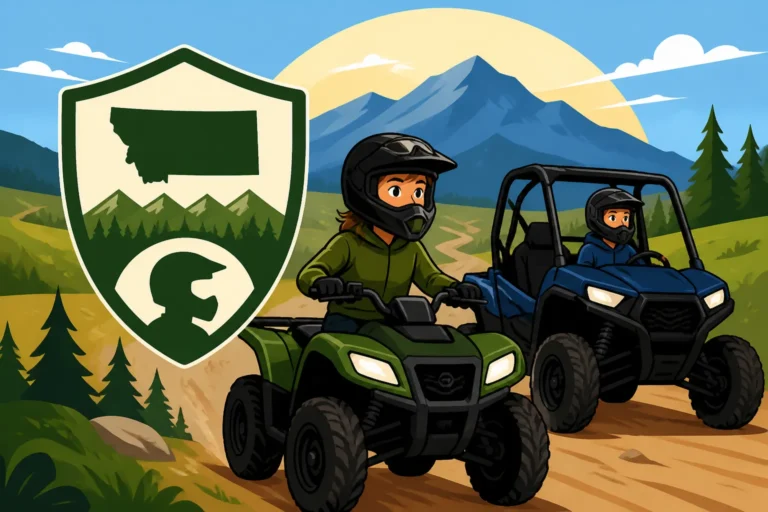
Beyond lighting and brakes, you'll need a horn to alert others, and a muffler to keep noise levels within acceptable limits, respecting those who live along these roads. A spark arrester is also mandatory, as fire prevention is a serious concern, particularly in Montana’s dry seasons. For the rider, anyone under the age of 18 must wear a DOT-approved helmet. [Montana Helmet Rules for Riders Under 18] are strictly enforced. All riders, regardless of age, must have eye protection. These are the core elements that ensure your machine is road-ready and that you, as the operator, are protected.
Driver Licensing and Machine Registration
Just like with cars and trucks, operating an OHV on a Montana road requires the operator to have a valid driver's license. This is a critical point that many new or visiting riders sometimes overlook. You can't just hop on your quad and ride into town if you don't possess the proper licensing. [Driver's License Rules for Montana Road Riding] stipulate that anyone operating a motor vehicle, including an OHV on a public road, must be licensed. There are specific rules for younger riders, too, so it's vital to know those if you have a teenager who wants to drive.
Furthermore, your OHV must be properly registered with the State of Montana. This involves obtaining a certificate of title and then registering the machine at your local county treasurer's office. Once registered, your OHV will receive a decal that must be prominently displayed. This registration process ensures that your machine is recognized by the state and that you're contributing to the funding of OHV programs and trails. If you’re riding an unregistered machine on a public road, you could face significant [Montana Penalties for an Unregistered OHV in Montana]. Understanding the full suite of requirements, from equipment to personal licensing and machine registration, is what truly makes an OHV legal for road sections in Montana.
Here's a quick reference table outlining the common requirements:
| Item | Status for Montana Road Use (OHV) | Notes |
|---|---|---|
| Headlight(s) | Required | Must be functioning, for visibility and seeing. |
| Taillight | Required | Must be functioning, for rear visibility. |
| Brake Light | Required | Must illuminate when brakes applied. |
| Brakes | Required | Must be fully functional and capable of stopping the machine. |
| Horn | Required | To alert other motorists or pedestrians. |
| Muffler | Required | Must meet noise regulations and be functioning. |
| Spark Arrester | Required | To prevent fires, especially in dry conditions. |
| Eye Protection | Required (for all riders) | Goggles or face shield to protect against debris. |
| Helmet (Under 18) | Required | DOT-approved helmet for riders under 18. |
| Driver's License | Required | Valid license for the operator on public roads. |
| OHV Registration & Decal | Required | Machine must be registered and have a current decal. |
| Whip Flag | Generally Not Required | Check local ordinances; recommended for enhanced visibility. |
| Mirrors | Recommended/Often Required | Check local ordinances; good practice for road safety. |
| Turn Signals | Not Generally Required | Hand signals often acceptable, but check local ordinances. |
| Insurance | Required for Road Use | Liability insurance is mandatory if operating on public roads. |
Conclusion
So, to wrap it all up, when you're thinking about whip flags on a Montana road section, remember this key takeaway: state law for general OHV road access typically does not mandate them. You won't find them listed among the core requirements like headlights, taillights, brakes, or a horn. However, that's not the end of the story, and it's where the frustration for riders can often begin.
The real nuance lies in local ordinances. A specific county, city, or even a particular land management agency might have its own rules that do require whip flags for certain road sections within its jurisdiction, especially if those areas present unique safety challenges like heavy dust, blind curves, or active logging operations. Always check with local authorities for the most up-to-date and specific rules for your intended route, particularly when [Crossing a Montana Highway on an OHV] or traversing through small towns.
Ultimately, even if not legally required, using a whip flag on a road section is often a really smart move from a safety perspective. It significantly enhances your visibility, especially when your smaller OHV is sharing the road with larger vehicles or kicking up dust on a gravel stretch. Products from brands like SuperATV can provide that added peace of mind. Your safety is paramount, and sometimes, going above and beyond the letter of the law is the best way to ensure you, and those around you, stay safe on Montana's beautiful and diverse roads.
Disclaimer
This article is for general informational purposes only and does not constitute professional advice. Laws, prices and regulations vary by location and change over time. Consult a qualified professional for guidance on your specific situation.