Family-Friendly Montana OHV Trails
A family ride can turn stressful fast when a route is narrower, steeper, or farther from help than anyone expected. Montana has plenty of memorable OHV country, but “family-friendly” depends on the machine, the youngest rider, trail conditions, and current access rules. This guide explains how to choose a manageable route, prepare kids, and plan a safer day on Montana trails.
What makes a Montana OHV trail family-friendly
Match the route to your least experienced rider
A trail that feels easy to an adult who rides every weekend may be intimidating to a child or first-time passenger. Family-friendly does not simply mean short or scenic. Look for a route with manageable grades, room to stop safely, limited exposure beside steep drop-offs, and a distance that leaves time to turn around without pressure.
Think about the whole group before choosing a trail. A confident adult driver in a roomy side-by-side may be comfortable with rough terrain that makes a younger passenger nervous. A child riding their own machine may need a wide, predictable surface and close adult supervision. If anyone is uneasy about a steep slope, loose rock, or narrow track, choose a gentler option rather than hoping the trail gets easier farther along.
Trail descriptions can help you narrow the choices, but they cannot account for every family’s experience or the day’s conditions. Start by reviewing [Montana Trail Difficulty Ratings] and [Montana Trails Suited to Beginners], then check the route’s surface, elevation changes, length, and access restrictions. A beginner-friendly trail can still become challenging after rain, snowmelt, washouts, or heavy use.
Choose a route that allows an easy turnaround
Families often plan around the destination—a lake, overlook, or historic site—and underestimate the difficulty of reaching it. Instead, treat the destination as optional. Pick a route where the group can stop, rest, and head back before anyone is tired or uncomfortable. That flexibility is especially valuable when children are riding along, because their energy and patience can change quickly.
A simple out-and-back route is often easier to manage than a long loop with several junctions. On an out-and-back, you retrace familiar ground and can turn around whenever the group needs to. A loop can be appealing, but it may put you far from the trailhead before you realize that a passenger is cold, a young rider is overwhelmed, or the trail is rougher than expected.
Before setting off, agree on a turnaround point and a latest return time. For example, a family might plan to ride to the first broad viewpoint, have a snack, and head back even if everyone feels ready to continue. That small boundary helps keep a fun outing from turning into a rushed ride back in fading light.
Keep expectations realistic for Montana terrain
Montana’s mountain scenery can make distances look deceptively manageable. A route that appears short on a map may involve slow travel, frequent stops, rough surfaces, or substantial climbing. In places such as the Flathead National Forest, the Custer Gallatin area, and the mountains around Helena, elevation and changing weather can make a modest outing feel more demanding than a similar ride on flatter ground.
Build your schedule around riding time rather than mileage alone. Allow for breaks, a slow pace, trail traffic, and the possibility of turning back. Families who are used to riding near home may find that a remote Montana route requires more attention to navigation and supplies than expected. [Planning a Montana Riding Trip] can help with the broader logistics, while [Riding Montana Trails With Kids] focuses on the practical needs of younger riders.
Montana areas to consider for a family ride
Flathead National Forest and the Hungry Horse area
The Flathead region offers a mix of forest roads and motorized routes, with access points spread across a large area. Families staying near Columbia Falls, Hungry Horse, or the southern end of Whitefish may find it convenient to investigate local riding options before committing to a full-day excursion. Routes around the Hungry Horse area can be appealing for their forest setting, but surface, width, and difficulty vary. Confirm that the specific route is open to your machine and suitable for your group.
Do not assume that every road or trail visible on a navigation app allows OHVs. Check the applicable Motor Vehicle Use Map and local closure information, and note whether the route permits your vehicle’s width and class. A road that works for a narrow ATV may not be appropriate or legal for a wider side-by-side. For a closer look at the region, see [Riding Montana's Flathead National Forest] and [Wild Bill OHV Trails in the Flathead].
The family-friendly approach here is to choose one short, clearly identified route and avoid stacking several destinations into one day. Forest roads can lead to changing conditions, unexpected traffic, and junctions that are easy to misread. Give yourself room to stop without blocking the route, and be prepared to turn around if you encounter a closure, a difficult section, or conditions that are beyond the group’s comfort level.
Custer Gallatin country near Bozeman
Families based in Bozeman or nearby communities may look toward motorized routes in the Custer Gallatin area. The scenery is a major draw, but mountain access can bring steep grades, weather changes, and seasonal restrictions. A route that seems suitable in midsummer may be snow-covered or muddy earlier in the season, while late-summer conditions can change with fire activity and local closures.
Start by choosing the kind of outing your family wants. A short, lower-commitment ride near a staging area may suit a first visit better than a high-country trip that requires a long drive and a full day on the trail. Use the official route information to confirm access, then compare it with a navigation tool such as onX Offroad to understand junctions and your planned distance. Treat the map as a planning aid, not as permission to ride.
For regional ideas, review [Custer Gallatin Trails Near Bozeman] and [Riding Near Bozeman on an OHV]. Before heading out, verify the specific route’s status and vehicle limits. In mountain country, it is wise to have a lower-elevation backup plan in case the intended route is closed, snowbound, muddy, or otherwise unsuitable.
Helena, Missoula, and other town-accessible options
Families who want to avoid a long approach may prefer to look for riding areas within a reasonable drive of their base. The Helena area and Blue Mountain Recreation Area near Missoula are examples of places riders investigate for local access. Their popularity does not mean every route is appropriate for every family. Terrain and permitted vehicle types can change from one trail segment to another, so select a specific route rather than relying on a broad area name.
Near Helena, begin with [Helena Area OHV Trails] and check the route details before leaving town. Around Missoula, [Blue Mountain Recreation Area Near Missoula] provides a starting point for research. Families staying farther east might explore the Shepherd Ah Nei system near Billings, while visitors around Red Lodge can investigate routes in Beartooth country. In each case, the same rule applies: confirm the current route designation, machine-width limit, and access conditions for the exact ride.
Local access can make a ride easier to fit into a family schedule, but it does not remove the need to plan. A trail near town can still be rocky, busy, or exposed. If children are riding their own machines, pick an area where you can keep them within sight and stop safely. If they are passengers, check the vehicle’s passenger seating and restraint requirements, and make sure the route’s roughness will not make the ride uncomfortable or unsafe.
| Planning question | Why it matters for families | What to check |
|---|---|---|
| Is the route open today? | Seasonal and temporary closures can change the plan. | Current land-manager notices and route status |
| Does the route allow your machine? | Width and vehicle restrictions can vary by route. | Motor Vehicle Use Map and posted signs |
| How difficult is the surface? | Loose rock, steep grades, and mud can challenge new riders. | Route description, recent conditions, and terrain |
| Can you turn around safely? | A flexible exit helps when someone gets tired or uneasy. | Wide pullouts, junctions, and the route layout |
| How remote is the ride? | A minor problem takes longer to solve far from services. | Distance, cell coverage, fuel, and recovery options |
How to plan the route before you leave
Check official access and seasonal status
A family plan should begin with the land manager’s current route information, not only a search result or a colored line on a map. Forest roads and trails can have seasonal dates, temporary closures, fire restrictions, or other rules. A route may also be open to some vehicles but not others. Read the route designation carefully and pay attention to signs at the trailhead and along the way.
The Motor Vehicle Use Map is a key tool for understanding where motorized travel is allowed on many national forest lands. It can show designated routes and vehicle restrictions that are not obvious from the landscape. Use [Reading a Montana Motor Vehicle Use Map] as a guide to interpreting the map, and check [Checking Montana Trail Status Before You Drive] before loading the trailer.
Digital mapping can make it easier to see junctions and estimate distance. Some families use onX Offroad alongside official maps to plan a route and keep track of their position. Still, a phone map should not override a closure sign, a land-manager notice, or a route restriction. Download any information you plan to use before leaving service, and carry a backup map for remote areas.
Estimate time, fuel, and distance conservatively
On an OHV ride, a few miles can take much longer than a family expects. The surface may be uneven, traffic may slow you down, or you may stop often to let a younger rider catch up. Estimate how long the full outing will take, including loading, unloading, breaks, navigation checks, and the ride back to camp or town. If the plan only works when everything goes perfectly, shorten it.
Fuel planning should include the whole day, not just the distance to the apparent destination. Account for the machine’s fuel use on hills and rough terrain, and do not assume that a nearby town or trailhead will have fuel available when you arrive. For a remote outing, consider what you would do if the route takes longer than expected or you need to backtrack.
Use a clear communication plan. Tell someone who is not riding where you intend to go and when you expect to return. Within the group, agree on how to handle a separation, a machine problem, or a change of plan. If family members are riding separate machines, set a pace that keeps the group together and choose safe places to regroup rather than stopping unpredictably in the trail.
Pack for a remote day, even on a short route
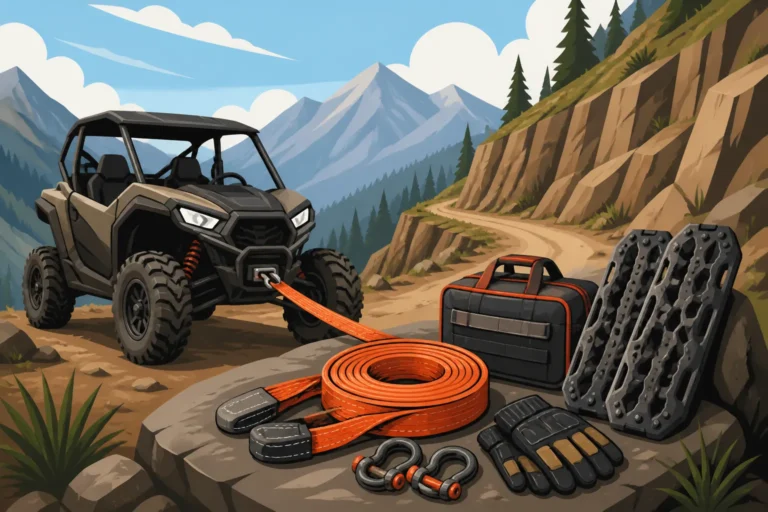
A short ride can become a long one if a tire goes flat, weather changes, or the group takes a wrong turn. Carry water, food, layers, basic first-aid supplies, and the tools appropriate for your machines. Add a flashlight or headlamp, a way to contact help, and any medications the family may need. The right supplies depend on the location and length of the ride, but the goal is simple: avoid being unprepared if you need to wait or turn back.
Children often need more frequent breaks than adults expect. Pack easy snacks, spare gloves, and an extra layer for a passenger who may be sitting still while the driver stays active. A warm afternoon in town can feel much colder at elevation, especially when the machine is moving. If someone becomes cold, tired, thirsty, or anxious, treat that as a signal to pause or shorten the ride rather than pushing on to the planned destination.
For a broader checklist, see [What to Carry on a Remote Montana Ride]. Before departure, make sure everyone knows where essential items are stored and what to do if the machines become separated. Keep supplies accessible rather than buried under luggage, and avoid packing so much that the vehicle’s handling or passenger space is compromised.
Making the ride safer and more comfortable for kids
Set age-appropriate expectations
A child’s age alone does not tell you whether a ride is suitable. Consider their size, attention span, ability to follow directions, and experience around moving machines. A young passenger may enjoy a short, smooth ride but become uncomfortable during a long stretch of vibration, dust, and noise. A child operating a machine needs instruction and close supervision appropriate to their age and ability.
Before the ride, talk through simple expectations: stay seated, keep hands and feet inside the vehicle, follow the driver’s instructions, and speak up if something feels wrong. Make sure the child understands that the group may stop or turn around at any time. Avoid framing the destination as a promise that must be reached; that can make kids feel they are disappointing everyone if they need a break.
Adults should also know the rules that apply to youth riders and passengers. Check [Montana Age Rules for Riders Under 16] and [Montana Helmet Requirements Under 18], along with the applicable machine and land-use requirements. Rules can differ according to where and how the machine is being used, so confirm the details for your planned ride rather than relying on assumptions from another state.
Use protective gear and comfort checks
A comfortable child is more likely to stay focused and communicate clearly. Choose a properly fitting helmet and eye protection, and dress for dust, wind, changing temperatures, and possible contact with brush. Gloves can improve comfort, while sturdy footwear helps protect feet when entering or exiting the machine. For passengers, check that the helmet and other gear remain secure throughout the ride.
Do a comfort check before leaving the staging area. Ask whether the helmet feels right, whether the child can reach the grab points or seat restraints as designed, and whether they understand how to signal that they need to stop. Recheck after the first short stretch. If the child is squinting, shivering, unusually quiet, or repeatedly shifting position, stop and address the problem before it becomes a bigger one.
Do not use an adult’s sense of comfort as the only measure. A rough section may be manageable for the driver but tiring for a small passenger. Choose a machine and seating arrangement intended for the number of riders, and follow the manufacturer’s guidance. Never assume that a child can safely ride in a seat or position that was not designed for a passenger.
Keep a calm pace and make breaks part of the plan
Families sometimes feel pressure to keep moving when other riders are behind them or when a destination is close. Resist that pressure. Ride at a pace that lets the least experienced person respond to bumps, turns, and changing terrain. Give faster riders clear instructions to wait at safe pullouts rather than racing ahead or stopping in a blind section.
Breaks are not wasted time. They give children a chance to drink, stretch, use the restroom where appropriate, and tell an adult if the ride is uncomfortable. They also give the driver an opportunity to check the route, inspect the machines, and notice changing weather or trail conditions. A planned pause at a safe spot can prevent the group from making hurried decisions later.
If the group’s mood turns tense, the route is getting rougher, or the return trip may run close to dark, turn around. That is good judgment, not a failed outing. Families who finish with enough energy to talk about the scenery and want to ride again have usually made a better choice than those who push through simply to complete a loop.
Common planning mistakes and how to avoid them
Trusting an online route line without checking restrictions
A route shown in a navigation app may be useful for orientation, but it does not automatically confirm legal access, current conditions, or suitability for your machine. A colored line can lead to a route that is closed, restricted by vehicle width, or difficult for a family’s experience level. This is one reason to compare your planned route in onX Offroad or another mapping tool with official land-manager maps and notices.
Before departure, identify the route name or number, access point, and any key junctions. Make sure the entire route—not just the first section—is open to your vehicle. If the route crosses between different jurisdictions or land types, check the rules for each section. Keep a backup option in mind in case the intended route is closed or conditions are poor.
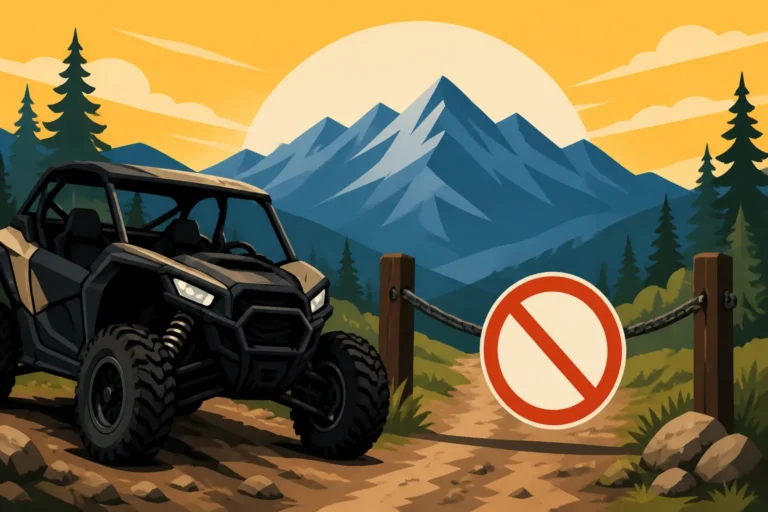
At the trailhead, follow posted instructions even if your pre-trip map appears to show something different. Signs may reflect a closure or restriction that is not yet visible in a saved map. If the route is unclear, do not guess with children in the vehicle. Choose a route with clearer access information or ask the appropriate land manager for guidance.
Underestimating weather, elevation, and trail conditions
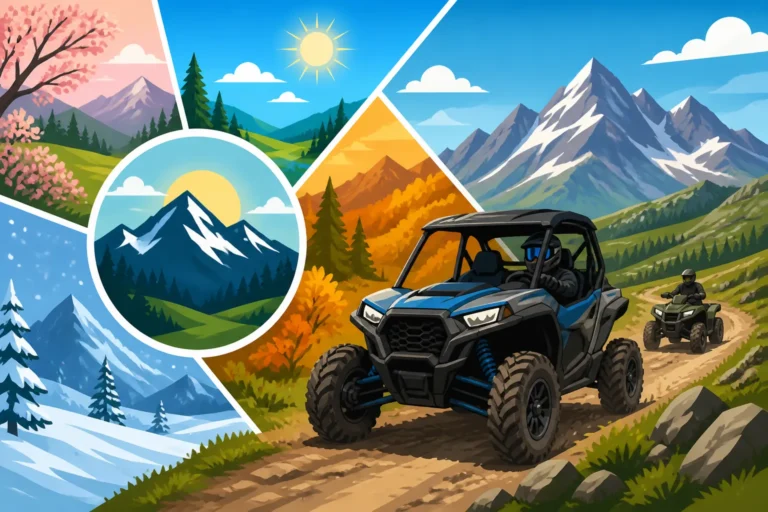
Montana weather can change quickly, and high-country conditions may differ from what you see in town. A sunny start does not guarantee a comfortable day on an exposed ridge or in a shaded forest. Rain can make a familiar route slick, while spring snowmelt can leave ruts, muddy sections, and water crossings. Fire-season conditions can also affect access and visibility.
Check the forecast for the specific riding area, not just the nearest large town. Look at elevation and expected temperature changes, and bring clothing that works if the ride becomes colder, windier, or wetter than planned. If conditions are deteriorating, shorten the ride or postpone it. Families should be especially cautious around high water, loose slopes, and muddy trails, where a minor mistake can have larger consequences.
Trail conditions deserve the same attention as weather. A route that is manageable when dry may feel very different after a wet week. Avoid creating new tracks around mud or obstacles, and do not ride around a closure. If a trail is damaged or unsafe, turn back and report the issue through the appropriate channel rather than widening the problem.
Packing too much into one day
It is tempting to combine a long drive, several trail stops, a scenic destination, and a late return to camp. That schedule can leave little room for a slow child, a mechanical issue, or a change in weather. A family ride is more enjoyable when the central plan is modest and optional activities are genuinely optional.
Choose one primary route and one backup, then set a realistic return time. If the group finishes early, you can add a short, suitable activity nearby. If the ride takes longer than expected, you still have enough time to return safely. Keep the plan flexible enough that turning around does not feel like a disappointment.
A useful family outing is not measured by miles covered. It is measured by whether the route matched the group, everyone felt prepared, and the day ended without unnecessary stress. Montana’s scenery will still be there on another trip. When in doubt, choose the shorter ride and save the more ambitious route for a day when the group has more experience and favorable conditions.
Disclaimer
This article is for general informational purposes only and does not constitute professional advice. Laws, prices and regulations vary by location and change over time. Consult a qualified professional for guidance on your specific situation.