Weekday Riding on Montana Trails
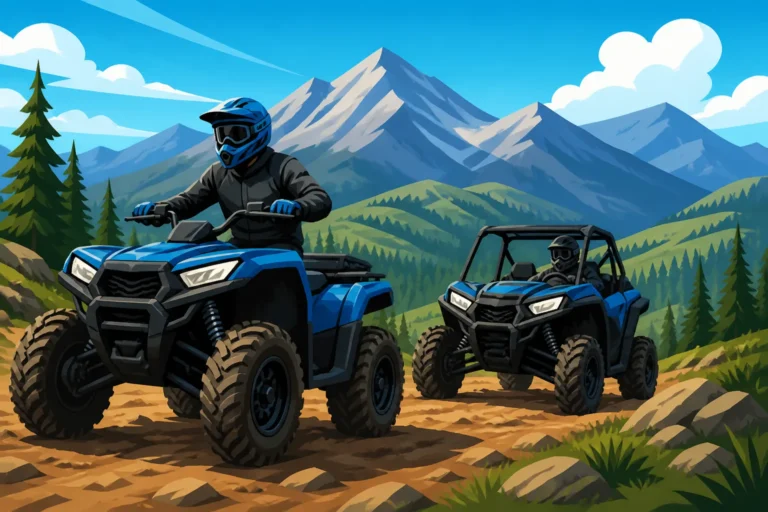
A weekday ride can mean quieter trails, easier parking, and more time to enjoy Montana’s big country. It can also mean arriving to a locked seasonal gate, finding a route closed for fire danger, or discovering there’s little cell service when plans change. This guide helps you choose a realistic riding area, check access, and prepare for a safer, less crowded day out.
Why ride Montana trails on a weekday
Fewer crowds, but not a guaranteed empty trail
A Tuesday or Wednesday can feel very different from a summer holiday weekend. Trailhead lots may be less congested, passing can be easier, and you may spend less time waiting behind other machines on a narrow route. In popular areas near Missoula, Bozeman, or the Flathead Valley, that extra breathing room can make a day more comfortable, especially for newer riders or families.
Still, “weekday” does not always mean “quiet.” Local riders may be out before or after work, and some routes attract steady traffic throughout the week. Popular trailheads can also fill during peak summer, while construction, logging, hunting activity, or an event may bring more vehicles than you expect. For a sense of how weekend patterns differ, see Busy Montana Trails on a Holiday Weekend.
A quieter trail also asks more of you, not less. You may have fewer people nearby if you need help, and you should not assume another rider will come along soon. Tell someone where you plan to go, when you expect to return, and what you will do if your route changes. On a remote ride, consider the guidance in Riding Alone in the Montana Backcountry.
The main weekday advantage is flexibility
When you are not trying to fit a ride into a crowded Saturday, you can adjust your departure time, route, or destination more easily. You might choose a shorter loop if the morning is smoky, wait for a wet section to dry, or switch to a lower-elevation ride if snow remains higher up. That flexibility is especially useful in Montana, where conditions can change sharply from one valley or elevation to another.
Weekday flexibility can also help with practical details. You may find it easier to stage a trailer, fuel up, or ask a local land manager or business about general access information when staff are available. But a quick phone call is not a substitute for checking the route’s official access rules. Always confirm that the trail or road is open to your type of machine and that any required permits, registration, or safety documents are in order before leaving home.
Choose a ride that fits the day
Match the route to your machine and experience
Montana has everything from narrower trails to routes that suit wider machines, but a trail’s appearance on a map does not tell you whether your ATV or side-by-side will fit. A wide UTV can be a poor match for a narrow trail, and a beginner may have a much better day on an easier route than on a steep, rocky one. Check width restrictions, motorized-use designations, and the route’s difficulty before loading up.
The Blue Mountain Recreation Area near Missoula, the Wild Bill OHV area in the Flathead region, and riding areas near Bozeman can all be starting points for researching a trip. They are not interchangeable, and access details can vary by trail, season, and land manager. Use area-specific information and the applicable motor vehicle use map rather than assuming that a route is open because it appears on a general recreation map. Montana’s National Forest Trail Systems is a useful place to continue learning about how the state’s trail networks differ.
If you are choosing a first weekday route, keep your first plan modest. A shorter loop near a familiar trailhead gives you room to learn how the machine handles the terrain without committing to a long ride far from help. You can also compare route characteristics with Montana Trails Suited to Beginners before deciding where to start.
Check access, closures, and maps before you leave
The most frustrating trail day often begins with a map that looked clear at home but did not reflect a gate, seasonal restriction, fire closure, or other on-the-ground change. Start with the managing agency’s current information and the applicable Motor Vehicle Use Map, or MVUM. An MVUM shows which routes are designated for motorized use; it is not simply a suggestion about where a machine might physically fit. For help understanding the map’s role, read Reading a Montana Motor Vehicle Use Map.
A mapping app such as onX Offroad can help you organize routes, save information for offline use, and keep your planned ride easier to follow. Treat it as one planning tool, not permission to ride. Compare its route information with the relevant official map and closure notices, and do not ride a route if access is unclear. Before driving to the trailhead, check Checking Montana Trail Status Before You Drive and review any fire-related restrictions through Montana Trail Closures in Fire Season.
| Before the ride | What to confirm | Why it matters |
|---|---|---|
| Route access | The managing agency allows your machine on the route | Not every road or trail shown on a map is open to OHVs |
| Seasonal status | Gates, snow, mud, or seasonal dates do not block access | A route can be closed even when the trailhead is reachable |
| Fire restrictions | Closures or restrictions do not affect your destination | Conditions and restrictions can change during the season |
| Machine fit | Width and other route limits match your ATV or UTV | A route that works for one machine may not work for another |
| Permit and registration | You have the documents and permits required for the ride | Requirements depend on the machine, rider, and land being used |
| Offline navigation | Your map and route details are available without service | Cell coverage can be unreliable outside towns |
Plan the logistics of a weekday ride
Sort out parking, fuel, and timing
A less crowded weekday lot is still a lot you need to use thoughtfully. Confirm that the trailhead is suitable for your truck and trailer, park only where permitted, and leave room for other users to maneuver. Avoid blocking gates, access roads, loading areas, or emergency routes. If you are unfamiliar with the staging area, Montana Trailhead Parking and Staging can help you plan where and how to unload.
Fuel planning matters even when the trail looks close to town. The driving distance to a trailhead and the miles you travel on the machine are different parts of the day, and rough terrain, elevation, stops, or a change of route can affect fuel use. Start with a conservative estimate, carry what is appropriate for your machine, and know where you can refuel before the ride—not after the tank is nearly empty. See Fuel Planning for a Montana Trail Day for more ways to think through range and reserves.
Set a turnaround time before you begin. On a weekday, you may be tempted to keep going because the trail is quiet and you have not encountered delays. But a late start, a mechanical issue, or a route-finding mistake can stretch the day. If the ride takes longer than expected, turn back while you still have enough daylight and fuel to return comfortably.
Prepare for weak coverage and changing conditions
Cell service can disappear quickly once you leave a town or paved highway. Download maps or route details for offline use before you go, carry a paper map as a backup, and make sure someone outside the riding group knows your plan. A phone with a full battery is useful, but it is not a dependable rescue plan by itself. Read Cell Service in the Montana Backcountry when preparing for remote terrain.
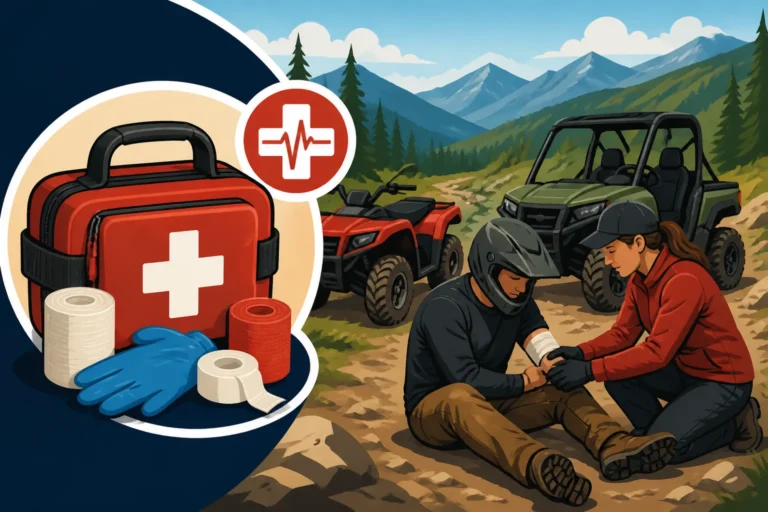
Weather can also change the character of a ride. A warm valley morning does not guarantee comfortable conditions at higher elevation, and afternoon storms, wind, smoke, or lingering snow can affect both visibility and footing. Bring layers, water, basic first aid supplies, and gear suited to the route. If the ground is soft or rutted, slow down or choose a different route rather than cutting around the damaged area; riding off the designated track can harm the trail and create access problems for everyone.
Ride considerately, even when it is quiet
Share the route and protect the trail
On a weekday, you may meet hikers, cyclists, horseback riders, wildlife, or other motorized users without much warning. Slow down when visibility is limited, approach blind corners cautiously, and give other users room. Dust can reduce visibility for the group behind you and for anyone approaching from the opposite direction, so leave space and adjust your speed to the conditions.
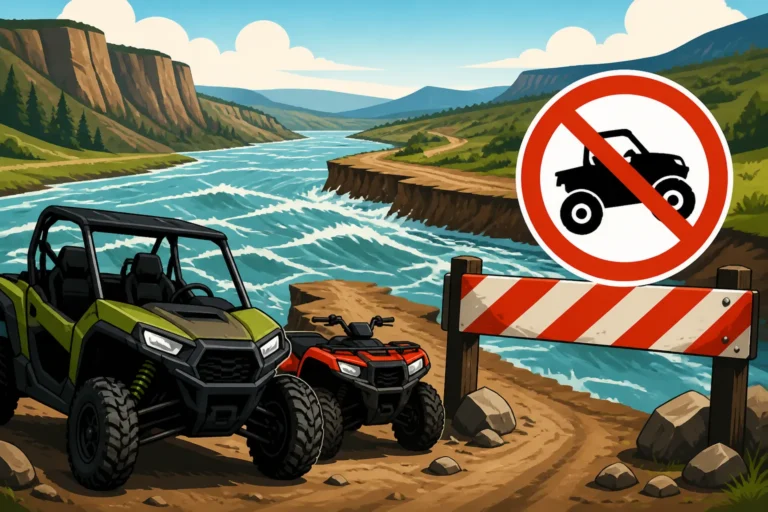
Stay on designated routes. Do not widen a trail to get around mud, park on vegetation, or take an unofficial shortcut to reach a viewpoint. If a trail looks damaged or a gate is closed, respect the restriction rather than treating the empty trail as an invitation. For a broader look at responsible riding, explore Montana Trails That Lost Motorized Access and Reporting Trail Damage in Montana.
Keep your plan manageable if something goes wrong
A minor problem—such as a flat tire, overheating, or a machine that will not restart—can become more serious when you are far from the trailhead and have no signal. Carry repair and recovery items suited to your machine and route, and know how to use them. Before leaving, make sure everyone in the group knows the basic plan: where you are riding, where the vehicles are parked, and what to do if the group gets separated.
If the conditions are worse than expected, changing plans is a good decision, not a failed ride. A short, uneventful loop can be a better weekday outing than pushing through a route that has become muddy, smoky, or difficult to navigate. That is especially true if you are riding with children, less-experienced drivers, or a machine that is not well matched to the terrain. Give yourself enough time to return, check the trailhead and vehicle before heading home, and let your contact know you are back.
Disclaimer
This article is for general informational purposes only and does not constitute professional advice. Laws, prices and regulations vary by location and change over time. Consult a qualified professional for guidance on your specific situation.