First Aid When Help Is Hours Out
A minor crash can become a serious problem when you’re miles from a trailhead, cell service is patchy, and the nearest help may be hours away. This guide explains how to prepare a first-aid kit, respond to common injuries, contact rescuers, and keep an injured rider safer while you arrange help on a remote Montana ATV or UTV ride.
Prepare for first aid before a remote Montana ride
Pack a kit for the riders and the terrain
A first-aid kit is most useful when it matches the people and conditions on your ride. A small prepacked kit may handle a scraped knee, but it may not be enough for a group spending the day on remote forest roads or rough trails. Think about the likely problems: cuts, blisters, sprains, fractures, allergic reactions, cold exposure, and the possibility that a rider will need help staying warm while you wait for assistance.
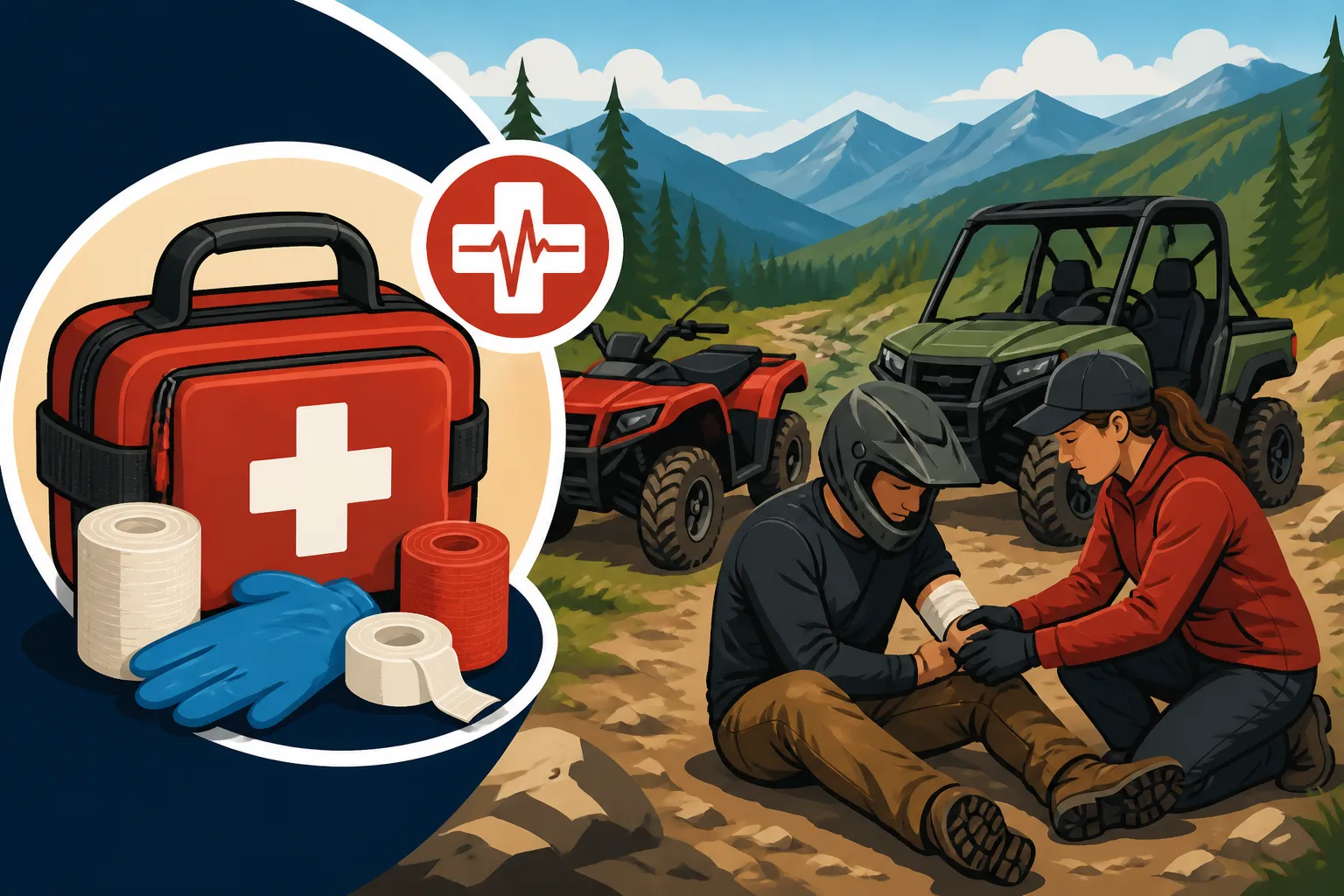
Pack supplies in a waterproof pouch or hard case that stays with the machine, not buried beneath camp gear. Include disposable gloves, gauze pads, roller bandages, medical tape, antiseptic wipes, tweezers, blister care, shears, and a triangular bandage. Add any personal medication a rider may need, such as prescribed emergency medication, and make sure the person who needs it can reach it. Check expiration dates and replace used supplies before the next trip.
For serious bleeding, a commercial tourniquet and hemostatic gauze may be appropriate supplies, but they are not substitutes for training. Learn how to use the specific items you carry before you need them, and follow the product instructions and emergency dispatcher’s guidance. Don’t pack specialized gear simply because it looks reassuring if no one in the group knows how to use it.
A useful kit also includes items that support care rather than treat an injury directly: a headlamp with spare batteries, a whistle, a thermal blanket, extra dry layers, water, and a notepad or phone for recording what happened. If the ride is far from help, consider carrying a CPR face shield and taking a recognized first-aid course. A wilderness first-aid course can be especially useful because it addresses the decisions involved when professional care is not close by.
| Situation | Useful preparation | Important reminder |
|---|---|---|
| Cuts and scrapes | Gloves, gauze, tape, antiseptic wipes | Clean small wounds when practical and watch for worsening symptoms |
| Heavy bleeding | Gauze and a tourniquet if carried | Use only as trained and follow emergency guidance |
| Cold or wet conditions | Dry layers, insulation, thermal blanket | Protect the person from wind and ground contact |
| Poor visibility or darkness | Headlamp, spare batteries, whistle | Keep your hands free when possible |
| Remote location | Satellite communicator or other emergency device | Learn the device before leaving cell coverage |
| Personal medical needs | Prescribed medication and emergency details | Make sure another rider knows where these are |
Use [What to Carry on a Remote Montana Ride] to build out the rest of your safety gear. First aid is only one part of being prepared: a spare layer, basic repair tools, food, and a way to communicate can all matter if an injury turns a short ride into a long wait.
Plan the route and communication before leaving
Before unloading at the trailhead, tell someone who is not riding with you where you plan to go and when you expect to check in. Give them a route description, the vehicle and trailer details, the number of riders, and a time to take action if they do not hear from you. “We’re riding somewhere near the forest” is not enough information for someone trying to help.
Download or carry maps before you lose service. Apps such as onX Offroad can help riders review routes and keep map information available offline, but don’t treat a phone map as your only navigation or emergency tool. Check that the selected route is open to your machine and appropriate for its width and your group. A route that looks short on a screen may involve slow travel, difficult terrain, or limited places for a rescue vehicle to reach you. [Checking Montana Trail Status Before You Drive] is a helpful part of that pre-trip routine.
Cell coverage can disappear quickly once you leave a town or main highway. A satellite communicator or personal locator beacon can provide an emergency contact option where a phone cannot, but the devices work differently. Read the instructions, charge the device, register it if required, and practice sending a non-emergency message before relying on it. Keep it somewhere accessible to the group, not locked inside a machine that could be damaged in a crash. See [Carrying a Satellite Messenger in Montana] for more on planning around remote communication.
If one person in the group is injured, someone else may need to contact help while another rider stays with them. Discuss that possibility before you start. It is much harder to decide who is carrying the communicator or which direction the group should travel after a crash has already happened. For more considerations, including the added planning required when nobody else is riding with you, read [Riding Alone in the Montana Backcountry].
Respond calmly when someone is injured
Make the scene safer and get help early
Take a breath before rushing toward a crashed ATV or UTV. Check for immediate hazards such as traffic, unstable ground, fire, leaking fuel, moving machines, or other riders approaching around a blind corner. If the scene is unsafe, make it safer only if you can do so without putting yourself in danger. Put on a helmet or high-visibility clothing if appropriate, and ask another person to warn approaching riders from a safe position.
Once the scene is safe enough, check whether the injured person responds and is breathing normally. Speak clearly and ask simple questions. If the person is unconscious, having difficulty breathing, experiencing severe bleeding, or showing signs of a serious head, neck, or back injury, contact emergency services as soon as possible. Use 911 where you have a connection, or activate your satellite device according to its instructions. If there is no signal and no emergency device, send a capable rider for help while someone stays with the injured person. Avoid splitting the group without a clear plan.
When calling or messaging for help, share the most useful information first: the type of emergency, the number of injured people, their condition, your location, and a way to contact your group. Give coordinates if your device or map provides them, and describe nearby landmarks or trail junctions. A screenshot or written coordinate saved before the ride can help, but confirm that it represents your current position. Apps such as onX Offroad may help you identify a location on a map; relay coordinates in the format your emergency device or dispatcher can use.
Do not move someone with a possible serious neck, back, or pelvic injury unless staying where they are presents a greater immediate danger. Keep them as still and comfortable as possible, and follow dispatcher instructions. If they are in a dangerous place, such as an active roadway, use care and move them only as much as necessary to reach a safer location. The goal is not to perform a complicated rescue on your own. It is to prevent further harm while qualified help is arranged.
Address immediate threats before minor injuries
Severe bleeding and problems with breathing need attention before a small cut or a damaged piece of gear. If someone is bleeding heavily, put on gloves if available and apply firm, direct pressure with clean gauze or cloth. Keep pressure in place and call for emergency help. If the bleeding is from an arm or leg and you have a tourniquet, use it only if you have been trained or are being guided by a dispatcher. Don’t remove a tourniquet once it has been applied unless emergency professionals instruct you to do so.
If an object is stuck in a wound, do not pull it out. Apply pressure around it rather than pressing directly on the object, and wait for professional care. If a dressing becomes soaked, keep pressure on the area and add material over the existing dressing rather than repeatedly lifting it to check. A person with major bleeding can become confused, weak, pale, or unusually sleepy. Treat those changes as urgent and tell the dispatcher.
If someone is unresponsive or not breathing normally, call emergency services and follow the dispatcher’s instructions. Begin CPR or use an automated external defibrillator only if you know how or can follow clear guidance. Don’t delay contacting help while searching for equipment. If the person is breathing but unconscious, keep watch over their breathing and protect them from weather. Do not give food, drink, or medication to someone who is unconscious or seriously injured.
A rider who is awake may still have a serious injury. Keep checking their condition rather than assuming the first conversation means they are fine. Ask what hurts, whether they can feel and move their hands and feet, and whether symptoms are changing. Don’t force them to stand or walk to “test” an injury. A crash, a hard impact, worsening pain, or altered awareness can all justify a cautious response and professional assessment.
Recognize common trail injuries and protect the rider
Treat suspected fractures, sprains, and head injuries cautiously
A painful limb that looks deformed, is badly swollen, or cannot bear weight may be fractured. Don’t try to straighten it or push a bone back into place. Keep it as still as you can, support it in the position found, and arrange medical help. A splint can help limit movement when someone knows how to apply one, but an improvised splint that is too tight can create another problem. Check that fingers or toes beyond the injury remain warm and normally colored, and loosen the support if it is causing concerning pressure or numbness.
Sprains and strains can look less dramatic but still make riding, walking, or getting to a pickup point unsafe. Stop the ride and avoid putting weight on a painful joint. Protect it from further impact and use a cold pack wrapped in cloth if one is available. Don’t let a rider push through pain simply because the group is close to the truck. A short, difficult walk over uneven ground can worsen an injury or lead to a second accident.
Head injuries deserve particular caution. Confusion, loss of consciousness, repeated vomiting, worsening headache, unusual behavior, seizure, difficulty staying awake, or problems with balance or speech require urgent medical attention. A helmet may reduce risk, but it does not rule out a brain injury. Don’t encourage a rider to remount and “see how they feel.” Keep them under observation and follow emergency guidance. If a neck injury is possible, minimize movement.
A rider may be embarrassed or worried about holding up the group and may say they are fine. Stay calm, ask direct questions, and make decisions based on what you observe, not only on reassurance. If the rider’s symptoms are significant or worsening, seek help. An onX Offroad map can help a group communicate where it is, but a map cannot tell you whether an injury is safe to ride out.
Manage cold, heat, burns, and animal encounters
Montana weather can change during a ride, and an injured person may become cold while sitting still, even if everyone was comfortable while moving. Get them out of wind and off the cold ground if you can do so safely. Remove wet clothing when practical, add dry layers, and use a blanket or sleeping bag for insulation. Handle someone who is shivering, confused, unusually tired, or losing coordination gently. Don’t rely on alcohol or a hot drink as treatment, and don’t leave the person alone to find supplies.
Heat illness can also occur during a long day, especially when riders are wearing protective gear and not stopping to drink. Move someone who feels faint, weak, nauseated, or confused to shade and stop exertion. Offer small sips of water only if they are awake and able to swallow safely. Confusion, collapse, or a serious change in behavior is an emergency. Contact help and follow the dispatcher’s instructions rather than trying to manage severe symptoms with water alone.
For a minor burn, cool the area with clean, cool water if available. Don’t apply ice directly, and don’t pull away clothing that is stuck to the skin. Cover the burn loosely with a clean dressing and seek medical care for serious burns or burns involving sensitive areas. If a rider has been bitten or stung and develops trouble breathing, facial or throat swelling, widespread hives, or sudden weakness, treat it as an emergency and use prescribed emergency medication if available, following its instructions.
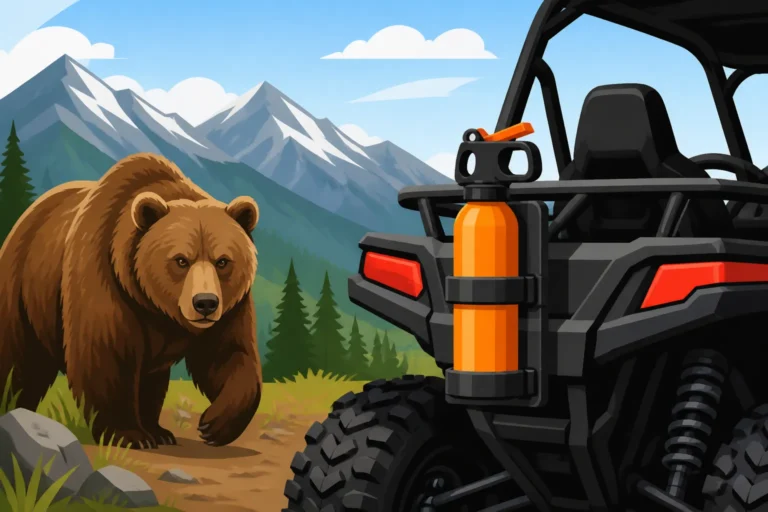
In bear country, a first-aid response should not put the group closer to wildlife or into unsafe terrain. Keep bear spray accessible on the ride and know how to use it before entering the backcountry; [Bear Spray on an OHV] covers practical access considerations. If someone is hurt after an animal encounter, prioritize immediate safety, contact emergency services, and give responders clear information about the location and what happened.
Arrange a safe evacuation and prepare for the wait
Decide whether to stay, signal, or move
When help is hours away, the safest choice is not always the fastest-looking choice. A person with a possible serious injury may be safer staying still while rescuers come to them. Moving them in a UTV or on another machine can expose them to more bumps, vibration, and risk. On the other hand, a dangerous location, worsening weather, or another immediate threat may make a short move necessary. Make that decision cautiously, use available professional guidance, and avoid carrying an injured person farther than needed.
If the group must send someone for help, choose a capable rider who knows the route and give them a clear message: where the injured person is, what happened, what help is needed, and which route they will take. Keep at least one person with the injured rider whenever possible. If you have a satellite communicator, send a message with the location and request for assistance, then keep the device available for follow-up. Don’t assume that an emergency message has been received until you have confirmation if the device provides one.
Prepare a clear location description for rescuers. Identify the nearest trail junction, road crossing, staging area, gate, or recognizable landmark. If you are near a forest road, note its name or number if known. You can use an offline map such as onX Offroad to help orient the group, but verify what you are seeing against trail signs and the terrain. Keep the map, phone, or GPS protected from weather and conserve battery by dimming the screen and limiting unnecessary use.
Tell responders about obstacles they may encounter, such as a narrow trail, a locked gate, a washed-out section, or a machine blocking access. Trailhead and staging information can also help rescuers understand how to reach your group; see [Montana Trailhead Parking and Staging]. Don’t send several riders in different directions without a communication plan. If searchers arrive at the wrong access point, a clear meeting location can save time and reduce confusion.
Keep the rider stable and the group organized
While waiting, assign simple roles. One person can stay with the injured rider and monitor changes, another can communicate with responders, and someone else can keep the remaining machines and riders out of the way. If you are alone with the injured person, focus on the most important needs: contact help, protect them from immediate hazards and weather, and keep checking their condition. Avoid unnecessary movement, especially if a serious injury is possible.
Write down the time of the crash, what the rider says hurts, changes in their condition, and any first aid provided. Share that information with the dispatcher or rescuers. It can be difficult to remember details after a stressful incident, especially if the group has been riding for hours or it is getting dark. Keep the injured person’s medication information and known allergies available if you know them, but don’t delay emergency contact to collect a full medical history.
Stay warm, visible, and together. Use a headlamp after dark and keep people away from exposed edges, traffic, or unstable slopes. If the injured rider is alert, explain what is happening and what you are doing. Calm, straightforward updates can help reduce fear: “We’ve contacted help. We’re staying here and keeping you warm while we wait.” Don’t promise a specific arrival time unless responders have told you one.
After the emergency, review what worked and what did not. Replace used supplies, recharge devices, and reconsider the group’s route and communication plan. If a tire or machine problem contributed to the delay, add an appropriate repair item or practice a roadside repair before the next trip; [Fixing a Flat 60 Miles From the Nearest Shop] is a useful companion topic. For questions about dead zones and how they affect trip planning, see [Cell Service in the Montana Backcountry].
A short safety briefing before the next ride can make a real difference. Show everyone where the first-aid kit and communicator are, identify who knows how to use them, agree on a check-in plan, and make sure every rider knows the route. You can also review [Montana Trailhead Parking and Staging] and [What to Carry on a Remote Montana Ride] before departure so the group is not trying to solve basic logistics after an accident.
Disclaimer
This article is for general informational purposes only and does not constitute professional advice. Laws, prices and regulations vary by location and change over time. Consult a qualified professional for guidance on your specific situation.