Food Storage at a Montana Trail Camp
A quiet trail camp can turn stressful fast when food smells linger around your tent, UTV, or cooking area. In Montana, where camps may sit in black bear and grizzly habitat, careful storage is part of a safe ride—not an afterthought. This guide explains what to secure, where to keep it, and how to plan a practical food routine at camp.
Plan food storage before you leave the trailhead
Check the land manager’s rules and your campsite
Food-storage requirements can differ between developed campgrounds, dispersed sites, and public-land areas. Before heading out, check the rules for the specific place where you plan to camp. A site near the Flathead National Forest, for example, may have different facilities and instructions than a private campground or a site elsewhere in Montana. Don’t assume that a method allowed at one stop will be acceptable at the next.
For dispersed camping, learn whether the area requires a bear-resistant container, offers a communal food locker, or provides other storage instructions. If you’re unsure, contact the relevant land manager before your trip and bring an approved storage option rather than relying on an improvised setup. For broader camp-planning considerations, see [Dispersed Camping Rules on Montana Forest Land] and [Montana Campgrounds With Trail Access].
It’s also worth confirming that your intended campsite is open and suitable for overnight use. A route that looks promising on a map may lead to a closed road, a restricted area, or a location without an appropriate place to camp. Use onX Offroad to help review your route and locate nearby access points, then verify current camping and closure rules with the land manager. [Checking Montana Trail Status Before You Drive] can help you build that check into your trip planning.
Pack storage equipment that suits your trip
Your storage plan should match the number of people, nights away, food volume, and camping setup. A solo rider carrying one dinner and breakfast may need a simpler system than a family group with a cooler, snacks, and several days of meals. Make the decision before loading the trailer, not after arriving at a dark trailhead with no secure place for groceries.
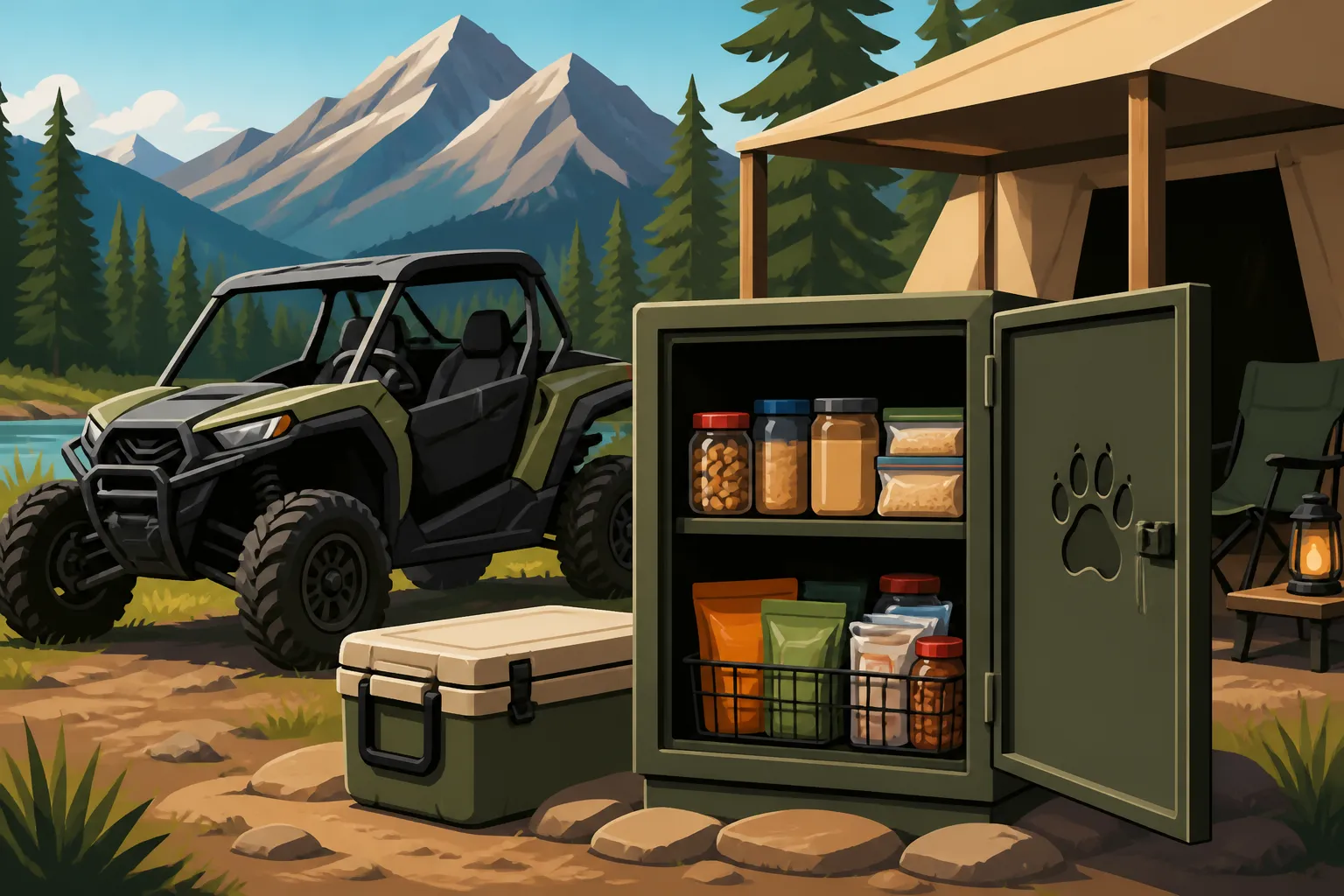
A bear-resistant container or locker is a strong option when required or recommended for the area. At a developed campground, use the supplied locker as directed. If you’re responsible for your own storage, make sure the container is suitable for the setting and large enough for all the food and scented items—not just the main cooler. A small container that fills up after dinner can leave snacks, garbage, or toiletries unsecured.
A UTV cargo box, ATV rack, soft bag, or cooler may keep supplies organized during the ride, but ordinary vehicle storage should not be treated as bear-resistant. A locked lid can deter casual access; it is not a substitute for a storage method approved for bear country. If your vehicle is your only practical storage space, check the land manager’s specific guidance before counting on it. Keep [What Grizzly Country Asks of a Rider] in mind as you plan for the whole camp, not only the food.
Keep food and scented items away from sleeping areas
Sort everything that can attract wildlife
Food is only part of the picture. Wildlife may investigate garbage, cooking grease, pet food, toiletries, and other scented products. A useful approach is to collect these items into one “smellables” group and store that group according to the site’s rules.
Common items to secure include:
- Meals, snacks, candy, and food wrappers
- Coolers and food packaging
- Garbage, recycling, and used paper towels
- Cooking oil, grease, and dirty cookware
- Toothpaste, soap, sunscreen, and scented lotions
- Pet food, treats, and food bowls
- Drinks with spills or residue
Even a small snack wrapper can create a smell, and a “clean” cooler may still hold food residue or odors. After cooking, wipe down the preparation area, clean utensils and cookware, and pack waste away promptly. Don’t leave a bag of trash beside the UTV while you finish setting up tents.
If you bring a dog, include its food and bowls in the plan. Feeding a pet at camp and leaving the bowl outside overnight can undermine an otherwise careful setup. The same goes for a child’s snack pouch or a jacket pocket with a granola bar: make a quick check of clothing and day packs before turning in.
Separate cooking, storage, and sleeping areas
Where space and site rules allow, keep food preparation and eating separate from tents and sleeping gear. Choose a cooking spot that is not beside the tent entrance, and avoid storing food in a tent, vestibule, or sleeping bag. A tent is for sleeping, not for keeping snacks within arm’s reach overnight.
At a small trail camp, distances may be limited. Use the safest practical layout available, follow the land manager’s directions, and don’t create a new hazard by placing food storage near a road, trail, water, or another campsite. Keep the route between your tent and cooking area clear of clutter so people are less likely to trip after dark.
A routine helps more than a complicated campsite layout. After the last meal, put food away, secure garbage, clean cookware, and check the cooking area before anyone goes to bed. If the group is tired after a long ride, assign one person to oversee the final check rather than relying on everyone to remember independently. For additional backcountry safety context, see [Riding Safely in Grizzly Country] and [Bear Spray on an OHV].
Use a storage routine that works around your ATV or UTV
Secure supplies when you arrive and before you ride
When you reach camp, unload and sort supplies promptly. Don’t leave groceries in an open cargo bed while the group scouts the area or pitches tents. Put food and scented items into the proper storage system first, then organize riding gear and camping equipment.
Before leaving camp for a ride, make sure food and garbage are secured even if you expect to be back soon. A short trip to a nearby trail can turn into a longer loop because of weather, a route closure, or a mechanical problem. Pack only what you need on the machine, and keep trail snacks in a sealed container or bag that goes back into secure storage when you return.
A simple checklist can prevent the common “we forgot the coffee and trash bag” problem:
- Put food, snacks, and pet food in the designated storage.
- Secure garbage and food-soiled packaging.
- Clean cookware and wipe up spills.
- Check tents, day packs, and clothing pockets for snacks.
- Close the storage container or locker fully.
- Confirm that the cooking area is clear before leaving camp or going to sleep.
A vehicle’s cargo area can still be useful for organization. Use it to transport food from the trailhead to camp, keep items protected from dust, and prevent supplies from shifting while you ride. Just don’t confuse a convenient cargo box with approved wildlife-resistant storage. onX Offroad can help you plan a route back to camp, but food storage should be handled on arrival regardless of how close the ride is.
Prepare for weather, dust, and a changing schedule
Montana conditions can make a basic storage setup less reliable. Wind can scatter wrappers, rain can soak paper packaging, and dust can work its way into food containers. Choose sealed, sturdy packaging and place it inside the appropriate storage container. Keep clean food separate from garbage and dirty cooking equipment so you’re not opening the whole supply area every time someone wants a snack.
Temperature also matters. A cooler may preserve food quality, but it does not make food secure from wildlife. Keep it closed when not in use, avoid leaving it open while preparing a meal, and follow safe food-handling practices for anything that needs to stay cold. If your route or camp plan changes, don’t leave perishable food or trash behind at a temporary stopping point.
If the group is traveling between camps, decide who is responsible for the food container and where it will be carried. Keep heavy gear secured so it cannot shift or fall off on rough terrain. A cooler that comes loose on a rocky trail creates a riding hazard, and a damaged lid may compromise the food inside. For remote trips, plan for delays and pack enough supplies without filling every available bag with unsecured snacks. [What to Carry on a Remote Montana Ride] and [Cell Service in the Montana Backcountry] are useful planning topics when your camp is far from help.
| Item or situation | Safer camp practice | Common mistake to avoid |
|---|---|---|
| Meals and snacks | Store them in the required or recommended secure container | Leaving a snack bag in the tent |
| Garbage and wrappers | Seal and store with other attractants | Leaving a trash bag beside the vehicle |
| Cooking equipment | Clean it and secure it after meals | Leaving greasy cookware outside overnight |
| Toiletries and sunscreen | Include scented products in the storage plan | Assuming only food attracts attention |
| UTV cargo box | Use it for transport and organization | Treating an ordinary locked box as bear-resistant |
| Pet food and bowls | Store food and bring bowls in after feeding | Leaving a bowl outside the tent |
| Cooler | Keep it closed and store it as directed for the area | Assuming cold storage also prevents wildlife access |
Respond calmly if wildlife visits camp
Do not approach or feed an animal
If you see a bear or other wildlife near camp, give it space. Do not move closer for a photo, try to scare it by driving toward it, or leave food out as a distraction. Keep people together, bring children and pets under control, and follow local wildlife guidance. If an animal is near your storage area, don’t put yourself between it and the food or try to retrieve supplies while it is present.
Bear spray should be carried where it is accessible, not buried under camping gear in a cargo box. Everyone in the group should know where it is and how to use it. Review the relevant safety guidance before leaving home, especially if riders are unfamiliar with bear country. [Bear Spray on an OHV] is a helpful companion topic for deciding how to carry it during the ride as well as at camp.
If an animal gets into food or storage, prioritize people’s safety. Once the animal has left and it is safe to do so, follow the site’s reporting instructions and contact the land manager or appropriate wildlife agency for guidance. Don’t quietly leave damaged packaging or scattered food behind for the next camper to discover.
Reset the camp before you leave
Before packing up, check the cooking area, campsite, and route between the tent and vehicle. Look for wrappers, crumbs, pet food, used cookware, and small items that may have slipped beneath a table or into the grass. Secure everything before loading the machine so trash doesn’t blow out along the trail.
If your group has used a campground locker, follow its posted instructions and leave it clean. If you carried your own storage container, make sure it is closed and secured for the ride out. A final sweep is especially useful after a late departure, when people are packing in a hurry and it is easy to leave a coffee packet or food wrapper behind.
Good food storage is a repeatable routine: check the site rules, secure every attractant, keep food away from sleeping areas, and clean up before riding away. That routine makes camp easier to manage and helps reduce the chance that wildlife will associate a campsite with an easy meal.
Disclaimer
This article is for general informational purposes only and does not constitute professional advice. Laws, prices and regulations vary by location and change over time. Consult a qualified professional for guidance on your specific situation.