Riding Safely in Grizzly Country
A quiet trail in the Flathead or Cabinet Mountains can turn tense when a rider rounds a bend and finds a bear nearby. The risk is not something you can eliminate, but you can reduce the chance of a surprise encounter and prepare to respond calmly. This guide covers route planning, bear spray, group habits, and what to do if you see a grizzly.
Plan a Montana ride with bears in mind
Check the route, conditions, and escape options
Before leaving the trailhead, check that your route is open to motorized use and suitable for your machine. Forest roads and trails can cross bear habitat in the Flathead, Cabinet, Bitterroot, and other Montana ranges. A route that looks straightforward on a phone may include narrow bends, steep slopes, limited places to turn around, or sections where stopping safely is difficult.
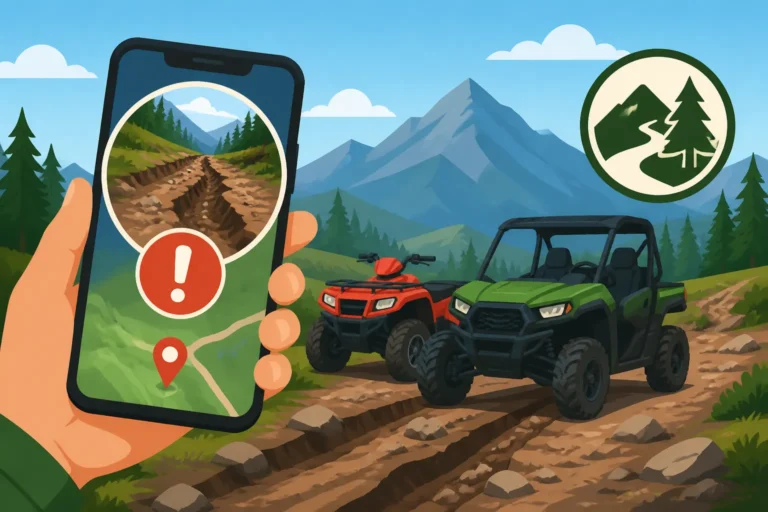
Use an up-to-date motor vehicle use map from the land manager to confirm which routes are open. Apps such as onX Offroad can help you review a route and save map information before you lose service, but treat the official map and posted signs as the authority on access. Look for trail junctions, creek crossings, blind corners, and places where your group could pull off without blocking the trail. [Finding a Forest's Motor Vehicle Use Map]
Check for closures and changing conditions before driving to the staging area. A washed-out road or a closed trail can force a last-minute detour, and an unfamiliar route may take you farther into remote terrain than planned. If visibility is poor, the trail is wet, or a route feels beyond your group’s ability, choose an easier option or turn back. The goal is not to cover the most miles; it is to keep enough time and flexibility to respond to what you encounter.
Think about where and when you ride
Bear activity varies with food availability, weather, and season. There is no time of day or year when an encounter is impossible. Be especially alert where vegetation limits visibility, near streams and berry patches, and around animal remains. Do not stop to investigate a carcass, and do not assume that a bear will hear your engine and move away.
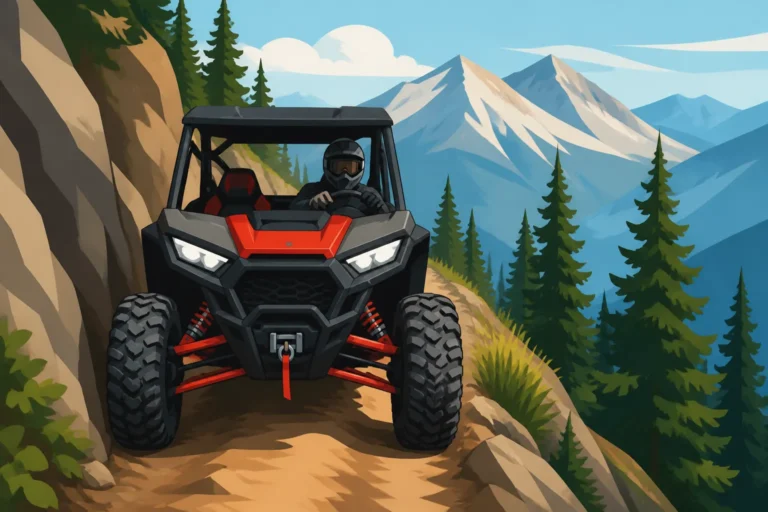
On a narrow trail, a bend, crest, or dense patch of trees can leave little time to react. Slow down before you reach places with limited sightlines. Scan ahead and to the sides, and avoid rushing through a stretch simply because the machine can handle it. If conditions make it hard to see what is around the next corner, reduce speed or reconsider the route.
A map is useful for orientation, but it cannot show every hazard on the ground. Keep checking trail signs and the terrain around you. If you are riding near a wilderness boundary, confirm that your route stays on legal motorized trails rather than assuming a line on a map means access is permitted. For more on preparation and bear-country awareness, see [What Grizzly Country Asks of a Rider].
Prepare your people and equipment
Carry bear spray where you can reach it
Bear spray is only useful if you can get to it quickly and know how to use it. Keep it in a holster on your body, such as at your waist or chest, rather than in a storage box, backpack, or cargo compartment. A spray canister that is buried under riding gear may be difficult to retrieve when every second feels hurried.
Before the ride, check the canister’s condition and expiration date, and read its label. Learn how to remove the safety clip and point the canister as directed. Practicing with an inert training canister can help you become familiar with the motion without discharging the real product. Do not test live spray casually: it can blow back, contaminate equipment, and affect people nearby.
If you wear bulky layers or protective gear, make sure the holster remains reachable with gloves on and while seated on the machine. A passenger should also know where the spray is and how it is carried. More detailed preparation is covered in [Bear Spray on an OHV].
Ride in a way that reduces surprises
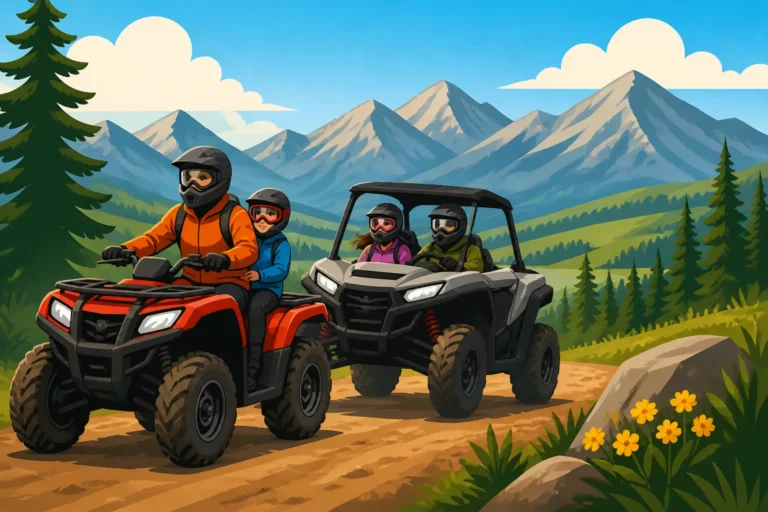
A group can make its presence easier to notice, but spacing and communication matter. Keep riders close enough to remain in contact without crowding one another. Call out when approaching a blind corner, a sharp change in terrain, or a place where the person ahead has stopped. Avoid bunching up so tightly that a sudden stop leads to a collision.
Engine noise is not a dependable warning system. A bear may be occupied, sheltered by terrain, or simply too close for the sound to provide useful notice. Use your voice when visibility is limited, especially on foot near the machines or while stopped. If one rider spots a bear, communicate calmly and clearly so the group does not split or surge forward.
Do not try to approach a bear for a closer look or a photograph. Keep passengers seated and pets under control, and do not let a dog run ahead on the trail. A dog that chases or confronts a bear can bring it back toward people. Make a habit of carrying the rest of your essentials, too: a first-aid kit, water, a map, and a way to call for help when possible. [What to Carry on a Remote Montana Ride]
| Before you ride | Practical check |
|---|---|
| Route | Confirm motorized access, closures, and a turnaround option |
| Maps | Download or carry route information before entering a dead zone |
| Bear spray | Check condition and expiration; carry it within easy reach |
| Group | Agree on spacing, signals, and what to do if someone sees a bear |
| Communication | Tell someone your route and expected return time |
| Camp or food stop | Store food and scented items securely, away from the machines |
Respond calmly if you encounter a bear
If you see a bear from a distance
Stop in a controlled way and give the bear space. Do not accelerate toward it, follow it, block its route, or surround it with multiple machines. If it has room to move away, let it do so. Keep the group together, speak in a calm voice, and avoid sudden movements that could escalate the situation.
If the bear is on the trail ahead, do not assume it will move just because you wait. Be prepared to turn around if you can do so safely. On a narrow route, avoid creating a bottleneck by sending riders forward one at a time. Make sure everyone understands the plan before moving. If the bear changes direction, approaches, or appears agitated, prioritize distance and a safe retreat rather than getting a better view.
Do not stop near cubs. A mother bear may react defensively if she believes her young are threatened. Never position a machine between a sow and her cubs, and do not attempt to pass between them. If you cannot safely continue, back away slowly and leave the area.
If a bear approaches or charges
Keep bear spray accessible and follow the instructions on its label. If a bear approaches, try to stay calm, avoid running, and give it room to leave. Do not make quick movements toward the bear or try to scare it with the machine. If there is time and a safe route, slowly back away while keeping the group together.
A defensive charge can happen very quickly. If a bear makes contact, the right response may depend on the circumstances and the bear’s behavior. General bear-safety guidance distinguishes a defensive attack from a persistent or predatory one: in a defensive grizzly encounter, playing dead may be advised, while fighting back may be necessary if the attack continues or appears predatory. There is no substitute for learning current bear-safety guidance before your trip and understanding how to use your spray. Do not treat any single response as a guarantee of safety.
After an encounter, do not immediately head back toward the bear to recover a dropped item or continue the route. Move to a safer location, account for everyone, and contact emergency services or local authorities if anyone is injured or the situation remains dangerous. [Cell Service in the Montana Backcountry] is a useful reminder that a phone may not connect from every trail. On remote rides, consider how you will call for help if ordinary service is unavailable; [Carrying a Satellite Messenger in Montana] covers another part of that planning.
Keep food, camp, and solo riding risks under control
Handle food and scented items carefully
Food smells can attract wildlife, so do not leave snacks, coolers, garbage, or scented toiletries exposed at a trailhead or campsite. Keep items secured according to the rules for the area, and clean up promptly after eating. Do not store food in a tent, leave scraps behind, or assume that a closed vehicle or UTV cargo compartment is automatically a safe storage method.
At a camp, follow the land manager’s food-storage requirements and use the equipment or designated storage provided for that location. Keep cooking and eating areas orderly, and dispose of garbage properly rather than burning it or tossing it into the woods. The same care applies to scented items that are easy to overlook, such as toothpaste, lip balm, and cooking grease. See [Food Storage at a Montana Trail Camp] before planning an overnight stay.
A lunch stop on the trail deserves the same attention. Choose a place where you can see the surroundings, avoid lingering near animal remains or thick brush, and pack out every wrapper. If the area feels unusually quiet or you notice fresh signs of wildlife, move on without stopping to investigate.
Make a backup plan, especially if riding alone
Solo riding leaves no partner to help if you are injured, lose your route, or need someone to contact help. If you ride alone, tell a trusted person where you are going, which route you expect to take, and when you plan to check in. Set a clear overdue plan rather than relying on a vague promise to call later.
Keep an offline map or paper backup, and make sure you know how to use it before leaving the trailhead. onX Offroad can be part of route preparation when you save map information ahead of time, but do not rely on a phone battery or signal as your only navigation and communication plan. A power bank, a paper map, and a satellite messenger may each address different problems. [Riding Alone in the Montana Backcountry]
Before each ride, run through a simple check: route access, weather and closures, bear spray, food storage, communication, and a turnaround time. That preparation will not make a Montana trail risk-free, but it can prevent avoidable mistakes and help your group respond more deliberately when the unexpected happens.
Disclaimer
This article is for general informational purposes only and does not constitute professional advice. Laws, prices and regulations vary by location and change over time. Consult a qualified professional for guidance on your specific situation.