Riding Alone in the Montana Backcountry
A solo ride through Montana’s backcountry can turn from peaceful to stressful when the trail forks, cell service disappears, or a small mechanical problem leaves you stranded. Riding alone calls for more than a full tank and a good view: this guide explains how to plan a route, prepare for common emergencies, and make safer decisions when nobody else is riding beside you.
Plan a Solo Montana Ride Before You Leave
Choose a route that matches your experience and machine
A route that feels manageable with a group may be a poor choice alone. Without another rider to help with recovery or check a map, steep grades, loose rock, narrow shelves, water crossings, and long stretches between roads can carry greater consequences. Be especially cautious about choosing a new route based only on a line on a screen or a friend’s description.
Start with a ride you understand. Check the route’s permitted uses, machine-width limits, seasonal access, and connection points before loading up. A Motor Vehicle Use Map, often called an MVUM, can help clarify which routes are open to motorized travel, but it is not a guarantee that a road is passable or that conditions are safe. Pair it with current local information and a realistic assessment of your riding ability. [Reading a Montana Motor Vehicle Use Map] is a useful place to start.
Think through the route as a series of decisions rather than a single destination. Where will you turn around if the trail is washed out? Is there a reasonable way to shorten the ride? Could a creek crossing rise or become difficult to see after rain? If the answer to a key question is “I’ll figure it out when I get there,” choose a more familiar or less remote route.
Check closures, weather, daylight, and access
Montana conditions can change quickly with elevation and location. A sunny morning near town does not mean a high route will be clear, dry, or open. Snowmelt, thunderstorms, smoke, fire activity, muddy sections, and maintenance work can all affect a planned ride. Check the relevant land manager’s notices and route information before leaving, then check again if conditions change. [Checking Montana Trail Status Before You Drive] can help you build that habit.
Allow extra time for slower travel. A map estimate may not account for rough surfaces, photo stops, navigation checks, wildlife, or a cautious pace on unfamiliar terrain. A solo rider should also plan to be off the most remote section well before dark rather than relying on a headlight to turn an uncertain route into a safe night ride.
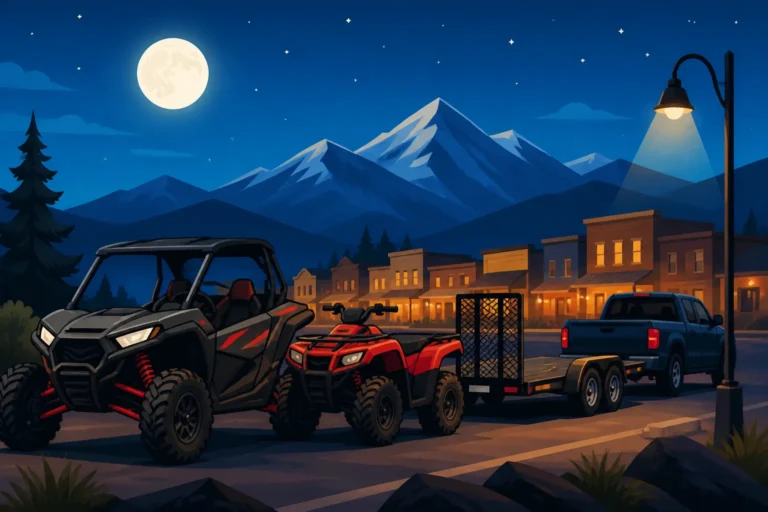
Tell someone who is not on the ride where you’re going and when you expect to return. Give them your planned route, the machine description, your vehicle and trailer details, and the time you’ll check in. Agree on what they should do if you miss that check-in. “I’ll be back sometime this afternoon” is hard to act on; a clear route and a specific check-in plan are far more useful.
Prepare for No Cell Service and a Delayed Rescue
Carry navigation that works offline
Cell coverage can be unreliable or absent in remote parts of Montana, including sections of western mountain country. Do not treat a phone’s map screen as your only navigation system. Download maps or route information before you leave service, bring a suitable paper map, and learn how to use both before the ride. Keep your phone protected from dust, water, cold, and vibration, and carry a backup power source.
Apps such as onX Offroad can help riders view saved routes and map information offline when prepared in advance. The important step is not simply installing an app: open the area you need while you still have a connection, confirm the maps are available without service, and practice locating yourself and identifying a turn. Carrying a paper backup gives you another option if a battery dies, a screen breaks, or the device becomes difficult to use with gloves.
Set a clear navigation rule before you start: if you are uncertain about a junction, stop somewhere safe and confirm your position instead of guessing. A wrong turn can quietly add miles and consume fuel. If the trail becomes unfamiliar and you can’t establish where it leads, returning to the last known point is usually safer than continuing in the hope that it reconnects.
Bring a way to call for help
A phone is still useful for navigation, photos, and emergency calls where a signal is available, but it should not be your only emergency communication plan on a remote ride. Consider a satellite messenger or personal locator device that suits your route and needs. Learn how it works, charge it, register or set it up as required, and keep it where you can reach it after a tip-over—not buried under cargo.
A satellite device helps only if the person back home knows what to do with a message or missed check-in. Explain your plan, share the device’s emergency instructions, and make sure your contact can tell rescuers where you intended to ride. Keep emergency communication separate from casual check-ins so your contact understands when a message is urgent.
Also tell your contact when your plans change. If you decide to take a different spur, spend extra time at a viewpoint, or return by another route, send an update when possible. If there is no service, stick to the original plan unless changing it is necessary for safety. [Cell Dead Zones in Western Montana] and [Carrying a Satellite Messenger in Montana] cover two important parts of planning for a communication gap.
Pack for Breakdowns, Injury, and Wildlife
Carry essentials you can reach on the trail
A solo rider has to handle the first response personally, at least until help arrives. Pack water, food, warm and waterproof layers, a first-aid kit, a headlamp, basic tools, and emergency communication equipment. Add items suited to your machine and the route, such as a tire repair kit, air source, spare belt where appropriate, tow strap, or compact recovery gear. [What to Carry on a Remote Montana Ride] offers a broader packing checklist.
Keep essential items accessible. A first-aid kit or satellite messenger packed beneath heavy cargo may as well be at home if you are hurt or the machine is tipped. Secure gear so it does not shift on rough ground, and check that tools fit your machine before the ride. A quick practice session at home—using the tire kit, checking the tool roll, or locating the machine’s shutoff—can prevent frustrating trial and error in the backcountry.
Pack according to the day’s risks, not just the forecast at the trailhead. Conditions in the mountains can be colder, wetter, and windier than expected. A dry layer and a way to stay warm matter if you are delayed after a breakdown. Carry enough water and food to cover a longer day than planned, but do not use extra supplies as a reason to take unnecessary risks.
| Situation | Useful preparation | Safer response |
|---|---|---|
| Navigation uncertainty | Offline map, paper map, charged device | Stop safely and retrace to a known point if needed |
| Flat tire or mechanical issue | Machine-specific tools and repair supplies | Move out of danger, assess the repair, and avoid worsening damage |
| Injury or sudden illness | First-aid supplies, emergency communication | Stabilize what you can and contact help if needed |
| Cold, rain, or an unexpected delay | Warm layer, shell, food, water, light | Stay sheltered where practical and preserve energy |
| Wildlife encounter | Bear spray carried accessibly and practiced awareness | Give the animal space and avoid approaching or feeding it |
Know what you will do if the machine stops
Before the ride, identify the most likely problems for your machine and route. A flat tire on a trail near a road is a different challenge from a flat far from a trailhead. Make sure you know how to use your repair supplies, how to safely shut down the machine, and what you can do if a simple repair does not work. [Fixing a Flat 60 Miles From the Nearest Shop] is worth reviewing before a remote ride.
If the machine breaks down, first move yourself and the ATV or UTV out of immediate danger if you can do so safely. Stop and assess the situation rather than repeatedly trying to drive a damaged machine. A small issue can become a larger one if you continue over rough ground. Use your communication device if you need assistance, provide your location and condition, and follow its emergency instructions.
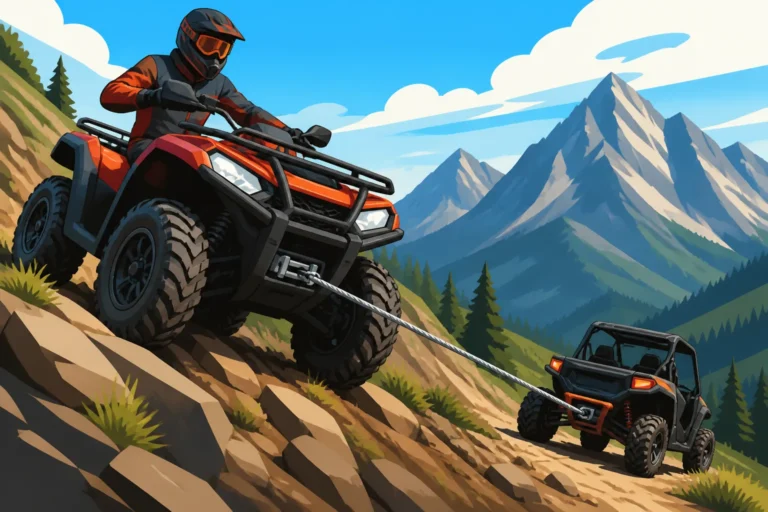
Be realistic about self-recovery. A steep slope, unstable ground, a damaged winch point, or a machine positioned awkwardly can make a recovery attempt dangerous. Do not stand in a likely path of a rolling machine or tensioned recovery line. If you cannot make a safe, controlled repair or recovery, stop, communicate, and wait for help. [First Aid When Help Is Hours Out] is also useful preparation for a ride where assistance may take time.
Prepare for wildlife without turning the ride into a chase
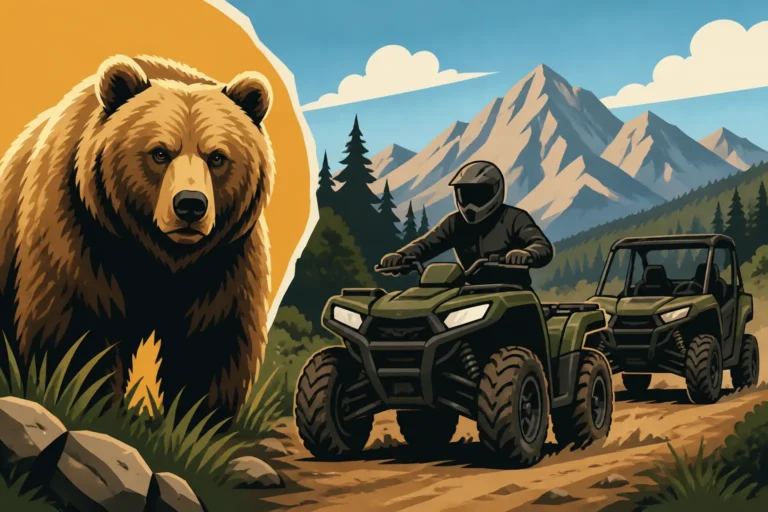
Montana backcountry includes wildlife habitat, and riders should expect to share space with animals. Slow down where visibility is limited, especially around bends, brush, water, and areas where animals may be feeding or crossing. Do not crowd wildlife for a closer look or try to move through a group of animals. Give them room to leave, and be ready to stop.
In bear country, carry bear spray where you can reach it quickly, not buried in a pack or secured to the machine out of reach. Read the instructions before the ride and know how to access it while wearing your riding gear. Keep food and scented items secured when stopping or camping. [Bear Spray on an OHV] and [Riding Safely in Grizzly Country] offer additional preparation guidance.
If you encounter an animal at close range, avoid a sudden approach and give it an escape route. Do not assume that a running engine will make every animal move away. If you are unsure how to proceed, stop at a safe distance and wait for the animal to move on rather than trying to squeeze past it.
Make Safer Decisions While Riding Alone
Use a deliberate pace and turn-around point
The safest solo pace is the one that lets you stop within the distance you can see. Dust, loose gravel, shade, blind corners, and changing surfaces can hide hazards. Keep enough distance from edges and obstacles to give yourself room to react, and slow down when visibility or traction worsens. Riding alone is not the time to chase a personal speed record or follow a route simply because you have already invested time reaching it.
Set a turn-around time before you leave. If you reach that point without completing the route, turn back. This can feel disappointing when you are close to a lookout or a familiar connection, but the return trip also takes time—and a delay from a flat, a navigation mistake, or weather can use the margin you thought you had. A planned turn-around rule makes the decision easier when you are tired or tempted to push on.
Reassess at every major change: a washed-out section, a rising creek, worsening weather, a new route split, or a machine that begins to sound or handle differently. Ask whether continuing still fits the original plan. If it doesn’t, changing course is not failure. It is the point of having a plan.
Treat fatigue and small problems as early warnings
Fatigue can make simple choices harder. If you notice that you are missing turns, taking rougher lines, or becoming impatient, stop somewhere safe and take a proper break. Drink water, eat, check your position, and decide whether continuing still makes sense. A short pause can prevent a rushed decision, but it does not erase the risk of an overly long day.
Keep a basic record of your route and progress, using a saved track or another method you understand. When you stop for a break, compare your location with your intended route and note how much daylight and fuel remain. Apps such as onX Offroad may help you review a saved track when you have prepared the map offline, but keep a backup navigation method and avoid relying on a single device.
Never ignore a small change in machine behavior simply because you are alone and do not want to lose time. A new vibration, unusual heat, a soft tire, or a warning light can signal a problem that is easier to address early. If continuing could leave you farther from help with a worse problem, stop and evaluate before moving on.
Build a simple solo-riding routine
A repeatable routine reduces the chance of forgetting something when you are excited to get moving. Before departure, check the machine, fuel, tires, lights, brakes, tools, water, and communication devices. Confirm your route and return time with your contact. At the trailhead, check access information once more and send a departure message.
During the ride, pause at meaningful junctions rather than glancing at a screen while moving. Keep track of your fuel use and turnaround deadline. If your route changes, update your contact when you can. When you return, let them know you are safely back; that final check-in closes the loop and prevents unnecessary worry.
Solo riding can be rewarding precisely because it is quiet and self-directed. The goal is not to eliminate every uncertainty—that is impossible in the backcountry—but to avoid stacking uncertainties on top of one another. Choose a suitable route, carry independent navigation and communication, leave a clear plan with someone at home, and turn around when conditions no longer fit the plan.
Disclaimer
This article is for general informational purposes only and does not constitute professional advice. Laws, prices and regulations vary by location and change over time. Consult a qualified professional for guidance on your specific situation.