FWP Offices That Sell Trail Passes
If you’re riding an ATV or UTV in Montana, finding a trail pass before you reach the trailhead can save a frustrating detour. Montana Fish, Wildlife & Parks offices may be a place to buy one, but office services and inventory can differ. Here’s how to check before you go, what to ask, and when another sales option may be easier.
What an FWP office can help you buy
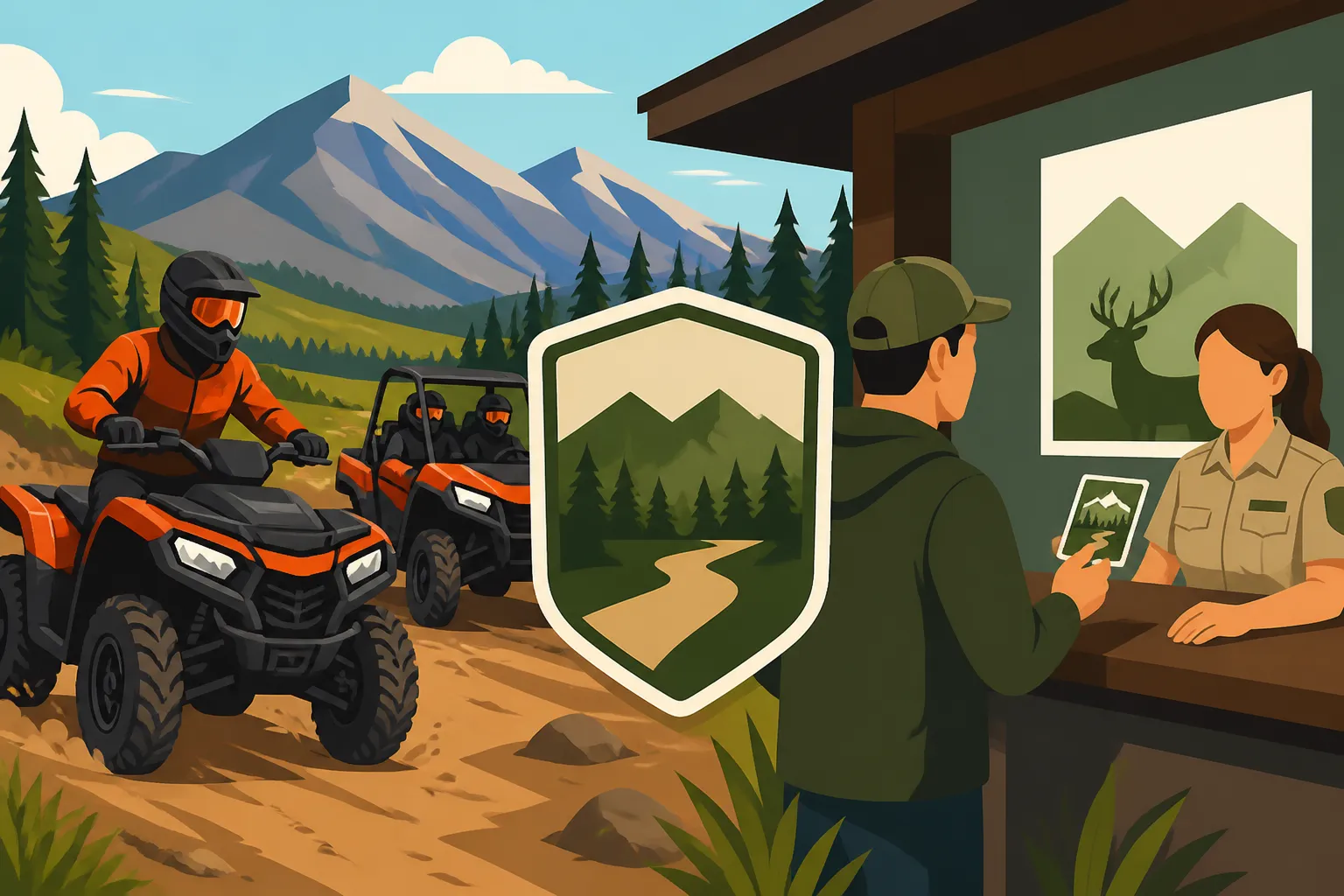
Montana Fish, Wildlife & Parks, usually shortened to FWP, is a useful place to start when you need a Montana OHV trail pass. Some FWP offices sell passes directly, but don’t assume every office offers the same service or has passes available whenever you arrive. Call ahead or check current official information before building your travel plans around a particular location.
The pass you need depends on your residency and the machine’s situation. Montana residents and out-of-state visitors generally use different permit or pass options. A machine’s registration status can also affect what you need. If you’re uncertain which category applies, describe your circumstances to the office or check FWP’s current OHV guidance before paying.
An office can be particularly helpful if you have a question that isn’t answered by a basic sales page. For example, you might need to confirm whether a visiting rider needs a temporary use permit, whether a resident pass is appropriate, or whether a machine already has the required authorization. The office may be able to clarify the process or point you to the right sales channel. It cannot necessarily resolve every registration or title question on the spot, so be clear about what you’re asking.
It helps to separate three things that riders sometimes treat as interchangeable:
- Registration concerns the machine’s legal registration status and related requirements.
- A trail pass or permit concerns permission to use certain public trails or lands under Montana’s OHV system.
- Permission to ride a particular route depends on that route’s land manager, access rules, seasonal closures, and any local restrictions.
Having one does not automatically settle the others. A pass is not a guarantee that every trail is open, and it should not be treated as a substitute for vehicle registration or permission to ride on a road. Read What Montana Riders Need Before They Ride for a broader checklist, and review Montana’s Non-Resident Temporary Use Permit if you’re visiting from outside the state.
Before you travel to an FWP office, ask these questions:
- Do you currently sell the kind of OHV pass or permit I need?
- Can I buy it at this office in person, or do I need to use another sales channel?
- What information should I bring about the machine and rider?
- Can you issue the pass immediately, and what proof or confirmation will I receive?
- Are there other locations or online options if your office cannot complete the sale?
That short call can establish whether the office is a practical stop or just a place to get redirected. It’s especially worthwhile if you’re arriving outside regular business hours, travelling a long distance, or planning to ride soon after reaching Montana.
How to find and contact an office before you go
Start with FWP’s official office directory or official OHV permit information rather than relying on an old business listing or a rider’s forum post. Office details, opening schedules, and available services can change. A search result that says an office exists does not confirm it sells trail passes today.
Use the directory to identify a location along your route, then contact that office directly. If you can’t reach someone, look for current official information about buying the pass online or through an authorized vendor. Don’t assume an office is closed or doesn’t offer sales simply because no one answers once; try the official contact information again or choose a sales option that you can verify.
When calling, give the staff enough context to answer accurately. You can say whether you’re a Montana resident or a visitor, what type of machine you’ll ride, and whether you’re asking about a trail pass, a nonresident permit, or registration. If you’re buying for a group, mention how many machines are involved and whether they belong to different riders. The right option can depend on details, and a general question such as “Do I need a pass?” may not give staff enough to distinguish your situation.
| What to check | Why it matters | What to ask |
|---|---|---|
| The office sells the right pass | An office may not offer every permit or transaction | “Can I buy this specific pass here?” |
| Current sales availability | Services and sales arrangements can change | “Is it available for purchase now?” |
| Your rider and machine category | Residents and visitors may need different options | “Which permit applies to my situation?” |
| Required information | Missing details can delay or prevent the purchase | “What should I bring or provide?” |
| Proof of purchase | You may need to show that you obtained the pass | “What confirmation or documentation will I receive?” |
| Other sales channels | A nearby vendor or online option may be more convenient | “Where can I buy it if this office cannot?” |
If the office confirms it can sell the pass, ask whether you need an appointment or whether walk-ins are handled. Also confirm the address and the hours for the day you plan to visit. An office may be a good choice if you want help choosing a permit or prefer to speak with staff, but it can be less convenient than buying online or stopping at a nearby authorized seller.
For other purchase options, see Buying a Trail Pass Through FWP Online Licensing, County Treasurers and Trail Pass Sales, and Where Visitors Buy a Montana Permit. These routes may be more practical if your itinerary doesn’t pass an FWP office.
Choose the pass that fits your situation
A common mistake is looking only for the nearest place to buy a pass before confirming which pass to buy. First identify your rider and machine situation; then choose a sales channel. That order reduces the chance of spending time and money on the wrong item.
If you’re a Montana resident
Residents should check the current requirements for the resident OHV trail pass and how it relates to their machine’s registration. If you’re already registering a machine, ask whether the relevant pass can be handled in the same process or whether you must complete a separate purchase. Don’t infer that a registration transaction automatically includes every trail-related requirement. Review Montana’s Resident OHV Trail Pass and Trail Pass Credit Toward Permanent Registration for details about the resident pathway, then confirm current procedures before visiting.
An FWP office may be a useful place to ask about the pass, but a county treasurer or another sales channel may handle related transactions more conveniently. If you need both registration and a pass, ask which office or channel can complete each part. The distinction matters: a location that can sell a trail pass may not handle all title or registration work, while a treasurer’s office may have a different role from FWP.
If you’re visiting from another state
Visitors should check the nonresident permit rules before entering the riding area. Don’t assume that a registration sticker from your home state, a pass bought in another state, or a Montana vehicle plate automatically satisfies Montana’s visitor requirements. Permit reciprocity is not something to guess at. Confirm whether Montana requires a permit for your planned use and what the permit covers.
The [What the Non-Resident Permit Covers] article can help you distinguish trail access from other kinds of use. If you’re arriving close to your first ride, buying before you leave home or choosing a verified sales point on your route may be simpler than searching for an open FWP office after arrival. For the expiration and timing details, see When a Montana Non-Resident Permit Expires.
If the machine is borrowed, rented, or part of a group
A borrowed machine, a rental, or a group trip can raise questions about who is responsible for obtaining the permit and whether the machine already has what it needs. Ask the owner or rental business what is included, then verify that the permit arrangement applies to your planned ride. Don’t assume that one pass covers every machine in a group.
For a rental, ask the shop specifically whether the required Montana permit is included, whether it applies to the machine you’ll be riding, and what proof you should carry. For a borrowed machine, ask the owner whether the pass is already in place and whether you need any separate documentation. When organizing several machines, Buying Permits for a Group Trip is a useful companion to your planning.
If you are also trying to sort out registration, keep that question separate from the permit purchase. Registering an Out-of-State Machine in Montana can help with registration issues, but it doesn’t replace checking the trail-access requirements for the rider and route.
What to bring and what to keep after purchase
An FWP office may be able to sell a pass without extensive paperwork, but it is sensible to arrive prepared. Bring the machine details you have, including its make, model, and identifying information if available. Have your residency information ready, and know whether you’re asking about one machine or several. If you’re unsure what the office needs, ask before you drive over rather than treating this list as a universal requirement.
At minimum, be ready to explain:
- Whether you live in Montana or are visiting
- What type of OHV you plan to ride
- Whether the machine is yours, borrowed, or rented
- Where you plan to ride, if you already know
- Whether you’re buying for one rider or a group
- Whether you also need help with registration
After the transaction, check the pass or confirmation before leaving. Make sure the information appears correct and that you understand what you must display, carry, or present. If something looks wrong, ask the seller to explain how it can be corrected while you’re still there. Keep the receipt or confirmation in a safe place, and follow current instructions for displaying or carrying the pass.
A small waterproof document pouch can help keep paperwork and receipts together during a dusty or wet ride. If you’re already buying a route map or basic riding supplies through Amazon, a simple pouch or map sleeve can be a practical addition; it’s also fine to use a pouch you already own. Amazon is a convenience for gear, not an official permit seller, so use FWP or another confirmed authorized sales channel for the pass itself. If you use Amazon for a map case, check that it fits the paper map or documents you actually plan to carry rather than choosing by product photos alone.
Digital proof can be convenient, but don’t rely on a phone as your only backup if you’ll be riding where reception is poor or the battery may run down. Save the confirmation where you can retrieve it offline, and consider carrying a paper copy if the official instructions allow or recommend it. You can also keep the receipt separate from the document you need to show, so losing one item doesn’t leave you without any record.
Amazon may also be useful for basic supplies such as a small organizer to keep machine documents and trip notes together. If you buy one, keep important paperwork in a sealed inner sleeve rather than assuming the organizer itself is waterproof. For route planning, a paper map or a printed copy of the official information can be more dependable than a shopping receipt or an online listing; Amazon is not a substitute for checking current land-manager maps and closures.
Common problems and the simplest way to avoid them
Driving to an office without checking sales
An office directory confirms where an office is; it doesn’t necessarily confirm that the location sells the pass you need. Call first, explain your situation, and ask about a backup sales channel. This is the most straightforward way to avoid arriving at an office that can only refer you elsewhere.
Buying a pass but assuming it opens every route
A pass does not mean that every trail, forest road, county road, or private road is open to OHVs. Access depends on the land manager and the specific route. Seasonal closures, machine-width limits, local road rules, and temporary restrictions can all matter. Check the official map or route information for the area you intend to ride, and verify that the machine is allowed on the route.
Treating an office conversation as proof of the transaction
If staff explain which pass you need, make sure you still complete the purchase through an approved channel. Advice is not the same as a pass. Leave with the confirmation or documentation that the official process provides, and ask what you should show if a warden or other officer checks.
Confusing an FWP sale with registration service
FWP’s role and the county treasurer’s role are not identical. If you need title or registration work, ask which office handles that step rather than assuming an FWP office can complete it. Buying a Pass at a County Treasurer may help if a treasurer’s office is easier to reach, but confirm that it offers the specific service you need before going.
Waiting until you reach the trailhead
A remote trailhead is a poor place to discover that you need a pass, your phone has no service, or the nearest seller is closed. If possible, confirm the rules and buy through a verified channel before setting out. Keep the pass proof accessible, and check route closures separately from permit requirements.
A simple order of operations works well:
- Identify whether you’re a Montana resident or a visitor.
- Confirm which pass or permit applies to your rider and machine.
- Check whether the planned route is open to that machine.
- Contact the FWP office or other seller to confirm availability and requirements.
- Buy through an official or otherwise confirmed sales channel.
- Save the proof of purchase and carry it as instructed.
An FWP office can be a helpful in-person option, especially when you need clarification, but it should be one part of the plan rather than your only assumption. Confirm the correct permit first, verify that the office sells it, and check the route separately. Those small steps can prevent a paperwork problem from becoming a missed ride.
Disclaimer
This article is for general informational purposes only and does not constitute professional advice. Laws, prices and regulations vary by location and change over time. Consult a qualified professional for guidance on your specific situation.