Trail Pass Credit Toward Permanent Registration
A Montana resident who has already bought an annual OHV trail pass may be able to apply its value toward permanent registration for the same machine. The catch is that the credit is not the same as a refund, and the details can depend on the transaction and proof you bring. Here’s how to understand the credit, prepare for the county treasurer, and avoid paying for the wrong thing twice.
What the trail pass credit does
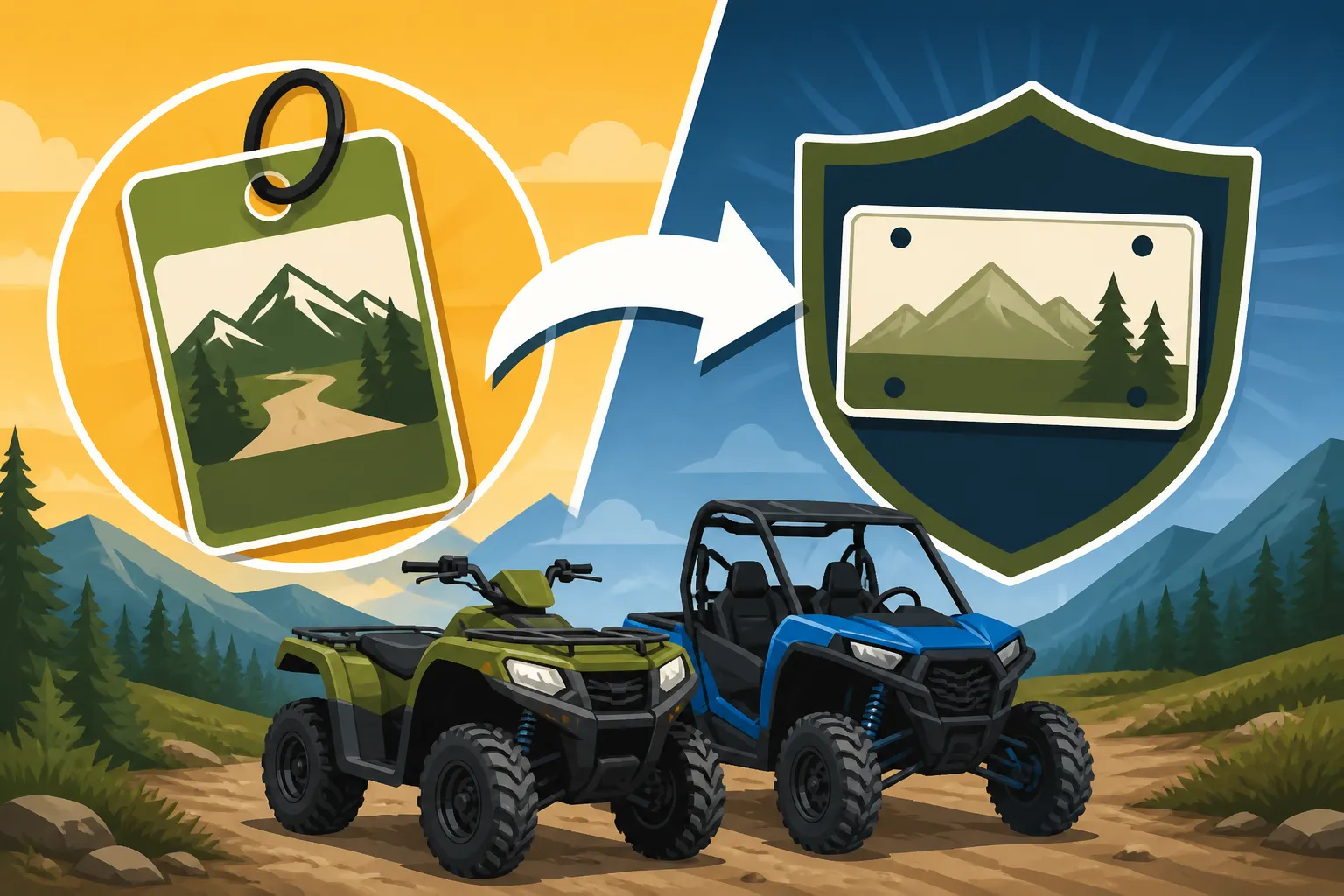
Montana’s resident OHV trail pass and permanent registration serve related but different purposes. The trail pass is an annual pass for riding on public lands where one is required. Permanent registration is a longer-term registration for an eligible machine. When a resident has paid for a trail pass and then registers the machine permanently, the trail pass payment may be credited toward the permanent registration transaction.
Think of the credit as a way to account for a qualifying payment you have already made. It is not necessarily a cash refund, and it does not automatically mean the permanent registration will cost nothing. The credit can only reduce eligible charges; other amounts due may remain. Which payment qualifies, how the credit is applied, and what documentation is needed should be confirmed before you make the trip to the treasurer.
A permanent registration also does not mean the machine can ride everywhere without other requirements. Riders still need to follow land-manager rules, route closures, and any permit requirements that apply to the place they are riding. For a broader overview of the annual pass, see Montana’s $20 Resident OHV Trail Pass Explained and What Permanent Registration Actually Buys You.
The distinction is especially important if you are deciding whether to buy a trail pass first or register the machine first. If you know you plan to permanently register a qualifying machine, ask about the credit before purchasing anything. If you have already bought the pass, keep proof of that purchase and ask the county treasurer how to present it.
What the credit is not
The credit should not be treated as:
- A guaranteed cash refund for a pass you no longer need.
- A credit that automatically transfers to a different machine or another owner.
- A promise that every fee associated with registration will be covered.
- Permission to ride public land without the required pass or registration while your paperwork is incomplete.
- A credit that automatically applies to a nonresident permit.
A pass bought for one purpose or one machine may not qualify in a different transaction. Before you rely on it, make sure the pass, machine, owner, and registration request meet the current requirements.
Who may qualify and what to check first
The credit is associated with the Montana resident trail pass and a permanent-registration transaction. A nonresident permit is a separate product for visiting riders, so do not assume it can be applied toward a Montana resident’s permanent registration. The rules and purchase records for resident and nonresident permits are not interchangeable.
Before making plans around the credit, check these points with Montana Fish, Wildlife & Parks or the county treasurer handling the registration:
- Is the pass for the same machine? Have the machine’s identifying information ready. If the pass purchase was linked to a particular OHV, ask whether that identification matches the machine you want to register.
- Is the person who bought the pass the person registering the machine? If the names differ, ask what proof or additional paperwork is needed. Do not assume a pass bought by a spouse, family member, or previous owner automatically qualifies.
- Is the pass from the relevant registration period? Ask whether the pass must have been purchased during the same calendar year or within another specified window. Do not assume a pass from a prior year remains available as a credit.
- What kind of machine is it? Confirm that the machine qualifies for the registration you are seeking. An ATV, UTV, dirt bike, or other off-highway vehicle may have different paperwork or classification questions.
- What proof will the office accept? Find out whether the receipt, pass record, account information, decal, or other documentation is required. A decal alone may not provide all the information the office needs.
- Does the credit apply to the amount you expect? Ask what it offsets and whether you will still owe other registration or administrative charges.
These questions matter most when the original purchase happened online, at a vendor, or through an account that is not in the registrant’s name. A payment record can be easier to find before you arrive than while you are waiting at a counter.
For help with the wider registration process, see Registering an OHV in Montana and Documents to Bring to a County Treasurer. If you are not sure whether you need a title before registering, read Titling an OHV in Montana and Proof of Ownership for a Montana Title as well.
Resident pass versus nonresident permit
A visitor who buys a nonresident permit should not treat that purchase as the same thing as a resident trail pass. The nonresident permit is intended for visiting riders and has its own coverage and terms. A visitor considering a longer stay, a change in residency, or a machine purchase in Montana should ask the relevant agency which permit or registration applies to their situation.
In particular, buying a machine in Montana does not by itself make the buyer eligible for a resident pass or permanent registration. Residency, ownership, and the intended use of the machine can all matter. A nonresident who plans to ride public land should review Montana’s Non-Resident Temporary Use Permit and [What the Non-Resident Permit Covers] rather than assuming a resident credit applies.
How to request the credit
The safest approach is to ask about the credit before you start the registration transaction. The county treasurer can explain what the office needs for the machine and how the payment record should be presented. If you bought the pass through a state licensing system or a vendor, the treasurer may still need you to produce a receipt or account record; do not assume the registration counter can automatically see every purchase.
Use this sequence:
- Gather the machine details. Write down the VIN or other identifying number, make, model, and any information that helps distinguish the machine. If you are unsure where to find the VIN, Where a Side-by-Side Hides Its VIN may help.
- Locate the pass record. Find the purchase confirmation, receipt, licensing-account record, or other proof you were given. Check that the date, purchaser, and machine information are readable.
- Call the county treasurer. Explain that you have a Montana resident trail pass and want to know whether it can be credited toward permanent registration. Ask what office handles the transaction if you are not sure which county to contact.
- Confirm the rules for your case. Specifically ask about the pass date, purchaser name, machine identity, deadlines, and any charges the credit does not cover. If you have a special situation, such as a family transfer or a recently purchased used machine, mention it at the start.
- Bring the required registration documents. A pass receipt does not replace proof of ownership or title paperwork. Ask the office what documents are needed for your machine and ownership history.
- Ask the clerk to explain the final calculation. Before you leave, check that the pass credit has been applied if you qualify and that you understand any balance due.
- Keep the completed records. Save the registration receipt and any credit documentation with the machine’s other papers. If an issue arises later, you will have a record of what was submitted and how the transaction was handled.
If you are registering a used machine, first make sure the seller’s paperwork is complete. A trail pass does not fix a missing title, an unsigned transfer, or a VIN discrepancy. Buying a Used Side-by-Side in Montana: The Paperwork and Montana Registration for a Machine Bought Private Party cover common purchase-document problems.
Make the question easy to answer
When you call, be ready to give the office a concise description:
“I’m a Montana resident. I bought a resident OHV trail pass for this machine and want to apply it toward permanent registration. The pass was purchased on this date, and the purchase record is in this name. What should I bring, and does this payment qualify?”
This gives the office the details most likely to affect eligibility. If the pass was bought for a different machine, in another person’s name, or in a previous year, say so. An early answer may save you a wasted trip or a second visit.
Keep a written note of whom you spoke with and what documents they asked you to bring. That note is not a substitute for official instructions, but it helps you follow them consistently—especially if you are coordinating the transaction for a family member.
Common situations and what to do
The right next step depends on how the pass was purchased and who owns the machine. Use the table as a checklist for what to ask, not as a substitute for the treasurer’s decision.
| Situation | What to verify | Practical next step |
|---|---|---|
| You bought a resident pass for the same machine and are registering it permanently | Whether the pass is within the eligible period and what proof is required | Bring the payment record and machine information; ask the treasurer to apply any eligible credit |
| You bought a pass online but cannot find a paper receipt | Whether the office can use an account record or confirmation email | Recover the electronic record before visiting and ask what format the office accepts |
| The pass is in a spouse’s or family member’s name | Whether the purchaser and registrant must match | Explain the relationship and ownership details before assuming the credit transfers |
| You bought the pass for another OHV | Whether a credit is limited to the machine associated with the purchase | Do not apply it to a second machine without confirmation |
| You are a nonresident visitor | Whether your purchase was a nonresident permit rather than a resident pass | Ask about the permit you actually purchased; do not assume resident registration credit applies |
| You bought a used machine with an existing decal | Whether the prior owner’s registration remains valid after the sale | Confirm the transfer and registration requirements; see Why a Montana Registration Does Not Follow the Machine |
| You have a pass from an earlier year | Whether older payments can be credited | Ask the treasurer about the date before counting on the credit |
| You have lost the payment record | Whether the purchase can be located in the issuing account or system | Contact the place where you bought it and request a record before the registration appointment |
If the machine changed hands
A permanent registration is not a reason to skip the ownership-transfer steps. The word “permanent” describes how long a registration may remain valid under the applicable rules while the relevant ownership conditions continue to be met. It should not be read as meaning the registration automatically follows the machine to every buyer.
If you bought the machine from a private seller, confirm that the title and transfer documents are in order. If the seller’s name on the paperwork does not match the person who sold it, or if a signature is missing, resolve that issue before relying on a trail-pass credit to complete the transaction. The registration credit addresses a pass payment; it does not establish who owns the machine.
See Registration That Ends When You Sell the Machine for the ownership question, and What a Montana Bill of Sale Should Say for the information a sale document should record. If a title is missing or incorrect, deal with that separately before planning a registration appointment.
If you are registering several machines
Do not assume one pass purchase can cover several OHVs or that a credit on one machine can be shifted to another. Ask about each machine individually. Record the identifying number, the person associated with the pass purchase, and the registration status for each one.
For a household or business with multiple machines, it can help to make a simple list:
- Machine make and model.
- VIN or serial number.
- Current owner.
- Pass type and purchase date.
- Name on the purchase record.
- Registration paperwork still needed.
This also helps prevent mix-ups when several receipts or decals look similar. If you manage a fleet, confirm the process for each machine with the treasurer rather than treating the group as one registration.
Mistakes that can cost you time or money
The most common problem is assuming the credit is automatic. A rider buys a pass, later decides to register permanently, and expects the system to connect those transactions without proof. That may not happen. Keep the purchase record and ask the office how it needs to be presented.
Other avoidable mistakes include:
- Buying the wrong kind of pass. A nonresident permit and a resident trail pass are not interchangeable. Check your status and the product description before purchase.
- Assuming an old pass remains eligible. Ask about the applicable time period instead of carrying a past payment forward in your budget.
- Using a pass tied to a different machine. Confirm whether the credit follows the buyer, the machine, or another specific condition.
- Leaving paperwork until the counter visit. Find the receipt and ownership documents first. If something is missing, you can address it before taking time off or driving to the office.
- Treating the credit as a full registration waiver. Ask what the credit offsets and what charges may remain.
- Confusing a pass credit with a refund. If your plan changed and you no longer need the pass, ask about the applicable policy. Do not count on receiving cash back.
- Assuming a permanent registration transfers on sale. Confirm the buyer’s steps after a sale; a decal or prior registration does not prove the new owner has completed their requirements.
Organization helps. Keep digital copies of receipts and paperwork in a folder you can access from your phone, but retain official documents as required and do not rely on a blurry photograph at the counter. A waterproof document pouch can keep papers from getting wet or dirty when you ride. If you need one, Amazon is one place to look; choose a size that fits the documents without folding them.
You can also keep a small folder in your garage for receipts, title records, and treasurer paperwork. Amazon offers basic folders and sleeves, but the important part is having a consistent place for the records—not a particular brand or product. For information on what to keep with the machine during a ride, see Keeping Registration Papers on the Machine.
A short checklist before you go
Before heading to a county treasurer, make sure you can answer the following:
- Do I have a Montana resident trail pass, rather than a nonresident permit?
- Was the pass purchased for the machine I want to register?
- Do I know the purchase date and the name associated with the record?
- Have I confirmed whether that date and purchase qualify for a credit?
- Have I asked what proof the treasurer will accept?
- Do I have the machine’s VIN or identifying information?
- Do I have the ownership and title documents required for this registration?
- Do I understand what charges the credit may not cover?
- Have I confirmed the office and process before traveling?
If the answer to any of these is no, call before you go. A few minutes spent checking the details can prevent the common frustration of arriving with a pass decal but no usable purchase record, or with a valid payment that cannot be matched to the machine.
After the transaction, save the receipt showing the final amount and any credit applied. If you later sell the machine, keep the sale and registration records separate from your own future machine paperwork. For questions about the pass itself, start with Montana Trail Pass Through the FWP Website. For questions about permanent registration, the county treasurer is the practical contact for your registration transaction.
Disclaimer
This article is for general informational purposes only and does not constitute professional advice. Laws, prices and regulations vary by location and change over time. Consult a qualified professional for guidance on your specific situation.