Documents to Bring to a County Treasurer
You've just found your dream ATV or UTV, or maybe you're finally getting around to getting the paperwork sorted for that trusty quad you’ve had for ages. The thought of heading to the county treasurer's office can feel like staring down a bureaucratic grizzly bear – a bit daunting, and you're never quite sure what they're going to ask for. Nobody wants to make multiple trips because of a missing piece of paper. This guide is here to walk you through exactly what documents you need to bring to your Montana County Treasurer to get your off-highway vehicle registered and titled without a hitch, saving you time and frustration.
Before You Go: What Are You Trying to Accomplish?
Before you even think about gathering documents, it's really helpful to clarify what your goal is at the county treasurer’s office. Are you registering a brand-new machine that’s never been on the trails before? Are you titling a machine you just bought from a private party? Or maybe you’re doing both simultaneously. Understanding this distinction will help you collect precisely what’s needed and make your visit much smoother. The process and required documents can vary slightly depending on whether you’re solely registering, solely titling, or handling both at once.
Registering Your OHV for the First Time
If your off-highway vehicle is new to you or new to the state of Montana, you'll need to get it registered. For Montana residents, this typically means a one-time permanent registration fee for your ATV or UTV. [What Permanent Registration Actually Buys You] This registration provides you with a decal that signifies your machine is legally allowed on designated public lands and trails. The primary purpose of registration is to ensure accountability and fund trail maintenance and enforcement, making sure our incredible Montana trails stay accessible and well-maintained for everyone.
This initial registration often goes hand-in-hand with titling, especially if the machine is new to you. The treasurer's office needs to establish legal ownership before they can issue a registration. If you're bringing a machine from out-of-state that was previously titled and registered elsewhere, you'll still need to register it in Montana and often transfer the title to a Montana title. The decal is your proof, so make sure you know [Where a Montana OHV Decal Goes] once you get it.
Transferring an Existing Montana Title
Perhaps you've just bought a used ATV or UTV from a private seller here in Montana, and it already has a Montana title in their name. In this scenario, you're primarily looking to transfer the ownership from the previous owner to yourself on the existing title. This is a critical step because until the title is in your name, you aren't legally recognized as the owner, even if you have a bill of sale. Without a proper title transfer, you could run into headaches if you ever need to sell the machine, deal with insurance, or even if it's involved in an accident.
When you transfer a title, you'll also likely be getting a new registration in your name, even if the machine was already registered. Remember, [Registration That Ends When You Sell the Machine]. So, while the machine might have had a registration decal, that registration doesn't automatically carry over to you. You'll be establishing your own, new permanent registration as part of this ownership transfer process. The county treasurer handles both the title transfer and the issuance of your new registration and decal during the same visit.
Required Documents for a New Purchase (Dealer or Private Seller)
This is where the rubber meets the road! The specific paperwork you'll need largely depends on where and how you acquired your ATV or UTV. Buying from a licensed dealer usually means a smoother process, as they typically handle much of the initial paperwork. Private party sales, however, put more responsibility on you and the seller to ensure everything is correct. And if you're bringing a machine in from out of state, there are unique considerations.
From a Licensed Montana Dealership
When you purchase a brand-new or used off-highway vehicle from a licensed dealer in Montana, they are typically responsible for providing you with the necessary documents to get your machine titled and registered. This usually includes the manufacturer's Certificate of Origin (MCO) for new machines, or the properly assigned title from the previous owner for used machines. The dealer will also give you a bill of sale detailing the purchase.
Here's what you should expect to receive and then take to the treasurer's office:
- Manufacturer's Certificate of Origin (MCO) or Original Title: For new machines, this document proves it's never been titled before. For used machines, it will be the previous owner's properly signed-off title. The MCO or title is the bedrock of establishing legal ownership. Ensure all sections, especially the odometer reading (if applicable and required for the vehicle type, though less common for OHVs), are accurately filled out and signed by the dealer.
- Bill of Sale: This is your proof of purchase. It should clearly state the buyer and seller names, the date of sale, the purchase price, and a detailed description of the machine including the year, make, model, and crucially, the Vehicle Identification Number (VIN). [What a Montana Bill of Sale Should Say] emphasizes clarity.
- Application for Title and Registration: The dealership might provide you with a pre-filled application, or you might fill one out at the treasurer's office. This form collects your personal information and details about the OHV.
- Odometer Disclosure Statement (if applicable): While not always required for all OHVs, some larger UTVs might fall under requirements for odometer disclosure. If provided, make sure it's completed correctly.
The dealer will often give you temporary tags, allowing you to legally transport your machine before you get the permanent registration and decal from the county. Even if they provide temporary paperwork, you still need to make that trip to the treasurer's office to finalize the permanent registration and title in your name.
Purchasing from a Private Seller
Buying from a private party can sometimes feel a bit like the Wild West of paperwork, but it doesn't have to be. It just means you need to be extra diligent. When you're buying a used ATV or UTV from someone who isn't a licensed dealer, the burden of ensuring correct paperwork falls on both you and the seller. The most important documents here are the title and a well-detailed bill of sale. For more detailed guidance, consider checking out [Buying a Used Side-by-Side in Montana: The Paperwork].
Here’s your checklist:
- The Original Montana Title (properly assigned): This is the single most critical document. The seller must sign off on the back of the title in the designated "Seller" or "Assignment of Title" section. They also need to provide their printed name, date of sale, and the exact odometer reading (if applicable, which is rare for many smaller ATVs but might be relevant for some UTVs). Make absolutely sure there are no erasures or alterations on the title, as this can invalidate it. If there are multiple owners listed on the title with "and," all owners must sign. If it says "or," only one owner might need to sign, but it's always safer to get both.
- Bill of Sale: Even with a properly signed title, a bill of sale is vital. It acts as a clear record of the transaction. It should include the full names and addresses of both buyer and seller, the date of sale, the agreed-upon purchase price, and a complete description of the OHV, including the year, make, model, and VIN. Using a template from a reputable source like LawDepot can ensure all necessary legal details are included, protecting both parties. Ensure both you and the seller sign and date it.
- Proof of Ownership: If the seller genuinely doesn't have a title for a very old machine (which is increasingly rare for OHVs, but can happen), you might be looking at a more complex process to establish [Proof of Ownership for a Montana Title]. However, for most machines, a title should exist. If they don't have one, ask questions, and be wary.
- Application for Title and Registration: You’ll fill this out at the treasurer's office with your personal details and the machine's information.
Always double-check the VIN on the paperwork against the actual VIN stamped on the machine itself. This single step can save you immense grief later. A mismatched VIN is a huge red flag that will prevent you from titling or registering.
Bringing Your OHV from Another State
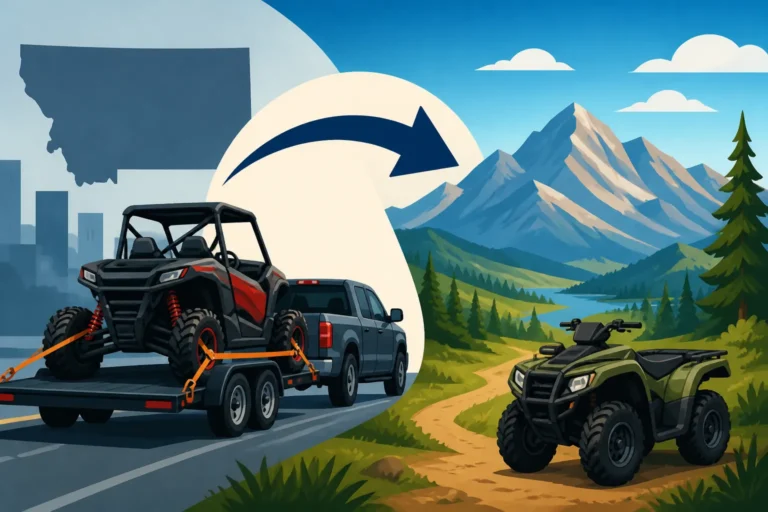
Welcome to Montana! If you’ve just moved here, or you've bought a machine out-of-state and are bringing it back to Big Sky Country, you’ll follow a process similar to a private party sale, but with a few extra steps. Montana wants to ensure that the machine is legitimately yours and that any previous titles are properly cancelled or transferred. The core idea is to convert your out-of-state title into a Montana title and get your permanent registration.
Here are the documents you'll need:
- Out-of-State Title (properly assigned): Just like a Montana title, the previous owner (or you, if it's already in your name from another state) must have properly signed off on the title. Make sure all fields for seller information, odometer disclosure (if required by that state), and signatures are complete. The more complete this is, the smoother your Montana transition will be.
- Bill of Sale: This is still crucial, especially if you just purchased the machine. It provides a clear transaction record. Make sure it has all the details mentioned above. Utilizing a robust bill of sale template, perhaps one found on LawDepot, can help ensure all bases are covered when dealing with an out-of-state transaction.
- Proof of Montana Residency: You'll need to show you are now a Montana resident, typically with a Montana driver's license or another form of state-issued ID. [Montana Registration for a New Resident] often details what qualifies.
- VIN Inspection (potentially): Some county treasurers or law enforcement agencies may require a physical VIN inspection for machines coming from out of state, especially if there's any ambiguity in the paperwork or if the state it came from has different titling conventions. This helps verify the machine's identity and ensures it's not stolen. It's wise to call your local county treasurer's office ahead of time to ask if this is a requirement for your specific situation.
- Application for Montana Title and Registration: You'll complete this form at the treasurer's office, providing your new Montana address and the machine's details.
It's always a good idea to bring copies of everything, even if you have the originals. This can be helpful for your own records or if the treasurer's office needs to retain a copy for any reason.
What to Do When Key Documents Are Missing
Life happens, and sometimes, despite everyone’s best intentions, key pieces of paperwork go missing. Perhaps the previous owner can’t find the title, or a crucial signature is missing from a bill of sale. While it can add a layer of complexity, it's often not an insurmountable obstacle. The Montana County Treasurer's office deals with these situations regularly, but being prepared for the extra steps can save you a lot of grief. For general help, you might consult [Titling an OHV in Montana] to see basic requirements.
| Document Type | Required For | Key Information Needed | What to Do if Missing |
|---|---|---|---|
| Certificate of Origin | New Machines (from dealer) | VIN, Make, Model, Year, MSRP, Dealer Info | Contact dealer for duplicate; if very old, may need other proof. |
| Original Title | Used Machines (any source) | VIN, Owner Names, Lien info, Odometer (if any) | Seller applies for [Replacing a Lost Montana Title]; or bonded title option. |
| Bill of Sale | All Purchases | Buyer/Seller Names, Date, Price, OHV Description, VIN | Create one with seller; if seller unavailable, affidavit of purchase. |
| Application for Title & Reg. | All OHVs | Your Info, OHV Info, Signatures | Filled out at Treasurer's office. |
| VIN Inspection | Some Out-of-State / Special | Verification of VIN against machine | Arrange with law enforcement or county official. |
Missing Titles or Certificates of Origin
This is probably the most common and often most frustrating hurdle. You've bought a machine, but the seller simply doesn't have the title or the Manufacturer's Certificate of Origin (MCO). While it's best practice to never buy a machine without a title, sometimes circumstances lead us there.
If the seller has lost the original Montana title, the easiest solution is for them to apply for a duplicate title before the sale is finalized. They can do this at their local county treasurer's office. Once they receive the duplicate, they can then properly sign it over to you. This might delay your purchase by a few weeks, but it’s the cleanest way to ensure a smooth transfer. If you've already bought the machine and the seller is no longer cooperative or reachable, it becomes much more difficult. In such cases, you might be looking at applying for a bonded title, which is a process to prove ownership without a traditional title, involving a surety bond. This is a more involved legal process and you would need to discuss it with your county treasurer's office directly.
For an MCO for a brand-new machine, if the dealer misplaced it, they are obligated to provide you with a duplicate or assist in getting one from the manufacturer. Always follow up with the dealership immediately if this document is missing.
Dealing with Incomplete or Incorrect Information
Picture this: you get to the county treasurer's office, you hand over your meticulously collected stack of papers, and they point to a blank line on the title where a signature should be, or an incorrect VIN on the bill of sale. It's a nightmare scenario! Incorrect or incomplete information is a major reason for rejection.
Here are common issues and how to approach them:
- Missing Signatures: If the seller failed to sign the title, the bill of sale, or any other required document, you're usually stuck. You'll need to track down the seller and have them complete the missing signature. There are very few workarounds for this, as the signature verifies the transfer of ownership. This is why it’s critical to scrutinize all documents before you leave the seller.
- Incorrect VIN: A mismatched VIN on any document (title, bill of sale, or application) compared to the actual VIN on the machine is a non-starter. You must have accurate VINs across all paperwork. If it’s an error on a bill of sale, you and the seller would need to correct it and initial the change, or ideally, create a new, corrected bill of sale. If the VIN is wrong on the title itself, that’s a much bigger problem, likely requiring the seller to rectify it with the state or seek a corrected title. For example, [Fixing a Wrong VIN on a Montana Title] shows this can be a complex process.
- Ersures or Alterations: Titles and MCOs are legal documents, and any sign of alteration or erasure will make the county treasurer extremely suspicious, and they will likely reject the document. If a mistake was made by the seller, they should apply for a corrected or duplicate title rather than attempting to "fix" the original.
When in doubt, and especially if you're dealing with a private sale, consider drafting your bill of sale using a professional template. Websites like LawDepot offer templates that guide you to include all necessary fields, minimizing the chances of leaving out crucial information or making common errors. This proactive step can save you countless headaches down the line.
The Importance of the VIN
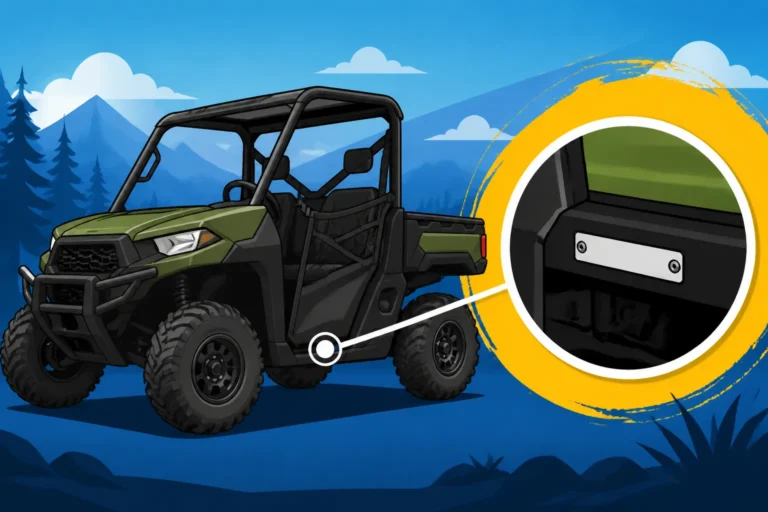
The Vehicle Identification Number (VIN) is like your OHV's fingerprint – it's unique, permanent, and identifies your specific machine. It's typically located on the frame, often near the front wheels, or on the engine casing for some ATVs, or on the frame near the driver's seat for UTVs. [Where a Side-by-Side Hides Its VIN] is a good resource to help you locate it.
The county treasurer uses the VIN to confirm the machine's identity, check for any liens (like an outstanding loan), and ensure it’s not reported stolen. Every document you present – the Certificate of Origin, title, bill of sale, and application for title – must have the exact same VIN. Any discrepancy, even a single digit, will halt your process immediately. Always visually verify the VIN on the machine against all your paperwork before heading to the treasurer's office. This simple step can prevent immense frustration. Also, it's wise to run the VIN through a check like a stolen vehicle database before buying from a private party. [Checking a Used Quad for a Theft Report] is a crucial step for any buyer.
Disclaimer
This article is for general informational purposes only and does not constitute professional advice. Laws, prices and regulations vary by location and change over time. Consult a qualified professional for guidance on your specific situation.