Where to Find the VIN on a Polaris Ranger
Oh, the elusive VIN! If you’ve ever found yourself crawling around your Polaris Ranger, wiping away mud, grease, or just plain old trail dust, squinting in the dim light trying to locate that all-important Vehicle Identification Number, you’re definitely not alone. It’s a common frustration that can turn a simple task into a major scavenger hunt. This guide is here to shed some light on the usual hiding spots for your Ranger's VIN, why it’s so critical, and some practical tips to help you find it without resorting to turning your machine upside down.
The Critical Role of Your Polaris Ranger's VIN
Before we dive into the nitty-gritty of where to find this mysterious string of characters, let’s talk about why it matters so much. It's more than just a number; it's the unique identifier for your specific machine, much like a social security number for a person. Without it, you’re going to run into a whole host of headaches, especially here in Montana when you’re trying to get out and enjoy our incredible trails.
Legal Requirements and Ownership Verification
In Montana, as with most places, the VIN is absolutely paramount for official purposes. When you head to your county treasurer's office to [Titling an ATV at a Montana County Treasurer] or register your machine, they'll demand that VIN. It’s how they verify that the machine is indeed yours and that you have the legal right to register it. Without a clear and legible VIN, you might as well be trying to register a ghost. It's also crucial for proving ownership if you ever need to sell your machine or if, heaven forbid, it gets stolen. Having proper documentation, including the VIN, is your best defense. When preparing to buy or sell, services like LawDepot can help you generate a bill of sale that explicitly includes the VIN, protecting both parties in the transaction.
Beyond basic registration, the VIN is recorded on your title, which is the ultimate proof of ownership. If you're ever involved in a dispute over a machine's ownership, that VIN on the title is your undisputed evidence. It’s the linchpin that connects you to your Polaris Ranger in the eyes of the law, ensuring that everyone knows who the rightful owner is. Without it, verifying who legally owns a machine can become a tangled mess, especially if you’re buying a used side-by-side from a private party who might not have all their ducks in a row.
Maintenance, Parts, and Recalls
Think of the VIN as your Ranger's genetic code. When you’re trying to order specific parts, especially for older models or those with unique configurations, the VIN is often the fastest and most accurate way for a parts counter person to identify exactly what you need. Polaris, like all major manufacturers, uses the VIN to track production batches, specific components, and any potential recalls. Trying to describe your machine’s exact year, model, and engine type without a VIN can lead to frustrating guesswork and ordering the wrong part.
A quick call to your local Polaris dealer with your VIN in hand can save you immense amounts of time and hassle. They can pull up schematics, identify the precise version of your machine, and ensure you get the right brake pads, belt, or spark plugs the first time. Moreover, if Polaris issues a safety recall for a component on your specific model, the VIN is how they track down affected machines and notify owners. Missing out on a crucial safety update because you couldn't locate your VIN is a risk you definitely don't want to take while out on the Montana trails.
Deterring Theft and Aiding Recovery
This is a big one, especially in the vastness of Montana where machines can sometimes disappear without a trace. A prominently displayed and properly registered VIN is a powerful deterrent to theft. Thieves often target machines with obscured or removed VINs because they are harder to trace and easier to sell on the black market. Having your VIN registered with the state means your machine is on record, making it far less appealing to opportunists.
Should the unthinkable happen and your Polaris Ranger goes missing, the VIN becomes the single most important piece of information for law enforcement. It allows them to enter your machine into national databases for stolen vehicles, making it identifiable across state lines. Without that VIN, recovering your machine becomes exponentially harder. It’s also what law enforcement will use if they find an abandoned machine and need to identify its owner. They’ll run the serial number first, and if it comes up stolen and matches yours, you might just get your beloved Ranger back. Always record your VIN in a safe place, like your home office, and even keep a copy with your vehicle registration papers.
Common Hunting Grounds for a Ranger VIN
Alright, let's get down to business. You know why you need it, now let’s talk about where you’re most likely to find it. Polaris is pretty consistent with their VIN placements across different models and years, but there can be subtle variations. The key is knowing the primary areas to check.
The Main Frame Stamping
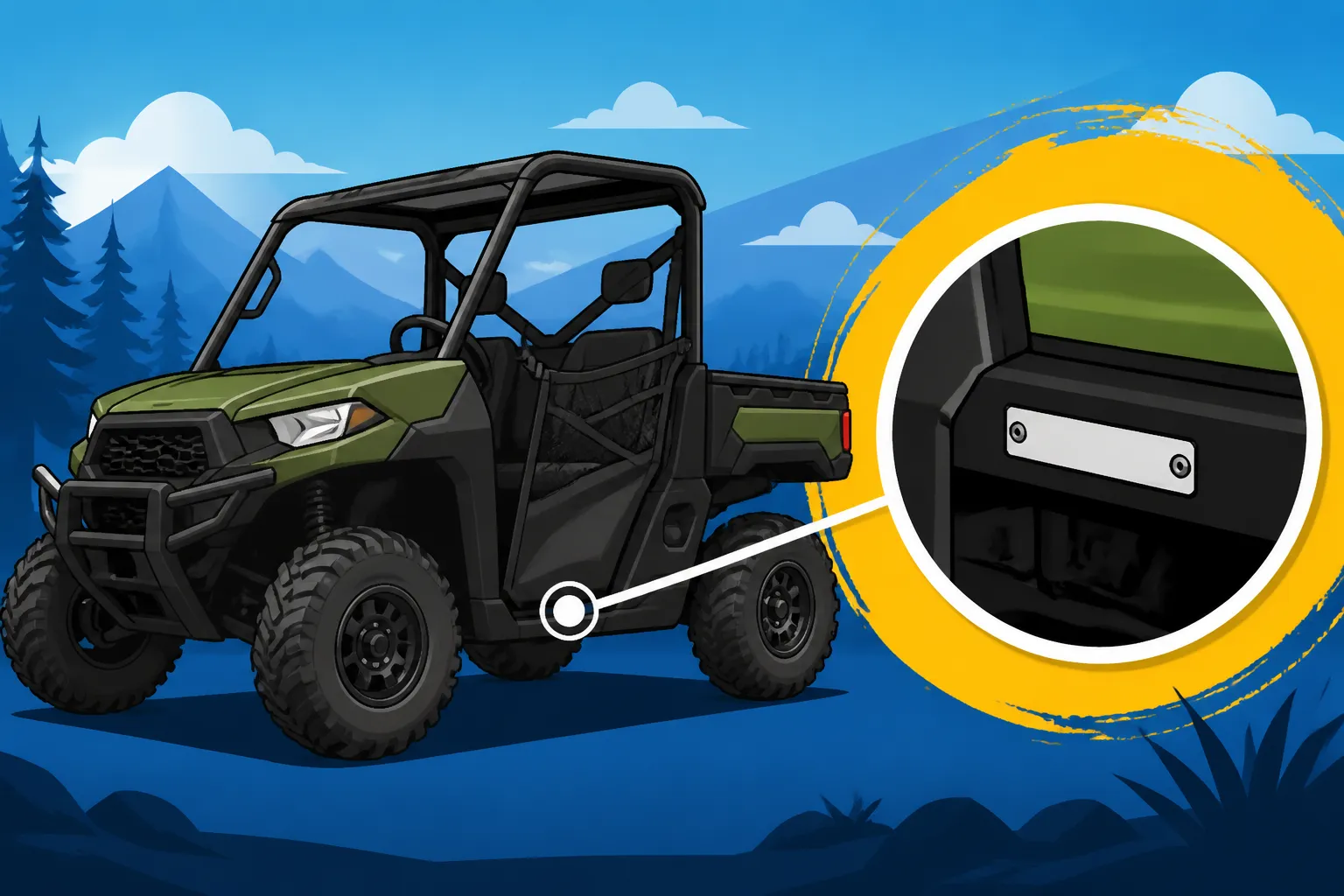
This is the holy grail, the most common and often the most reliable place to find your VIN. Polaris typically stamps the VIN directly onto the frame of the machine. For many Polaris Ranger models, you'll want to look on the front left side of the frame, usually near the front wheel well or suspension mount. Imagine standing at the front of your Ranger and looking towards the driver's side front tire. Follow the main frame rail up from the wheel hub. The VIN is often stamped into the metal itself, not just a sticker.
Sometimes it's just below the driver's side front fender, tucked away where dirt and debris can accumulate. For some older or specific utility models, it might be found on a crossmember or another structural part of the frame, often still on the left side. It’s designed to be in a relatively protected, yet accessible, location. If you’re looking at a used machine, this is the first place to check, as it’s generally the hardest for anyone to tamper with without leaving obvious signs. This is especially true when considering a [Proof of Ownership for a Montana Title] and ensuring its legitimacy.
Engine Case and Other Component Tags
While the frame is the primary location, Polaris often repeats the VIN or a partial serial number on other major components. The engine case is a common secondary spot. Look for a machined or stamped area on the engine block itself, often near where the transmission connects or on one of the cylinder heads. This isn't always the full 17-digit VIN, but it will be a unique serial number for the engine that can be cross-referenced.
You might also find a VIN-like tag or a serial number on other significant parts like the transmission housing, or sometimes even on the differential. These aren't usually the "official" VIN for registration purposes, but they can be incredibly useful for verifying that the major components are original to the machine, especially if you're [Buying a Used Side-by-Side in Montana: The Paperwork]. It's another layer of protection against buying a machine that might have had significant components swapped out or is a "parts machine" masquerading as a complete one.
Manufacturer Labels and Decals
Beyond the stamped numbers, Polaris also places VIN labels or decals on various parts of the machine. These are often easier to spot but can also be more prone to damage, fading, or even removal. Look for a sticker that typically contains the full 17-digit VIN, along with other manufacturing information like the Gross Vehicle Weight Rating (GVWR) and manufacture date.
Common spots for these labels include:
- Under the hood: Often affixed to the firewall or inside the engine compartment cover.
- Inside the glove box or console: Check the lid or side walls of storage compartments.
- On the driver's side door jamb (if applicable for some enclosed models): Similar to a car, but less common on open Rangers.
- Under the seat: Lift up the driver's or passenger's seat cushion and inspect the frame or plastic base.
These stickers are often white or silver with black text. While convenient, always cross-reference these with the frame-stamped VIN if possible, especially when considering a purchase. A sticker can be easily replaced or covered, whereas a stamped frame number is much harder to alter. If you find a discrepancy, that's a major red flag that warrants further investigation, as you might be dealing with a [Fixing a Wrong VIN on a Montana Title] situation or something more serious.
Here’s a quick overview of where to check first on your Polaris Ranger:
| Location Category | Specific Spot to Check | Notes |
|---|---|---|
| Primary Frame | Front left frame rail, near the driver's side front wheel | Most reliable. Often stamped into the metal. |
| Secondary Frame | Crossmembers or behind front bumper | Less common, but possible on some utility or older models. |
| Engine Block | Stamped area on the engine case, near transmission/heads | May be a serial number, not full VIN. Useful for cross-referencing. |
| Manufacturer Decals | Under the hood, inside glove box, under seats | Easy to spot, but can be damaged or removed. Verify with frame. |
Practical Strategies for Unearthing That Elusive Number
So you’ve got a general idea of where to look, but what if it’s still playing hide-and-seek? Sometimes that VIN is just stubborn, covered in years of grime, or tucked into a spot that seems impossible to reach. Don't throw in the towel just yet. With a few simple tools and a bit of patience, you can usually coax that number into view.
Essential Tools and Preparation
Before you start poking around, gather your gear. This isn't brain surgery, but a little preparation goes a long way. You'll want:
- A strong flashlight or headlamp: This is probably your most crucial tool. Even in daylight, shadows can hide those small stamped numbers.
- A stiff brush (wire brush if needed, but be careful): For caked-on mud or rust.
- Degreaser or an all-purpose cleaner: For oil, grease, or sticky residue.
- Clean rags or paper towels: To wipe away grime and cleaner.
- Safety glasses: Especially if you're using a wire brush or strong cleaners.
- A camera or smartphone: To take a picture once you find it!
- A piece of paper and a pencil/crayon: To do a "rubbing" if the stamping is faint.
It’s a good idea to park your Ranger on a flat, well-lit surface. If you have ramps or a jack, safely lifting the front end can give you better access, but always secure the machine properly. Don't rush into it; take your time to ensure your safety and avoid missing the number in haste.
Clearing Obstructions and Grime
This is where the elbow grease comes in. If the frame is covered in layers of mud, dust, or even rust, you'll need to clean it off.
- Start with a general wash: If your Ranger is particularly dirty, a quick spray with a hose can remove the loose stuff.
- Apply degreaser: For oily or greasy areas, spray a liberal amount of degreaser and let it sit for a few minutes to break down the grime. Then, use your stiff brush to scrub the area.
- Use a wire brush for rust: If the VIN is obscured by rust, a wire brush might be necessary. Be gentle but firm. You want to remove the rust from the numbers, not damage the numbers themselves. Excessive scratching can make the VIN harder to read.
- Wipe clean: After scrubbing, wipe the area thoroughly with a clean rag. Repeat the process if necessary.
- The "rubbing" trick: If the numbers are faint even after cleaning, place a thin piece of paper (like tracing paper or even a dollar bill) over the VIN area. Then, gently rub the side of a pencil or crayon across the paper. The raised edges of the stamped numbers should transfer onto the paper, making them visible. This old-school technique is surprisingly effective for faint stampings.
Remember, the goal is to reveal the VIN, not to erase it. If you're struggling with particularly stubborn rust, consider a rust converter or a very fine grit sandpaper, but always proceed with extreme caution. The last thing you want is to accidentally render your VIN illegible, which could cause significant issues when trying to [Registering an OHV in Montana] or prove ownership.
What to Do If You Still Can't Find It
You've cleaned, you've squinted, you've rubbed, and still nothing. Don't despair!
- Check your owner's manual: The manual that came with your Polaris Ranger should have a diagram or a specific instruction page detailing where the VIN is located for your model.
- Contact a Polaris dealer: Give them your model year and any other identifying information you have. They might be able to tell you the exact location specific to your machine. They deal with this all the time!
- Look for other serial numbers: Even if you can't find the main VIN, finding a serial number on the engine or transmission can sometimes help a dealer or official identify your machine's full VIN through their records. This can be critical for tasks like [Checking a Used Quad for a Theft Report] or simply ordering correct parts.
- Consider a mechanic: If all else fails, a powersports mechanic might know exactly where to look or have specialized tools to help. This might be a last resort, but if you're truly stumped, it's an option.
- Search online forums: Polaris Ranger forums are a treasure trove of information. Post your model and year, and there's a good chance another owner has faced the same challenge and can point you to the exact spot.
What to Do Once You've Found Your Ranger's VIN
Hooray! You’ve found it. But the job isn't quite done. There are a few crucial steps to take once that 17-digit code is in your possession to ensure you're prepared for whatever comes next, whether it's registration, a sale, or just future reference.
Recording and Verifying the VIN
The very first thing you should do is write it down – accurately. Double-check every single character. One wrong digit can lead to a world of trouble later on when you try to register your machine or prove ownership. Take a clear photograph of the VIN as well, both close-up and with some context, so you have a visual record. Store this information in multiple safe places: your owner’s manual, your personal vehicle files, a cloud storage service, and perhaps even a dedicated spreadsheet for all your powersports machines.
If you’re buying a used Polaris Ranger, this step is paramount. You need to ensure the VIN on the machine matches the VIN on the title and any bill of sale you receive. A discrepancy here is a massive red flag. You can use platforms like LawDepot to draft a robust bill of sale that precisely matches the VIN from the machine and title, giving both parties a clear legal record.
Cross-Referencing for Accuracy
Once you have the VIN, take a moment to understand what it tells you. The 17-digit VIN follows a global standard, and specific positions reveal information about the manufacturer, model year, assembly plant, and sequence number. You can often find online VIN decoders that will break down your VIN for you.
Using a decoder can help you verify:
- Manufacturer: Does it confirm it's a Polaris?
- Model Year: Does the VIN's model year match what the seller claims or what you believe your machine to be? This is especially important for determining the [Finding the Model Year in Your UTV's VIN].
- Model Type: Does the VIN correspond to a Polaris Ranger, or a different Polaris model?
If any of this information doesn't line up, you need to investigate further. It could be an honest mistake, or it could indicate something more serious, like a salvaged or rebuilt machine where VINs might have been inconsistently recorded. Always cross-reference the VIN with other available documentation and a reliable VIN decoder to ensure everything is above board.
Next Steps for Registration or Sale
With your verified VIN in hand, you're now ready for the next phase.
- Registration: If you're a new owner in Montana, head to your county treasurer's office with your title (or proof of ownership if titling for the first time), a valid ID, and your payment for registration fees. They’ll use that VIN to get your machine officially on the road (or trail!). You might be looking into [Montana County Treasurer OHV Registration] or learning about [What Permanent OHV Registration Includes].
- Sale: If you're selling your Polaris Ranger, having the VIN clearly documented on your bill of sale (again, LawDepot can assist with professional templates) and ensuring it matches the title is essential for a smooth transaction. The buyer will need this information for their own registration process. Be prepared to show the buyer the physical VIN on the machine and allow them to take a photo for their records. Clear paperwork prevents future disputes and makes the process straightforward for both parties. [Wording a Montana Sale Agreement] correctly, including the VIN, is a critical step. Remember, the machine's registration does not follow it when sold; the new owner will need to register it themselves.
Knowing where to find your Polaris Ranger’s VIN might seem like a small detail, but it’s a foundational piece of information for any OHV owner. Being prepared with this knowledge will save you time, stress, and potential legal headaches down the line, ensuring you can focus on what really matters: enjoying the wide-open spaces of Montana on your machine.
Disclaimer
This article is for general informational purposes only and does not constitute professional advice. Laws, prices and regulations vary by location and change over time. Consult a qualified professional for guidance on your specific situation.