What Montana’s OHV Safety Course Teaches
A safety course can feel like a box to check before riding, but its useful lessons go beyond passing a quiz. Montana OHV training helps riders think through machine control, terrain, protective equipment and emergencies. Knowing what the course covers—and what it does not—helps you prepare for the course and make safer choices on the trail.
What the Montana OHV safety course is meant to teach
An OHV safety course is intended to build the knowledge and judgment needed to operate an off-highway vehicle more safely. The exact sequence, format and detail depend on the approved course provider, so treat any topic list as a guide rather than a promise that every course uses identical lessons.
The core ideas apply to ATVs and UTVs, though the machines are not operated in the same way. A rider straddles an ATV; a UTV is driven from a seat, often with a passenger. Both can roll, lose traction, collide with obstacles or become difficult to control when a rider misjudges the terrain. A course gives riders a framework for spotting those risks before they become an emergency.
Topics commonly include:
- Preparing the rider and machine before setting out
- Understanding basic controls and safe operating habits
- Adjusting speed and position to the terrain
- Recognizing hazards and making conservative decisions
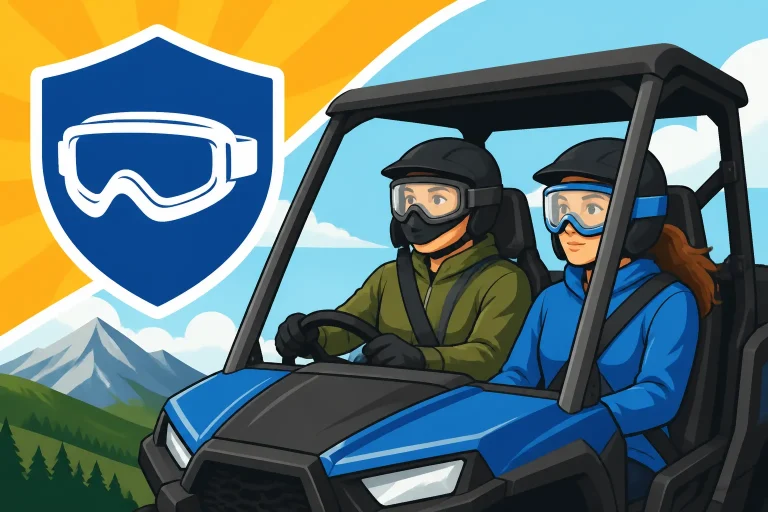
- Using protective equipment
- Following applicable rules and respecting other trail users
- Responding to a breakdown, injury or other emergency
The course is not a guarantee that a rider can handle every machine or trail. It cannot teach you the feel of a particular ATV or UTV, and it does not replace supervised practice. Nor does completing training automatically provide permission to ride on every public road or trail.
For current details on Montana’s education requirements, start with Montana OHV Safety Education Requirements. The rules about who must take a course can depend on the rider and the situation, so check Who Must Take the Montana Course and confirm the current requirements before riding.
Safety is a chain of decisions
The course is most useful when riders see safety as a series of choices, not a single piece of equipment or one-time certificate. A helmet matters, but so do speed, visibility, passenger choices, route planning and the decision to turn around when conditions change.
For example, a rider might start with a machine that fits the route, check that the controls work, and choose a pace that leaves room to react. If the trail becomes slick or visibility drops, the safest choice may be to slow down, stop or take another route. These decisions connect the course material to real riding.
| Learning area | What it helps a rider consider | How to apply it |
|---|---|---|
| Machine control | How the vehicle responds to steering, braking and acceleration | Practice in a controlled area before tackling difficult terrain |
| Terrain awareness | How loose ground, slopes, water and obstacles affect control | Look ahead and choose a speed and line suited to conditions |
| Protective equipment | How to reduce exposure to common riding hazards | Select equipment that fits, is appropriate for the ride and is in good condition |
| Rider judgment | How fatigue, passengers, speed and group pressure affect decisions | Set limits before the ride and pause when circumstances change |
| Emergency readiness | What to do if someone is hurt or a machine becomes disabled | Carry suitable supplies and make a plan for contacting help |
These are practical themes rather than a promise of a particular course outline. Check the approved provider’s description for the lessons, assessment and certificate process included in the course you plan to take. Approved Online Course Providers can help you identify available options.
How the course approaches machine control and terrain
A safety course can introduce basic operating principles, but it should not be mistaken for hands-on rider training. An online lesson may explain a concept or show examples; it cannot provide the physical practice needed to understand how your own machine turns, brakes or behaves on uneven ground.
Controls and suitable practice
A responsible first ride starts with understanding the controls on the specific machine. A course may teach riders to identify the controls, follow the owner’s instructions and check that important parts work before riding. The details differ between models, so the course cannot replace the owner’s manual or a machine-specific orientation.
Before riding on a trail, practice in an open, appropriate area with permission. Get familiar with starting, stopping, steering and changing speed at a pace that allows you to stay in control. A new rider should not learn basic braking or turning on a steep, narrow or crowded route.
For a UTV, occupants should know how to use the vehicle’s safety features and should remain seated and secured according to the manufacturer’s instructions. For an ATV, the rider needs to be able to reach and operate the controls comfortably. A course can explain why fit matters, but it cannot make an oversized or unsuitable machine safe for a particular rider.
Reading the route before committing
Terrain awareness is more than noticing the trail surface directly in front of the machine. Riders need to look ahead, assess what is beyond an obstacle and leave enough space to react. A patch of loose gravel, a rut or a sharp change in slope may affect traction and stability. Water can hide the depth or condition of a crossing. A blind corner can conceal another rider, a vehicle, livestock or debris.
A course can encourage riders to match their speed to visibility, surface and experience. That does not mean there is one safe speed for every trail. A speed that feels manageable on a broad, clear track may be too fast on a narrow route with rocks, dust or limited sightlines.
When a route looks beyond your skill or machine’s capability, stopping is a sound decision, not a failure. Riders can also check Montana Trail Difficulty Ratings when planning a route, while remembering that conditions can change after rain, snowmelt, fire or heavy use.
The course’s safety concepts are useful on public trails, but they do not determine where a machine is legally allowed to go. Before riding, check route access, closures and land-manager requirements. Montana Rules on Forest Service Roads covers a different question from machine-control training: whether a particular road is open to motorized use.
Passengers and group riding
Passenger safety is another area where judgment matters. A machine must be designed and equipped for the number of people on board, and riders should follow the manufacturer’s instructions. An extra person does not become safe simply because there is room to sit. A passenger can change how a vehicle handles and may shift position unexpectedly.
Group riding also calls for communication and spacing. Riders should agree on a route and a way to regroup if they become separated. Following too closely can leave little room to brake when the person ahead slows suddenly or encounters an obstacle. A group should set a pace that works for its least experienced rider rather than pressuring that rider to keep up.
A course can explain why these habits matter, but the group still needs to use them. If someone is uncomfortable with the route, the group should pause and adjust the plan instead of treating speed or difficulty as a test of nerve.
What it teaches about rules and responsible riding
Safety education commonly includes the idea that safe operation depends on following the rules that apply where you ride. That is different from memorizing every rule for every trail, road or land manager. The rules can vary with the location, machine, rider and type of access.
A course certificate does not, by itself, register an OHV, provide a trail permit, authorize road riding or grant access to private land. Riders may have separate obligations for registration, permits, equipment, age-related rules or permission to enter a particular area. For public-land requirements, see Montana Permit Rules on Public Land. If you are visiting from out of state, Montana’s Non-Resident Temporary Use Permit addresses a separate issue from safety-course completion.
Road use needs particular care. A road may be open to certain vehicles but closed to OHVs, or an OHV may need to meet additional conditions before it can be used on a permitted road section. Do not assume that a route shown on a map is open simply because another vehicle can travel there. Check the relevant local rules and current land-manager information before setting out.
Respecting land and other users
Responsible riding includes staying on routes open to your machine, avoiding damage to land and yielding appropriately to other users. Riding off an authorized route can cause damage, create a hazard and put access at risk. A safety course may reinforce the broader principle of knowing where you are and respecting restrictions, but riders need route-specific information for the area they plan to visit.
Other trail users may be moving at different speeds or may not hear an approaching machine until it is close. Slowing down, giving people space and avoiding sudden maneuvers can make a shared route safer. Dust can reduce visibility for riders behind you, so leave enough distance and avoid pushing the pace when you cannot see clearly.
For younger riders, adults should pay attention to both the rules and the child’s ability to operate the particular machine safely. Completing a course does not remove the need for supervision where it is required, nor does a certificate make a machine that is too large or powerful appropriate for a child. Check Montana Helmet Requirements Under 18 for a separate equipment-related topic.
Course completion is not an all-purpose credential
It is easy to confuse education, registration and permits because each may come up before the same ride. Keep them separate:
- Safety education develops knowledge and judgment. Whether a rider is required to complete it depends on the applicable rules.
- Registration or a trail pass concerns the machine and its eligibility for specified uses.
- A permit may be required for a particular user, machine or activity.
- Road authorization depends on the road and applicable requirements.
- Landowner permission is needed where access depends on private property.
One does not automatically replace another. Before riding, make a short checklist for the exact machine, rider and route. If the ride crosses different land or road types, check each part rather than relying on a single certificate or pass.
Preparing for the course and applying it on a ride
The best way to get value from the course is to connect each lesson to a real decision you might face. Instead of treating the material as facts to memorize, ask what you would do if a passenger felt unsafe, the route became more difficult than expected or your group lost sight of a rider.
Before taking the course
First, confirm that you have selected an approved course that meets the requirement relevant to you. Course options, access and certificate procedures can vary. Review the provider’s instructions before starting, and keep any completion documentation in a place you can retrieve later. For course formats and providers, see Approved Online Course Providers.
It can also help to have the owner’s manual or basic information about the machine you expect to ride. That makes it easier to connect general lessons about controls, capacity and checks to the actual ATV or UTV. If you are new to the machine, arrange an orientation or supervised practice separately; an online course is not a substitute.
Read carefully rather than clicking through. Pay attention to the situations used in examples: the unsafe choice is often not an obvious crash, but a small error in judgment such as continuing when tired, riding too fast for visibility or taking a passenger on a machine not designed for one.
Turn the lessons into a pre-ride routine
A consistent routine helps make course concepts usable. Before a ride, consider:
- Confirm the route is open and appropriate. Check access, closures and any requirements for the machine or rider.
- Check the machine. Follow the owner’s manual and look for obvious damage, low or damaged tires, loose parts or controls that do not operate as expected.
- Choose suitable equipment. Wear properly fitted protective gear and bring clothing suited to the weather and expected conditions.
- Set group expectations. Agree on the route, pace, regrouping points and what to do if someone needs to stop.
- Plan for delays or trouble. Carry supplies suited to the length and remoteness of the ride, and think through how you would contact help.
The course may not provide a customized checklist for every trip, so adapt the routine to the route and conditions. A short ride close to a staging area has different planning needs from a remote day ride. For a more detailed list of supplies, see What to Carry on a Remote Montana Ride.
Equipment advice also benefits from careful shopping. A course may help you identify what you need, but fit and suitability matter more than a product listing. If comparing helmets or other protective items online, including on Amazon, check the item’s specifications, sizing and applicable certification rather than relying on a photo or a broad product description.
Build skills gradually after course completion
Training is a starting point. Riders should increase difficulty gradually, ideally with an experienced person who can demonstrate good habits and give feedback. Begin on a route suited to the rider’s ability and machine. Practice at low speed before attempting more demanding terrain, and stop if the vehicle or rider is not responding confidently.
It is useful to separate unfamiliar challenges. A new rider does not need to learn a new machine, steep terrain, night riding and group navigation all on the same outing. Each added challenge makes it harder to identify the source of a problem and leaves less room to recover from an error.
Revisit course material when a lesson becomes relevant. If you are uncertain about passenger limits, riding in a group or what to do after a breakdown, check the provider’s materials and the machine’s manual before the next trip. Keep in mind that the most important skill may be recognizing when not to proceed.
What the course cannot teach or guarantee
A course can improve awareness, but it cannot remove the risks that come with riding a motorized vehicle off pavement. It does not guarantee that a rider will avoid a crash, make good choices under pressure or be prepared for every emergency. Experience, machine condition, terrain, weather and the decisions of other people all affect the ride.
It also cannot replace:
- Hands-on practice on the specific machine
- Instructions in the machine’s owner’s manual
- Current rules for the route and land manager
- Required permits, registration or other documentation
- Supervision or age-related requirements
- A suitable helmet and other protective equipment
- A realistic assessment of the rider’s fitness and ability
A successful course result is evidence of course completion, not proof of practical competence in every situation. A rider who passes may still need beginner-level routes and supervision. An experienced rider may still benefit from reviewing rules and changing habits that have become unsafe.
Nor does the course guarantee that rescue will be quick or that a phone will work in a remote area. Riders should plan for the possibility of injury, mechanical trouble or a route taking longer than expected. A course can encourage preparation, but the actual plan has to match the ride.
Treat safety education as one layer in a broader plan: understand the machine, wear suitable gear, check access, ride within your ability and be prepared to turn back. That is how course knowledge becomes useful well beyond the final quiz.
Frequently Asked Questions
Does the Montana OHV safety course teach hands-on riding?
Not necessarily. Course format and instruction vary by provider, and online training cannot provide practice on a physical machine. Arrange supervised, hands-on practice separately if you are new to riding or to a particular ATV or UTV.
Does passing the course let me ride any Montana trail?
No. Course completion does not automatically authorize access to a trail or road. Check whether the route is open and whether separate permits, registration or other requirements apply.
Is the course only about rules?
No. Safety education is intended to address practical judgment as well as rules, including machine operation, terrain, equipment and preparation. The emphasis and detail can vary by provider.
How can I find out whether I need the course?
Check the current Montana requirements for your circumstances and confirm that the course you choose is approved for the purpose. Requirements can depend on the rider and situation, so do not rely only on another rider’s experience.
Disclaimer
This article is for general informational purposes only and does not constitute professional advice. Laws, prices and regulations vary by location and change over time. Consult a qualified professional for guidance on your specific situation.