Noise Complaints in a Montana Small Town
Ah, the sound of a roaring engine on a beautiful Montana morning! For many of us, it’s music to our ears, signaling adventure and freedom. But for folks living in our charming small towns, that same sound can sometimes be a source of frustration, leading to those uncomfortable conversations about noise complaints. It's a tricky balance between enjoying our machines and respecting our neighbors, and it's a reality many of us face. This guide is all about navigating those tricky waters, helping you understand the rules, adopt good habits, and keep the peace so we can all continue to enjoy Montana's incredible landscapes.
Understanding Montana's OHV Noise Regulations
When you roll your ATV or UTV onto a street or trail in Montana, you're not just bringing your sense of adventure; you're also bringing your machine's sound signature. And while some noise is unavoidable, there are rules and expectations we need to be aware of. Ignoring them doesn't just risk a ticket; it risks souring relationships in the very communities we rely on for gas, food, and friendly faces.
State-Level Requirements for Exhaust and Spark Arresters
First things first, let's talk about the statewide baseline. Montana law is pretty clear: if you're riding an OHV on public lands, including designated roads and trails, your machine must be equipped with an adequate muffler and a spark arrester. An "adequate muffler" isn't just any old pipe; it's one designed to effectively reduce exhaust noise. This isn't just about being neighborly; it's about being legal. The state wants to ensure that our recreational activities don't become an unbearable nuisance for others enjoying the outdoors, or for residents near trailheads.
A common scenario might involve a rider who thinks their machine sounds "just right" until a game warden or sheriff's deputy pulls them over. Maybe they bought the machine used, and the previous owner had modified the exhaust without realizing it no longer met the legal definition of "adequate." Or perhaps a stock muffler has deteriorated over time, becoming louder. It's our responsibility as riders to make sure our mufflers are in good working order and actually doing their job of quieting things down. Similarly, a spark arrester is crucial for fire prevention, especially in our dry Montana summers. It's a safety device that prevents hot carbon particles from escaping the exhaust and igniting dry grasses or leaves, and it’s a non-negotiable component for trail riding. You can learn more about these requirements in our detailed article, [Mufflers and Spark Arresters in Montana].
Local Ordinances and Their Impact
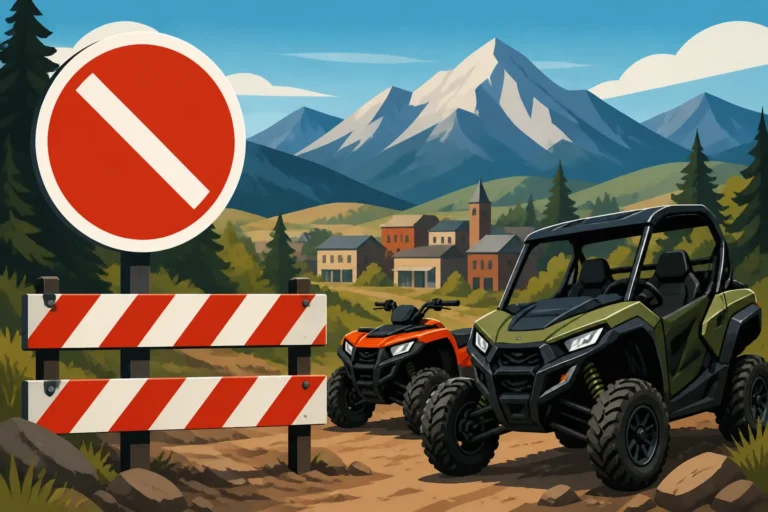
Now, here's where things can get a bit more localized and potentially confusing. While Montana has statewide regulations, individual cities, towns, and even counties have the authority to enact their own ordinances that might be more restrictive than state law. This means that what's perfectly legal on a forest service road miles from town might land you a citation if you're riding it down Main Street in a quiet mountain community. These local rules can set specific decibel limits for vehicles operating within town limits, or they might restrict the hours when OHVs can be ridden on certain streets.
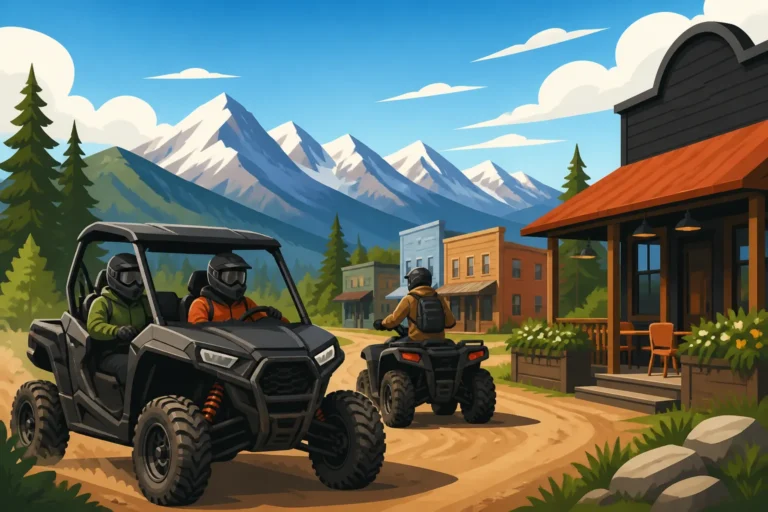
Imagine pulling into a charming small town after a long day on the trails, ready to grab a bite. Your machine is perfectly legal for the forest, but you're not aware that the town has an ordinance prohibiting vehicles over a certain decibel level on its streets between 8 PM and 7 AM. You innocently rumble through town to your lodging, and suddenly, you've got a disgruntled resident calling the sheriff. It's a frustrating situation for everyone involved. That's why it's incredibly important to do a little homework before you visit, checking for [Montana City Streets and Municipal Ordinances] or even better, [Finding a Montana Town's OHV Ordinance]. A quick call to the local sheriff's office or town hall can save you a lot of grief and help you avoid unnecessary conflict.
Common Sources of OHV Noise and How to Mitigate Them
It’s easy to point a finger at a loud exhaust, but the truth is, noise from an OHV can come from several places, and it’s often a combination of factors. Understanding these sources is the first step to being a more considerate rider and avoiding those unwanted complaints. It's about being proactive, not just reactive.
Aftermarket Exhaust Systems
Let's be honest, many of us are drawn to the idea of a little more horsepower and a throatier rumble. Aftermarket exhaust systems promise both, and they can certainly deliver. However, this is also one of the biggest culprits when it comes to noise complaints. While some aftermarket options are designed with noise reduction in mind, many are built purely for performance and can easily push your machine's sound output well beyond legal limits, especially in residential areas. It's a real dilemma for riders: you want to customize your machine, but you don't want to annoy the locals or get a ticket.
Even if you install an aftermarket exhaust that claims to be compliant, it's crucial to understand that sound levels can vary based on engine type, riding conditions, and even how well the system is maintained. A brand like SuperATV, for instance, offers a wide range of accessories, and while they might have performance-enhancing exhaust components, it's always on the rider to ensure that any modification still meets Montana's legal requirements for street or public land use. Sometimes, simply adding a "quiet core" insert can make a world of difference, bringing your machine back into an acceptable range without completely sacrificing performance. For more in-depth information, you might want to read [Aftermarket Exhaust and Montana Trail Access]. The key takeaway here is: if you've got an aftermarket exhaust, be extra vigilant about your noise output, especially when you’re near homes or businesses.
Riding Habits and Etiquette in Residential Areas
Believe it or not, it’s not always the exhaust itself that’s the problem; often, it’s how we ride. Even a machine with a perfectly compliant stock exhaust can sound incredibly loud if ridden aggressively. Picture this: you're cruising through a quiet neighborhood on your way to the trailhead. If you're speeding, rapidly accelerating, or constantly revving your engine at stop signs, you're amplifying every decibel your machine makes. This kind of riding doesn't just create unnecessary noise; it creates a perception of recklessness and disrespect, which is exactly what we want to avoid.
The simple act of slowing down, using smooth throttle inputs, and avoiding unnecessary engine revving can dramatically reduce your machine's perceived noise level. Think of it as stealth mode for your OHV. When you're passing through a residential area, treat it like a school zone: go slow, be mindful, and keep your noise profile as low as possible. And speaking of timing, roaring through town at 6 AM or 10 PM is a surefire way to earn the ire of sleepy residents. Try to plan your entries and exits from towns during more reasonable hours. Our article on [Speed on a Montana County Road] provides excellent context for responsible riding behavior in shared spaces. Being a good ambassador for the sport means being a good neighbor first.
Machine Maintenance and Wear
Sometimes, noise issues aren't about an intentionally loud setup but rather a maintenance oversight. Over time, mufflers can develop holes, exhaust gaskets can leak, or heat shields can come loose and rattle. These seemingly small issues can create irritating, often high-pitched or tinny noises that are far more grating than a deep exhaust rumble. What might sound like a minor annoyance to you over the hum of the engine could be a piercing irritation to someone trying to enjoy their backyard barbecue.
Regular maintenance checks are your best friend here. Take a few minutes before or after a ride to visually inspect your exhaust system for any cracks or loose parts. Listen for unusual rattles or hisses. Ensuring all components are securely fastened and in good repair can prevent a lot of headaches. It's not just about keeping your machine running smoothly; it's about making sure it operates as quietly as it's designed to. A well-maintained machine is a quieter machine, and a quieter machine means fewer complaints from those who share our beautiful Montana communities.
| Feature | Stock Exhaust (Typical) | Performance Aftermarket | Quiet Aftermarket (Example) |
|---|---|---|---|
| Noise Level | Moderate, generally within legal limits | High, often exceeds legal limits | Low to Moderate, designed for compliance |
| Legal Compliance | Usually compliant for public land | Often not street/trail legal | Generally designed to be compliant |
| Power Output | Standard, balanced for all-around use | Increased, focused on top-end | Similar to stock, slight gain possible |
| Cost | Included with machine | Varies, usually mid-to-high price | Varies, often similar to performance |
| Maintenance Impact | Standard, durable | May require more frequent packing | Standard, durable |
| Community Impact | Minimal, less likely to draw notice | High potential for noise complaints | Low, promotes harmonious riding |
Dealing with Complaints and Promoting Harmony
Let's face it, receiving a noise complaint is never fun. It can feel like a personal attack, or that someone is trying to spoil your fun. But understanding how these complaints typically unfold, and more importantly, how to proactively foster good relationships, is key to ensuring that OHV access remains welcome in our beloved Montana towns.
The Process of a Noise Complaint
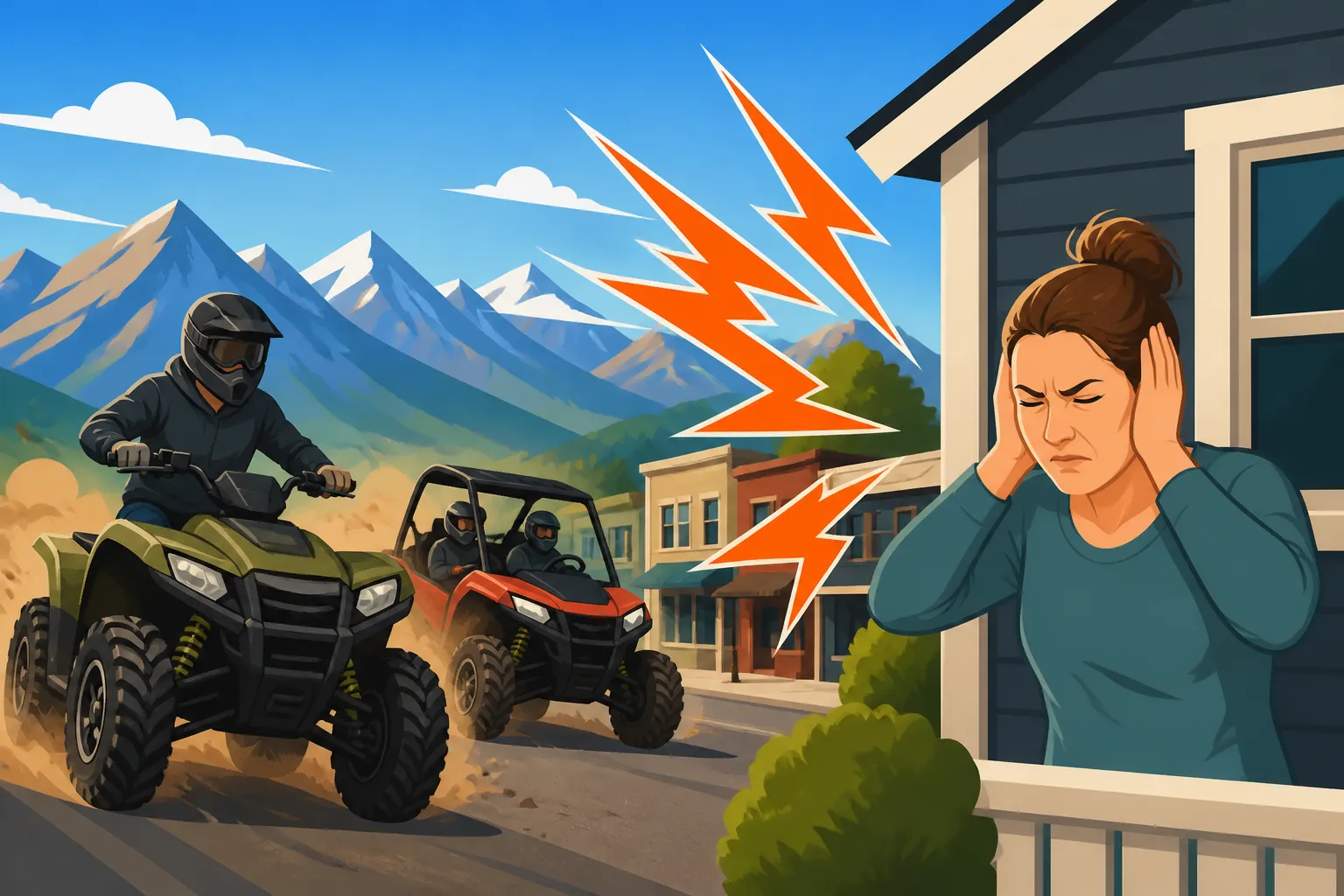
In a small town, a noise complaint often starts with a neighbor simply being annoyed. They might tolerate it for a while, but if the noise is frequent, excessive, or at inconvenient hours, their patience will wear thin. Their next step is usually to contact local law enforcement—the county sheriff or town police. When an officer responds, they might investigate by listening, observing your riding habits, or in some cases, even using a decibel meter to get an objective reading. It's a formal process that starts with an informal annoyance.
What happens next can vary. You might receive a friendly warning, a request to adjust your riding behavior, or if the violation is clear and repeated, a citation. Fines for noise violations can range, and they can be tied to broader infractions like [Montana Fines for Illegal Road Riding] if your noise is part of a larger issue with how you're using your machine on town streets. It's important to remember that these officers are simply responding to a resident's concern and enforcing local rules. Approaching the situation with respect and a willingness to understand can go a long way, even if you disagree with the complaint.
Being a Good Neighbor and Ambassador for OHV Use
The best way to deal with complaints is to prevent them in the first place. This means embracing the role of a "good neighbor" and an "ambassador" for responsible OHV use. When we ride through a Montana town, we're not just representing ourselves; we're representing every ATV and UTV rider out there. One loud, inconsiderate rider can tarnish the reputation of the entire OHV community.
Here are a few ways to be a good ambassador:
- Ride Responsibly: As mentioned, slow down, use smooth throttle control, and avoid unnecessary revving, especially near homes, businesses, and parks.
- Respect Quiet Hours: Be particularly mindful of noise levels early in the morning, late in the evening, and on Sundays when people are trying to relax.
- Use Designated Routes: If a town has specific OHV routes, stick to them. These routes are usually established to minimize impact on residential areas. Check out articles like [What Montana Requires on an OHV Road Ride] for more info.
- Engage with the Community: Consider joining a local OHV club. These groups often work with towns and land managers to maintain trails and promote responsible riding. They can also be a voice for riders in discussions about local ordinances.
- Apologize if Necessary: If someone approaches you with a complaint, a sincere apology and an offer to be more mindful can often de-escalate the situation faster than defensiveness.
By demonstrating respect and consideration, we build positive relationships with the local communities that welcome us and our machines.
Advocating for OHV Access while Minimizing Impact
Sometimes, the issue isn't just about individual behavior; it's about systemic challenges between OHV use and community expectations. This is where collective action and advocacy come into play. OHV user groups and enthusiasts can play a vital role in working with local town councils and county commissioners to establish clear, mutually agreeable rules for OHV access. This might involve advocating for designated quiet zones, clear signage for specific routes, or even contributing to trail maintenance efforts within town limits.
For example, a local OHV club might approach the county commissioners to discuss [Asking County Commissioners to Open a Road] for OHV use, but with a well-thought-out plan that addresses noise concerns and outlines specific hours or routes to minimize disruption. It's about showing that the OHV community is willing to be part of the solution, not just a source of the problem. Many small Montana towns benefit economically from OHV tourism, and by working together, we can ensure that these benefits continue while preserving the quality of life for residents. After all, the fees we pay for our registrations and permits often go back into improving trails and access through programs like [Montana State Parks Grants for Trails], so we have a vested interest in positive community relations. This collaborative approach fosters understanding and ensures that our beloved Montana trails remain accessible for generations to come.
Disclaimer
This article is for general informational purposes only and does not constitute professional advice. Laws, prices and regulations vary by location and change over time. Consult a qualified professional for guidance on your specific situation.