Riding Montana Trails With Kids
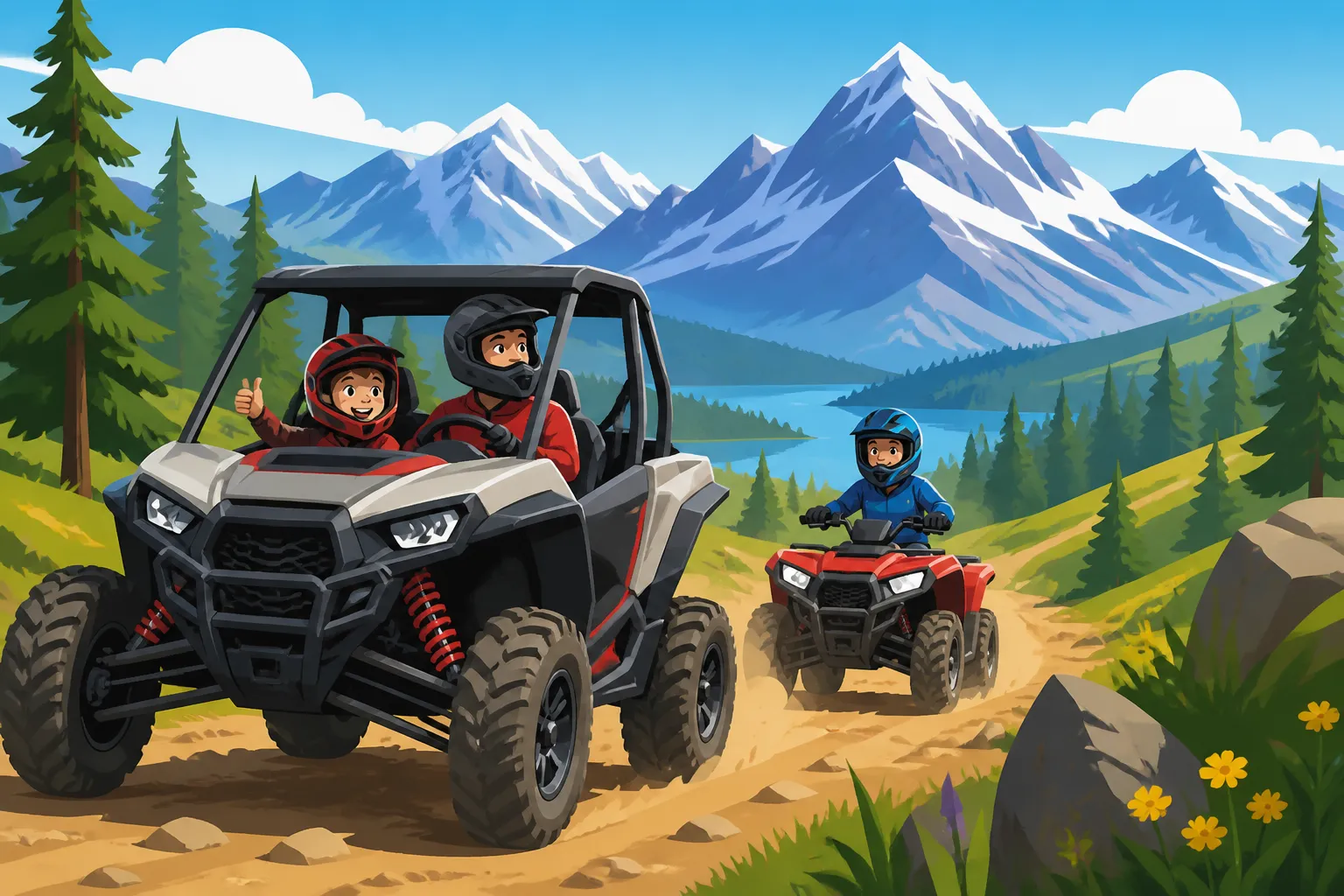
Taking kids on Montana ATV and UTV trails can be a wonderful family adventure—until a route turns out to be too long, too rough, or unsuitable for your machine. This guide helps you choose a manageable ride, check youth and equipment requirements, plan for changing conditions, and give everyone a safer, more enjoyable day outdoors.
Choose a trail that fits your child and machine
Start with the least demanding route
A child’s first ride does not need a dramatic overlook or a full-day loop to feel memorable. A shorter, familiar route with places to stop is often a better introduction than a steep climb or a long stretch of remote trail. That gives young riders time to get used to the sounds, movement, dust, and pace of an OHV ride without feeling trapped in the seat for hours.
Look for routes with room to pull over safely and an easy way to turn around if someone is tired or uncomfortable. Gravel roads and smoother, wider routes may be more manageable than narrow trails with loose rocks, sharp drops, deep ruts, or frequent water crossings. A route that feels simple to an experienced adult may still be challenging for a child who is new to riding.
Montana riding areas vary widely, and trail conditions can change with weather, maintenance, and seasonal closures. Use route descriptions and maps to make an initial plan, then check current information from the agency or land manager responsible for the area before you go. Guides such as Montana Trails Suited to Beginners and Family-Friendly Montana OHV Trails can help you think about what makes a route more approachable, but the family’s experience and the day’s conditions matter just as much.
Match the route to the vehicle’s width and design
Before setting out, make sure the route allows your specific machine. Some trails have width limits, and a wide side-by-side may not be allowed or may be difficult to maneuver on a route designed for smaller vehicles. A machine that fits on a trail can still feel cramped on tight turns, steep side slopes, or sections with low branches.
Check the machine’s width against the route’s rules and look for the posted limits or official map information. Montana Trails That Suit a 50-Inch Machine is a useful starting point if you are riding a narrower vehicle, but do not assume that a trail’s general reputation means every machine is permitted. A route can also have restrictions that apply only to certain sections.
An app such as onX Offroad can help you explore potential routes and understand how they connect, but it should not replace the official Motor Vehicle Use Map or current agency notices. Confirm that the route is open to your vehicle type and that the map information matches the land manager’s rules. Reading a Montana Motor Vehicle Use Map explains why those official designations matter.
Plan around real family riding time
A route that looks short on a map may take much longer once you add stops, slower travel, dust, traffic, and breaks. Kids may want to stop for water, adjust a helmet, or simply stretch their legs. Build those pauses into the day rather than treating them as delays.
For a first family outing, plan a conservative ride and make it easy to shorten. Set a turnaround time before leaving, especially if the route is out-and-back. If you reach that time earlier than expected, head back while everyone still has energy. Finishing with a little left in the tank makes it easier for children to look forward to the next trip.
| What to check | Why it matters for a family ride |
|---|---|
| Route length and escape options | A shorter route with a clear turnaround is easier to adjust |
| Trail width and vehicle restrictions | The machine must be allowed and able to maneuver safely |
| Elevation, surface, and obstacles | Rough or steep terrain can overwhelm a new rider |
| Current closures and conditions | Snow, mud, fire activity, or maintenance may change access |
| Fuel and stopping points | Kids need breaks, and remote routes may have few services |
| Cell coverage and backup plans | You may need another way to communicate or navigate |
Prepare children, equipment, and paperwork
Check youth rules before riding
Rules can depend on the child’s age, where the machine is being operated, and whether the route is a public road, trail, or private property. Before the trip, review the applicable requirements for youth riders, safety education, supervision, helmets, and any permits or passes. The information in Montana Safety Education Requirements and [Montana Age Rules for Riders Under 16] can help you identify questions to confirm before you leave.
Do not assume a child is ready to operate a machine just because they can reach the controls. They need to understand how to start, stop, steer, and respond to changing terrain, and they must be able to follow instructions consistently. If you are not confident they can control the vehicle safely, have them ride as a passenger only in a machine designed and equipped for passengers.
Before riding, explain simple rules in language your child can remember: stay with the group, keep a safe distance, stop when the adult signals, and never leave the trail. Agree on a clear hand signal or other communication method in case engines and helmets make it hard to hear one another.
Use properly fitting protective equipment
A helmet that is too loose or uncomfortable can become a distraction, so check the fit before the ride—not at the trailhead when everyone is eager to leave. Make sure the helmet is appropriate for the activity, sits securely, and has a fastened chin strap. Review Montana Helmet Requirements Under 18 for relevant rules, and confirm that each rider’s equipment meets the requirements that apply to the route.
Eye protection matters too, especially when the trail is dusty or another machine is ahead. Goggles or suitable protective eyewear can help keep grit, bugs, and branches out of a rider’s eyes. Dress children in long sleeves, long pants, gloves, and sturdy footwear. Bring an extra layer: a warm morning can turn into a chilly ride when the route climbs or the weather shifts.
For a UTV, check seat belts, doors or nets, and the manufacturer’s passenger requirements. Make sure every child has a seat intended for a passenger and can sit properly restrained. Never assume that a child can safely ride on someone’s lap or in an improvised spot. If a helmet, belt, or passenger position does not fit correctly, change the plan rather than trying to make it work.
Pack for the child, not just the machine
A family ride often goes more smoothly when children have a small personal pack with water, a snack, and an extra layer. Keep the load easy to manage, and make sure items are secured so they cannot fall onto the trail or interfere with the vehicle. Bring more water than you think you will need, particularly on a warm day or a route with little shade.
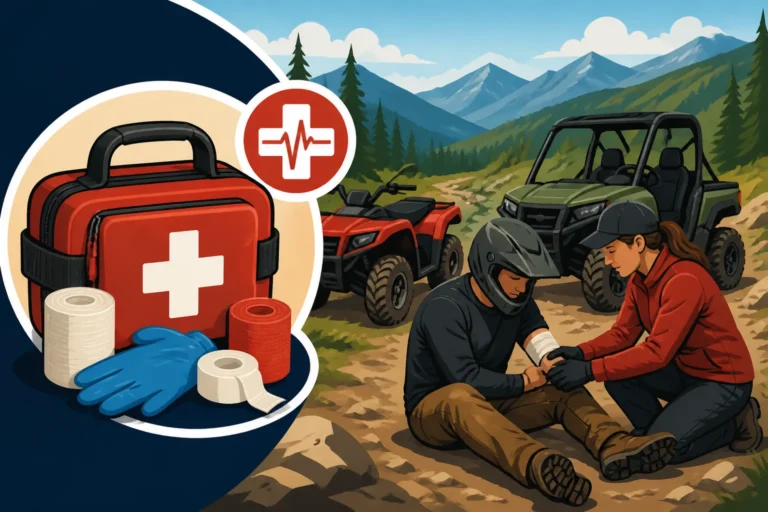
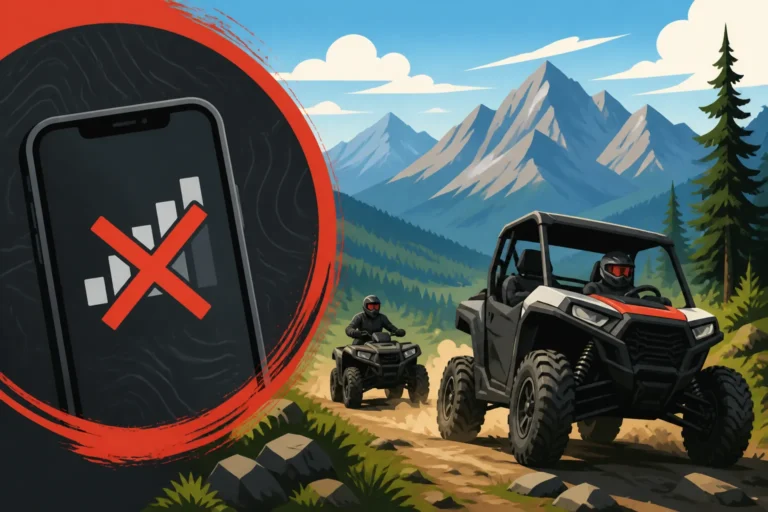
A basic first-aid kit, navigation backup, and tools suited to your machine are sensible additions. For a remote route, think through what you would do if the vehicle had a mechanical problem, someone became cold or hurt, or your group lost its way. What to Carry on a Remote Montana Ride offers a useful checklist mindset, while Cell Service in the Montana Backcountry is a reminder not to depend on a phone signal.
Give children a simple job, such as checking that their water bottle is packed or reminding the group to take a break. Small responsibilities can help them feel involved without putting them in charge of decisions they are not ready to make. Before moving, check that everyone is buckled or properly seated, their gear is secure, and the group knows where it is going.
Make the ride manageable from the trailhead to the turnaround
Check conditions and rules on the day
A route that was open and pleasant on a previous visit may not be suitable today. Snow, runoff, rain, mud, fire activity, maintenance work, or a temporary closure can change access and riding conditions. Check for current notices before driving to the trailhead and again if you are making a longer trip with several possible routes.
Use official land-manager information to confirm where motorized travel is allowed. A line on a general map or a route shown in an app is not by itself proof that riding is permitted. Tools such as onX Offroad can help with planning and orientation, but verify route status, seasonal rules, and vehicle restrictions with the responsible agency. Checking Montana Trail Status Before You Drive is especially useful when weather or seasonal access could affect your plans.
At the trailhead, take a few minutes to review signs, closures, and posted rules. If a route looks damaged, unusually muddy, or unsafe for a child, choose another option. Turning around is not a failed outing; it is a practical decision that can keep the day enjoyable and protect the trail.
Ride at the pace of the least experienced person
Keep the group together and leave enough space between machines for dust, braking, and unexpected stops. Avoid pressuring a child to keep up with faster riders. If one adult can ride behind the youngest or least experienced rider, that can make it easier to notice fatigue, loose gear, or uncertainty before it becomes a problem.
Stop in safe places rather than on blind corners, narrow sections, or steep slopes. During breaks, check whether children are thirsty, cold, hot, or uncomfortable. Kids may not always speak up quickly, especially when they are excited or do not want to disappoint the group. Ask directly and make it clear that anyone can request a pause or a return to the trailhead.
Keep instructions short while engines are running. A long explanation shouted over a motor is unlikely to stick. Before a tricky section, stop in a safe spot, explain what comes next, and decide whether the child should continue, ride with an adult, or wait in a safe location with appropriate supervision. Do not attempt an obstacle just because other riders have crossed it.
Choose Montana riding areas with a flexible plan
Montana offers a range of riding opportunities, but no trail system is automatically right for every family. Areas near communities such as Missoula, Billings, Bozeman, and the Flathead Valley may offer different combinations of access, terrain, and services. For example, families researching routes around Missoula can look into the Blue Mountain Recreation Area, while riders near the Flathead Valley may explore information about Wild Bill OHV trails. Check the official route map and current rules for the specific area before choosing a trail.
When comparing places, consider more than scenery. Ask whether the route suits your machine, how far it is from help, whether there are easy places to stop, and how quickly you can return to the trailhead. A beautiful but remote route may be a better choice for a later trip after your family has more experience.
An app such as onX Offroad can help you compare route options and keep track of your position, but download or carry useful navigation information before entering areas with limited service. Keep a paper map or another backup when practical, and tell someone where you plan to ride and when you expect to return. That simple plan matters most when the day does not go exactly as expected.
Build confidence without pushing past a child’s limits
Treat the first ride as a learning day
A child’s first outing is a chance to learn what they enjoy and what makes them uneasy. Begin with a calm explanation of the vehicle, protective gear, hand signals, and riding expectations. If the child is operating the machine, practise starting, stopping, and turning in a safe, permitted area before attempting a trail.
Keep the first ride short enough that the child can finish feeling successful. You might stop after a modest loop, have a snack, and decide together whether to continue. A child who is tired, frightened, or overwhelmed is less able to make good decisions, even if the route itself is not especially difficult.
Praise sensible choices, such as slowing down, asking for a break, or saying they are uncomfortable. Those are signs of good judgment, not weakness. Avoid turning the ride into a test of courage. Children who know they can speak up are more likely to tell you early when something feels wrong.
Watch for fatigue and changing conditions
Fatigue can show up as quietness, irritability, fidgeting, slow responses, or repeated requests to stop. A child may not connect those feelings to being tired or cold, so make breaks part of the plan instead of waiting for someone to ask. Offer water and a snack before energy drops, and check clothing when the temperature or wind changes.
Pay attention to changes in the trail, too. A dry road can become slick after rain, and a clear route can become difficult when dust reduces visibility. If visibility drops, slow down, increase spacing, and stop somewhere safe if needed. Do not let the group become separated in a cloud of dust.
If the route is getting harder, the weather is turning, or a child no longer feels comfortable, turn back while you still have options. Children remember how a ride ended. A calm early return can be a better family memory than pressing on until everyone is exhausted.
Make the day about the whole experience
Kids often remember the creek stop, wildlife tracks, picnic, or view as much as the trail itself. Plan time to look around from safe, permitted stopping areas, and remind children not to approach wildlife or wander away from the group. A relaxed pace gives everyone room to enjoy Montana rather than focusing only on reaching a destination.
After the ride, ask what felt fun and what felt difficult. Their answers can help you choose a better route next time, adjust the ride length, or improve the gear setup. If they found a particular section uncomfortable, treat that as useful information, not a reason to push them harder on the next outing.
A family ride does not need to cover a lot of ground to be worthwhile. When the route matches the child’s ability, the machine fits the trail, and everyone has a clear plan, even a short outing can build confidence and create a reason to come back.
Disclaimer
This article is for general informational purposes only and does not constitute professional advice. Laws, prices and regulations vary by location and change over time. Consult a qualified professional for guidance on your specific situation.