Montana Eye Protection Rules for Passengers
Montana passengers often ask whether they are legally required to wear goggles or other eye protection on an ATV or side-by-side. The answer depends on how and where the machine is being used. Montana does not set a general statutory eye-protection requirement for road use, but the state recommends protection on off-highway vehicles without a windshield.
What Montana Requires for Passenger Eye Protection
Montana Fish, Wildlife & Parks says Montana law does not specify a mandatory eye-protection requirement for operators and passengers of motorcycles and quadricycles on roads. The agency does recommend eye protection for operators of off-highway vehicles that are not equipped with a windshield.
That distinction matters: a recommendation is useful safety guidance, but it is not the same as a legal requirement. For passengers, the available rule does not create a separate mandate to wear goggles or glasses on a road ride. Nor does the stated recommendation mean that every off-highway passenger is legally required to wear eyewear. It is advice for riding conditions where a windshield does not protect the operator’s eyes.
A road ride and an off-highway ride may also involve different requirements for the machine and its occupants. For context, Montana Fish, Wildlife & Parks says helmets meeting DOT or Snell standards must be worn by people under 18 who operate or ride a motorcycle or quadricycle on streets or highways. That helmet rule is separate from the eye-protection question; satisfying one does not settle the other. For age-related helmet details, see Montana Helmet Rules for a Passenger Under 18.
| Riding situation | Montana eye-protection position | Practical takeaway |
|---|---|---|
| Motorcycle or quadricycle on a road | Montana Fish, Wildlife & Parks says there is no mandatory statutory eye-protection requirement for operators and passengers | Eyewear is not stated as a road-use legal requirement, but may still help protect exposed eyes |
| Off-highway vehicle without a windshield | Montana Fish, Wildlife & Parks recommends eye protection for operators | Passengers should also consider protection when dust, wind, insects, or debris can reach them |
| Off-highway vehicle with a windshield | The stated recommendation specifically addresses OHVs not equipped with a windshield | Check how much coverage the windshield provides; it may not block everything from the sides or above |
The road-use statement names motorcycles and quadricycles, while the recommendation refers to off-highway vehicles. Avoid treating the two statements as interchangeable or assuming that every vehicle is covered in the same way under every use. If you are unsure how a particular machine is classified or whether a different rule applies to your route, check with Montana Fish, Wildlife & Parks before riding.
It is also easy to confuse eye protection with a helmet rule. A helmet covers the head, while goggles, glasses, or a visor help shield the eyes. A helmet may have a face shield, but whether that is suitable depends on its design and whether it stays in place during the ride. When choosing gear for a young passenger, review both the helmet requirements and the specific passenger rules; Montana Rules for a Child Passenger covers a related issue.
Why Eye Protection Still Matters When It Is Not Required
Not having a legal mandate does not mean that exposed eyes are comfortable or well protected. Wind can make it difficult to keep the eyes open, and dust, insects, and small pieces of loose material can strike a rider’s face. On an open machine, those conditions can affect the passenger as well as the operator. The amount of exposure can change with the route, the weather, the machine, and the position of the passenger.
A windshield can reduce some direct airflow and debris, but it does not necessarily create a sealed barrier. Air may come around the sides or over the top. A passenger sitting behind the operator may also encounter dust kicked up by the machine in front, or by another rider in a group. In those conditions, eye protection can make it easier to see clearly and remain comfortable, even if Montana law does not require it.
Think about the ride rather than relying only on the label “windshield.” A short trip on a smooth, quiet route may expose passengers to different conditions from a longer ride on a dry, dusty trail. A windshield that blocks air for the operator may leave a passenger’s eyes exposed, especially if the passenger sits higher or farther back. If the route includes loose dirt, brush, or fast-moving air, choosing protective eyewear is a sensible precaution.
For an off-highway ride, this is especially relevant because the state’s recommendation is aimed at vehicles without a windshield. That guidance concerns operators, but passengers share the same environment and can face similar exposure. Riders can also check related public-land and route considerations in Riding an OHV on the Road in Montana and Montana Rules for Visiting Riders. Those topics do not replace the eye-protection guidance, but they can help clarify which rules apply to a planned ride.
Choosing Eye Protection for a Passenger
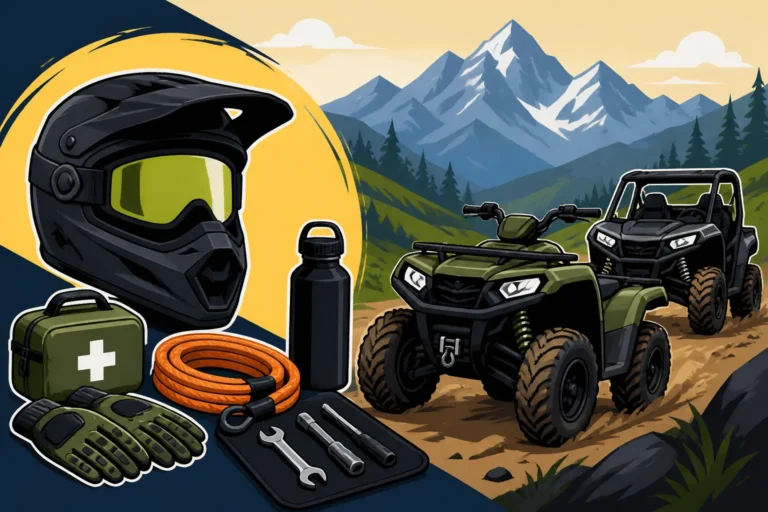
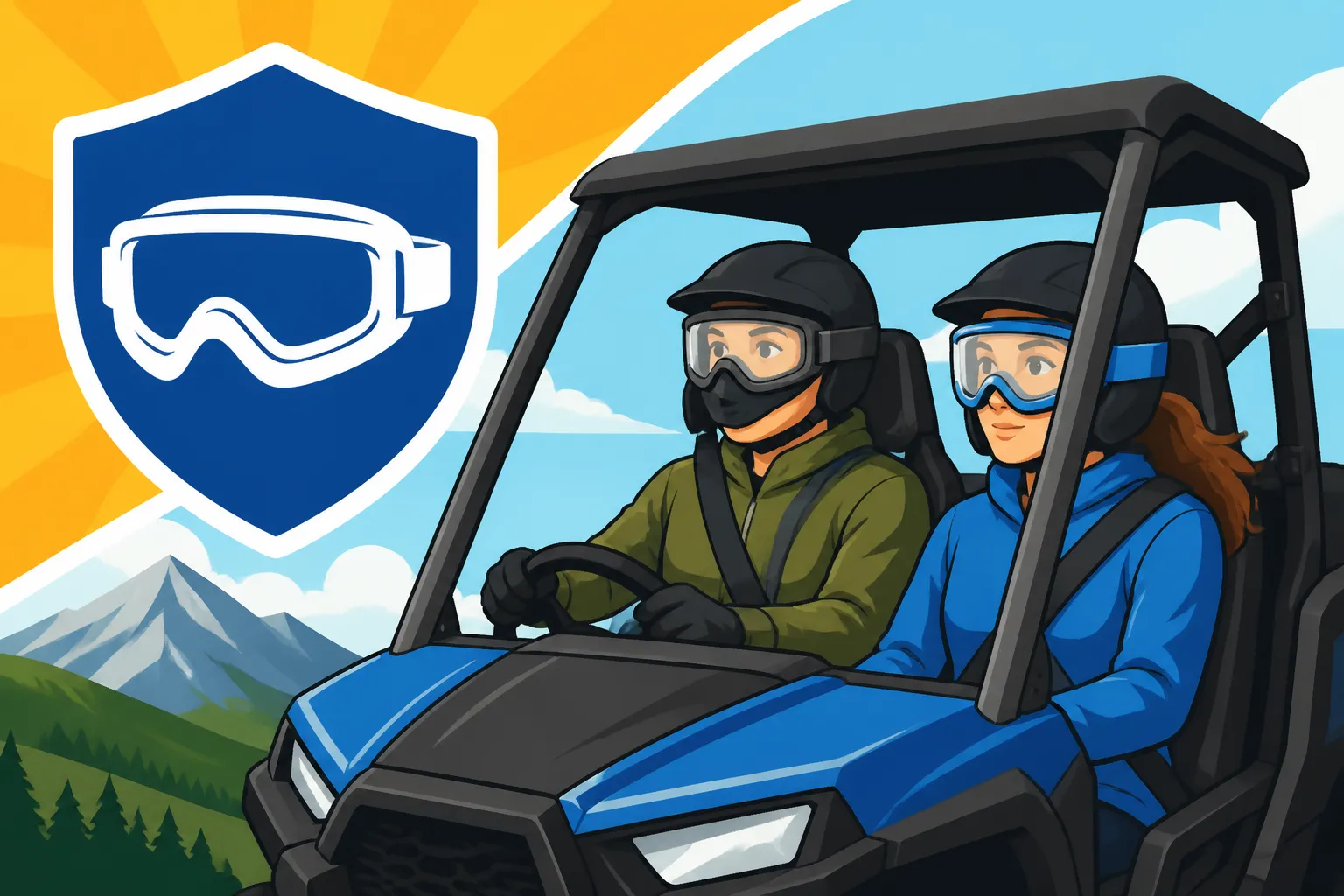
The most useful choice is gear that a passenger will actually wear and that stays in place while riding. A pair of everyday glasses may help with wind, but it may leave gaps around the sides. Goggles can provide a closer fit around the eyes, while a face shield may offer broader face coverage if it is part of the passenger’s helmet. The right option depends on the machine, the passenger, and the conditions.
Before the ride, check fit while the passenger is seated in the machine. The eyewear should not slide when the head turns or interfere with the helmet. If it fogs or shifts, it can become a distraction rather than a help. A passenger should be able to see clearly in the direction of travel and to the sides, and should tell the operator if the eyewear is uncomfortable or obscures vision.
A practical pre-ride check can include:
- Confirm that the eyewear fits securely with the helmet the passenger will use.
- Check that the passenger can see clearly without looking around an obstructive frame or shield.
- Make sure the gear is clean and not scratched or damaged in a way that interferes with vision.
- Consider whether the windshield protects the passenger’s position, not just the operator’s.
- Bring a suitable alternative if the ride could become dusty, windy, or otherwise uncomfortable.
If shopping online, including through Amazon, compare how the eyewear fits with the passenger’s helmet and machine rather than choosing by appearance alone. Product descriptions cannot tell you whether a particular pair will stay secure or provide comfortable coverage for your setup. When possible, try the gear on before a long ride.
Eye protection should also work with the rest of the passenger’s gear. A loose strap, a poorly fitting helmet, or eyewear that presses against the face can make a passenger more likely to remove it while moving. Sort out fit before departure, and stop in a safe place if the passenger needs to adjust anything. For side-by-side occupants, seat-belt and passenger rules are separate from eyewear; see Montana Seat Belt Rules in a Side-by-Side. For questions about whether a passenger needs a permit, consult [Do Passengers Need a Montana Permit?].
A Simple Way to Decide Before You Ride
Start by identifying where the machine will be operated: on a road or off highway. Then check whether a windshield actually protects the passenger’s eyes from direct airflow and debris. If the passenger’s eyes remain exposed, eyewear is a straightforward safety choice, even when the law does not mandate it.
If the route or vehicle classification makes the applicable rule unclear, ask Montana Fish, Wildlife & Parks rather than assuming that a road-use statement settles every off-highway situation. The agency’s stated position is specific: no mandatory statutory eye-protection requirement for road use by motorcycle and quadricycle operators and passengers, and a recommendation for operators of OHVs without a windshield. That is the clearest way to separate what the state requires from what it advises.
Before leaving, make sure passengers understand that they can ask to stop if dust, wind, or debris makes it hard to see. Clear vision is important to the passenger’s comfort and helps avoid distracting the operator. Eye protection does not replace a helmet, a suitable passenger position, or compliance with the rules that apply to the route. It is one practical part of preparing for a ride.
Sources
- Montana Fish, Wildlife & Parks — ACTIVITIES :: Off-Highway Vehicles | Montana FWP (checked November 3, 2026)
Disclaimer
This article is for general informational purposes only and does not constitute professional advice. Laws, prices and regulations vary by location and change over time. Consult a qualified professional for guidance on your specific situation.