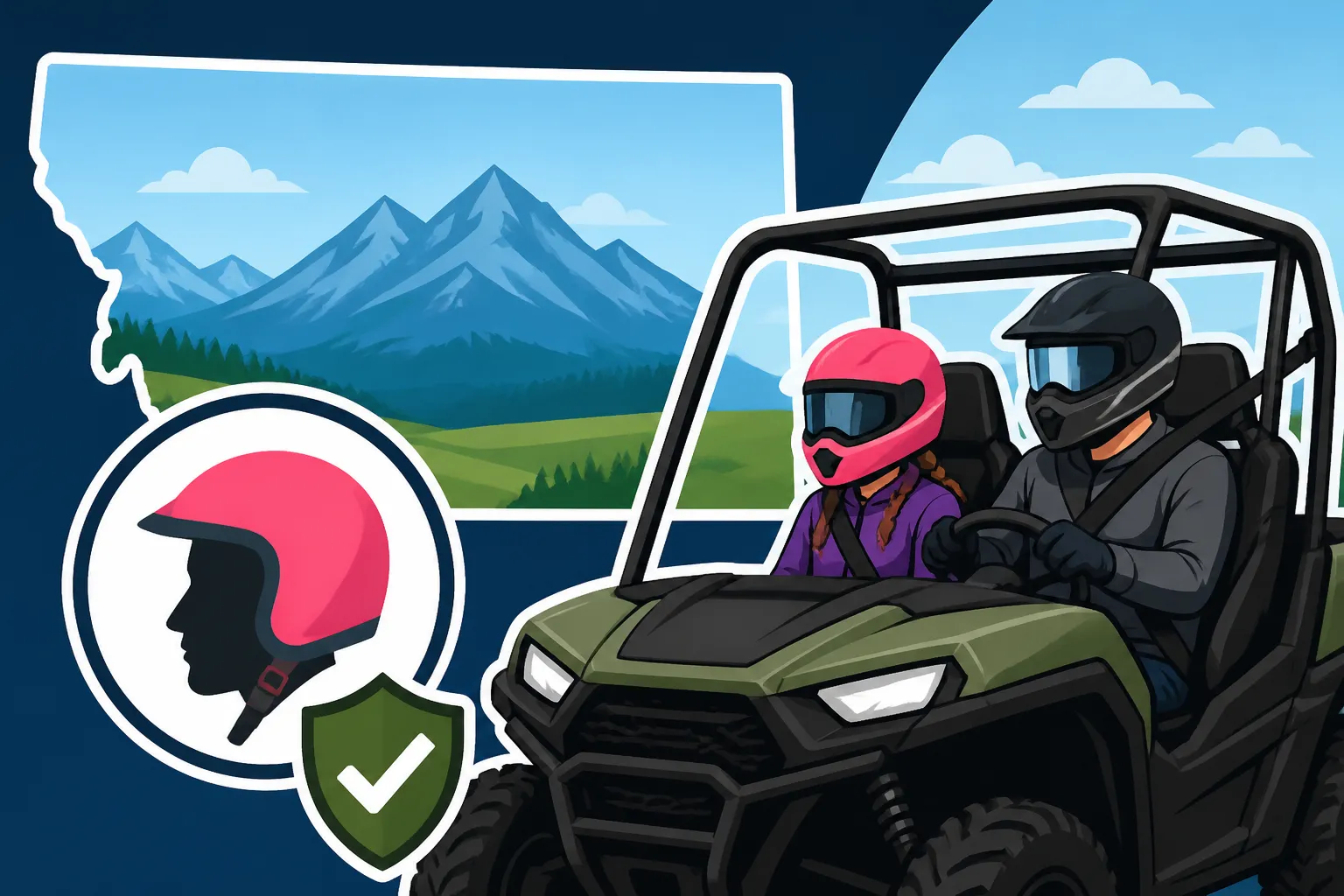
Montana Helmet Rules for a Passenger Under 18
Montana’s helmet rule can be easy to misread when a trip mixes roads and trails, or when a young person is riding as a passenger. The key is to identify both the machine and where it is being operated. Here’s what the rule says, what it does not establish for every off-highway ride, and how to check before setting out.
When a passenger under 18 must wear a helmet
According to Montana Fish, Wildlife & Parks, anyone under 18 who operates or rides a motorcycle or quadricycle on a street or highway must wear a helmet that meets DOT or Snell standards. “Rides” includes being a passenger, so a young passenger is covered by this rule when the machine and route fall within it.
The requirement applies to the rider, not just the person driving. An adult operating the machine does not make a helmet optional for a passenger under 18. If a young person will ride on a motorcycle or quadricycle on a street or highway, plan for that person to wear a qualifying helmet.
| Situation | What the stated Montana rule requires |
|---|---|
| A person under 18 operates a motorcycle on a street or highway | A helmet meeting DOT or Snell standards, according to Montana Fish, Wildlife & Parks |
| A person under 18 rides as a passenger on a motorcycle or quadricycle on a street or highway | A helmet meeting DOT or Snell standards, according to Montana Fish, Wildlife & Parks |
| A machine is being ridden off-highway on a trail | The street-and-highway helmet rule above does not, by itself, establish the helmet requirement for that off-highway situation; check the rules that apply to the route and activity |
| The machine’s legal category is unclear | Confirm the classification and applicable rule with Montana Fish, Wildlife & Parks before riding |
The location matters. The helmet rule in the stated guidance is tied to operation or riding on streets or highways. It should not be stretched into a claim that the same specific rule covers every private road, public trail, or off-highway area. Nor does the wording mean a young passenger can skip a helmet simply because an adult is driving.
For related road-use requirements, see Montana Helmet Requirements Under 18 and Riding an OHV on the Road in Montana. Those topics can help separate the helmet question from the other conditions that may apply when taking an OHV onto a road.
Check what kind of machine you have and where you will ride
The rule refers to motorcycles and quadricycles, so identifying the machine is an important first step. “ATV” and “UTV” are common everyday labels, but a label alone may not settle how a particular machine is classified for a street or highway ride.
Montana State Parks says motorcycles designed for off-road recreational use are classified as off-highway vehicles unless they are modified to meet street-legal requirements. That distinction can matter when a machine is prepared for road use. If you have modified an off-road motorcycle, do not assume the modification changes its legal category or the helmet rule without confirming how the machine is treated.
A passenger’s position does not change the basic question: does the rule apply to this type of machine on this type of route? A young passenger on a road-going motorcycle or quadricycle is covered by the under-18 rule stated by Montana Fish, Wildlife & Parks. If you are unsure whether a specific side-by-side or other machine fits the terms used in the road rule, ask the agency rather than relying on its sales description or what other riders do.
The route can change during a single outing. A ride might begin on a trail, connect to a road, and then continue off-highway. Treat the road segment as a separate compliance check. If the machine is a motorcycle or quadricycle and the under-18 rider will be on a street or highway, the helmet requirement applies for that portion under the rule described by Montana Fish, Wildlife & Parks.
That does not mean a helmet can be left behind until the road segment begins. A passenger may need to put on or adjust protective gear before reaching the road, and it is safer to plan the trip so the young rider has a properly fitting helmet available for every segment where it is required. For broader road-use questions, Montana Road Rules for Young Riders and Do You Need a Driver’s License to Ride a Montana Road? address related issues that are separate from helmet standards.
If the outing stays off-highway, do not use the street-and-highway rule as the only source for deciding what protective equipment to bring. Rules can vary by the land, route, and activity. Check the applicable requirements before leaving, and consider the helmet as a practical safety choice even where the particular road rule does not answer the question.
Choosing and checking a qualifying helmet
For a rider under 18 who will be on a street or highway on a motorcycle or quadricycle, choose a helmet that meets one of the stated standards: DOT or Snell. Montana Fish, Wildlife & Parks identifies those standards for the under-18 requirement. A helmet that looks sturdy, has a visor, or is described as suitable for off-road use is not necessarily confirmed to meet either standard.
Before a ride, check the helmet itself and its fit. Look for clear information that identifies the applicable standard, make sure the helmet sits securely, and inspect it for visible damage or worn parts. If the certification information is missing or unclear, do not guess. Check the product details with the manufacturer or ask the appropriate Montana agency how to verify it.
Online listings can make it difficult to distinguish a certified helmet from one that merely uses similar wording. If shopping through Amazon or another retailer, read the product information carefully and confirm that the specific model—not just the listing title—states that it meets DOT or Snell standards. Keep the packaging or product details until you have verified the helmet, particularly if the description is vague.
A practical pre-ride check can prevent last-minute uncertainty:
- Identify whether the machine is a motorcycle, quadricycle, or another type of OHV.
- Map out whether any part of the planned route uses a street or highway.
- If a rider under 18 will operate or ride a motorcycle or quadricycle on a street or highway, bring a helmet meeting DOT or Snell standards, as required by Montana Fish, Wildlife & Parks.
- Check the helmet’s stated standard and make sure it fits securely before departure.
- If the vehicle category or route rule is uncertain, confirm it with Montana Fish, Wildlife & Parks before riding.
Helmets are only one part of road readiness. A machine may have other requirements before it can be operated on a paved highway, and a helmet does not make an otherwise noncompliant machine legal for road use. For the broader permit and access picture, see What Montana Riders Need Before They Ride. For other helmet questions, Montana Helmet Standards and Who Must Wear One may help clarify which standards to look for.
The simplest takeaway is to treat a young passenger as a rider for this rule. When that person is on a motorcycle or quadricycle on a street or highway, Montana Fish, Wildlife & Parks requires a DOT- or Snell-standard helmet for anyone under 18. When the ride is off-highway or the machine’s classification is unclear, verify the applicable rule rather than assuming the road requirement answers every case.
Sources
- Montana Fish, Wildlife & Parks — ACTIVITIES :: Off-Highway Vehicles | Montana FWP (checked November 3, 2026)
Disclaimer
This article is for general informational purposes only and does not constitute professional advice. Laws, prices and regulations vary by location and change over time. Consult a qualified professional for guidance on your specific situation.