Registering an OHV Under a Montana Business
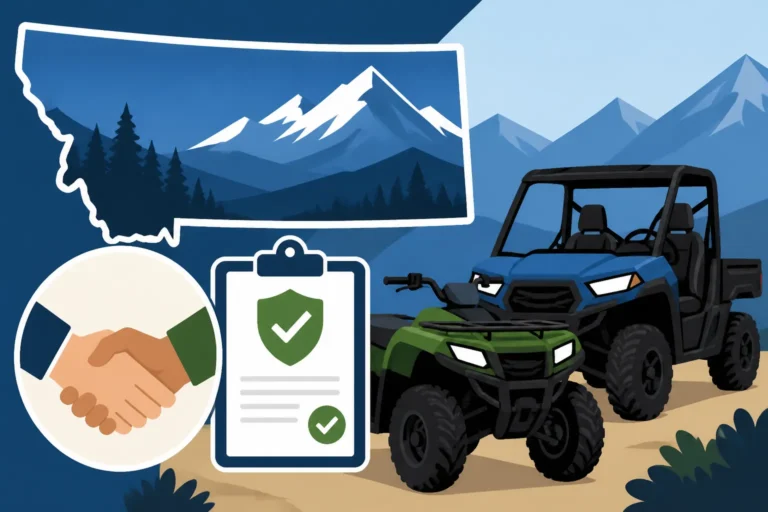
One common concern for folks who use their ATVs or UTVs for more than just weekend fun, especially if there's a business involved, is how to properly set up the paperwork. It can feel like a maze trying to figure out if you should register that side-by-side under your personal name or under your company. This guide will walk you through the ins and outs of registering an off-highway vehicle (OHV) under a Montana business, covering everything from liability to the actual process at the county treasurer's office.
Why Register an OHV Under a Business in Montana?
You might be wondering why anyone would go through the extra steps to put an OHV under a business name. After all, it's often simpler to just register it personally, right? While that's true for recreational riders, for those using their machines for commercial purposes, ranch work, guiding services, or even property management, there are some very compelling reasons to consider business registration. It's not just about appearances; it's about protecting yourself, your assets, and potentially saving money in the long run.
Liability Protection for Personal Assets
This is often the number one reason business owners choose to register vehicles, including OHVs, under their company. Imagine you're using your UTV for a guiding service, taking clients deep into the Montana backcountry, or perhaps a ranch hand is using it to check fences on your property. If an accident occurs and someone is injured, or property is damaged, a lawsuit could follow. If the OHV is personally owned, your personal assets – your home, savings, and other investments – could be at risk.
However, if the OHV is registered under a properly structured business entity, like a Limited Liability Company (LLC), that business acts as a separate legal shield. This means that generally, the liability for accidents or damages falls on the business, not directly on you as an individual. It provides a crucial layer of separation, safeguarding your personal wealth from business-related claims. While no protection is absolute, especially in cases of gross negligence, this structure is a cornerstone of responsible business operation.
Tax Advantages and Deductions
Another significant benefit of registering your OHV under a business is the potential for tax advantages. If your OHV is genuinely used for business purposes, you may be able to deduct various expenses related to its operation. This can include the purchase price itself (through depreciation), fuel costs, maintenance, repairs, insurance premiums, and even registration fees. For a working ranch, a landscaping business, or an outfitter, these costs can add up, and being able to write them off can make a real difference to your bottom line.
It's vital, however, to ensure that the OHV's use is predominantly for business. The IRS is particular about personal use versus business use, and a machine primarily used for weekend joyrides that also happens to get used once a month for a business errand might not qualify for full deductions. Keep meticulous records of mileage, fuel, and maintenance, separating business use from any personal use to remain compliant. Consult with a tax professional to understand the specific deductions applicable to your situation and business structure.
Professional Image for Commercial Use
For businesses that interact with clients or the public, a professional image is everything. Showing up to a job site or a client meeting with a vehicle that is clearly part of the company's fleet, rather than a personal machine, conveys a sense of legitimacy and professionalism. This might seem like a small detail, but it contributes to your brand identity and trust with customers. When you're running a commercial enterprise, every detail, including how your equipment is registered, speaks volumes about your operation's seriousness and organization.
Having your business name or logo visible on the OHV, combined with proper business registration, reinforces that this is a commercial asset. This can be particularly important for contractors, tour operators, or property management companies where the equipment is an extension of the service being provided. It sets clear boundaries and expectations, helping both your employees and your clients understand that the machine is an integral part of your professional service delivery.
Types of Montana Businesses for OHV Registration
Montana offers several business structures, and the choice you make can impact everything from liability to how you file your taxes. When it comes to registering an OHV, understanding these different structures is key. While the physical process at the county treasurer's office might not differ drastically based on your entity type, the underlying legal and financial implications certainly do.
Limited Liability Companies LLCs
Limited Liability Companies, or LLCs, are a popular choice for small business owners and those looking to register vehicles, including OHVs, under a business name. The reason for their popularity is right there in the name: "limited liability." An LLC separates your personal assets from your business debts and liabilities. So, if your company were to be sued over an OHV accident, generally, only the assets owned by the LLC (including the OHV itself) would be at risk, not your personal home or savings. This separation is a huge draw for many entrepreneurs in Montana and elsewhere.
Setting up an LLC involves filing articles of organization with the Montana Secretary of State. You'll also need an operating agreement, which outlines how the business will be run, who the members are, and how profits and losses are distributed. While you can draft these yourself, many business owners find it helpful to use online legal services like LawDepot for templates to ensure all bases are covered. Once your LLC is established, you can proceed with [Registering an OHV Under an LLC in Montana], bringing the necessary business documentation to your local county treasurer. Don't forget, even for an LLC, [The Montana LLC and Why Out-of-State Buyers Use It] often revolves around various benefits, not just OHV registration.
Sole Proprietorships and Partnerships
A sole proprietorship is the simplest business structure. If you're running a business by yourself and haven't filed any formal paperwork to create an LLC or corporation, you're likely a sole proprietor. Similarly, a partnership involves two or more people who agree to share in the profits or losses of a business. Both of these structures are easy to set up – often just by starting to do business – but they come with a significant drawback regarding liability.
With a sole proprietorship or a partnership, there's no legal separation between you and your business. This means that if an OHV registered under your business name (which, for these structures, is essentially just your name or a DBA) is involved in an accident, your personal assets are not protected. You are personally liable for all business debts and obligations. While you can still register an OHV for business use, it generally offers no additional liability protection beyond what your personal insurance might provide. For those seeking personal asset protection, establishing an LLC or a corporation is almost always a better choice.
Corporations and Non-Profits
Corporations (S-Corp, C-Corp) are more complex business structures, typically chosen by larger businesses or those planning to raise capital. They offer the strongest liability protection, as the corporation is a completely separate legal entity from its owners (shareholders). Registering an OHV under a corporation provides the same asset protection benefits as an LLC, often even more robust given the stricter compliance requirements. However, corporations come with more administrative burden, including regular board meetings, detailed record-keeping, and often more complex tax filings.
Non-profit organizations in Montana might also use OHVs for specific purposes, such as trail maintenance, event support, or educational programs. Like corporations, non-profits are distinct legal entities and can register OHVs in their name. The process would be similar to other businesses, requiring proof of the organization's existence and authority to purchase and register the vehicle. While tax implications differ significantly for non-profits, the principle of registering the OHV under the organization's name for liability and operational clarity remains consistent with for-profit corporations.
| Business Type | Liability Protection | Tax Complexity | Ease of Setup | Suitability for OHV Registration |
|---|---|---|---|---|
| Sole Proprietorship | None (personal risk) | Low | Very Easy | Limited (no asset protection) |
| Partnership | None (personal risk) | Medium | Easy | Limited (no asset protection) |
| LLC | Moderate | Medium | Moderate | Excellent (asset protection) |
| S-Corp | High | High | Moderate | Excellent (asset protection) |
| C-Corp | High | High | Complex | Excellent (asset protection) |
| Non-Profit | High | High | Moderate | Excellent (mission-specific use) |
The Registration Process for a Business-Owned OHV
So, you've decided to register your OHV under your Montana business. That's a smart move for many reasons! Now, let's talk about the practical steps you'll need to take to get that done. The actual process itself happens at your local county treasurer's office, just like it would for a personally registered machine, but there are some crucial differences in the documentation you'll need to bring along. Getting these ducks in a row beforehand will save you a lot of time and potential headaches.
Gathering Necessary Business Documentation
Before you even think about heading to the [Montana County Treasurer OHV Registration] office, you need to make sure you have all your business's official paperwork in order. This isn't just about showing up with a bill of sale; it's about proving that your business is a legitimate entity capable of owning assets. For an LLC or corporation, this typically means bringing your Articles of Organization or Incorporation, as filed with the Montana Secretary of State. These documents officially establish your business and often list the registered agent and initial members or directors.
You'll also need your business's Employer Identification Number (EIN), which is essentially the business equivalent of a Social Security Number. This identifies your business for tax purposes. If you're a sole proprietorship, you might use your Social Security Number, but for any other formal business entity, an EIN is essential. Furthermore, you should bring any operating agreements or bylaws that clearly state who has the authority to act on behalf of the business, especially regarding purchasing and registering vehicles. If you used a service like LawDepot to set up your business, they might have provided you with a neat package of all these documents. Having a business resolution or meeting minutes that authorize the purchase of the OHV can also be a good idea, particularly for larger organizations.
Filling Out the OHV Registration Forms
Once you have your business documentation ready, you'll need to complete the standard OHV registration forms. These are generally available at the county treasurer's office or sometimes online on your county's or the state's motor vehicle division website. When filling out these forms, you'll enter the business's name as the owner, not your personal name. The business's EIN will go in the tax ID field, and the business's official address will be used.
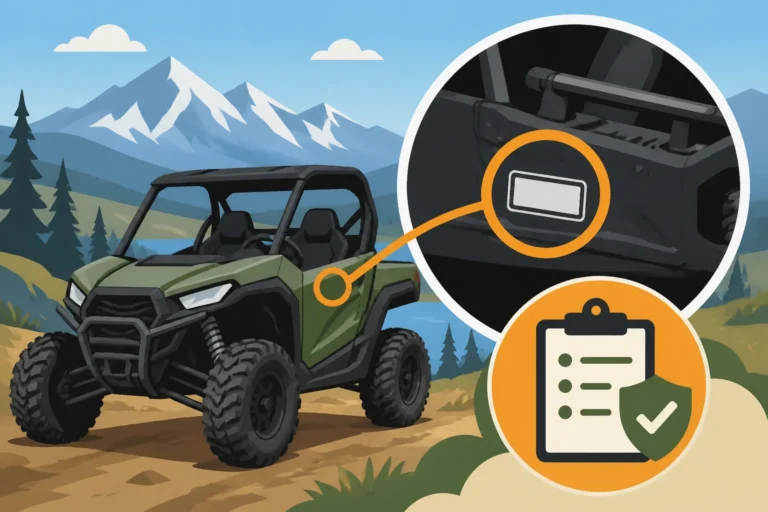
The form will also ask for details about the OHV itself, such as the VIN, make, model, and year. You'll need the original certificate of origin (if it's a new machine) or the properly endorsed title (if it's a used machine). For used machines, ensure the seller has correctly signed off on the title, transferring ownership to your business. If there's a lien, that information will also need to be included. Double-check every field to avoid errors, especially when transcribing the VIN, as a wrong VIN can lead to significant delays and complications, as detailed in [Fixing a Wrong VIN on a Montana Title].
Visiting Your County Treasurer
With all your documents in hand – the business formation papers, EIN, operating agreement (if applicable), completed registration forms, and proof of ownership (title or MSO) – you're ready to head to your local county treasurer's office. This is where the magic happens. The staff there will review all your paperwork to ensure everything is correct and in order. They'll verify the business's existence and your authority to act on its behalf.
You'll pay the applicable registration fees at this point. Remember, Montana offers [Montana's One-Time Permanent OHV Registration], which is a fantastic benefit for most OHV owners, including businesses. This means you generally pay a one-time fee, and the registration doesn't expire for the life of the machine in Montana, as long as the ownership doesn't change. Once everything is approved and fees are paid, you'll receive your new registration receipt and an OHV decal to affix to your machine. For a full list of required items, check out [Documents to Bring to a County Treasurer].
Maintaining Your Business OHV Registration
So, you've successfully registered your OHV under your Montana business. Congratulations! But the process doesn't just end there. While Montana's OHV registration has some unique features that make maintenance relatively straightforward, there are still a few things you need to keep in mind to ensure your business stays compliant and your OHV remains legally on the trails.
Understanding Montana's Permanent Registration
One of the best aspects of registering an OHV in Montana is the "permanent" registration. Unlike many states where you have to renew annually or every few years, Montana's OHV registration is a one-time deal as long as the machine stays with the same owner. This means your business won't typically need to worry about annual renewal notices or recurring registration fees for that specific OHV. It's a significant convenience and cost-saver for businesses that own a fleet of machines or operate them for many years. This is clearly outlined in [What Permanent Registration Actually Buys You].
However, "permanent" refers to the specific machine and owner combination. If your business were to sell the OHV, the permanent registration does not transfer to the new owner, as [Why a Montana Registration Does Not Follow the Machine] explains. The new owner, whether an individual or another business, would then need to go through their own registration process. Similarly, if your business structure changes dramatically (e.g., from a sole proprietorship to an LLC), it might necessitate re-registration under the new entity. Keep good records of your business's initial registration and any subsequent changes in status.
Reporting Business Changes and Address Updates
Even with permanent registration, your business has an ongoing responsibility to keep its information up-to-date with the state and county. If your business's physical address changes, you'll need to notify the county treasurer's office where the OHV is registered. This ensures that any official communications or notifications can reach you. Failing to update your address could lead to missed notices about things like property taxes (if applicable to your OHV) or other important information.
Beyond address changes, if there are significant changes to your business entity itself, such as a change in the legal name of your LLC or corporation, you will likely need to update the OHV registration to reflect this. These updates confirm that the registered owner information remains accurate and consistent with the state's records. While this might seem like a minor administrative task, maintaining accurate records is crucial for avoiding complications down the line, especially if you ever need to prove ownership or transfer the vehicle.
Dealing with a Sold or Transferred Business Machine
When your business decides to sell or transfer an OHV, the permanent registration ceases to apply, as mentioned earlier. As the seller, your business must properly endorse the title over to the new owner. This usually involves signing the back of the title in the designated seller's section, accurately recording the sale date and purchase price. It's crucial that the authorized signatory for your business (e.g., the owner, a managing member of an LLC, or an officer of a corporation) signs the title.
For your business's records, it's always wise to complete a bill of sale, even if the state doesn't explicitly require it for OHVs. This document provides a clear record of the transaction, including the buyer's and seller's information, the OHV's details, the sale price, and the date. Online platforms like LawDepot can be helpful for finding standard bill of sale templates. This protects your business by documenting the transfer of ownership and liability. The new owner will then take the properly endorsed title and bill of sale to their county treasurer's office to initiate a new registration in their name or business name.
Important Considerations for Business OHV Owners
Registering your OHV under your Montana business is a strategic move, but it's not a set-it-and-forget-it situation. There are several ongoing considerations that business owners need to keep in mind to ensure they're fully compliant, protected, and making the most of their business asset. From insurance requirements to distinguishing between business and personal use, these details can have significant implications.
Insurance Needs for Commercial OHV Use
One of the most critical considerations for a business-owned OHV is insurance. Standard personal ATV or UTV insurance policies are typically designed for recreational use and often do not provide adequate coverage for commercial operations. If you're using your OHV for guiding, construction, ranching, or any other business activity, you will almost certainly need a commercial OHV insurance policy. This type of policy generally offers higher liability limits, covers employees, and provides broader protection for business-related risks. For more on what to consider for personal insurance, see [Insuring an ATV in Montana].
Imagine a scenario where your employee is operating a business-owned UTV on a job site, and an accident occurs, causing significant property damage or injury to a third party. A personal policy might deny coverage, leaving your business (and potentially you) exposed to a massive financial claim. Commercial policies are tailored to these risks, covering things like general liability, physical damage to the OHV, and even workers' compensation for employees injured while operating the machine. Always discuss your specific business use with an insurance agent to ensure you have the right coverage, as underinsuring a commercial asset can be a costly mistake.
Distinguishing Business from Personal Use
While registering an OHV under your business offers fantastic benefits, it's paramount to maintain a clear distinction between business use and personal use. This isn't just about adhering to IRS rules for tax deductions; it's also about maintaining the liability protection that your business entity provides. If you frequently use your "business" OHV for personal weekend rides, especially without properly accounting for it, you could inadvertently "pierce the corporate veil." This legal term means a court could decide that your business isn't truly separate from you personally, thus exposing your personal assets to business liabilities.
To avoid this, treat your business OHV as a business asset. If you use it personally, consider "renting" it from your business, paying fair market value, or at least meticulously logging personal use. Keep separate fuel and maintenance logs. Ideally, if you need a machine for personal recreation, it's better to own a separate, personally registered OHV. This clear separation strengthens your business's legal standing and protects the integrity of your limited liability. Remember that [Montana OHV Rules for Ranch Machines] may have specific considerations for distinguishing work use from recreational use on private land.
Potential Tax Implications in Other States
For Montana businesses, especially those operating near state lines or with employees who might travel, it's important to be aware of how other states view Montana-registered OHVs. While Montana proudly boasts no sales tax on vehicle purchases, and our permanent registration is a breeze, other states have "use tax" laws. If your business purchases an OHV in Montana and then primarily uses or stores it in another state, that state might expect your business to pay their equivalent sales or use tax.
This is a common issue for out-of-state buyers who use Montana's lack of sales tax as an incentive, but businesses can also face scrutiny. If your Montana-based business frequently dispatches OHVs to projects in, say, Idaho or Wyoming, and those machines are primarily housed there, those states could argue that the OHV falls under their tax jurisdiction. Always consult with a tax advisor familiar with multi-state business operations to understand your obligations, as ignoring these can lead to penalties and back taxes if discovered. Similarly, if your business is primarily based out of state and you're considering setting up a Montana LLC just for OHV registration, you'll want to carefully examine the full implications and costs involved, potentially referencing resources like [Montana LLC Setup Cost for a Vehicle].
Disclaimer
This article is for general informational purposes only and does not constitute professional advice. Laws, prices and regulations vary by location and change over time. Consult a qualified professional for guidance on your specific situation.