Telling the Treasurer You Moved
Moving to a new home in Montana is exciting, but amidst the boxes and change of address forms, it's easy to overlook one crucial detail: updating your off-highway vehicle (OHV) registration information with the county treasurer. This guide will walk you through exactly why and how to update your address for your ATV or UTV, ensuring you stay compliant and connected with important information about your machine.
Why Your Address on File Matters for Your Montana ATV or UTV
It might seem like a small thing, just an address, right? But for your ATV or UTV, that address on file with the county treasurer is more significant than you might imagine. It’s not just about receiving junk mail; it’s about official communications, legal compliance, and even the peace of mind that comes from knowing your machine’s details are accurate.
More Than Just Mail: Official Notices and Renewals
Think about all the official communications that need to reach you. While Montana's OHV registration is often a [Montana's One-Time Permanent OHV Registration], meaning you don't typically get annual renewal notices in the traditional sense, that doesn't mean your mailing address becomes irrelevant. There could be other important notices, updates to local ordinances, or even communications about changes in OHV laws that need to get to you. If your address is outdated, these critical pieces of information could end up in someone else's mailbox, leaving you out of the loop.
Imagine missing a notice about a new local trail closure or an important safety recall because the information went to your old apartment. That's a frustrating scenario that's entirely avoidable. For other vehicles you might own, like a car or truck, you're used to getting annual renewal reminders or tax statements. While OHVs operate a bit differently, the principle of needing correct contact information for official purposes remains the same. Keeping your details current ensures you remain informed and proactive about your responsibilities as an OHV owner in Big Sky Country.
Local Enforcement and Emergency Services
In the unfortunate event that your ATV or UTV is stolen, or if it's involved in an incident, accurate registration information becomes paramount. Local law enforcement, whether it's the county sheriff or a Montana Fish, Wildlife & Parks warden, relies on the details registered with the county treasurer to identify the machine's rightful owner. If your address is incorrect, it could significantly delay the process of notifying you if your machine is recovered or if there's an inquiry related to it.
Consider a scenario where your side-by-side goes missing from your property. When the authorities recover it, their first step is to check the registration. If the address on file leads them to your previous residence, precious time is wasted, and communication becomes a convoluted mess. Furthermore, in emergency situations where your machine might be found abandoned or involved in an accident, up-to-date owner information can be critical for contacting you or your next of kin swiftly. Ensuring your county treasurer has your current address is a simple step that provides a layer of security and efficiency in times of need.
How to Inform Your Montana County Treasurer of an Address Change
So, you've moved, and you realize your OHV registration needs updating. Don't sweat it; the process is usually pretty straightforward, but knowing the exact steps and what to bring can save you a lot of time and hassle.
The Process: Step-by-Step Guidance
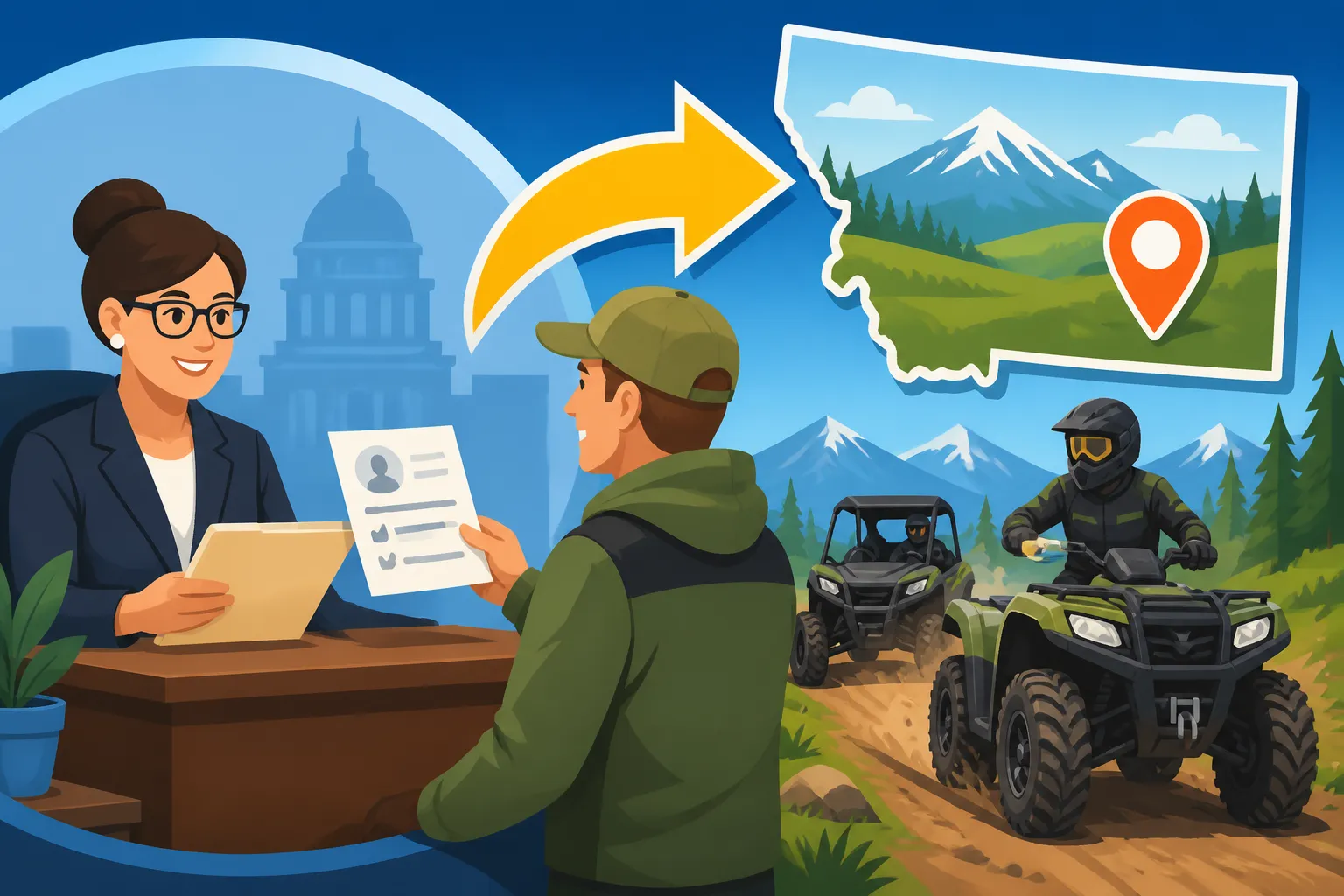
Updating your address for your ATV or UTV registration in Montana primarily involves a visit to your local county treasurer's office. While some states might have a centralized DMV system that automatically updates all vehicle types, in Montana, it's typically handled at the county level for OHVs. Here’s a breakdown of the steps:
- Identify the Correct County Treasurer's Office: If you've moved within the same county, you'll visit that county's treasurer. If you've moved to a different county, you'll likely be dealing with the treasurer's office in your new county of residence. This is where your official record will be kept moving forward. You can usually find their contact information and hours on the county's official website.
- Gather Necessary Documents: Before heading out, make sure you have everything you need. This typically includes your current identification, proof of your new address, and any existing registration or title documents for your OHV. We'll dive deeper into specific documents in the next section.
- Complete the Necessary Forms: Most county treasurer offices will have a specific form for updating personal information, including address changes. While some larger counties might offer these forms online for pre-filling, it's often a simple paper form you complete at the counter. Don't be surprised if it's a quick, one-page document.
- Submit Your Information: The most common way to do this is in person. This allows you to ask any questions you might have and ensures immediate processing. Some counties might accept updates via mail, but an in-person visit is usually recommended for accuracy and peace of mind. Online portals for OHV address changes are less common at the county level but it's always worth checking your specific county's website.
- Confirm the Update: Once submitted, the treasurer's office will update their records. You might not receive a new physical registration card immediately, especially if your OHV has a permanent registration, but you can usually ask for a confirmation that the change has been processed.
Remember, the staff at the [Montana County Treasurer OHV Registration] office are there to help, so don't hesitate to ask if you're unsure about any step.
What Documentation You'll Need
Having the right paperwork ready when you visit the county treasurer's office will make the process incredibly smooth. Imagine showing up only to realize you forgot a crucial document – that's a wasted trip nobody wants! Here's a list of what you'll typically need to bring:
- Valid Photo Identification: Your current Montana driver's license or state ID card is usually sufficient. Make sure it's not expired.
- Proof of New Address: This is key. Acceptable documents often include:
- A utility bill (electric, gas, water) in your name showing your new address.
- A current lease agreement or mortgage statement. If you've recently moved, a document generated through a service like LawDepot for a new lease or a bill of sale for a property can serve as excellent proof.
- Your updated Montana driver's license or ID card showing your new address.
- A recent bank statement or credit card statement with your new address.
- Mail from a government agency.
- Existing OHV Registration Documents: Bring your current OHV registration card. Even if it’s a permanent registration, it has your old address on it and helps the clerk quickly locate your record.
- OHV Title (Optional but Recommended): While not always strictly required for an address change on the registration, having your [Titling an OHV in Montana] documents can be helpful. It’s good practice to bring anything related to the machine's official paperwork.
It’s crucial that your name on your ID matches the name on your proof of address and the OHV registration. Any discrepancies could cause delays. If you've had a name change along with your move, you'll need to address that simultaneously with appropriate legal documentation, like a marriage certificate or court order. When using a service like LawDepot to formalize documents like lease agreements, ensure all names and addresses are precisely as they should appear on official records.
Specific Scenarios and Important Considerations
Life happens, and moves aren't always simple. Understanding how different moving scenarios impact your OHV address update is important.
Moving Between Montana Counties
Montana is a big state with plenty of open spaces, and it's common for residents to move from one county to another—say, from Flathead County down to Gallatin County for work, or from Yellowstone County to Missoula County for a change of pace. When you move between Montana counties, your permanent OHV registration generally remains valid, but the "county of record" for your machine will shift to your new county.
What this means for you is that you'll typically visit the county treasurer's office in your new county of residence to update your address. They will then update their system to reflect that you and your OHV are now residents of their jurisdiction. This doesn't affect the "permanent" nature of your [What Permanent Registration Actually Buys You] itself, but it ensures that your local county has accurate records for you. It's a simple administrative change that keeps everything aligned with your current residency, helping ensure any future county-specific communications reach you without issue.
Moving to Montana from Another State New Residents
If you’re a new resident moving to Montana from, say, Idaho or North Dakota, the process isn't just an address change; it's a full-on [Montana Registration for a New Resident] of your off-highway vehicle. You won't simply be updating your old state's registration with a Montana address. Instead, you'll need to register and title your ATV or UTV in Montana for the first time.
This involves bringing your out-of-state title, proof of ownership, and identification to a Montana county treasurer’s office. You'll go through the steps of applying for a Montana title and then registering the machine, likely opting for the permanent registration that many Montana residents choose. It's a distinct process from a simple address update for an already Montana-registered machine, so be prepared with all your out-of-state paperwork.
Updating for a Business-Registered OHV
For those who own businesses or operate ranches in Montana, it's not uncommon for ATVs or UTVs to be registered under a business name or an LLC. If your business has moved its primary operating address, or if the registered agent's address has changed, then updating the OHV registration will follow a slightly different protocol.
You'll need to provide documentation showing the business's new official address, which might include updated articles of incorporation, a business license reflecting the new location, or a formal change of address filing with the Montana Secretary of State's office. The person making the update will likely need to be an authorized signatory for the business. Services like LawDepot can be useful if you need to generate formal business resolutions or agreements reflecting the address change, ensuring you have professional documentation on hand. It’s important to keep this information current, especially for machines used in commercial operations, as it can affect everything from liability to tax implications. For more details on this, you might find [Registering an OHV Under a Montana Business] helpful.
Common Pitfalls and How to Avoid Them
Even simple tasks can have hidden snags. Being aware of common pitfalls when updating your address can save you headaches:
- Forgetting to Update: This is the most common pitfall. With so much to do during a move, updating OHV registration often slips through the cracks. Put it on your moving checklist!
- Not Having Proper Documentation: Showing up without your ID, proof of new address, or current registration will mean a wasted trip. Double-check your list before you leave.
- Assuming DMV Update Covers OHVs: Many people assume that if they update their address with the Department of Motor Vehicles for their car, it automatically updates their OHV registration too. This is usually not the case in Montana for county-level OHV registrations. They are separate systems.
- Delays in Processing: While in-person updates are usually quick, if you mail in documents, be prepared for potential processing delays. Follow up if you haven't received confirmation within a reasonable timeframe.
- Unclear Proof of Address: Ensure your proof of address is clear and undeniable. A handwritten note won't cut it. Use official documents like utility bills or a professionally generated lease agreement, perhaps created with LawDepot, to ensure there's no doubt.
By anticipating these issues, you can navigate your address change smoothly and efficiently.
The Ripple Effect: Why Keeping Your Information Current Helps Everyone
Updating your address might seem like a small personal chore, but it actually has a broader positive impact beyond just your own convenience. It’s about being a responsible OHV owner and contributing to the community that supports our shared passion for riding Montana's incredible trails.
Ensuring Proper Communication and Compliance
First and foremost, keeping your address current with the county treasurer ensures you receive all necessary official communications. This isn't just about avoiding a missed renewal notice (though that's certainly important); it's about staying compliant with the ever-evolving landscape of OHV regulations. Local ordinances can change, state laws might be updated, and there could be safety advisories or critical information disseminated by Montana Fish, Wildlife & Parks. If your address is out of date, you could miss these vital updates, inadvertently putting yourself at risk of non-compliance.
Imagine a new rule about spark arresters or noise limits in your favorite riding area. If the notice went to your old address, you might unknowingly violate the rule, leading to potential fines or even the temporary loss of riding privileges. The frustration of facing [Penalties for an Unregistered OHV in Montana] or a citation for an unknown rule is completely avoidable by simply updating your address. Staying informed means you can enjoy the trails responsibly and without unnecessary stress.
Supporting Montana's OHV Infrastructure
The fees collected from OHV registrations and permits in Montana play a direct role in funding the maintenance and development of our state's vast trail systems. [Where Montana OHV Fees Go] is usually back into the OHV program, supporting trail grooming, signage, cleanup efforts, and even law enforcement patrols that keep our riding areas safe and accessible.
When you keep your registration information, including your address, accurate, you contribute to a more efficient system. Accurate data on OHV owners helps state and local agencies better understand rider demographics and where resources are most needed. This isn't just bureaucratic red tape; it's the foundation upon which effective planning for future trail projects, grant applications, and resource allocation is built. By taking a few minutes to update your address, you're not just helping yourself; you're doing your part to ensure that Montana's breathtaking OHV opportunities remain robust and thriving for everyone to enjoy.
Required Documentation for OHV Address Change
Here's a quick summary of the essential items to bring when updating your address for your Montana OHV registration:
| Document Type | Specific Examples | Importance |
|---|---|---|
| Proof of Identity | Montana Driver's License, State ID Card | Verifies who you are and that you are the registered owner. |
| Proof of New Address | Utility Bill, Lease Agreement (e.g., from LawDepot), Mortgage Statement, Updated Driver's License, Official Government Mail | Establishes your current physical residence in Montana. |
| Existing OHV Registration | Current OHV Registration Card (even if permanent) | Helps the county treasurer quickly locate your existing record and verify machine details. |
| OHV Title | Certificate of Title | Recommended to bring for reference, though often not strictly required for address change on registration. |
Disclaimer
This article is for general informational purposes only and does not constitute professional advice. Laws, prices and regulations vary by location and change over time. Consult a qualified professional for guidance on your specific situation.