Crossing a Montana Highway on an OHV
It’s a scenario every Montana ATV and UTV rider eventually faces: you’re out enjoying some incredible trails, the sun is shining, and then you realize the next section of your adventure, or perhaps the only way to get back to camp or grab some lunch, requires you to cross a paved state or federal highway. This moment can be confusing and a little nerve-wracking, as you weigh convenience against the rules. This guide will walk you through the ins and outs of legally and safely navigating a highway crossing in Big Sky Country, addressing the common frustrations and questions that come with it.
Understanding Montana's General Road Rules for OHVs
Riding off-highway vehicles (OHVs) in Montana offers unparalleled access to some of the most beautiful backcountry in the world. However, the rules for where you can and cannot ride, particularly concerning public roads, can feel like a tangled knot of regulations. Many riders assume that because their machine is registered, they can simply hop on any road, but that's not quite how it works, especially when it comes to higher-speed highways.
Where OHVs Are Usually Allowed on Roads
Montana does allow OHVs on certain public roads, primarily county roads. These are often gravel, dirt, or lower-speed paved roads that connect small communities, ranches, or provide access to trailheads. The key is that these roads are typically under the jurisdiction of county commissioners, who have the authority to open them to OHV use. This means that what's legal in one county might not be in another, leading to a lot of head-scratching for riders trying to navigate unfamiliar areas. You might be cruising along a fantastic two-track and suddenly find yourself needing to know if the next stretch, often a county road, is fair game. Knowing [Which Montana Roads Allow OHVs] is crucial before you even consider approaching a highway.
Ranchers, loggers, and other land users frequently rely on these county roads, and often, OHVs share these routes, fostering a spirit of shared access. Many of Montana's charming small towns have also adopted ordinances that allow OHVs on their streets, making it easier to grab a burger or fuel up without having to load your machine back on a trailer. It's truly a convenience when you can ride directly into a trail town, but this permission rarely extends to major highways.
Distinction Between Roads and Highways
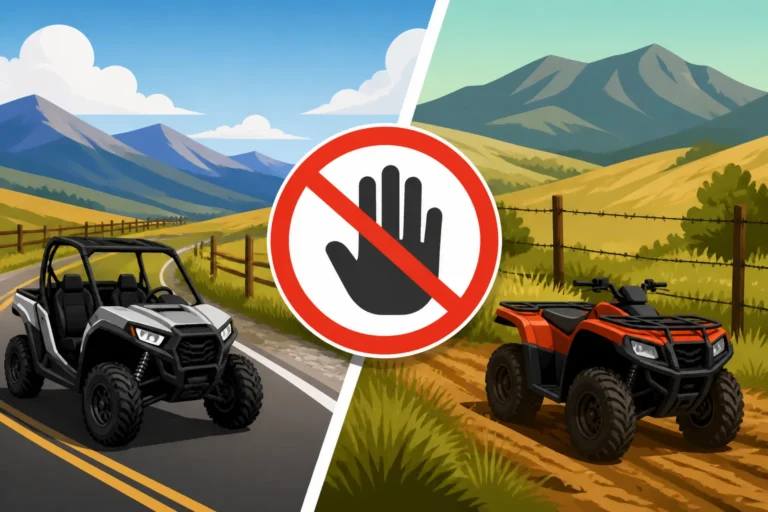
Here's where the rubber meets the road, quite literally. While many county roads and some city streets welcome OHVs, state and federal highways are an entirely different beast. These are designed for higher-speed motor vehicle traffic, often with multiple lanes and a substantial flow of cars, trucks, and semi-trucks. The Montana code makes a clear distinction: OHVs are generally prohibited from operating on highways, defined as those roads designated as primary or secondary highways, or federal aid system roads.
This distinction isn't just bureaucratic; it's about safety. An ATV or UTV, even a powerful one, simply isn't built for the same speeds, braking distances, or crash protection as a highway-legal passenger vehicle. The speed differential alone creates a significant hazard. Imagine a side-by-side, even a robust model with good aftermarket accessories from a brand like SuperATV, trying to merge onto a highway where traffic is moving at 70 mph. It's a recipe for danger, and Montana law reflects that concern. This is why the rules for crossing these major arteries are so specific and limited.
The Specifics of Crossing a Paved Highway
So, you're faced with that moment: a busy highway stands between you and your destination. The good news is that Montana law does provide a specific, albeit limited, allowance for OHV operators to cross these highways. It's not a free pass to drive down the shoulder for a mile; it’s strictly for getting from one side to the other.
The "Crossing Only" Provision
Montana law allows OHVs to cross a public street or highway if they are crossing at right angles to the traffic, or as nearly as practicable. This means you need to go straight across, not diagonally, and certainly not turn and ride down the highway for any distance. The intention is to minimize your time exposed to highway traffic. You're allowed to cross from a county road to another county road, or from a designated OHV trail section to another, but only if the crossing is the most direct route.
This provision is a practical one, acknowledging that Montana's vast landscape and trail networks are often bisected by major roads. Without it, many trail systems would be isolated. However, it comes with strict stipulations. You can't just cross anywhere; it needs to be at an intersection or a place where visibility is excellent and it's safe to do so. The goal is to make the crossing as quick and predictable as possible for both you and highway traffic.
Preparing for the Cross
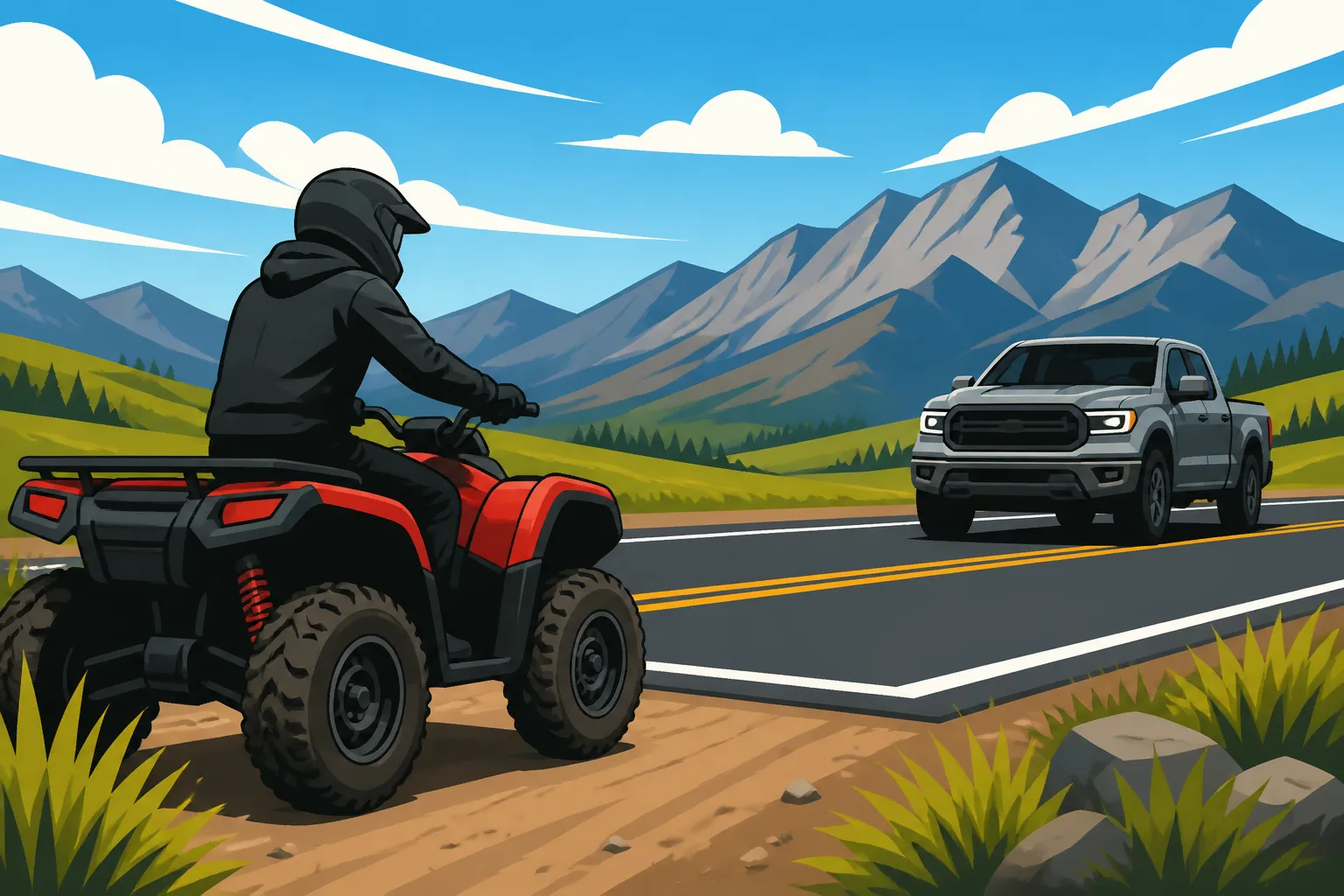
Before you even think about putting a tire on that pavement, preparation is paramount. First and foremost, you need to bring your machine to a complete stop before entering the highway. Think of it like a stop sign for an uncontrolled intersection; you must yield to all highway traffic. Look both ways, several times, for oncoming vehicles. Remember, highway speeds are deceiving, and a vehicle that looks far away can be on top of you in seconds.
It's also a good idea to scout your crossing point if possible. Is there a designated turn lane for highway traffic that might offer a small refuge? Are there clear sightlines in both directions for a substantial distance? Any obstructions, like hills, curves, or dense trees, can make a crossing incredibly risky. If you're riding with a group, communicate clearly. The lead rider should confirm a clear path, and each subsequent rider should re-verify before proceeding. This isn't the time for assumptions. You'll also want to be certain your machine is properly registered; consult [Fines for an Unregistered OHV in Montana] to understand the risks of cutting corners here.
Legal Requirements for the Machine During a Cross
Even for a quick crossing, your OHV needs to meet certain requirements to be considered legal. Foremost among these are proper lighting. Your machine must have at least one headlight and one taillight, and these lights must be turned on, even during daylight hours. This dramatically increases your visibility to highway traffic. If you've upgraded your lighting with a light bar or brighter headlights from a reputable supplier like SuperATV, now is the time they really pay off.
Beyond lights, your machine needs to be properly registered with current decals. If you're an out-of-state visitor, ensure you have your [Montana's Non-Resident Temporary Use Permit] in order. While Montana does not generally require specific turn signals or mirrors for OHVs, for road-legal use in towns or for highway crossings, having these can certainly enhance safety and communication. The more visible and predictable you are, the safer everyone is. Additionally, you should be carrying proof of liability insurance, as this is a requirement for any motorized vehicle on public roads, even for a brief crossing.
Safety First: Essential Practices for Highway Crossings
Crossing a busy highway is arguably one of the most hazardous maneuvers an OHV operator can perform. It requires intense focus, quick decision-making, and a solid understanding of both the law and safe riding practices. This isn't just about avoiding a ticket; it's about avoiding a potentially life-altering collision.
Visibility and Awareness
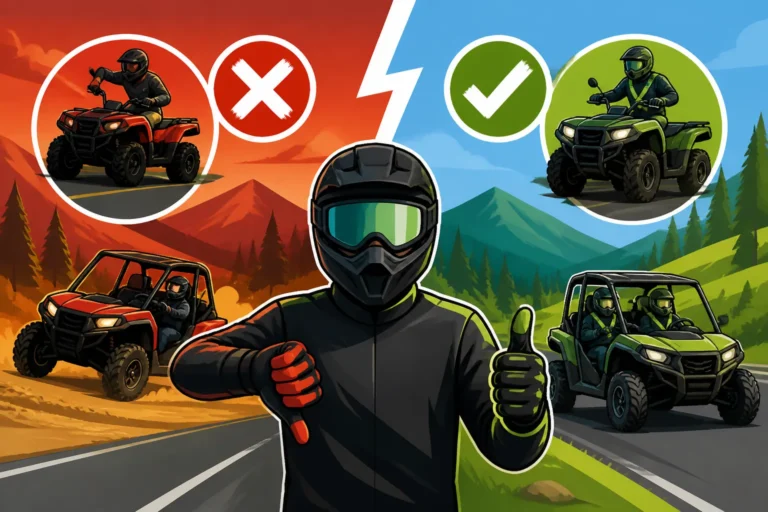
In the world of OHV riding, "seeing and being seen" is critical, but nowhere more so than at a highway crossing. Wear bright, contrasting colors. A neon green or orange helmet, jacket, or vest can make a huge difference in how quickly a highway driver spots you. As mentioned, keep your headlights and taillights on. If you have aftermarket amber or white marker lights, use them. The more visual signals you can provide to oncoming traffic, the better.
Beyond your personal visibility, actively scan the highway for threats. Don't just glance; genuinely look for vehicles that might be obscured by glare, shadows, or other traffic. Pay attention to their speed, not just their distance. A semi-truck traveling at 75 mph covers a football field's length in less than three seconds. Always assume highway drivers might not see you, especially if you're pulling out from a less-traveled access point. This defensive mindset is your best tool for survival.
Choosing Your Crossing Point
While the law dictates you cross at a right angle, choosing where you cross is equally important. Always opt for intersections with the best possible sightlines in both directions. Avoid crossing at blind curves, over crests of hills, or in areas with heavy vegetation that obstruct views. If there's an actual intersection with traffic signals or a four-way stop, these are generally the safest, as they regulate traffic flow, though you still need to exercise extreme caution.
If you're on a less-defined access road, identify a crossing point where you can stop your machine completely off the main travel lane of the highway but still have a clear view. This allows you to observe traffic without being in harm's way. Don't be afraid to pull over and wait for a significant gap in traffic. Rushing a crossing is never worth the risk. Many [Montana Trails That Link Two Towns] might involve such crossings, so plan your route carefully.
Riding Etiquette and Signals
When riding in a group, establishing clear communication signals is vital. Before approaching a highway, the lead rider should brief everyone on the crossing procedure: stop, look, signal, cross. When ready to cross, if you have turn signals, activate them in the direction you'll be heading after the crossing (if applicable, though usually you just go straight). If you don't have turn signals, use clear hand signals to indicate your intention to cross.
Once you commit to crossing, do so decisively and without hesitation. Accelerate smoothly and maintain a straight path across the lanes. Don't swerve or slow down in the middle of the highway. Get across as efficiently as possible. If you're with a group, cross one machine at a time, ensuring each rider has a clear and safe window to make it across. This minimizes the risk of multiple machines being exposed to highway traffic simultaneously. It’s a good practice to review [Montana Road Rules for Young Riders] if you have youth in your group, as their decision-making skills might not be as developed.
Penalties and Risks of Illegal Crossings
The temptation to cut corners or simply "go for it" when facing a highway can be strong, especially if you're tired or running low on fuel. However, the penalties for illegal highway operation, even for a brief moment, are severe, and the physical risks are even graver. Law enforcement takes highway safety very seriously, and OHVs operating where they shouldn't be are easily spotted.
Consequences of Breaking the Law
Operating an OHV illegally on a Montana highway can result in a range of penalties, from significant fines to having your machine impounded. Law enforcement officers, whether it's the Montana Highway Patrol or a county sheriff, are vigilant about keeping highways clear of non-legal vehicles. You could face citations for illegal operation, lack of proper equipment (if your machine isn't equipped for even limited road use), or even reckless endangerment if your actions create a hazard for others. These fines can quickly add up, turning an enjoyable ride into a very expensive mistake.
Beyond immediate legal trouble, a citation could also affect your future riding privileges or even your driver's license status, depending on the severity of the offense. It's simply not worth the risk. Understanding [Montana OHV Ticket Costs by Violation] can give you a stark picture of what you might be facing if you disregard the rules.
Insurance Implications
An often-overlooked consequence of illegal highway operation is the impact on your insurance. If you are involved in a collision while illegally operating your OHV on a highway, your insurance provider may deny coverage. Most OHV insurance policies are specifically written to cover off-road use, or road-legal use only where explicitly permitted by law and policy. If you're in violation of state law, your policy might be voided, leaving you personally liable for damages, medical expenses, and potential lawsuits.
Imagine hitting a car on a highway, or worse, being hit by one. Without insurance, you could be facing hundreds of thousands of dollars in costs, not to mention the personal injuries. It's a risk that far outweighs any perceived convenience of an illegal crossing. Always ensure you have appropriate [Insuring an ATV in Montana] coverage, and understand its limitations.
Planning Your Route to Minimize Highway Exposure
The best way to handle highway crossings is to avoid them whenever possible. Montana's vast trail networks and backroads often provide alternative routes that keep you safely off the major paved arteries. Planning ahead is your most powerful tool in ensuring a safe and legal ride.
Using MVUMs and GPS Tools
Motor Vehicle Use Maps (MVUMs) are invaluable resources for planning any ride on public lands in Montana. These maps, issued by the U.S. Forest Service and other land management agencies, clearly designate which roads and trails are open to which types of motorized vehicles. They are your official guide to where you can and cannot ride. When planning a trip, always check the MVUM for the specific area you intend to explore. These maps will show if a trail connects directly or if there are county roads that can serve as legal connectors, often avoiding the need for a highway crossing altogether.
Modern GPS apps like onX Offroad or other mapping software are also incredibly useful. Many of these apps integrate MVUM data and other trail information, allowing you to visually plan your route, identify potential highway crossings, and seek out alternatives. You can usually see satellite imagery to get a better sense of terrain and visibility at potential crossing points. Utilizing these tools diligently before you head out can save you a lot of grief and keep you on [Montana's National Forest Trail Systems] safely.
Alternative Trail Connections
Montana's trail systems are vast and interconnected, but sometimes it takes a bit of research to find the perfect link. Look for designated OHV trails, forest service roads, or open county roads that might offer a bypass around a major highway. Sometimes, a slightly longer route on unpaved roads or trails is a much safer and more enjoyable option than a direct, but risky, highway crossing. This is where local knowledge, trail maps, and online forums can be incredibly helpful. Other riders might have already scouted out safer alternatives.
If you find yourself frequently needing to cross a particular highway, it might be worth exploring if there are existing underpasses or bridges designed for non-motorized traffic that could theoretically be used for OHVs, though this requires careful investigation into local rules. Or perhaps there's a nearby trail or county road that runs parallel to the highway for a short distance, allowing you to connect without ever setting tire on the high-speed pavement. Don't be afraid to rethink your route entirely if it means avoiding a dangerous situation.
Crossing US-93 on an OHV
Montana's US-93 is a major north-south corridor, often referred to as "the fastest way to see Montana," precisely because it connects so many communities and passes through some truly breathtaking landscapes. For OHV riders exploring western Montana, particularly around the Flathead Valley or the Bitterroot, encountering US-93 is inevitable. Navigating a crossing of this highway, or any other major state route like US-2, US-12, or I-90, requires extreme caution and adherence to the same strict "crossing only" rules.
Specifics for US-93 and Other Major Routes
When you're looking at US-93, you're looking at a multi-lane highway with high speed limits and constant traffic, including commercial trucks. The crossing rules remain the same: you can only cross at a right angle, or as nearly as practicable, and only if it's the most direct route between two legal OHV access points (like county roads or trails). You cannot ride down the shoulder, even for a short distance, to reach a more convenient crossing point. That's a direct violation of the law.
Visibility is even more critical on these major routes. Drivers are often traveling at highway speeds and may not be expecting an OHV to suddenly appear. Look for wide, clear sections where you have maximum sight distance in both directions. Avoid crossings near intersections with numerous turning lanes or complex traffic patterns, as these can add to the confusion for both you and other drivers. If there's an overpass or underpass nearby that is part of a county road, that's almost always a safer bet, even if it adds a little distance to your route.
What to Do When There's No Other Way
Sometimes, despite all your planning and best intentions, a highway crossing truly is the only viable option to continue your ride or reach your destination. In these "no other way" scenarios, your focus must shift entirely to maximum safety and strict adherence to the law.
Before you even approach the highway, pull over to a safe spot and have a serious conversation with your group about the crossing. Review the steps: stop completely, look multiple times in both directions, confirm the path is clear, signal, and cross decisively. If anyone in your group is uncomfortable, respect that. There's no shame in changing your plans for safety.
Consider dispatching a "spotter" if riding with a group and if safe to do so. This person can stand in a highly visible location, ensuring the highway is clear before signaling for riders to cross one at a time. This adds another layer of safety, but the ultimate responsibility for a safe crossing still lies with the operator of each machine. If you're riding alone, you are your own spotter, which means exercising even greater caution and patience.
Ultimately, if the highway traffic is too heavy, visibility is poor, or you simply don't feel it's safe to cross, the answer is clear: don't cross. Turn around, find an alternate route, or arrange for a trailer to transport your machine across the highway. No ride is worth risking your life or the lives of others. It’s always better to be safe than sorry, especially when you consider [Montana OHV Accident Reporting] procedures and the potential aftermath.
Table: Key Differences – County Roads vs. Highways for OHV Use
Here's a quick summary to help clarify the distinctions between different types of roads in Montana for OHV operators:
| Feature | County Roads (Gravel, Dirt, Low-Speed Paved) | State/Federal Highways (US-2, US-12, US-93, I-90, etc.) |
|---|---|---|
| Primary Authority | County Commissioners, local ordinances | Montana Department of Transportation, Federal Highway Administration |
| General OHV Access | Permitted if opened by county or local ordinance. Often used for trail access and local travel. | Generally Prohibited for through travel. |
| Crossing Allowed? | Yes, typically treated as any intersection if OHVs are allowed on the road. | Yes, but strictly for crossing at right angles from one legal access point to another. No riding on shoulder. |
| Speed Limits | Varies, often lower (25-45 mph). | High speed limits (55-80 mph). |
| Traffic Volume | Generally lower, local traffic, ranch vehicles. | High volume, includes commercial trucks, tourist traffic. |
| Visibility Needs | Important, but traffic is typically slower. | EXTREME importance due to high-speed traffic. |
| Legal Machine Needs | Registration, liability insurance. Some areas may require lights, spark arresters. | Registration, liability insurance, lights on at all times, spark arrester. |
| Safety Equipment Guidance | Helmet recommended, eye protection. | Helmet strongly recommended, eye protection required for under-18 riders, high-vis gear. |
| Internal Links Example | [Montana Towns That Allow OHVs on Their Streets], [County Commissioners and Montana County Roads] | [Crossing an Interstate on a Quad], [Montana Rules at a Paved Highway Crossing] |
Disclaimer
This article is for general informational purposes only and does not constitute professional advice. Laws, prices and regulations vary by location and change over time. Consult a qualified professional for guidance on your specific situation.