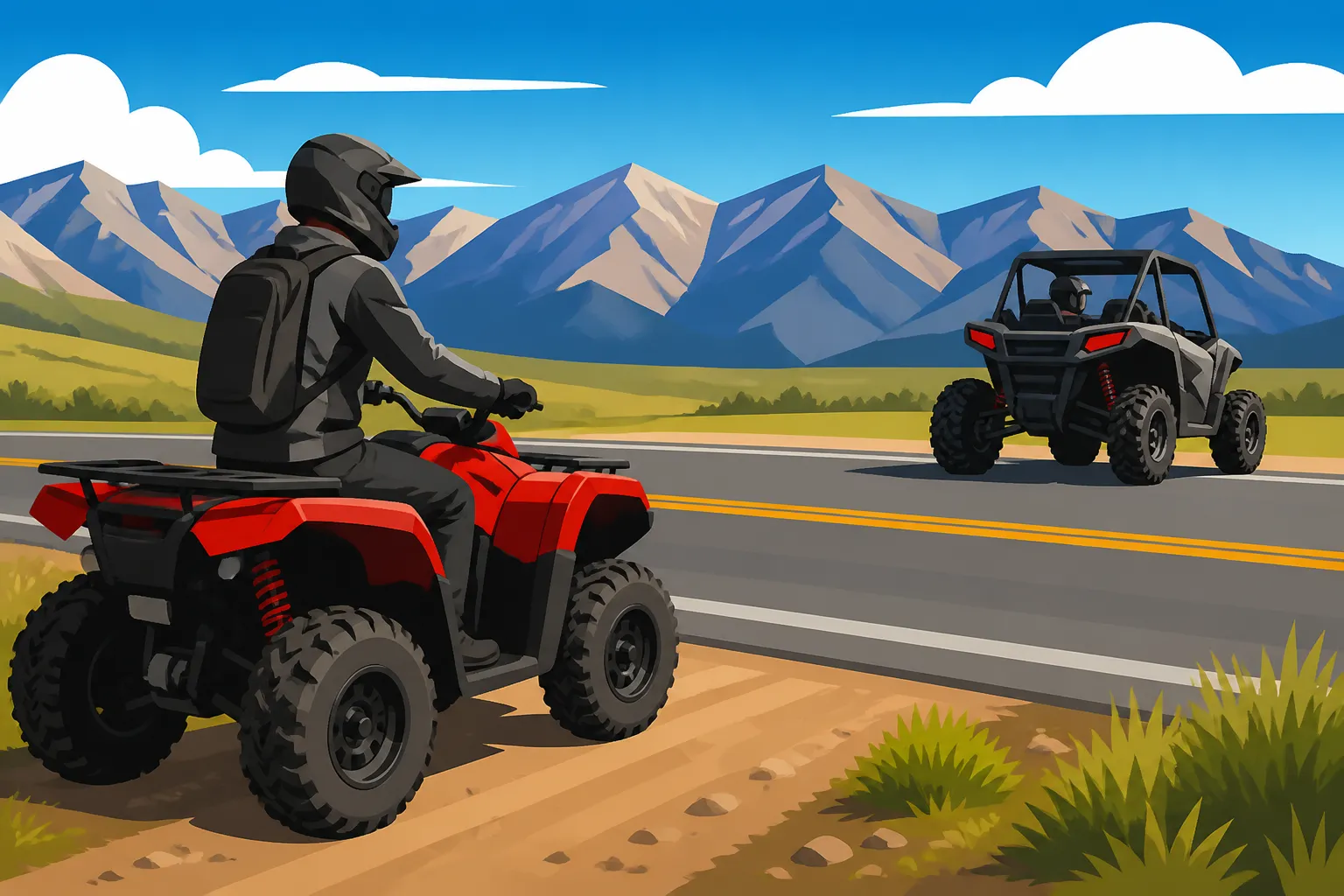
Crossing US-93 on an OHV
It's incredibly frustrating when you're out enjoying the vast network of Montana's OHV trails and scenic backroads, only to find a major artery like US-93 standing between you and your next destination or a convenient resupply point. This guide is here to untangle the often-confusing rules around whether, and how, you can legally cross this significant state highway on your ATV or UTV, helping you avoid headaches and potential fines.
Understanding US-93 as a State Highway for OHVs
Riding off-highway vehicles in Montana offers an incredible sense of freedom, but that freedom comes with specific rules, especially when you start interacting with paved public roads. US-93, stretching from the Idaho border all the way up through the Flathead Valley and beyond, is not just any road; it's a major state highway, and that designation carries a lot of weight when it comes to OHV access.
Why US-93 is Different from a County Road
The biggest difference comes down to jurisdiction. Most of the time, when we talk about OHVs on roads, we're discussing county roads. These are managed by local county commissioners, who often have the authority to open certain sections or even entire networks of roads to OHV use through local ordinances. They understand the local context – how residents use their machines, where the trailheads are, and the rhythm of traffic in their area.
US-93, however, falls under the jurisdiction of the Montana Department of Transportation (MDT). State highways are built and maintained for high-speed, high-volume vehicular traffic, often connecting major population centers. The default assumption for MDT-controlled roads is that they are not open to OHV travel, primarily due to safety concerns. The speed differential between a typical OHV and highway traffic, combined with the sheer volume of cars and trucks, creates a much higher risk environment. What might be a perfectly reasonable decision for a quiet gravel county road in rural Montana is often out of the question for a busy state highway. This fundamental difference in control and purpose is key to understanding [Why Montana Road Access Depends on Who Owns the Road].
The General Prohibition and Exceptions
So, let's be clear: generally speaking, operating an OHV on US-93 is prohibited. This isn't just about riding a mile down the shoulder; it's about any sustained travel. The highway is simply not designed or legally designated for OHV use as a thoroughfare.
However, like most rules, there can be very narrow exceptions. These exceptions almost never involve riding along US-93, but rather crossing it at specific, designated points. These designated crossings are not a statewide blanket rule; they are typically the result of specific local ordinances enacted by a town or county that US-93 passes through. A town might have a legitimate reason to connect two parts of its community or a trail system that requires a crossing, and they've gone through the process with the MDT to establish a legal crossing point. These situations are few and far between, and you cannot assume one exists just because it would be convenient. Unlike the more common allowances for OHVs on local roads, the state highway system maintains a much stricter stance. If you've been wondering [Can You Ride an OHV on a Montana Highway?], the answer is almost universally no, with these highly specific, localized crossings being the rare exceptions.
Specific Rules for Crossing US-93
If you find yourself in a situation where you absolutely must get your OHV from one side of US-93 to the other, and you've confirmed a legal crossing point exists, you need to understand the stringent rules that govern such an maneuver. It's not like simply cruising across a quiet intersection.
Designated Crossings and Local Ordinances
The key phrase here is "designated crossing." You won't find a general Montana law saying "OHVs can cross US-93 anywhere." Instead, any permission to cross this major state highway comes from very specific, localized ordinances passed by a city or county. These local laws identify a particular intersection or stretch of road where an OHV is permitted to cross US-93. For instance, a small town might have a trail system on both sides of the highway, and to facilitate local recreation and commerce, they might have worked with the MDT to establish a specific intersection where OHVs can go straight across.
These ordinances are not always easy to find, and they don't apply universally. What's allowed in one town along US-93 might be strictly forbidden in the next. To ensure you're compliant, you'd typically need to check with the county commissioners' office, the city clerk for a specific municipality, or even the local sheriff's department. They can provide details on local ordinances, which dictate everything from road access to required safety gear within their jurisdiction. Understanding [Montana City Streets and Municipal Ordinances] is a good starting point, but always remember that municipal rules might not extend to the state highway itself without specific MDT approval for the crossing. This is why it's so important to know [Finding a Montana Town's OHV Ordinance] before you make any assumptions.
The "Straight Across" Rule and Why It Matters
When a crossing of US-93 is permitted, it almost invariably adheres to the "straight across" rule. This means you are allowed to travel directly from one side of the highway to the other at the designated intersection, usually at a 90-degree angle to the flow of traffic. What you are not permitted to do is turn onto US-93, travel any distance along its lanes or shoulders, and then turn off. Even a short jaunt down the shoulder is typically illegal and incredibly dangerous.
Why is this rule so critical? Safety, pure and simple. US-93 is a high-speed corridor. An OHV traveling at a much slower speed, or attempting to merge with traffic, creates an enormous hazard. The straight-across rule minimizes the time your machine spends in the path of oncoming highway traffic. It's about getting across the danger zone as quickly and directly as possible. This rule underscores the danger inherent in interacting with such a busy highway, even for a moment. Riders must exercise extreme caution, ensure optimal visibility, and obey all traffic signals and signs as if they were operating a regular vehicle. This is distinct from rules for other roads, as explained in [Montana Rules at a Paved Highway Crossing].
Equipment Requirements for Any Road Operation
Even for a brief, designated crossing of US-93, your OHV must be equipped with the necessary street-legal features. These aren't just suggestions; they are legal requirements designed to ensure your visibility and ability to operate safely among other vehicles.
At a minimum, your machine needs to have:
- Headlights: Must be on, day or night, for any road operation.
- Taillights and Brake Lights: Essential for being seen from behind and signaling your intentions.
- Mirrors: A rearview mirror is typically required to see traffic approaching from the rear.
- Horn: For alerting other drivers.
- Spark Arrester: Crucial for preventing wildfires, especially on public lands, but also a general requirement.
- Muffler: To meet noise regulations.
Think about it: highway drivers are not expecting to see an OHV, especially one that might be slower or less visible than a typical car or truck. Having properly functioning headlights and taillights, for example, is non-negotiable. Many riders upgrade their lighting specifically for this purpose. Brands like SuperATV offer a range of aftermarket LED light bars and brighter headlights that can significantly enhance your visibility, which is a major advantage when dealing with high-speed traffic. Equipping your machine with robust mirrors from a reputable manufacturer like SuperATV can also give you a clearer view of the fast-approaching vehicles on US-93. These aren't just about legality; they're about basic survival in a high-risk situation. Familiarize yourself with [What Montana Requires on an OHV Road Ride] before ever thinking about public road use.
Practical Considerations and Safety When Near US-93
Navigating any part of US-93 on an OHV is a serious undertaking that demands careful planning and an unwavering focus on safety. It's not the place for impulsive decisions or cutting corners.
Scout Ahead and Plan Your Route
Never, ever assume a crossing of US-93 is allowed or safe without doing your homework. The first and most critical step is to scout ahead and meticulously plan your route. This means more than just looking at a map on your phone. You need to verify if a specific crossing point is legally designated for OHVs. This often involves checking local city or county ordinances, reviewing current Motor Vehicle Use Maps (MVUMs) for the areas you'll be riding near, and even calling the local sheriff's office or city clerk.
Ideally, you'd physically scout the intersection during off-peak hours to assess traffic flow, sightlines, and any potential hazards. Look for alternative routes that might completely bypass US-93. Are there parallel county roads, old logging roads, or forest service routes that could get you where you need to go without ever touching the highway? Often, a slightly longer, slower route on an OHV-friendly road is infinitely safer and more legal than a quick dash across a busy highway. Make sure to consult resources like [Checking Montana Trail Status Before You Drive] as part of your planning, as closures or conditions can impact even brief road sections.
Increased Visibility and Defensive Riding
The speed differential between highway traffic and an OHV is significant, making you incredibly vulnerable on US-93. If a crossing is permitted and you decide to undertake it, maximizing your visibility is paramount. Wear brightly colored clothing, preferably blaze orange or fluorescent yellow-green. Ensure all your lights (headlights, taillights, brake lights) are functioning perfectly and are on. Consider adding aftermarket lighting, like additional LED pods or a brighter headlight from a trusted brand like SuperATV, to make your machine stand out. A tall whip flag, as described in [Whip Flags on a Montana Road Section], is also a wise addition for any road use, making you more noticeable over the tops of cars.
Beyond equipment, adopt an intensely defensive riding posture. Assume no one sees you. Make eye contact with drivers if possible. Wait for the absolute clearest, longest possible gap in traffic before attempting to cross. Do not try to "beat" traffic. Be patient, be visible, and be ready for the unexpected. A moment of impatience can lead to a lifetime of regret.
Penalties for Unauthorized US-93 Operation
Operating an OHV illegally on a state highway like US-93 carries significant consequences. Law enforcement, including the Montana Highway Patrol and local sheriff's deputies, take violations on these high-speed roads very seriously because of the extreme danger posed to all road users.
Penalties can include substantial fines, and in some cases, your machine could be impounded. If you're operating the OHV with a driver's license, points could be assessed against your driving record. It's also worth noting that if you were involved in an accident while illegally operating your OHV on the highway, your insurance might not cover damages or injuries, leaving you personally liable for potentially astronomical costs. The risks simply aren't worth it. Understanding [Montana Fines for Illegal Road Riding] gives you a sense of the financial implications, but the safety risks are far more profound. Rest assured, [Sheriff Enforcement on Montana Back Roads] and highways is a reality.
Alternatives to Crossing US-93 by OHV
Given the inherent risks and strict regulations regarding OHV use on major state highways like US-93, it's almost always a better idea to explore alternatives rather than attempting a crossing. Prioritizing safety and legality will ensure your riding experience remains enjoyable and hassle-free.
Trailering Your Machine
Without a doubt, the safest and most legally sound method for getting your OHV across US-93 is to load it onto a trailer and tow it with a street-legal vehicle. This completely removes your machine from direct interaction with highway traffic, eliminating the risks and legal complexities discussed earlier. It might add a few minutes to your journey, but that peace of mind is invaluable.
If you're planning a trip that requires crossing major roads, investing in a good trailer and learning how to properly secure your machine is highly recommended. Ensure your trailer is properly registered – [Trailer Registration for Hauling ATVs in Montana] is a good resource for that – and that you know how to effectively load and [Strapping a Machine Down for a Montana Pass] so it stays put during transport. This method keeps you fully compliant with the law and significantly reduces any risk of accident or enforcement action.
Using Local County Roads and Bypass Routes
Montana is vast, and while US-93 is a main artery, there are often numerous alternative routes available if you're willing to explore. Many areas have extensive networks of county roads, gravel roads, and even Forest Service or BLM roads that run parallel to or bypass sections of US-93. These routes are frequently open to OHV use, or at least have more flexible rules, making them a much better option for connecting trail systems or getting to specific destinations.
Before your trip, spend some time with detailed maps, perhaps even using GPS apps like onX Offroad or Motor Vehicle Use Maps (MVUMs) for forest lands. Look for those winding backroads. You might discover scenic bypasses that not only keep you off the highway but also offer unique riding experiences through less-traveled parts of the state. Familiarize yourself with [Montana Rules on Forest Service Roads] and even [Riding a Logging Road in Western Montana] as these can be excellent alternatives. While they might be slower, they immerse you deeper into the Montana landscape and keep you far away from high-speed highway traffic.
Connecting to OHV-Friendly Towns
Some towns situated along US-93 have recognized the value of OHV tourism and have enacted local ordinances to allow OHV use on their municipal streets. This can be fantastic for accessing local amenities like gas stations, restaurants, or lodging. However, it's crucial to understand that these local allowances typically apply only within the town's limits and rarely, if ever, extend to allowing you to ride on or along US-93 itself to reach that town or connect to a trail on the other side.
The purpose of these ordinances is usually to facilitate local movement and access to services, not to serve as a bridge over state highways. So, even if a town is OHV-friendly, you might still need to trailer your machine to get to the town, or use the alternative county/forest roads mentioned above. Always verify the specific boundaries and conditions of any local ordinance. While it's great to know [Montana Towns That Allow OHVs on Their Streets], remember this rarely means you can ride the state highway to get there.
| Route Type | OHV Allowed on Road? | Crossing US-93? | Key Considerations |
|---|---|---|---|
| State Highway (US-93) | Generally NO | Only at very specific designated crossings with local ordinance approval | High speed, high traffic, extreme danger, strict "straight across" rule, rare approval, heavy penalties for violations |
| County Road | Often YES (dependent on local ordinance) | Only if an OHV-approved crossing of US-93 exists | Slower speeds, variable traffic, local decision, potentially good for bypassing US-93 |
| Forest Service Road | Generally YES (check MVUMs for specifics) | NO (unless designated crossing of US-93) | Lower traffic, scenic, often connects to trails, good alternative to US-93 |
| Private Land | YES (with landowner permission) | NO (unless direct crossing, permitted, and safe) | Landowner rules, no public access without explicit permission, cannot be used to circumvent highway rules |
Navigating US-93 on an OHV in Montana is a scenario that requires extreme caution and a thorough understanding of the law. While rare designated crossings might exist, the overwhelming rule is that OHVs are not permitted on this state highway. Prioritize your safety and legal compliance by trailering your machine or seeking alternative routes on county or forest service roads. A little extra planning can save you a lot of trouble and ensure you continue to enjoy the incredible riding opportunities Montana has to offer.
Disclaimer
This article is for general informational purposes only and does not constitute professional advice. Laws, prices and regulations vary by location and change over time. Consult a qualified professional for guidance on your specific situation.