Doubling Up on a One-Seat Quad
It’s a common scenario out here in Big Sky Country: you’re heading out to hit some trails or explore a backroad, and a friend or family member asks if they can just hop on the back of your quad. The thought of doubling up on a single-seat ATV seems convenient in the moment, but the reality is that it's often against the rules in Montana, and far more importantly, it carries some serious risks for both rider and passenger. This guide will walk you through the regulations, the hazards, and the safe, legal alternatives for enjoying the trails with company.
The Hard Truth About One-Seat Quads and Passengers in Montana
Let's get straight to it: most ATVs are designed and intended for a single operator. When a manufacturer designs a machine as a "one-seater," they're not just putting a single seat on it for aesthetics; they're engineering the entire vehicle – from its suspension and braking system to its center of gravity and engine power – for the safe operation by one person. Trying to squeeze two people onto a machine built for one fundamentally alters how it handles, often in dangerous ways.
In Montana, the rules surrounding off-highway vehicles (OHVs) and passengers are pretty clear, and they generally align with safety recommendations. While specific local ordinances can sometimes vary, the statewide expectation is that a machine designated for one rider should only carry one rider. This isn't just about avoiding a ticket; it's about preventing serious accidents. A quick look at any [Montana OHV Safety Education Requirements] will quickly highlight the importance of understanding your machine's design limits.
Imagine trying to navigate a steep, rocky trail, or even just a gravel road, with an extra 100-200 pounds shifted high up on the back of your ATV. The machine becomes top-heavy, making it prone to tipping, especially in turns or over uneven terrain. The brakes, designed for a lighter load, will struggle to stop safely, and the suspension will bottom out more easily, leading to a much rougher and less controlled ride. It’s a recipe for disaster that most experienced riders, and certainly law enforcement, want to avoid.
Understanding Manufacturer Designations
Every ATV comes with a manufacturer's label, often found near the seat or on the frame, clearly stating the intended number of occupants and the maximum weight capacity. This isn't just a suggestion; it's based on extensive testing and engineering to ensure the vehicle operates safely under its designed load. Ignoring this designation is essentially telling the engineers who built your machine that you know better, and on a rugged Montana trail, that's rarely the case.
These labels are critical for a reason. For example, a machine might have a payload capacity of, say, 300 pounds. That capacity needs to cover the rider, any gear, and potentially some fuel. If you have a 200-pound rider and then add a 150-pound passenger, you're immediately exceeding that limit, compromising the vehicle's structural integrity and dynamic stability. It's not just about space; it's about the load-bearing capabilities of the frame, axles, and tires.
Sometimes, people confuse ATVs with side-by-sides (UTVs) or multi-passenger off-road vehicles. Side-by-sides are specifically designed with multiple seats, often seatbelts, and a roll cage for passenger safety. An ATV, even a large one, rarely has these features for additional riders. If you're looking to bring company, investing in a machine specifically designed for that purpose, like a two-up ATV or a UTV, is the only truly safe and legal way to go.
Legal Ramifications of Carrying an Unauthorized Passenger
While Montana is known for its wide-open spaces and a sense of freedom, that doesn't mean there are no rules for OHVs, especially when it comes to safety. Carrying an unauthorized passenger on a single-seat quad can lead to fines and other penalties. Law enforcement officers, whether it's the local sheriff, a Fish, Wildlife & Parks warden, or Forest Service patrol, are well-versed in OHV safety regulations and will intervene if they see unsafe practices.
The specific penalties can vary, but generally, operating an OHV outside of its designed parameters is a violation. Beyond the immediate fine, there are other, more serious consequences. If an accident occurs while you are carrying an unauthorized passenger, your liability insurance might not cover the damages or injuries, as you were operating the vehicle outside of its intended use. This can lead to significant financial strain and legal battles.
Think about a scenario where you're on a public trail and, due to the added weight and altered balance, you lose control and crash. Not only might you or your passenger be seriously injured, but if your insurance company deems you were negligent by carrying an extra person on a single-seat ATV, you could be personally responsible for all medical bills, property damage, and potentially long-term care. It's a risk that simply isn't worth taking for a casual ride. Understanding [Montana Liability Insurance for Riders] is crucial for all OHV enthusiasts.
Why Manufacturers Build Single-Rider ATVs That Way
There's a science to ATV design, especially when it comes to single-rider models. Engineers spend countless hours calculating weight distribution, suspension travel, steering geometry, and braking power to create a machine that's agile, stable, and safe for one operator. Adding a passenger completely throws these delicate balances out of whack, often with immediate and noticeable negative impacts on handling.
The rider of a single-seat ATV uses their body weight and position to actively help steer, lean into turns, and absorb bumps. This dynamic interaction is crucial for control, especially at speed or on challenging terrain. With a passenger on the back, the operator's ability to shift their weight freely is severely restricted, and the passenger's added weight, often high up, makes the machine unwieldy and unpredictable.
Consider the frame and chassis. They are built to withstand the stresses of a single rider and their gear. An extra person means additional stress points, especially over rough terrain, which can lead to premature wear, component failure, or even structural damage to the ATV. While aftermarket parts from brands like SuperATV can enhance durability for specific uses, they can't magically transform a single-seat frame into a multi-passenger one designed for different load distribution.
Center of Gravity and Stability
One of the most critical factors in ATV design is the center of gravity (CG). For a single-rider machine, the CG is carefully positioned to provide optimal stability during acceleration, braking, and turning, and to allow the rider to use their weight to further influence this balance. When you add a passenger to a single-seat ATV, you raise and shift the center of gravity significantly.
This elevated and rearward-shifted CG makes the ATV far more susceptible to rolling over, especially on inclines, declines, or while making turns. A sudden bump or even a seemingly minor evasive maneuver can easily destabilize the machine. This isn't just about feeling a bit wobbly; it's about losing control entirely and potentially rolling the ATV, leading to severe injuries for both occupants.
Moreover, the suspension system of a single-seat ATV is tuned for the weight of one rider. With an additional person, the suspension will be overworked, bottoming out more frequently. This reduces ground clearance, which can cause the ATV to snag on obstacles, and it diminishes the suspension's ability to absorb impacts, leading to a harsher ride and a greater risk of losing traction. It's a cascade of compromised performance.
Braking and Control Issues
The braking system on an ATV is also designed with a specific weight range in mind. Adding a passenger means the brakes have to work much harder to slow and stop the machine. This increases stopping distances significantly, which can be incredibly dangerous when you need to react quickly to an unexpected obstacle or trail condition. On a steep decline, the added weight can cause the brakes to fade faster, leading to a terrifying loss of control.
Steering and overall control are likewise impacted. The front wheels, which are crucial for steering, will have less weight on them when a passenger is seated at the back, reducing traction and making the ATV harder to steer accurately. This phenomenon, often called "lightening the front end," can make the ATV feel disconnected from the terrain and prone to understeer. Precision riding, which is often required on technical trails, becomes nearly impossible.
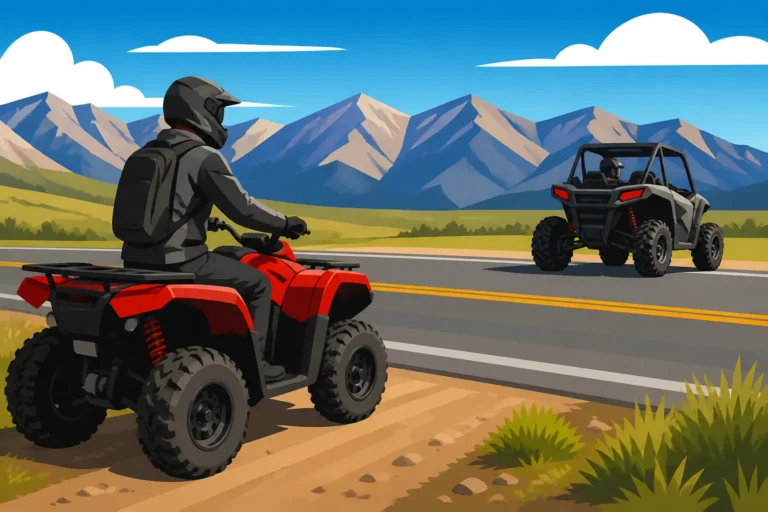
When you're dealing with varying terrain in Montana, from rocky climbs to muddy descents, reliable braking and precise steering are non-negotiable safety features. Compromising them by doubling up on a single-seat machine is a gamble with very high stakes. For instance, imagine needing to make an emergency stop when [Riding the Shoulder of a County Road] or navigating a tricky turn on a mountain trail; the increased stopping distance and reduced steering response can be the difference between a close call and a serious accident.
The Very Real Dangers of Doubling Up on a Single-Seat ATV
Beyond the legal and design considerations, the most compelling reason to avoid carrying a passenger on a single-seat quad is the sheer danger involved. We're talking about direct threats to the physical safety of both the operator and the unauthorized passenger. The open nature of ATVs means there's little protection in the event of a rollover or collision, and an added passenger exacerbates these risks exponentially.
Injuries from ATV accidents can range from scrapes and bruises to broken bones, head trauma, and even fatalities. When two people are involved in an accident on a machine designed for one, the potential for severe injury increases dramatically. Passengers, especially, are often unprepared for the dynamics of an ATV ride and are more likely to be thrown off, hit by the machine, or suffer impacts from obstacles.
It's tempting to think "just a short ride, what could happen?" But accidents can occur anywhere, anytime, often when least expected. Even on seemingly flat or easy terrain, a hidden rut, a patch of loose gravel, or a sudden maneuver can lead to a loss of control. And when that happens, the consequences of having an extra person on board can be devastating.
Increased Risk of Rollovers and Loss of Control
This is arguably the biggest safety concern. As discussed, adding a passenger significantly raises and shifts the ATV's center of gravity. This makes the machine inherently unstable. Rollovers are a leading cause of serious injury and death in ATV accidents, and they become far more likely with an extra person on board.
Consider a rider taking a turn a bit too sharply or hitting an unexpected obstacle. On a properly loaded ATV, the rider's body movements can often compensate for the imbalance, preventing a rollover. With a passenger, the rider's ability to make these corrective movements is hampered, and the additional weight and height make the machine much harder to recover once it starts to tilt. The passenger also lacks the controls and often the experience to anticipate and react to these shifts.
Furthermore, a passenger might instinctively grab the handlebars or shift their weight unexpectedly, further disrupting the operator's control. In a critical moment, this can be enough to turn a near-miss into a catastrophic accident. It’s not just about the physics of the machine; it’s about the unpredictable interaction between two people on a single control surface.
Reduced Visibility and Response Time
An extra body on a single-seat ATV can significantly impede the operator's visibility. The passenger might block views to the rear, sides, or even parts of the trail directly ahead, especially if they are sitting high or leaning in certain ways. This reduced field of vision increases the risk of not seeing an upcoming hazard, another rider, or wildlife.
Just as critical is the impact on the operator's response time. With diminished visibility and compromised control, the operator has less time and fewer options to react to sudden changes in the environment. Stopping distances are longer, steering is less precise, and evasive maneuvers are more difficult. This directly translates to a higher likelihood of collision or rollover.
For example, imagine a child as a passenger. Not only are they often too small to properly brace themselves, but their movements can be unpredictable, and their smaller size means they might not be wearing an appropriately fitted helmet or safety gear, increasing their risk of severe injury. While it's tempting to want to share the adventure, it's crucial to follow [Montana Rules for a Child Passenger] and ensure they are on a machine designed for their size and with proper safety provisions.
Safe and Legal Alternatives for Riding with a Passenger in Montana
So, you want to share the incredible Montana OHV experience with a friend or family member? That's awesome! The good news is that there are perfectly safe and legal ways to do it, without compromising anyone's well-being. The key is choosing the right equipment for the job.
The market offers a wide range of machines specifically designed to carry more than one person. These vehicles are engineered from the ground up to accommodate the extra weight, provide additional seating, and maintain stability and control. This means everyone can enjoy the ride with peace of mind, knowing they're on a machine built for the adventure.
Before you head out, always ensure everyone has appropriate safety gear, including DOT-approved helmets, eye protection, sturdy footwear, and long pants and sleeves. Even on a designated multi-passenger machine, safety gear is non-negotiable. You can also consult resources like [Montana Helmet Rules for Riders Under 18] to ensure all passengers, especially younger ones, are properly outfitted.
Investing in a Two-Up ATV or a UTV
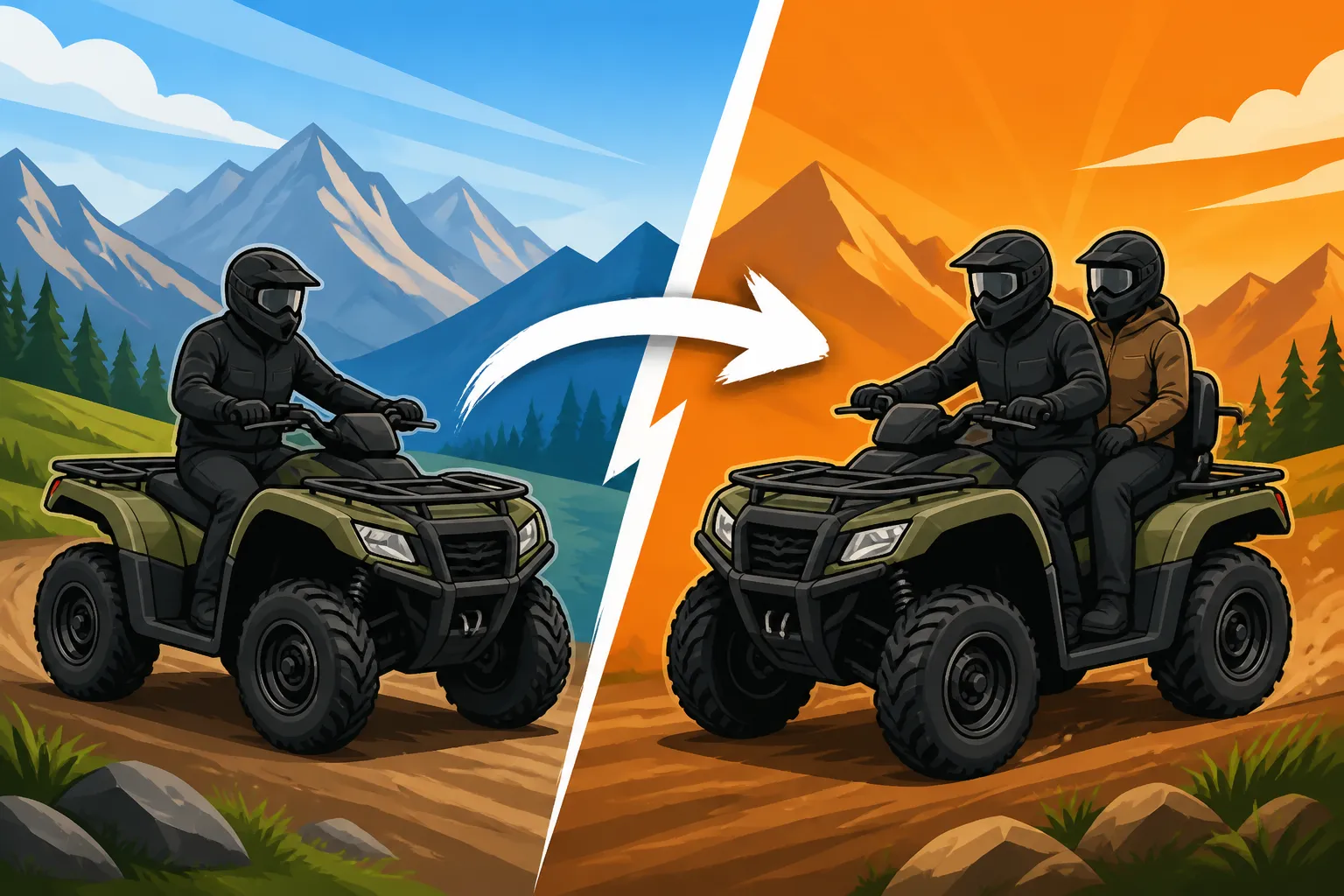
If you primarily love the open-air feel and independent nature of an ATV but want to bring a single passenger, a "two-up" ATV is your answer. These machines feature an extended frame, a longer, contoured seat that's specifically designed for two people, and a passenger backrest and handholds. Crucially, their suspension, braking, and engine are all tuned for the added weight and different weight distribution of two riders.
Many major manufacturers offer excellent two-up models. These often come with features like passenger footrests that are integrated into the chassis, not just an afterthought. They handle much like a single-seat ATV, but with the added stability and passenger comfort necessary for shared adventures.
For those who want to carry more than one passenger, or prefer a more car-like experience with seatbelts and a roll cage, a Utility Terrain Vehicle (UTV) or side-by-side is the perfect choice. UTVs come in configurations from two-seaters to six-seaters, offering ample space, storage, and a much more stable platform for passengers. They are fantastic for exploring rough terrain, hunting, or simply cruising through the backcountry with a group. Many UTVs, for example, offer robust protection thanks to their factory roll cages and seatbelt systems, making them ideal for families. You might even find aftermarket enhancements for UTVs from companies like SuperATV that improve their safety or utility even further.
Here's a quick comparison to help visualize the differences:
| Feature | Single-Seat ATV | Two-Up ATV | UTV (Side-by-Side) |
|---|---|---|---|
| Intended Riders | 1 | 1-2 | 2+ (often 2, 3, 4, 6) |
| Seating Arrangement | Motorcycle-style saddle | Extended saddle, backrest | Bucket seats or bench, steering wheel |
| Control Input | Handlebars, active body lean | Handlebars, some body lean | Steering wheel, foot pedals |
| Passenger Safety | None (not designed for) | Dedicated seat, handholds | Seatbelts, roll cage, doors/nets |
| Stability (with pass.) | Poor, high rollover risk | Good, designed for two | Excellent, wide stance |
| Weight Capacity | Rider + minimal gear | Rider + passenger + gear | Multiple occupants + significant cargo |
| Road Legality (MT) | Limited, requires specific equip. | Limited, requires specific equip. | Limited, requires specific equip. |
| Common Uses | Sport, utility, single-person trail riding | Trail riding, touring with passenger | Utility, recreation, family trail riding, hunting |
Practical Considerations for Safe Passenger Riding
Even with a machine designed for multiple riders, common sense and safety practices are paramount. Always ensure your passenger is aware of how the machine handles, where to hold on, and how to properly brace themselves. Give them a quick rundown of what to expect, especially before hitting any challenging terrain. Communication is key, particularly on rough trails where sudden movements or shifts can occur.
If you're riding with a passenger on a [Montana County Treasurer OHV Registration] machine, make sure they are wearing a helmet, even if they are an adult and not legally required to on certain roads. It's a matter of personal safety. Eye protection, gloves, and sturdy clothing are also highly recommended for everyone on board. Riding responsibly also means adhering to speed limits, especially on shared roads, and being mindful of other trail users. [Montana OHV Rules for Riders Under 16] also outlines specific requirements for younger operators, which can indirectly inform safe passenger practices.
Finally, remember that sharing the trails is part of the fun in Montana. By choosing the right equipment and prioritizing safety, you can create lasting memories with friends and family, rather than risking an accident by trying to fit two on a machine built for one. Whether it's a two-up quad for a spirited ride or a UTV for a leisurely exploration, there's a safe and legal way to bring your companions along.
Disclaimer
This article is for general informational purposes only and does not constitute professional advice. Laws, prices and regulations vary by location and change over time. Consult a qualified professional for guidance on your specific situation.