Carrying a Rifle on an OHV in Montana
Venturing out into Montana's vast backcountry on your ATV or UTV often means bringing along a rifle, whether it's for hunting, predator control, or just ranch work. But the rules around legally and safely transporting that firearm on your machine can feel like a tangled mess of state and federal regulations, leaving many riders scratching their heads. This guide is designed to cut through the confusion, offering clear, practical advice for Montana riders who want to carry a rifle responsibly and legally.
Montana's General Rules for Carrying Firearms on OHVs
Montana is known for its strong tradition of firearm ownership and relatively permissive gun laws. Generally, the state leans towards protecting the right to bear arms. However, when you introduce an off-highway vehicle (OHV) into the mix, especially on public lands or during specific activities like hunting, some critical nuances come into play. It's not just about the gun itself, but how and where you're carrying it.
The Legality of Open Carry and Concealed Carry on OHVs
In Montana, open carry of firearms is generally legal for anyone not otherwise prohibited from possessing a firearm. This applies whether you're walking down Main Street, driving your pickup, or riding your side-by-side. For concealed carry, Montana does not require a permit for constitutional carry within city limits, counties, or unincorporated towns if you are legally allowed to possess a firearm. However, some local jurisdictions might have specific ordinances, so it's always wise to check if you're heading into a new area, though most rural parts of Montana are quite consistent.
When it comes to an OHV, the machine itself is usually treated much like any other vehicle in this regard. If your rifle is openly mounted in a visible gun scabbard on your ATV or UTV, that's generally considered open carry. If it's tucked away under a seat or in a storage compartment, that might be considered concealed carry. The key is understanding that your mode of transport, while unique, doesn't fundamentally change the state's core open and concealed carry laws for most purposes outside of specific hunting or federal land regulations.
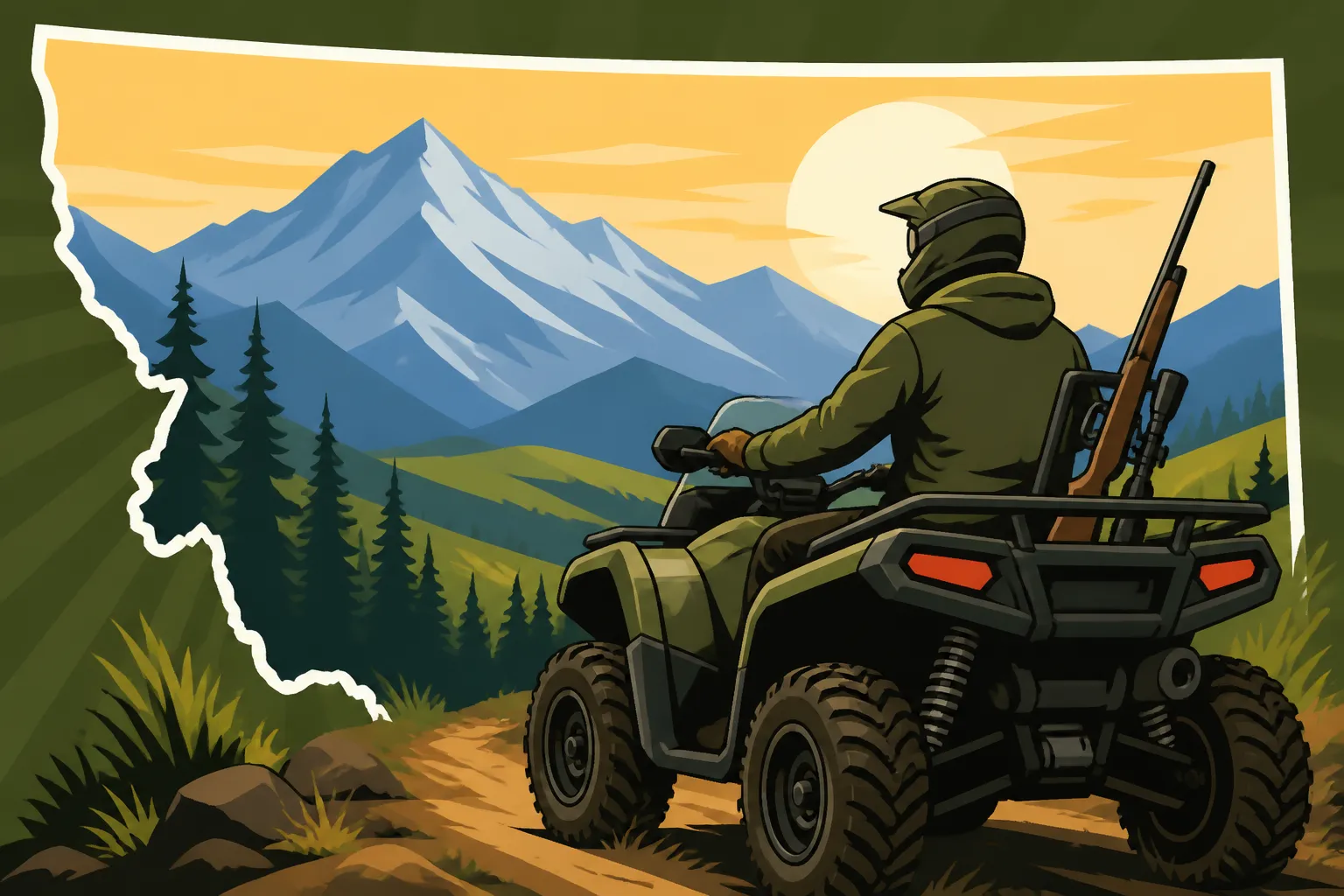
Many riders find it most practical to openly carry their rifle on their OHV, using purpose-built mounts that keep the firearm secure and accessible. This approach often removes any ambiguity about concealed carry, especially if you happen to stop in a small town along your route. Just remember, while Montana's laws are generally broad, always respect private property rights and local ordinances, as they can sometimes add layers of complexity. [Riding a Friend's Ranch by Permission] always means adhering to their rules, which might include specific firearm policies.
Specific Rules for Loaded Firearms on OHVs
This is where things can get a little more specific and where many riders find themselves confused. Montana state law generally prohibits carrying a loaded long gun (rifle or shotgun) in a "motor vehicle" on a public highway or road. An OHV operating on a public road, even a county road or forest service road, falls under the definition of a "motor vehicle" for this rule. This means if you're riding your ATV or UTV on any public road, your rifle should not have a round in the chamber.
The definition of "loaded" can sometimes be debated, but generally, a round in the chamber is universally considered loaded. A magazine full of ammunition inserted into the rifle but without a round chambered might be considered unloaded by some interpretations, but to err on the side of caution, it's often best to keep the magazine out or ensure no round is in the chamber if you're on a public road. This rule is designed for safety and to prevent impromptu shooting from vehicles along roadways.
When you're off-road, on private land, or on public land where motorized vehicle use is permitted but not on a designated "road," the interpretation can shift. On private property with the landowner's permission, you can generally carry a loaded firearm as you see fit. On public lands, if you are truly off a designated road or trail system (and only in areas where such off-road travel is allowed, which is becoming increasingly rare), the "loaded firearm in a motor vehicle" rule might not strictly apply in the same way. However, many federal land agencies (like the Forest Service or BLM) have their own interpretations and rules that often align with keeping firearms unloaded while in or on a motorized vehicle, regardless of whether it's a "road" or not. It’s always best to check the specific land management rules for the area you are in.
| Scenario | Loaded Firearm (Chambered Round) | Unloaded Firearm (No Round Chambered) |
|---|---|---|
| On a Public Road/Highway | Illegal | Legal |
| On a Designated Public OHV Trail | Generally Illegal | Legal |
| On Private Land (with permission) | Legal | Legal |
| Off-Road (where permitted) | Legal (check land agency rules) | Legal |
Safe Storage and Transport
Beyond the legal aspects, safe storage and transport are paramount. A rifle bouncing around unsecured on an OHV is a recipe for disaster. It can get damaged, fall off, or, in the worst-case scenario, accidentally discharge. Investing in a high-quality gun scabbard or a dedicated gun rack is not just convenient; it's a safety imperative. These systems are designed to hold your rifle firmly in place, protecting it from the constant vibration, dust, and potential impacts of trail riding.
Think about the conditions your rifle will face: mud, dust, rain, snow, and relentless rattling. A good scabbard, ideally one that's weather-resistant, will keep the elements off your firearm and protect its finish and optics. Companies like SuperATV offer a variety of robust mounting solutions, from padded soft cases that securely attach to your roll cage to hard-shell scabbards designed to protect your rifle from even the harshest conditions. Ensure that whatever system you choose, it keeps the muzzle pointed in a safe direction and prevents unauthorized access if you step away from your machine.
Many riders opt for a quick-release mounting system that allows for easy access when needed, but also secure retention during bumpy rides. Protecting your investment goes beyond just the gun itself; consider the scope and other accessories. A bent scope or a cracked stock from a fall could ruin your hunting trip or cost a pretty penny to repair. Securely strapping your rifle down, even if it's in a scabbard, ensures it stays put no matter how rough the terrain gets.
Hunting Season Specifics and OHV Use
Hunting season in Montana is a magical time, but it also comes with a heightened set of responsibilities and specific rules for OHV users. Many of these rules are designed to prevent unfair chasing of game, preserve the integrity of hunting, and protect sensitive habitats. Ignoring them can lead to hefty fines and loss of hunting privileges.
Road vs. Off-Road Hunting Access
A crucial distinction in Montana hunting regulations revolves around "motorized vehicles" and their use on roads versus off-road. Generally, Montana Fish, Wildlife & Parks (FWP) regulations prohibit the use of motorized vehicles, including OHVs, for hunting or pursuing game off of established roads. This means you cannot drive your ATV or UTV off-trail to chase an animal or gain an advantage. The concept of [Montana Trespass Law for Riders] applies here, as driving off designated routes can easily lead to trespass onto private or restricted public lands.
Many hunting districts also have specific "Travel Management Plans" or "Motor Vehicle Use Maps" (MVUMs) that dictate exactly which roads and trails are open to motorized use during hunting season. These maps are your best friend and should be consulted before every hunting trip. They show designated routes and often highlight areas that are closed to all motorized traffic or have seasonal restrictions. [Montana's National Forest Trail Systems] and [Montana Rules on Forest Service Roads] often have these detailed maps available.
Even on designated roads, remember the rules about loaded firearms in vehicles. If you're driving down a forest service road and spot game, you must generally exit your vehicle and step away from the road before loading your rifle and attempting a shot. The specific distance from the road can vary, but the intent is clear: no shooting from or immediately adjacent to a motorized vehicle on a public roadway.
Restrictions Near Roads and During Game Retrieval
Beyond just not shooting from your OHV, there are specific regulations about discharging a firearm across or within the right-of-way of a public highway. This means if you're parked on the shoulder of a county road, you can't just swing your rifle and shoot across it. Always ensure you have a clear, safe backdrop and are aware of any roads, trails, or structures downrange.
When it comes to game retrieval, Montana FWP has specific regulations, especially regarding the use of OHVs. In some areas, once an animal is legally harvested, limited off-road travel may be permitted for retrieval, often requiring a specific permit or adherence to strict conditions (e.g., only driving directly to the carcass, staying off wet ground, etc.). This is a critical point that can vary greatly by hunting district and land management agency. Never assume you can just drive your UTV wherever you shot your elk. [Montana OHV Rules During Elk Season] often detail these specific allowances and restrictions. Always double-check the current FWP hunting regulations for the district you are hunting in, as these rules can change year to year.
It's also important to remember that the general spirit of hunting regulations is ethical pursuit. Using your OHV to "harass" or "pursue" game is illegal and unethical. Your machine is primarily for transport to and from hunting areas, not for actively locating or chasing animals. Be mindful of how your OHV use might be perceived by wardens or other hunters, and always act in a way that respects the wildlife and the hunting tradition.
Blaze Orange and Visibility
While not directly related to carrying a rifle, it's essential to remember Montana's blaze orange requirements during general big game hunting season. If you are hunting big game, or even if you are just in the field during a big game season, you are required to wear at least 400 square inches of hunter orange material above the waist, visible from all sides. This includes a hat.
Even if you're not actively hunting but are just transporting your rifle through public lands during hunting season, wearing blaze orange is a smart and safe practice. It increases your visibility to other hunters and minimizes the risk of being mistaken for game. This isn't just a rule; it's a vital safety measure that protects everyone in the field. When packing your gear for your OHV trip, always include your blaze orange, even if you don't anticipate needing it.
Public vs. Private Land Considerations
The rules for carrying a rifle on your OHV can vary significantly depending on whether you're on public land managed by federal or state agencies, or on private property. Understanding these distinctions is crucial to staying legal and respectful.
National Forests and BLM Land Regulations
A significant portion of Montana's OHV riding and hunting opportunities exists on federal lands, primarily those managed by the U.S. Forest Service (USFS) and the Bureau of Land Management (BLM). These agencies often have their own specific regulations concerning firearms and motorized vehicles, which can sometimes be more restrictive than state law. [Montana Rules on Forest Service Roads] and [Montana Rules on BLM Roads] are essential reading for any rider planning to recreate on these lands.
For instance, while Montana state law might allow an unloaded rifle in a scabbard on a forest road, some federal land management units may have additional rules regarding cased firearms or those secured in a way that is not immediately accessible. Always consult the specific Motor Vehicle Use Map (MVUM) for the National Forest or BLM district you plan to visit. These maps are the definitive guide for where you can legally ride your OHV and often contain information or references to firearm regulations.
Beyond firearms, federal lands also have strict rules about off-road travel. Driving off designated routes can lead to severe penalties, including fines and vehicle impoundment. This is particularly relevant during hunting season, as tempting as it might be to cut across a meadow. Always stick to the marked trails and roads, even if you are just transporting your firearm and not actively hunting. Respecting these rules helps ensure continued access for all OHV users.
State Lands and Parks
Montana also has a variety of state-managed lands, including State Forests, State Trust Lands, and State Parks. The rules for firearms and OHVs on these lands can vary. For State Trust Lands, which are often open to public access for activities like hunting, the rules generally follow FWP guidelines. However, you should always be aware that some State Trust Lands may have specific restrictions, especially concerning motorized access.
Montana State Parks, on the other hand, typically have much stricter rules regarding firearms and motorized vehicles. Discharging a firearm within a State Park is generally prohibited, and OHV use is usually limited to designated parking areas or access roads, if allowed at all. These areas are designed for passive recreation, and firearm use is typically not compatible. Before carrying a rifle or riding an OHV into any Montana State Park, always check the specific park regulations.
The important takeaway is that "public land" isn't a monolithic entity. It's crucial to identify the specific managing agency for the land you're on and understand their unique set of rules. Ignorance of the law is never an excuse, and a quick check online or a call to the local office can save you a lot of trouble.
Private Property and Permission
If you're carrying a rifle on an OHV on private land, the rules are primarily determined by the landowner. With permission, you can generally carry a loaded firearm and operate your OHV as agreed upon with the property owner. This includes everything from vast ranch lands where you might be helping with predator control to a friend's small woodlot where you're simply transporting your hunting gear.
However, just because it's private land doesn't mean you can ignore common sense or safety. Always confirm the landowner's expectations regarding firearms, loaded status, and where you can ride your OHV. Be especially mindful if the private land borders public land, as accidentally crossing boundaries without permission is considered trespass. [Riding Posted Ground in Montana] is a serious offense, and even unmarked property lines can lead to legal issues if you're not careful.
When helping out on a ranch, for example, [Montana OHV Rules for Ranch Machines] might grant certain operational flexibility for work-related tasks, but firearm rules still apply to safety and legal transport. Even on private land, accidental discharges or unsafe firearm handling can have severe consequences, so always prioritize safety, regardless of the property ownership.
Best Practices and Avoiding Misunderstandings
Beyond simply staying legal, there are a lot of practical steps you can take to make carrying a rifle on your OHV safer, more efficient, and less prone to misunderstandings with law enforcement or other outdoor enthusiasts.
Secure Mounting and Protection
We can't stress this enough: a rifle needs to be securely mounted and protected when riding an OHV. Trail conditions in Montana can be incredibly varied, from smooth gravel roads to rocky, rutted climbs. Your rifle needs to be able to withstand constant vibration, sudden bumps, and potential rollovers without shifting, becoming damaged, or endangering anyone.
Look for mounting systems that attach directly to the OHV's frame or roll cage, not just strapped to a flimsy rack. Padded scabbards, like those available from SuperATV, help absorb shock and prevent scratches, dents, and dings to your firearm's finish and delicate optics. Many riders opt for rigid cases that completely enclose the rifle, offering maximum protection from both impacts and the elements. Consider a quick-detach mount for easy access when you reach your destination, but ensure it locks securely in place during travel.
Beyond physical protection, think about visibility. If you're using a scabbard, make sure the muzzle is pointing safely away from yourself and others, and that the trigger guard is protected. For those long, dusty rides, covering your rifle or using an enclosed case will save you hours of cleaning later and prevent dust from getting into critical mechanisms, which can cause malfunctions. Investing in quality gear here isn't an extravagance; it's a necessity for responsible firearm transport in the Montana backcountry.
Knowing Your Hunting District Rules
If your purpose for carrying a rifle is hunting, then knowing the specific rules for your hunting district is non-negotiable. Montana Fish, Wildlife & Parks publishes comprehensive hunting regulations annually, and these often contain very specific rules about motorized access, game retrieval, and even firearm use in particular zones or during certain seasons.
Before you ever head out, download or pick up a hard copy of the current FWP regulations for the species you're hunting and the district you'll be in. Pay close attention to sections on "general hunting regulations," "motorized vehicle restrictions," and any "special regulations" for your specific district. These rules are developed to manage wildlife populations, ensure fair chase, and protect habitat, and they are strictly enforced. [Montana OHV Rules During Elk Season] are a perfect example of these season-specific regulations that often have direct implications for OHV riders.
Don't rely on what you heard from a buddy last year, or what some online forum says. Rules can and do change. A quick call to the local FWP office or a visit to their website can clarify any ambiguities and ensure you're compliant with the latest regulations, saving you from potential fines or, worse, losing your hunting privileges.
Being Prepared for a Warden Stop
It's not uncommon to encounter a Montana Fish, Wildlife & Parks warden, a county sheriff, or a Forest Service law enforcement officer while out on your OHV, especially during hunting season. They are there to ensure public safety, enforce regulations, and protect Montana's natural resources. Being prepared for a stop can make the interaction smooth and efficient.
First and foremost, when approached by law enforcement, safely pull over, turn off your engine, and keep your hands visible. Follow all instructions clearly and calmly. Have your required documents readily available: your driver's license (if applicable for road use), OHV registration, proof of ownership, and any hunting licenses or conservation stamps. For a full list of general requirements, you might want to review [What a Montana Warden Asks a Rider For].
Regarding your rifle, if asked, clearly state that you are carrying a firearm and its location. Do not reach for it unless instructed to do so. If the firearm is unloaded as required on public roads, you can calmly explain that. Wardens are experts in state and federal firearm laws, and they're familiar with common OHV setups. Being cooperative and honest will always lead to a better outcome. Remember, they are often checking for compliance with safety regulations and hunting laws, ensuring a safe and fair environment for everyone recreating in Montana's wild spaces.
Disclaimer
This article is for general informational purposes only and does not constitute professional advice. Laws, prices and regulations vary by location and change over time. Consult a qualified professional for guidance on your specific situation.